
REVIEW · BARCELONA GHOST TOURS
Barcelona: El Born Ghost Walking Tour.
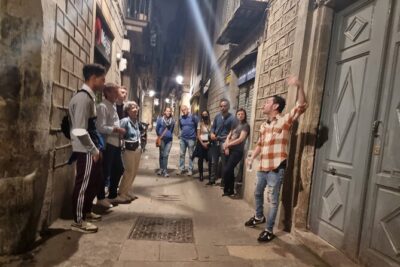
Barcelona gets stranger after dark. This two-hour walk through El Born and nearby quarters pairs ghost stories with real city history, leading you from the Arc de Triomf to Santa Maria del Mar. I like the route’s quiet backstreets and the way it reaches places many visitors miss. I also like that the stories connect to Barcelona writers, old convents, merchants, sailors, and the Inquisition.
The main catch is simple: this is more folklore and history than a fright fest. Some tales are eerie, but several people found the tour entertaining rather than truly scary, especially when daylight lingered at the start. The route also ends at Santa Maria del Mar, not back at the Arc de Triomf, so plan your walk home.
Key points before you book
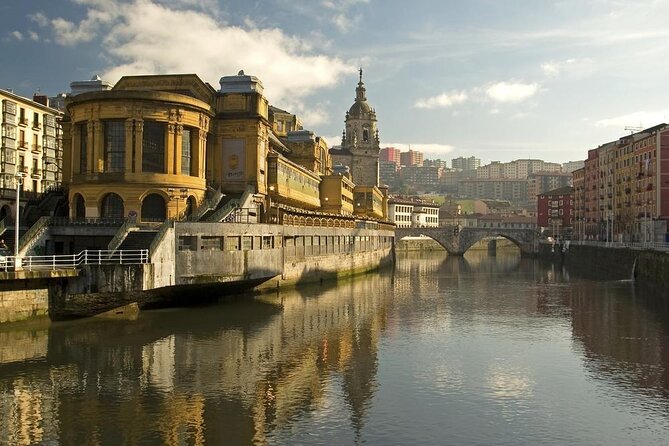
- The route runs from Arc de Triomf to Santa Maria del Mar, crossing Sant Pere, Santa Caterina, and El Born.
- The stories center on exorcisms, witchcraft, ghostly nuns, apparitions, and the Inquisition, with material linked to Sylvia Lagarda-Mata’s book Fantasmes de Barcelona.
- You see major landmarks and lesser-known lanes, including the Arc de Triomf, Sant Pere Square, Passeig del Born, Plaça d’En Marcús, and Santa Maria del Mar.
- The price is $21.60 per person, a fair rate if you want a guided night walk with local legends rather than a formal museum tour.
- The guide makes or breaks the evening, and Christina receives especially strong praise for her storytelling, warmth, and command of Barcelona’s past.
- Comfortable shoes matter, since narrow lanes and cobblestones can be awkward, especially for anyone with walking difficulties.
What this Barcelona ghost walk is really like
I would book this tour for atmosphere, stories, and a fresh look at Barcelona’s old quarters. I would not book it expecting actors jumping from doorways or a parade of proven paranormal events.
The tone depends heavily on the guide. At its best, the tour uses a dark tale to make you look more closely at a street, church, or square. A good guide does not need to pretend every legend is fact. In fact, Christina reportedly made the evening stronger by explaining when a story was likely folklore, then pointing out the places tied to it.
That approach suits Barcelona. The city’s old districts contain layers of Roman roads, medieval trade, religious foundations, industry, war, and urban change. Ghost stories give those layers a memorable shape. You may forget a date, but you will remember the square where nuns are said to wander after dark.
The tour is listed as a private activity, with only your group participating. It is offered in English and includes a professional guide. Group discounts are available, and the mobile ticket makes the practical side easy. Food and drinks are not included, so eat before you meet or plan a stop after the walk.
More Ghost Walking Tours in Spain
- Barcelona: Dark History Night Walking Tour
★ 4.8 · 344 reviews - Barcelona Dark History Night Walking Tour With Drinks
★ 5.0 · 153 reviews - Barcelona El Raval Dark History Walking Tour
★ 5.0 · 70 reviews
Meeting the guide beneath the Arc de Triomf
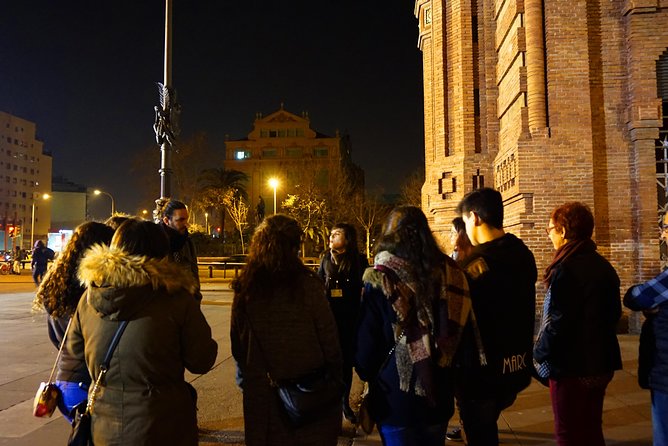
The walk begins on Passeig de Lluís Companys, beneath Barcelona’s redbrick Arc de Triomf. Built for the 1888 Universal Exposition, the arch once marked the entrance to the fairgrounds in Parc de la Ciutadella.
This is a good meeting place because it is large, visible, and close to public transportation. One practical detail is worth remembering: the meeting area is broad. A guide carrying a red umbrella has been easy to spot, but arrive a little early so you are not searching across the plaza at the last moment.
The Arc de Triomf itself sets the right mood without needing any supernatural help. Its Neo-Mudéjar design is more decorative than menacing, yet the red brick and evening shadows make a memorable opening point. From here, the route heads toward the older quarters, where the modern city gives way to narrow streets and medieval traces.
Departure times specifically noted for this experience are 8:30 p.m. on Fridays and 8 p.m. on Saturdays. Check your confirmation for the time on other days.
Sant Pere and Carrer del Portal Nou
The first part of the walk enters Sant Pere and Santa Caterina, districts that were once major centers of trade and textile work. During the 19th century, silk and cotton factories, printing workshops, and more than 280 textile businesses operated across the two neighborhoods.
That context matters because the lanes were not built for sightseeing. They served workers, shopkeepers, religious communities, and merchants. Your guide uses the streets to explain the people who lived here, including prosperous traders and rough-edged sailors connected with the old Ribera quarter.
Carrer del Portal Nou has an older story still. It once formed an entrance to Barcelona from a Roman road leading toward France. In the 15th and 16th centuries, porticoes supported shops and street commerce, though many disappeared in the early 19th century.
The paranormal side enters through reports of late-night apparitions near the old medieval walls. This is one of the tour’s better combinations: you get a sense of how the street worked, then hear why local stories attached themselves to it. If you want only ghost content, the historical explanation may feel slow. I think it gives the legends more weight.
Sant Pere Square and the ghostly nuns
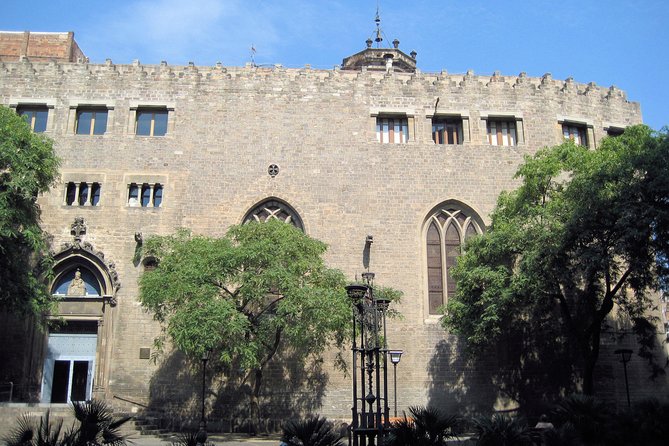
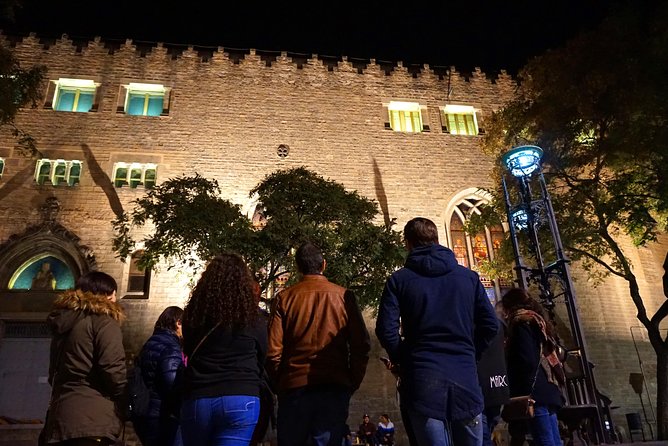
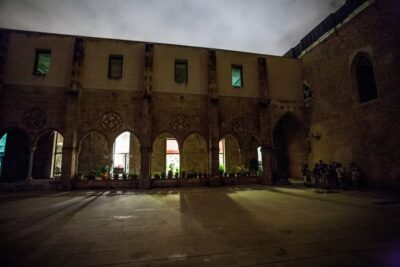
Sant Pere Square occupies the former site of the Monastery of Sant Pere de les Puel·les. The monastery was founded before the year 1000 as a refuge for noble nuns and suffered repeated damage from invasions, wars, and fires.
It was rebuilt several times and regained importance after being reconsecrated in 1143. Later, the monastery was confiscated and used as a prison. The nuns were forced to leave for good, which helped create the local story of ghostly sisters unable to rest.
This stop shows the tour’s preferred style. The tale is unsettling, but the real subject is also the fate of a religious institution caught in political and military change. You are not simply told that a ghost appears. You learn why the site might have developed a reputation for sorrow and haunting.
The square can also be a useful pause in the route because it gives you space to look around. Still, do not expect a seated break or a café stop built into the schedule. One practical criticism of this kind of walking tour is that two hours on foot can feel long without a bathroom or coffee break.
More Ghost Walking Tours in Barcelona:
- Barcelona Ghosts of a Dark Past Gothic Walking Tour
★ 5.0 · 55 reviews - Barcelona: El Born Ghost Walking Tour
★ 3.8 · 47 reviews - Barcelona: Ghosts of a Dark Past Walking Tour
★ 5.0 · 10 reviews - Barcelona’s Dark History Walking Tour in El Raval
★ 4.8 · 6 reviews
The lane where Barcelona bought snow
One of the route’s more unusual details comes in a narrow street in El Born that was once associated with selling real snow. Before refrigerators, people bought snow to cool drinks, preserve food, and make ice cream.
It is a small fact, but it gives the walk a nice change of pace. Not every stop involves death, possession, or a wandering spirit. Details like this show how people solved everyday problems in earlier Barcelona.
The lane also illustrates why the route works even if you are not fully convinced by ghosts. You are seeing small streets that are easy to pass without understanding. After the tour, you may want to return in daylight to spot the shops, galleries, and local businesses tucked into the old quarter.
Roman roads and the Hostal Flor de Lliri
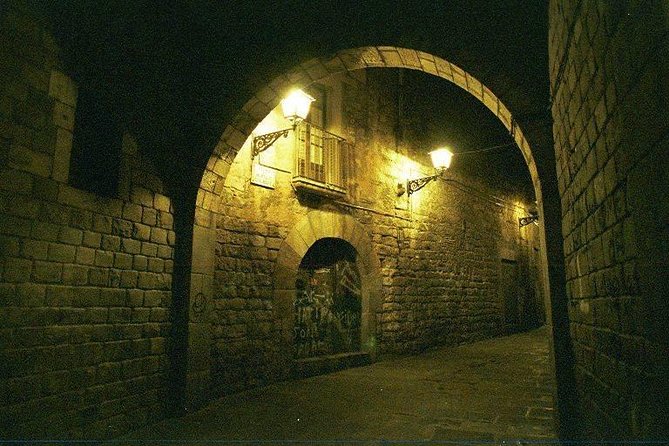
Another stop follows the old Roman route that connected Barcelona with Europe. The street life here once centered on the Hostal Flor de Lliri, a place now wrapped in a darker reputation.
The guide links the location to mysterious events and old stories, giving you a sense of how inns, roads, and passing strangers could become ideal settings for rumor. In earlier centuries, an inn near a major route was a natural meeting point for merchants, workers, sailors, and people whose identities were not always clear.
This is also where the tour’s storytelling quality matters most. Some people found the guide’s delivery lively and suspenseful. Others wanted more drama and a stronger scare factor. If your enjoyment depends on theatrical narration, your experience may vary. If you like hearing how legends grow around old places, this stop should work well.
Plaça d’En Marcús and the charitable merchant
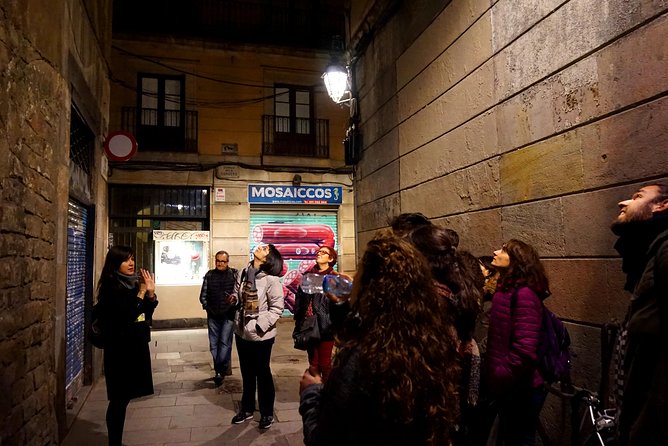
Plaça d’En Marcús is named after Bernat Marcús, a wealthy 12th-century benefactor. He funded charitable work, including a chapel and a hospital for poor people and pilgrims.
The square adds a more humane note to the evening. Barcelona’s old districts were not only places of crime and punishment. They also depended on charity, religious foundations, hospitals, and private donors.
That contrast helps keep the route from becoming a string of identical ghost stories. The guide can move from unsettling tales to the social structure of medieval Barcelona, then back to the supernatural traditions attached to the area.
Camí del Born and Passeig del Born
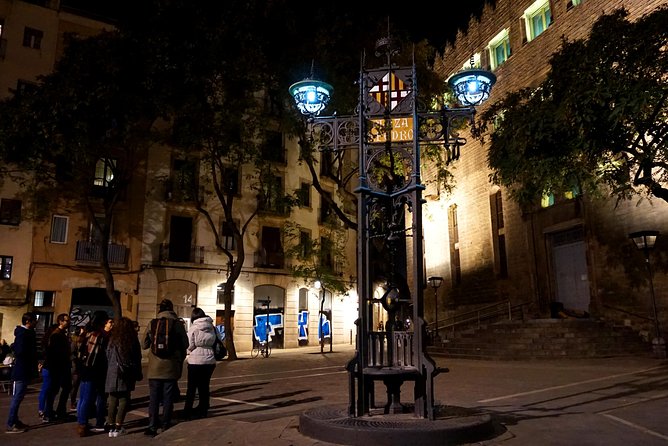
The route then reaches one of El Born’s key historic areas. The street now lined with galleries and museums began as the 11th-century coastal path called Camí del Born, in an area once known as Vilanova del Mar.
The land was later granted to influential citizens by Count Ramon Berenguer IV. That detail helps explain why this part of town became so important. It was shaped by access to the coast, trade, and the people who gained power through land and commerce.
Passeig del Born has had several identities. In medieval times, it was a place for jousts. Later, it became connected with the Inquisition and acquired darker associations beneath its attractive appearance.
For me, this is one of the most useful sections for first-time visitors. You get a public space that looks pleasant and social today, then learn how its purpose changed over time. The ghost material may be the hook, but the broader story helps you read the city more intelligently.
Santa Maria del Mar after dark
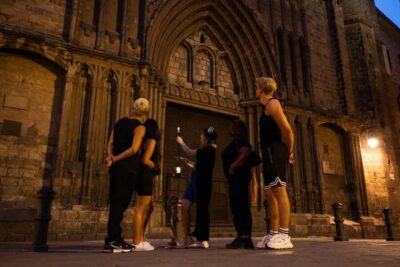
The walk finishes at the Basilica of Santa Maria del Mar in Plaça de Santa Maria. Built between 1329 and 1384, the church is one of Barcelona’s finest examples of Catalan Gothic architecture.
Its construction was closely tied to the people of the Ribera district, especially the bastaixos, workers who carried heavy stones from Montjuïc. Unlike Barcelona Cathedral, Santa Maria del Mar was closely associated with the local population. That gives the church a strong civic identity, not just a religious one.
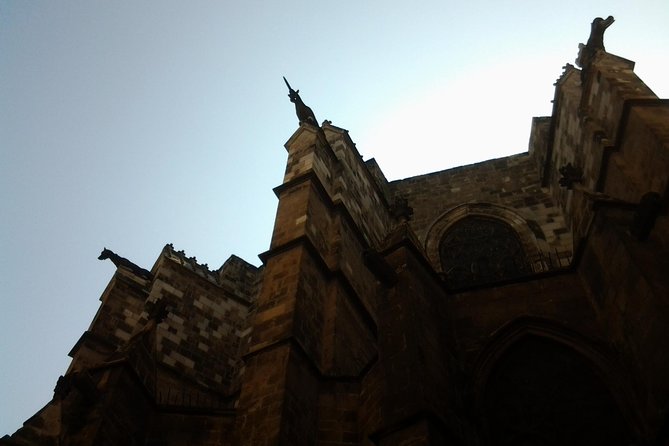
The tour presents the church’s beautiful exterior alongside darker stories connected with the building and its surroundings. This contrast is effective. The façade can look calm and elegant while the guide describes the fears, punishments, and legends linked to Barcelona’s past.
The end point is worth noting. You finish at Plaça de Santa Maria, 1, not at the Arc de Triomf. That is not a problem if you know in advance, but it matters when planning dinner, transport, or a return walk. A previous participant wished the guide had led the group back to the start. I agree that the route should be treated as point-to-point, not circular.
How scary is it?
The honest answer is: usually not very scary. The strongest parts involve exorcisms, bewitched convents, apparitions, ghostly nuns, and places associated with the Inquisition. Yet the material is presented as myths, legends, and reported sightings rather than proof of active ghosts.
Several aspects reduce the fright factor:
- The walk begins before complete darkness on some evenings.
- Much of the content is historical and social.
- The route passes through public streets rather than isolated sites.
- The guide may explain the likely folklore behind a tale.
- The mood depends on storytelling, not special effects.
That is good news if you want a gentle spooky evening with history. It may disappoint you if you want a horror show. I would describe it as a night history walk with supernatural seasoning.
Guide style and group atmosphere
The guide is the key variable. Christina is singled out for friendly, engaging delivery and strong command of the subject. She reportedly kept solo participants involved, welcomed questions, and made the walk feel easy to join even when people arrived alone.
That warmth is important because the route crosses streets and narrow lanes. A good guide keeps the group together, handles crossings, and maintains the mood while moving from one stop to the next.
There is one issue to clarify before booking. Some past departures were run bilingually, with stories delivered in both Spanish and English. That can stretch a two-hour walk and weaken the suspense, especially in a large group. The experience is advertised in English, and the activity is described as private, so confirm the language arrangement if this matters to you.
Is $21.60 good value?
At $21.60 per person, I consider this a reasonable price for a two-hour guided walk in central Barcelona. You are paying for a professional guide, a planned route, local stories, and access to parts of Sant Pere, Santa Caterina, and El Born that you might otherwise pass without noticing.
The value is strongest if you enjoy wandering and want structure. You could walk these streets for free, but you would not automatically know the story of the monastery, the snow sellers, the Roman route, Bernat Marcús, or the bastaixos of Santa Maria del Mar.
The value is weaker if you want verified paranormal encounters or a polished theatrical production. Food, drinks, and entrance fees are not included, although the route appears designed around exterior sights and public streets rather than paid admissions.
Who should take this walk?
I think it suits:
- First-time visitors who want a different introduction to El Born
- Couples and friends looking for a light spooky activity after dinner
- Solo visitors who enjoy guided walks and meeting other people
- History fans who like legends, religious sites, and old city streets
- Families with older children or teenagers who can manage two hours of walking
- Repeat visitors who want to see corners they missed on a daytime visit
I would think twice if you have difficulty with uneven cobblestones or need regular stops. Comfortable shoes are strongly advised, and the route operates in all weather, so bring suitable clothing.
Should you book the El Born Ghost Walking Tour?
Book it if you want Barcelona’s old quarters seen through stories of ghosts, religion, crime, and local folklore. The route is the main attraction. You will see the Arc de Triomf, Sant Pere Square, Passeig del Born, Plaça d’En Marcús, and Santa Maria del Mar while moving through lanes that many standard sightseeing routes skip.
Do not book it for guaranteed scares. The experience is better understood as a history walk with eerie legends. Christina’s style appears to bring out the best in it, but the tour can feel ordinary if the guide lacks dramatic timing or if the group is large and bilingual.
For the best fit, wear good shoes, confirm the English departure details, arrive early at the Arc de Triomf, and remember that the evening ends at Santa Maria del Mar. With those expectations set, $21.60 buys a pleasant and unusual way to get to know El Born after dark.
FAQ
Where does the Barcelona El Born Ghost Walking Tour begin?
It begins at Passeig de Lluís Companys in Ciutat Vella, beneath or near the Arc de Triomf.
Where does the tour finish?
The tour finishes at the Basilica of Santa Maria del Mar, Plaça de Santa Maria, 1, in Ciutat Vella.
How long does the walking tour last?
The experience lasts approximately two hours.
What time does the tour leave on Fridays and Saturdays?
The stated Friday departure is 8:30 p.m. The stated Saturday departure is 8 p.m. Check your booking confirmation for other days.
Is the tour offered in English?
Yes. The experience is offered in English. Some past departures involved bilingual storytelling, so confirm the language arrangement if that is important to you.
Can I cancel for a full refund?
Yes. You can cancel up to 24 hours before the experience start time for a full refund. Cancellations or changes made less than 24 hours before the start time are not accepted for a refund.
Newly added around Barcelona
- Walking Tour Mysteries and Legends of Barcelona and its Ghosts★ 5.0 · 3 reviews
- Witch Hunt on Montjuïc: Self-Guided Puzzle Quest in Barcelona★ 4.5 · 9 reviews
- Barcelona Ghosts of a Dark Past Gothic Walking Tour★ 5.0 · 55 reviews
- The Gothic Trail – Ghosts of Barcelona Exploration Game★ 4.5 · 33 reviews
- Dark History and Legends Night Walk of Gothic Quarter★ 5.0 · 2 reviews
- Barcelona Ghosts and Legends Gothic Quarter Tour★ 5.0 · 152 reviews
- Barcelona: El Born Ghost Walking Tour★ 3.8 · 47 reviews
- Barcelona: Gothic Quarter Tour Dark History & Ghosts Tour★ 4.8 · 64 reviews
Barcelona Ghost Tours, compared.
Barcelona Dark History Night Walking Tour With Drinks
Read our review →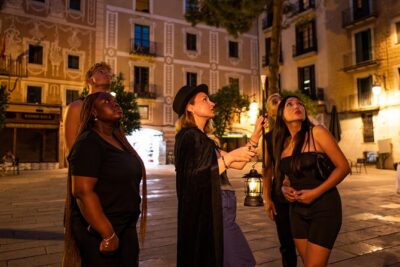
Barcelona Ghosts and Legends Gothic Quarter Tour
Read our review →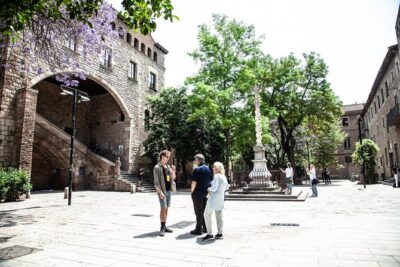
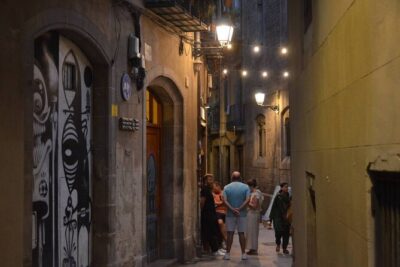
Barcelona Ghosts of a Dark Past Gothic Walking Tour
Read our review →Browse the lists this tour appears in