
REVIEW · USA GHOST TOURS
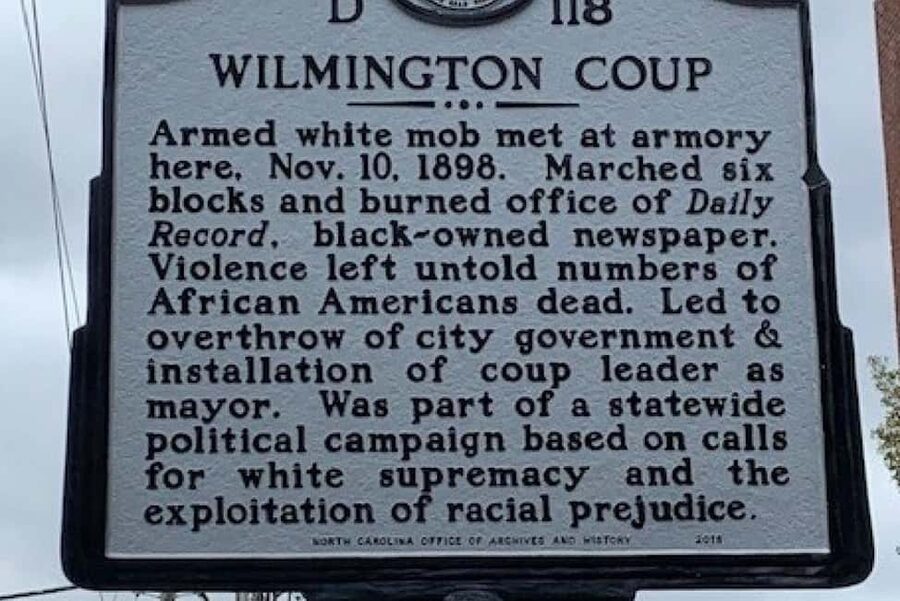
Dark History: Wilmington Coup and Massacre Historic Tour
Wilmington’s past is impossible to ignore. This 75-minute walking tour explains how North Carolina’s biracial, democratically elected government was overthrown in 1898, then connects that political crime to the attacks and massacre that followed. I like the site-based storytelling, which takes you to homes, rally points, and places tied to speeches and violence rather than keeping the history inside a museum. I also like the clear link to the start of North Carolina’s Jim Crow era.
The main drawback is pace. You cover a lot of serious material on foot in just over an hour, and one account found the walk a little quick for older walkers. Bring water, wear good shoes, and give the subject your full attention. This is not a light sightseeing stroll, but it is an unusually direct way to face a part of Wilmington’s past that is often left out.
Key points about Wilmington’s 1898 coup tour
- A successful political coup: Learn how a legally elected government was forced from power through organized violence.
- History told on the streets: Visit homes and downtown sites linked to victims, perpetrators, rallies, attacks, and speeches.
- A clear cause-and-effect story: Follow the connection between economic pressure, racial politics, violence, and the beginning of Jim Crow rule in North Carolina.
- A historian-led walk: The guide explains complicated events in person, with Max praised for presenting the facts clearly and honestly.
- A compact 75-minute format: You get a focused introduction to a major event without giving up an entire morning or afternoon.
- A tour that asks you to look closely: Photography is allowed, but the locations call for respect rather than casual snapshot hunting.
Why Wilmington’s 1898 story matters today
Wilmington in 1898 was not simply the setting for a riot. The city was the scene of a successful coup d’état, in which a democratically elected government was removed by force. The violence reached its worst point in Wilmington, where hundreds of citizens were affected by attacks and massacre.
That fact alone makes this one of the most important history walks in North Carolina. The tour does not treat the event as an isolated burst of anger. It explains the political and economic pressures behind it, the people who planned and carried out the attack, and the citizens who suffered from it.
I value that wider frame. Without it, you might leave knowing that violence occurred but not understanding how a government could be overthrown. The guide’s job is to show how speeches, rallies, racial fear, political strategy, and economic interests combined into a campaign that changed the state.
The coup also marked the beginning of North Carolina’s Jim Crow period. That connection gives the walk lasting importance. You are not just studying one day in 1898. You are looking at the start of a system of oppression that shaped public life for generations.
More Dark History Tours in the USA
- Adults-Only New Orleans Ghost, Crime, Voodoo, and Vampire Tour
★ 5.0 · 6,545 reviews - New Orleans Adults-Only True Crime and Ghost Walking Tour
★ 5.0 · 1,666 reviews - Genteel and Bard’s Savannah Dark History and Ghost Encounter Walking Tour
★ 5.0 · 1,546 reviews
Starting at Slice of Life on Market Street
The tour begins at Slice of Life Pizzeria & Pub Downtown on Market Street. This gives you a simple, easy-to-find meeting point in central Wilmington, and the same location serves as the end of the walk.
Do not arrive expecting a bus or a private vehicle. Transportation to and from the meeting point is not included, and the experience is conducted on foot. If you are already spending time downtown, the start and finish make it easy to fit the tour around other plans.
The pizzeria is also a useful practical marker. You can meet there, get organized, and make sure you have water and suitable clothing before heading out. Meals and drinks are not included, so plan those separately rather than assuming the stop forms part of the tour.
The tour is offered in English with a live guide. Since the walk deals with complicated and painful events, the guide matters a great deal. One guide named in feedback is Max, who received praise for framing difficult material clearly and truthfully. Another account praised a woman guide for staying close to the historical record while keeping the presentation compelling.
Walking through homes, rallies, and attacks
Once the walk begins, the city itself becomes the classroom. You visit homes connected with important perpetrators and victims, then move through locations tied to rallies, attacks, and public speeches.
That approach gives the history physical weight. A list of names and dates can feel distant. Standing near the places where people lived, organized, spoke, or were targeted makes the sequence easier to follow. I especially like tours that use ordinary streets to explain extraordinary events, because you begin to notice how much history can sit behind familiar buildings.
The tour does not provide a detailed stop-by-stop list in advance, so you should not expect a fixed set of named buildings with long indoor visits. The value is in the guide’s interpretation of the sites, not in entering every property. The focus remains on understanding what happened and who was involved.
Photography is allowed, but use judgment. These are not simply attractive downtown photo stops. Some sites are connected to death, racial terror, and political persecution. Take pictures if useful, but listen first and treat the locations with care.
The economic and political forces behind the violence
A good historical walk should answer more than what happened. It should also explain why people acted as they did and how a violent plan gained political force.
This tour places the coup within its economic and political setting. That is essential because the event did not appear out of nowhere. You learn about the origins of the conflict, the forces pushing Wilmington toward confrontation, and the way racial politics helped organize public action.
The guide also explains the difference between a spontaneous disturbance and a planned seizure of power. That distinction is central. The story involves rallies, speeches, attacks, and the removal of an elected government. When those pieces are connected, the event becomes easier to understand as a coup rather than a vague episode of unrest.
I appreciate this kind of explanation because it keeps the tour from becoming a simple list of villains and victims. The perpetrators remain responsible for their actions, but you also learn how political language and economic concerns were used to build support for repression.
The material is sensitive, and the tone needs to be serious. The strongest presentation is likely to be the one described by the people who praised the guide for honesty and clear framing. Do not book this expecting a cheerful tour with occasional dark anecdotes. The dark subject is the purpose.
Same streets, an entirely different kind of scare:
- New Orleans Premier Ghost, Voodoo and Vampire Walking Tour
★ 4.5 · 12,856 reviews - Chicago: Gangsters and Ghosts Walking Tour
★ 5.0 · 7,155 reviews - Salem’s Best Ghost Tour
★ 4.5 · 4,186 reviews - Haunted Evening Horse and Carriage Tour of Charleston
★ 4.5 · 3,678 reviews
From massacre to Jim Crow rule
The final part of the story concerns the aftermath. The coup did not end when the immediate violence stopped. It changed who held power and helped usher in North Carolina’s Jim Crow period.
That is the point many short history tours miss. If the walk only described the massacre, you might understand the tragedy but not its political result. Here, the emphasis is on the longer legacy: oppression, racism, and the removal of democratic power.
The tour also raises a difficult question about public memory. How does a city acknowledge an event that was long ignored or underexplained? One visitor came away feeling that Wilmington has done little to show or reconcile what happened. That concern gives the walk another layer of value. You are not only learning about the past. You are also considering how cities choose which parts of their past to mark.
Another strong reaction came from a first-time Wilmington visitor who had noticed how few local tours address slavery, Reconstruction, and the post-Reconstruction period. That gap matters. A city can present beautiful streets, historic homes, and a pleasant riverfront while leaving out the political violence that shaped its modern identity.
This walk helps fill that gap. It does not claim to settle every question about remembrance, but it gives you facts and locations to think about after the tour ends.
Is 75 minutes enough?
Seventy-five minutes is long enough to establish the story, visit several important sites, and explain the main legacy. It is also short enough to fit into a day of sightseeing without taking over your schedule.
The tradeoff is density. You will hear names, events, political developments, and historical consequences in a fairly compact period. If you like to stop often, take notes, or ask many questions, the time may feel tight.
Walking speed is another practical issue. The route involves a significant amount of walking, and one account found the pace a little fast for older walkers. The stated length of the tour does not mean you will be strolling slowly between every stop. Wear comfortable shoes, keep water with you, and be prepared for changing weather.
The tour is listed as wheelchair accessible, but the walking requirement still matters. If you have mobility concerns, consider how much walking you can manage in 75 minutes and check the current route details before booking.
The $19 price and what you receive
At $19 per person, this is a reasonably priced history experience. You are paying for a professional historian guide, access to key historical sites from the outside, and educational material that helps organize a difficult subject.
The value is strongest if you want interpretation rather than simple sightseeing. You could walk through downtown on your own, but you would not easily know which homes, rally sites, speech locations, and attack points mattered. The guide connects those places and explains their role in the wider coup.
The price is less compelling if you want a long museum-style program or a slow architectural tour. Meals, drinks, transportation, and personal expenses are separate. The experience is also only 75 minutes, so it is best seen as a focused historical introduction rather than a full day of research.
You can reserve now and pay later, and cancellation is free up to 24 hours before the tour for a full refund. Those terms are useful if your Wilmington plans may change, but the real buying decision comes down to interest in the subject. This tour earns its price through the guide’s interpretation, not through extras.
Who should take this Wilmington history walk?
I recommend it most strongly to you if you want to understand Wilmington beyond its pleasant downtown appearance. It suits people interested in Reconstruction, voting rights, American political history, racial violence, and the beginnings of Jim Crow rule.
It is also a good choice for first-time visitors who want a serious local introduction. The route gives you a framework for understanding the city’s public spaces and historic buildings. Afterward, you will see downtown with more questions in mind, which is often what a good history tour should do.
The tour may not suit young children or anyone looking for light entertainment. The subject includes murder, political intimidation, racism, and the destruction of democratic government. The guide may present the facts clearly, but the material itself remains painful.
Older walkers should plan carefully because of the pace. If you need frequent rest stops, ask about the route before booking. Comfortable shoes are essential, and weather-appropriate clothing is not optional in a walking tour.
How to prepare for the experience
Arrive at Slice of Life Pizza on Market Street with enough time to find the meeting point and organize your belongings. Bring water, wear comfortable shoes, and check the weather before leaving.
Keep your phone available for photographs, but do not let it distract you from the guide. The most useful part of this experience is the connection between each location and the larger political story.
You may also want to read a little about Reconstruction before arriving. You do not need a history degree, but knowing that Wilmington had a biracial elected government will help you understand why the coup was such a major break from democratic rule.
Finally, bring a respectful attitude. The tour visits sites connected with victims and racial terror. Photography is permitted, but the places deserve more thought than a quick social media stop.
Should you book the Wilmington Coup and Massacre tour?
Book it if you want an honest, place-based account of one of the most important and often neglected events in North Carolina history. The $19 price is fair, the 75-minute length is manageable, and the professional guide adds context that you would be unlikely to gain from walking downtown alone.
I would be cautious only if you need a slow-paced route or prefer cheerful sightseeing. For everyone else, especially those interested in Reconstruction, civil rights, and the way political violence changes a city, this is a worthwhile use of an hour and fifteen minutes. Go ready to listen, walk, and think.
FAQ
Where does the Wilmington Coup and Massacre tour begin?
The tour begins at Slice of Life Pizzeria & Pub Downtown on Market Street in Wilmington.
Where does the tour end?
The tour returns to Slice of Life Pizzeria & Pub Downtown.
How long does the tour last?
The guided walking tour lasts 75 minutes.
What language is the tour offered in?
The tour is conducted in English with a live guide.
Is the tour wheelchair accessible?
Yes, the activity is listed as wheelchair accessible. It also involves a significant amount of walking.
What should I bring?
Bring comfortable shoes, water, and clothing suitable for the weather. Photography is allowed, but the sites should be treated with respect.
More Heritage Tours in the USA
- Savannah History and Haunts Candlelit Ghost Walking Tour
★ 5.0 · 3,235 reviews - New Orleans Small-Group Haunted History Carriage Tour
★ 4.5 · 2,289 reviews - New Orleans Haunted History Ghost Tour
★ 4.5 · 2,084 reviews - The Historic Galveston Ghost Tour
★ 5.0 · 1,524 reviews
Newly added around the USA
- Zion: Harry Potter-Inspired Zion Ghost Tour with Sunset View★ 5.0 · 8 reviews
- Witches, Widows, & Wraiths: Wichita Ghost Tours★ 5.0 · 2 reviews
- Wraiths of the West Texas Wind: El Paso Ghost Tour★ 4.5 · 9 reviews
- Wraiths & Wicked Whispers: Wilmington Ghost Tour★ 4.2 · 25 reviews
- Wilmington: Boos and Booze Haunted Pub Crawl★ 4.0 · 8 reviews
- Wild West Ghost Tour★ 4.6 · 3 reviews
- Williamsburg: Echoes of Twilight Late-Night Ghost Tour★ 4.6 · 13 reviews
- Washington D.C.: Dark Nights in D.C. Ghost Tour★ 4.5 · 33 reviews
USA Ghost Tours, compared.
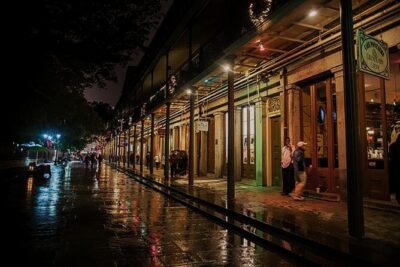
New Orleans Premier Ghost, Voodoo and Vampire Walking Tour
Read our review →
Adults-Only New Orleans Ghost, Crime, Voodoo, and Vampire Tour
Read our review →
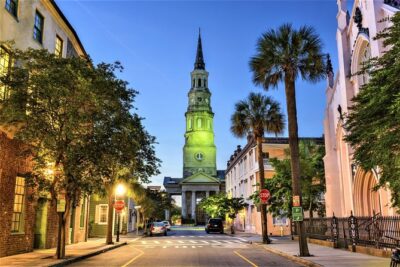
Haunted Evening Horse and Carriage Tour of Charleston
Read our review →
Savannah History and Haunts Candlelit Ghost Walking Tour
Read our review →
Ghosts of Charleston Night-Time Walking Tour with Unitarian Church Graveyard
Read our review →

Savannah’s Ghost City “Dead of Night” Walking Night Tour
Read our review →Browse the lists this tour appears in