
REVIEW · SALEM GHOST TOURS
Salem Witch Tour
Salem’s past is stranger than its legends. This walking tour links the Salem Witch Trials Memorial, old burial grounds, historic buildings, and pop-culture landmarks in a compact route through the city. I like the small group size of 10 people and the chance to hear the story from Cynthia, a friendly multilingual guide who explains Salem clearly and offers useful tips for exploring on your own. I also like the mix of serious history and lighter stops, including the Bewitched statue.
The main consideration is pace. The tour is advertised as lasting about one to two hours, but the listed stop times add up to roughly 65 minutes before walking between locations. Some stops are brief, and entrance to the Witch House or any museum is not included. Still, families can ask for frequent pauses, and Cynthia has shown flexibility with children.
Five useful things to know before you book
- The tour begins at the Peabody Essex Museum: Meet at 161 Essex Street in Salem, then return to the same point at the end.
- The memorial is the emotional center: The granite wall, names of the victims, and carved protests of innocence make this more than a standard sightseeing walk.
- You get history and pop culture together: The route includes the Witch House and Bridget Bishop’s property, then shifts to the Elizabeth Montgomery statue from Bewitched.
- Cynthia is a strong guide for families: She has been praised for explaining the past well, speaking more than one language, and stopping often for children.
- The tour is offered in four languages: You can request English, Spanish, French, or Italian.
- Extra readings cost more: Tarot or palm readings are optional and cost $40 for 15 minutes. Museum admission, coffee, and tea are also separate.
Starting at the Peabody Essex Museum
The meeting point is outside the Peabody Essex Museum at 161 Essex Street. This is a practical place to begin because it puts you in Salem’s historic center, close to several major sights.
The tour ends back at the same meeting point, so you do not need to arrange a pickup at another part of town. That makes it easier to continue with a museum visit, lunch, shopping, or another Salem attraction after the walk.
The group can include up to 10 people. That is small enough for a more personal conversation than you would get on a large bus tour, while still giving the guide a group to manage. If you have children, tell the guide at the start that you may need regular pauses. Cynthia has been happy to stop more often when families need a slower rhythm.
The route requires a moderate level of physical fitness. Exact walking distances are not provided, but this is a walking experience through historic Salem, with outdoor stops and movement between them. Wear comfortable shoes, especially if you plan to add more sightseeing before or after the tour.
More Witch Tours in Salem
- Bewitched Walking Tour of Salem
★ 5.0 · 1,895 reviews - The Salem Witch Walk
★ 4.5 · 1,301 reviews - Wicked Awesome Tours: Witch Trial History and Salem Haunts!
★ 5.0 · 1,032 reviews
Pickman House and the Salem Witch Trials Memorial
Before entering the memorial area, the tour pauses at Pickman House, described as one of Salem’s oldest houses. This first stop helps set the tone. Rather than rushing straight to the best-known memorial, you hear stories connected to an old building and begin to picture Salem as a lived-in town, not only a place built around Halloween imagery.
The Salem Witch Trials Memorial is the most important stop on the route. It is suitable for all ages, but the subject is serious. Twenty people were executed during the 1692 witch trials, and the memorial gives each victim a place in the landscape.
A handcrafted granite wall surrounds the memorial on three sides. The entrance has stone thresholds inscribed with the victims’ protests of innocence. Benches inside carry the names and execution dates of the 20 victims.
I appreciate the way this place asks you to slow down. The design is simple, and the names are not buried in a long museum text. You encounter them directly, one after another. The short visit lasts about 15 minutes, which is enough for an introduction and some quiet reflection, though you may want extra time if the subject matters deeply to you.
The drawback is that this stop can feel brief. If you want a fuller account of the accusations, court proceedings, and social pressures of 1692, you will need to visit a museum or spend more time reading elsewhere. The walking tour gives you the setting and the central facts, not a full lecture course.
Old Burying Point Cemetery and Salem’s early years
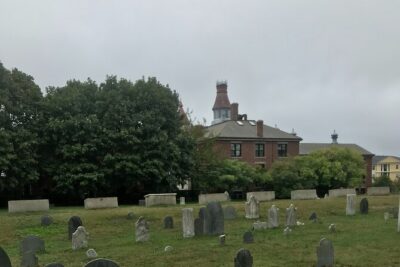
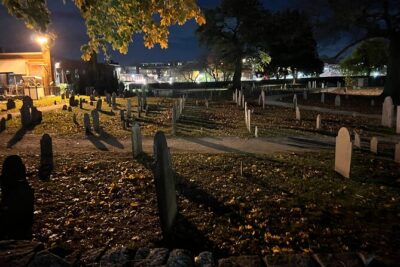
The Old Burying Point Cemetery is also called the Charter Street Cemetery. Opened in 1637, it is Salem’s oldest maintained cemetery and one of the oldest in the United States.
The tour allows about five minutes here. That is enough to identify the cemetery and understand its place in Salem’s story, but it is not a long cemetery exploration. Several notable Salem figures are buried here, and the old stones add physical weight to the city’s early colonial past.
I would pay attention to the change in mood after the memorial. The memorial names people condemned during the witch trials, while the cemetery places Salem in a much broader timeline. The town did not begin or end with 1692.
Five minutes may feel too short if you enjoy old graveyards. You might want to return later, when you can look more carefully at the markers and give the setting the time it deserves. The tour is best viewed as an introduction rather than the final word.
Old Town Hall, built in 1816
Salem’s Old Town Hall is a Federal-style brick building erected in 1816. It sits in the historic center and is now used as a cultural and rental space instead of municipal offices.
The building has Palladian windows, carved wood details, antique chandeliers, decorative columns, and hardwood floors. The short stop lasts about five minutes, so you may mainly view the exterior or enter if access is available at the time of the visit.
This stop adds useful context because Salem’s story reaches beyond the witch trials. Its architecture reflects a later period when the town was developing civic buildings and public spaces. The elegant design also contrasts with the grim courtroom and prison stories elsewhere on the route.
Access inside is not guaranteed by the tour details. If the interior is important to you, treat it as a bonus rather than a promise. The building is still worth seeing from outside, especially because it is close to the other downtown stops.
More Witch Tours in the USA
- Best Salem Witch Trials Historical Walking Tour
★ 4.0 · 743 reviews - Salem Ghost Tour: Witches & Wicked Whispers
★ 4.5 · 571 reviews - Salem Uncovered: The Salem Witch Trials Tour
★ 4.5 · 471 reviews - Salem Ghost Tours: Witches & Wicked Whispers
★ 4.2 · 436 reviews
The Elizabeth Montgomery statue and Salem’s lighter side
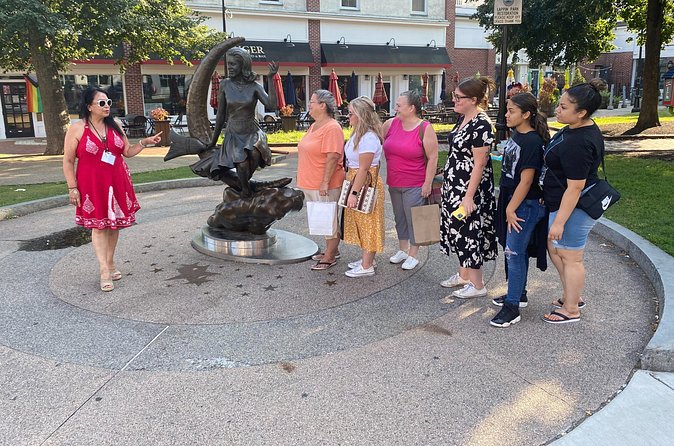
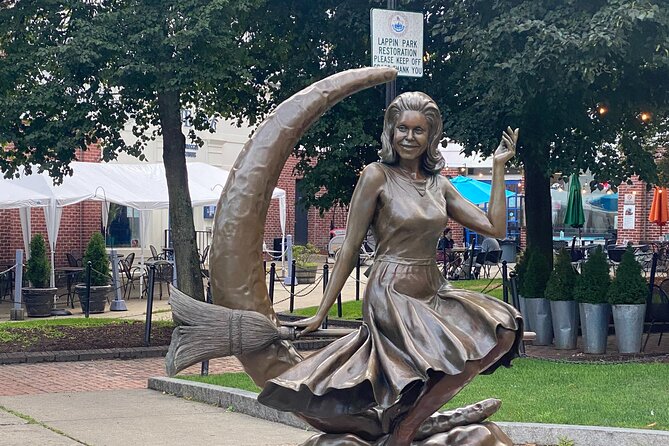
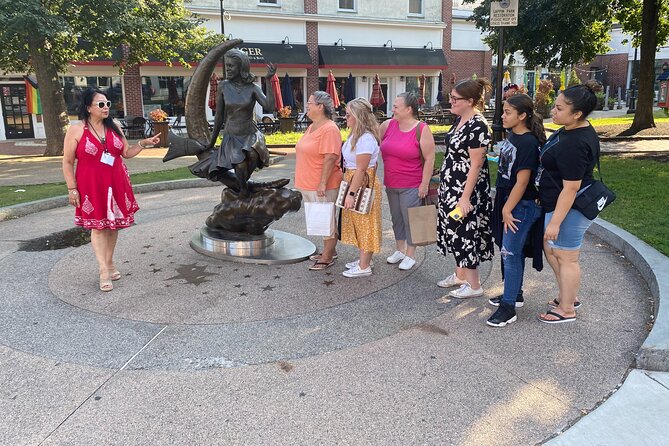
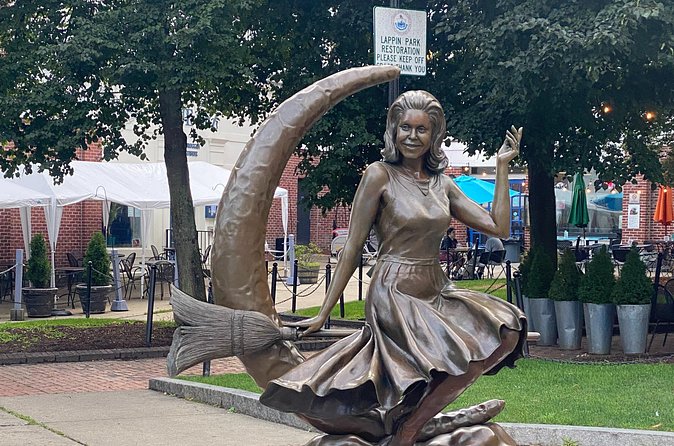
The route then makes a sharp turn from colonial tragedy to 1960s television. The bronze statue of Elizabeth Montgomery shows Samantha Stephens, her Bewitched character, sitting sidesaddle on a broom beside a crescent moon.
The statue is about six feet tall and makes an easy photo stop. Several episodes of Bewitched were filmed in Salem in 1970, and the city has embraced that connection. You receive about 10 minutes here, which should give you time for pictures and a quick explanation of the show’s link to Salem.
Some people may find the statue out of place beside the witch trials memorial and old cemetery. I see the contrast as part of the tour’s appeal, provided you understand that this is not a solemn historical site. Salem has built a modern identity around both the real trials and the playful witch image used in popular culture.
Families often appreciate this change of mood. Younger children may connect more easily with the statue than with names and dates in a cemetery. It also gives the walk a little humor without erasing the serious parts of Salem’s past.
The Witch House and Jonathan Corwin
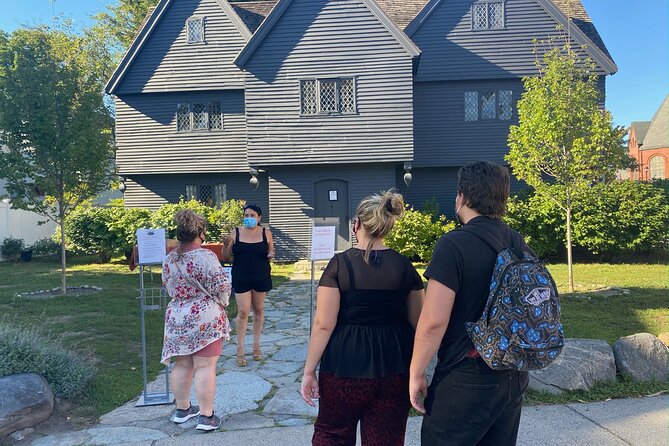
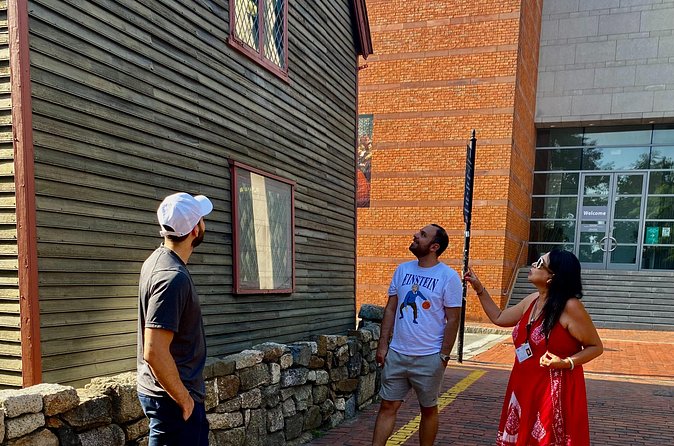
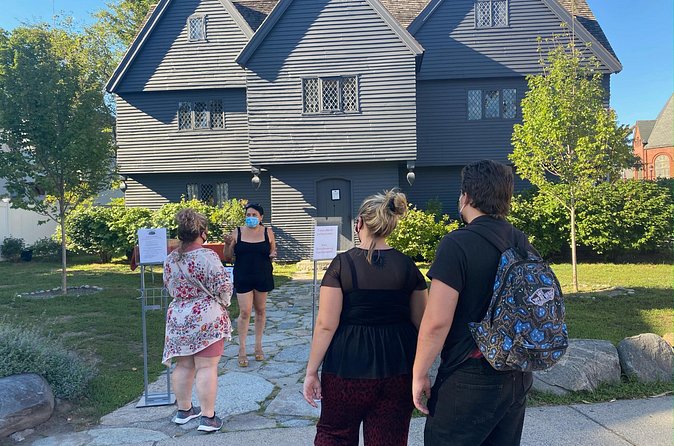
The Witch House is the only surviving building in Salem with a direct connection to the witch trials. It was the home of Jonathan Corwin, who served on the Court of Oyer and Terminer, the body that convicted accused witches.
Corwin lived from 1640 to 1718 and was the uncle of High Sheriff George Corwin. The house also has a connection to Roger Williams, who lived there before founding Providence Plantation in what is now Rhode Island.
The building was moved 11 meters in the 1940s to make room for road widening. That small fact is useful because historic buildings are not always sitting in their exact original position. Even a famous house can be altered by modern streets and city planning.
The stop lasts about 10 minutes, and admission is not included. The tour lets you see the place and hear its importance, but entering the house requires a separate ticket. If you want rooms, exhibits, or a fuller account of Corwin’s role, budget extra time and money for the interior.
This is one of the strongest stops for anyone who wants a direct physical link to the trials. The limitation is that 10 minutes outside or near the house will not replace a proper visit inside.
Bridget Bishop’s property and the old jail site
Turner’s Seafood at Lyceum Hall marks the location associated with the property of Bridget Bishop. Bishop was the first person executed for witchcraft during the 1692 trials, on June 10 of that year.
Seeing a present-day business at a site tied to such a grim episode can be unsettling. That contrast is useful, though. Salem’s historic places are part of a working town, not a preserved stage set. Restaurants, roads, homes, and shops occupy ground connected to events from centuries ago.
From here, the tour continues to the site of the infamous Salem Jail. People accused of witchcraft were arrested and imprisoned before being hanged. The stop lasts about 15 minutes, making it one of the longer points on the route.
The jail itself is a historical site rather than a functioning prison attraction. Do not expect a preserved cell block unless another venue is specifically open for entry. The value comes from understanding the chain of events: accusation, arrest, imprisonment, trial, and execution.
This part of the tour is especially helpful because it connects names to places. Bridget Bishop is not only a figure in a textbook account. Her story is tied to particular ground in the city, and the jail site helps show how quickly an accusation became a real legal and physical ordeal.
Roger Conant and the town beyond the trials
The final listed stop is the Roger Conant statue. The supplied details also connect this section with the Old Burying Point Cemetery, so your guide may use it to return to Salem’s earlier colonial story.
Conant was an early Salem settler, and his statue provides a reminder that the city’s story began before 1692. The stop is brief, about five minutes, so expect a quick explanation and a chance to see the marker rather than a long historical talk.
This closing point helps widen the focus. If you only visit Salem’s witch-related attractions, you can leave with a narrow picture of the town. The route adds early settlement, civic architecture, burial grounds, popular entertainment, and modern tourism to the better-known trial story.
Afterward, you return to the Peabody Essex Museum. That makes the ending convenient, but it also means the tour does not drop you at the final attraction of the day. You will need to plan your next stop yourself.
Guide style, languages, and family fit
Cynthia is the guide name most closely associated with this experience. Her strongest qualities are patience, clear explanations, and a friendly manner. She has been willing to stop frequently for small children, and she has also helped people with practical tips for getting around Salem after the walk.
The tour is available in English, Spanish, French, and Italian. Since language availability can depend on the scheduled guide, confirm your preferred language when booking.
One particularly distinctive extra is the optional tarot or palm reading. It costs $40 for 15 minutes and is not part of the walking tour price. Some people will enjoy adding this playful Salem tradition, while others will prefer to keep the experience focused on documented history.
The tour suits families, first-time visitors, and anyone who wants an orientation before exploring alone. It is also a good fit if you want a small group rather than a large scripted procession. History enthusiasts may find the short stops too light, especially if they want extended access to buildings or detailed court records.
What the cost includes and what it does not
The tour price itself is not provided in the available details, so I cannot judge its exact value against a specific ticket cost. The value depends on what you want from Salem: a guided overview, personal help with the city, or long visits inside historic buildings.
The main route includes the guide and stops at the memorial, cemetery, Old Town Hall, Elizabeth Montgomery statue, Witch House area, Bridget Bishop’s property, jail site, and Roger Conant statue. Admission is free at the listed outdoor stops.
You should plan separately for:
- Admission to the Witch House or any museum
- Coffee and tea
- The optional $40 tarot or palm reading
For me, the tour makes the most financial sense if you want the city explained in context and appreciate a guide who can answer questions. It offers less value if you already know Salem well or plan to spend most of your day inside museums.
Timing, cancellation, and practical planning
The experience takes about one to two hours. The listed stop times total around 65 minutes, so the remaining time likely covers walking, introductions, explanations, and pauses. Treat the schedule as an approximate walking tour rather than a tightly timed museum visit.
Confirmation is provided when you book. Service animals are allowed, and the meeting point is near public transportation. A moderate level of physical fitness is recommended.
Cancellation is flexible if you act early. You receive a full refund when you cancel at least 24 hours before the local start time. Cancellations or changes made within 24 hours are not accepted for a refund.
I would avoid booking this as your only Salem plan. Use it to get oriented, then choose a museum or historic house for a longer visit. That approach gives you both the broad city story and the slower detail that some stops cannot provide.
Should you book the Salem Witch Tour?
Book it if you want a friendly, small-group introduction to Salem that mixes the real trials with the town’s later Bewitched connection. Cynthia’s flexibility with children, multilingual service, and practical advice are genuine strengths.
You should also book it if you value seeing the locations tied to Bridget Bishop, the jail, Jonathan Corwin, and the 20 victims rather than simply hearing a general ghost story. The route gives you a useful map of Salem’s past.
Skip it if you want extensive time inside museums or historic houses. In that case, use the tour only as a starting point, or choose a longer specialized program. For most first visits, though, this is a sensible way to get your bearings, hear the key stories, and decide where to spend the rest of your day.
FAQ
Where does the Salem Witch Tour begin?
It begins at the Peabody Essex Museum, 161 Essex Street, Salem, Massachusetts 01970.
Where does the tour end?
The tour ends back at the starting meeting point.
How long does the tour last?
The experience lasts approximately one to two hours.
What languages are available?
The tour is offered in English, Spanish, French, and Italian.
What is the group size?
The maximum group size is 10 people.
Is admission to the Witch House included?
No. Admission to the Witch House is not included.
Are museum tickets included?
No. Entrance to museums is not included in the tour.
Does the tour include a tarot or palm reading?
No. Tarot or palm readings are optional and cost $40 for 15 minutes.
Are service animals allowed?
Yes. Service animals are allowed.
What is the cancellation policy?
You can cancel at least 24 hours before the start time for a full refund. Cancellations or changes made less than 24 hours before the start time are not accepted for a refund.
Newly added around Salem
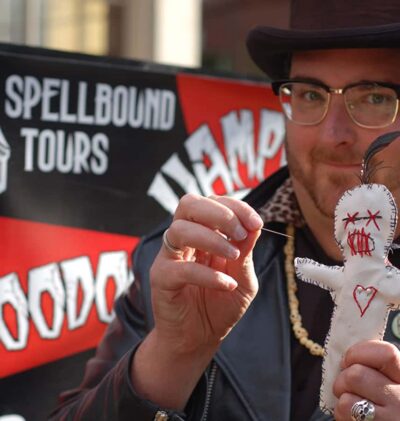
- Salem: Voodoo, Vampires, and Ghosts Guided Walking Tour★ 4.8 · 206 reviews
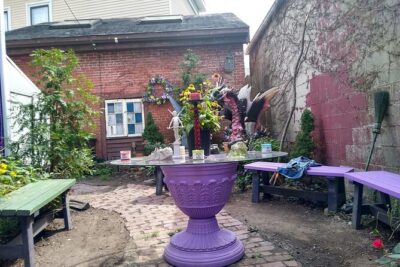
- Witch Costume Photo Shoot – Witch Cottage theatrical set★ 5.0 · 149 reviews
- [ESP] History of Salem Witch Trials★ 4.0 · 5 reviews
- Witch City Broom Making Workshop in Salem★ 5.0 · 105 reviews
- Vampire Ghost Adventures and Haunted Objects Walking Tour★ 4.5 · 34 reviews
- Wandering Witches★ 4.5 · 33 reviews
- Ultimate Historic Salem and Witch Trials Self-Guided Walking Tour★ 4.5 · 67 reviews
- Private Walking Salem Legends Tour Professional Guide★ 5.0 · 3 reviews
Salem Ghost Tours, compared.
Wicked Awesome Tours: Witch Trial History and Salem Haunts!
Read our review →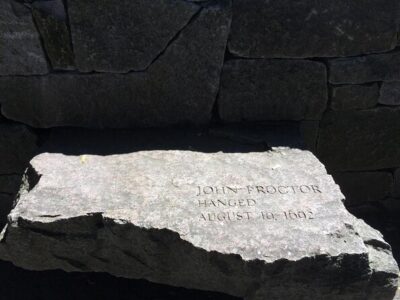
Best Salem Witch Trials Historical Walking Tour
Read our review →
Browse the lists this tour appears in