
REVIEW · STOCKHOLM GHOST TOURS
Private blood, ghosts and folklore Old Town 2h Stockholm tour
Some Stockholm stories are better told after dark. This private walk links the city’s Old Town with Swedish tales of executions, restless spirits, water creatures, trolls, and protective magic. I like the private format, which lets you ask questions and keeps the guide’s attention on your group. I also like the unusual focus on folklore rather than a standard list of royal buildings and museums. The main consideration is that the title suggests a two-hour tour, while the stated duration is about one hour and 30 minutes, and one past guest felt the stories did not live up to the grim promise.
This is not a conventional sightseeing tour. You will spend most of the time outdoors, moving between landmarks while the guide explains how blood, iron, churches, newborn children, water, and the dead fit into Swedish belief. The tone can be creepy, but the experience depends heavily on how vividly the guide tells each story. A friendly, well-prepared guide can make this a memorable way to see Gamla Stan. A less effective presentation may leave you wanting more actual history and fewer loose ghost tales.
What makes this Stockholm ghost walk different
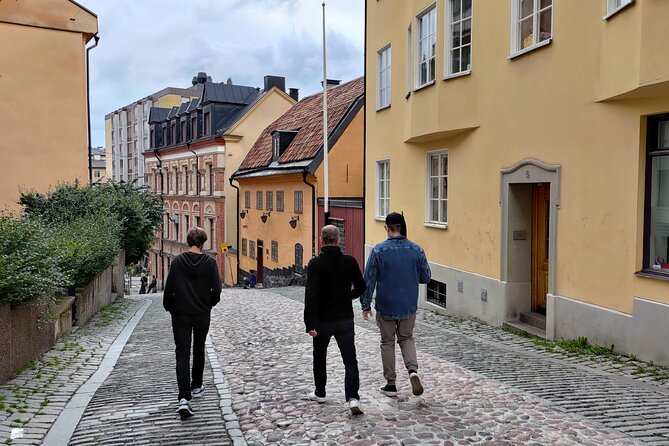
- Stortorget connects famous Old Town scenery with executions and Stockholm’s Bloodbath era, including stories about the magical use of body parts.
- Prästgatan’s former name, Hell, provides a compact setting for tales about the people who lived there.
- Swedish folklore takes center stage, from the household tomte to the dangerous Näcken and bäckahästen.
- The route ends at Saint Jacob’s Church near Kungsträdgården, not back at the starting point, so you finish outside Old Town.
- A private group means you can ask questions freely, rather than trying to speak over a larger crowd.
- The price is high for a short walking tour, so the value depends on your interest in folklore and the quality of the storytelling.
Meeting at Stortorget, Stockholm’s most dramatic square
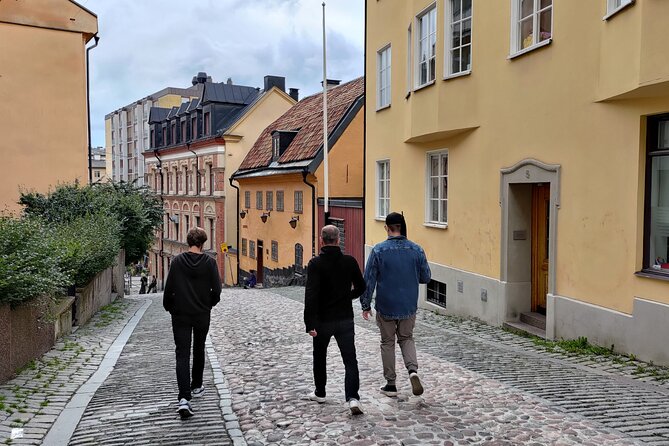
The tour begins outside the Nobel Prize Museum at Stortorget, the central square in Gamla Stan. This is a useful meeting point because it is easy to find and puts you right in the middle of Stockholm’s oldest quarter.
The first stop turns quickly toward death. You hear about the execution of around 90 people during the period when the Danish King Christian took Stockholm. The guide also explains old beliefs about the blood of the dead, gallows parts, and other body parts used in curses, spells, or supposed remedies.
This is one of the strongest parts of the route for anyone who wants grim history tied to a real place. Stortorget is not just a pretty square with colorful facades. It has been the scene of political violence and public punishment. The setting gives the stories weight, even if you are hearing them in daylight among cafés and passing pedestrians.
The stop lasts about 10 minutes and admission is free. You should not expect a long historical lecture or an interior visit. The value comes from the connection between the square and the beliefs surrounding death. If you prefer verified political history with dates and documents, you may find the folklore material less satisfying. If you enjoy the point where fact, fear, and old custom meet, this is a strong opening.
More Ghost Story Tours in the world:
- Prague: Ghost Walking Tour Where Legends Come To Life
★ 4.4 · 5,253 reviews - Prague: Ghosts, Legends, Medieval Underground & Dungeon Tour
★ 4.3 · 5,104 reviews - Prague: Ghosts and Legends of the Old Town Evening Tour
★ 4.5 · 3,091 reviews
Walking through Prästgatan and the old Hell quarter
From Stortorget, the walk continues along Prästgatan. Here, the guide discusses the street’s former association with Hell and the people who lived there.
This stop is short, around 10 minutes, but it adds a useful social layer to the tour. The focus is not only on kings, palaces, and grand events. You also hear about the reputation of a particular part of town and the people connected with it.
The route through the Old Town is part of the experience. Gamla Stan has narrow streets and an uneven, old-fashioned feel, but the supplied information does not specify the walking conditions in detail. Wear comfortable shoes, and keep your attention on the pavement while listening. The guide handles the navigation, which is especially helpful in the winding lanes.
I like this part because it keeps the tour from becoming a string of unrelated ghost stories. Place names can preserve older fears and social attitudes, and Prästgatan gives the guide a chance to explain that connection. Still, the stop is brief, so do not expect a full history of the street.
Iron, trolls, and the Swedish tomte at a doorway
At a house door in the Old Town, the subject turns to protection. The guide explains the use of iron against supernatural beings, including vaesen and elves believed to arrive with mist. The idea of mist carrying souls who have not found rest adds a particularly eerie note to an otherwise ordinary doorway.
You also learn about the Swedish tomte. In modern popular culture, the tomte may bring to mind a cheerful Christmas figure. Here, the tradition is treated as part of a broader world of household spirits and old protective beliefs.
The guide also covers the danger facing a newborn child before baptism. According to the folklore discussed on the walk, an unbaptized baby lacked protection from trolls and the Devil. The door itself had weak points, and the tour explains what protective steps people were believed to use.
This is one of the tour’s more distinctive subjects. You are not simply hearing that ghosts exist. You are being shown how fear shaped everyday habits, especially around a house and a vulnerable infant. The stop lasts roughly 10 minutes and takes place outside, so it is worth remembering that the experience is about explanation rather than a staged ritual or theatrical performance.
For me, this is the sort of detail that makes folklore useful. It shows how supernatural beliefs could influence ordinary choices. You might come away thinking less about haunted castles and more about why a family would worry about a threshold, an iron object, or a baby’s protection.
Water spirits at Logårdstrappan
At Logårdstrappan, the stories move from doorways to water. The guide introduces several Swedish folklore beings connected with rivers, lakes, seas, and ships.
You hear about Näcken, a dangerous water spirit; the bäckahästen, a Swedish version of the kelpie; the Sjörå, or sea spirit; and the skepps-rå, associated with ships. The common thread is danger near deep water. These beings could lure people into the water or drown them.
The location matters. A waterside setting gives these tales a clearer purpose than a generic room or lecture hall. Before modern safety systems and scientific explanations were widely accepted, a frightening story could warn people about currents, isolation, poor visibility, or the risks of approaching water.
This stop is planned for about 10 minutes. It is a good point to ask questions, especially if you want to understand how the creatures differ. Because the tour is private, you can ask the guide to explain a name or compare one being with another without worrying about holding up a large group.
The drawback is that the stop may feel short if water folklore is your main interest. There are several names to absorb, and the guide needs to cover each one quickly. Listen for the practical fear behind the creature stories, not just the names. That is where the subject becomes more than a list of monsters.
More Private Ghost Tours in the world:
- Ghosts of Greenwich Village: 2-Hour Private Walking Tour
★ 5.0 · 178 reviews - NOLA’s BIG 4 PRIVATE CITY TOUR – NO GHOST, ONLY FACTS!
★ 5.0 · 158 reviews - The Last Ride Private Golf Cart Ghost Tour for up to 5 people!
★ 5.0 · 89 reviews - Private Ghost Tour of York
★ 5.0 · 83 reviews
Kungsträdgården and the darker side of Swedish folklore
The walk then reaches Kungsträdgården, where the guide expands the discussion to other Swedish folklore beings. This segment is planned for about 20 minutes, making it the longest single stop.
The Skogsrå, also called the huldran, is presented as a dangerous forest figure. The guide also discusses the myrling, an undead child, along with other beings linked to blood, death, and illness.
This section gives the tour its fullest look at Swedish folklore beyond Stockholm itself. You begin to see recurring fears: the forest as a place where people could disappear, the dead as a continuing threat, and children as vulnerable figures in stories of loss. These themes are grim, but they also show how folklore helped people explain danger and misfortune.
I would expect this to be one of the more engaging parts for anyone who likes Scandinavian legends. It also helps balance the earlier focus on executions and urban history. You get both the documented past of Stockholm and the stories people used to make sense of a threatening world.
At the same time, you should keep your expectations in check. The tour is not advertised as a museum-style study of Swedish mythology, and no admission is included because the stops are outside. The guide’s storytelling carries much of the experience. A friendly host can make the material lively and easy to follow. A flat delivery could make several unfamiliar names blur together.
Saint Jacob’s Church and the final warnings
The final stop is outside Saint Jacob’s Church on Västra Trädgårdsgatan. The guide discusses the church door, weak points in the building, and the role of protection in a sacred setting.
The stories become especially personal here. You hear about an exorcism involving a child at baptism and about ways a worst enemy might supposedly be punished. These tales continue the tour’s interest in the boundary between Christian practice, folk belief, fear, and revenge.
The church is viewed from the outside. There is no indication that the tour includes interior admission, so plan on hearing the stories beside the building rather than entering it as part of the experience.
This stop lasts around 15 minutes and gives the tour a natural ending. It brings together several themes from earlier: baptism, protection, the vulnerability of children, and the belief that certain places or objects could keep evil away.
The tour ends just outside the Old Town on the north side of Kungsträdgården. From Saint Jacob’s Church, it is about a 10-minute walk back to the starting point. That is not a problem, but you should know it before you set off. If you have another appointment immediately afterward, allow extra time for the walk back.
What the private format adds
The tour is private, so only your group participates. That matters more here than it would on a basic orientation walk. Folklore often leads to questions, and you may want the guide to pause on a particular creature, historical event, or protection custom.
A private format also lets the guide adjust the pace. If your group is fascinated by the Stockholm executions, you can ask for more context. If several supernatural names are becoming hard to track, you can ask for a recap. This flexibility is one of the clearest strengths of the experience.
The guide also handles navigation through the Old Town and onward to Kungsträdgården. You do not need to keep checking a map while trying to follow the story.
The tradeoff is price. At $188.16 per person, this is a costly short walking tour, particularly for a solo visitor or a couple. The private arrangement makes more financial sense for a family or group that can share the experience, especially since group discounts are available. You are paying for personal attention and a specialist theme, not entry tickets or transportation.
Duration, pace, and practical planning
The experience is described in its title as a two-hour tour, but the stated approximate duration is one hour and 30 minutes. The six scheduled discussion periods total about 75 minutes before walking time is added. I would plan for roughly the advertised experience length, while allowing some flexibility because private tours can move at different speeds.
The route is entirely built around outdoor stops. There is no included transport, meal, museum ticket, or attraction admission. The guide is included, and each listed stop has free admission.
The meeting point is the Nobel Prize Museum at Stortorget 2. The end point is Saint Jacob’s Church at Västra Trädgårdsgatan 2A. Public transportation is nearby, and service animals are allowed. Most people can participate according to the available details, but you should still be ready for a walking route through the Old Town and between the Old Town and Kungsträdgården.
The tour is booked, on average, 14 days ahead. That does not guarantee that every date fills up, but it suggests that you should not leave planning until the last minute if this particular theme fits your schedule.
Free cancellation is available if you cancel at least 24 hours before the start time. Cancellations inside that window are not refunded, and changes are not accepted. The experience also requires a minimum number of participants, so if the operator cancels for that reason, you are offered another date or experience, or a full refund.
Who will enjoy this Stockholm experience
I would choose this tour if you enjoy:
- Dark local history rather than only royal landmarks
- Ghost stories linked to real streets and buildings
- Scandinavian folklore and supernatural creatures
- Private guiding with time for questions
- A short walking experience that fits around other Stockholm plans
Families with older children may find the unusual stories memorable, but the themes include executions, death, blood, exorcism, and undead children. Use your judgment based on your child’s comfort with those subjects.
This is less suitable if you want a broad introduction to Stockholm, a long historical timeline, or a tour packed with interiors and museum visits. It is also not the best value for someone who dislikes folklore or expects every story to be firmly documented.
The rating information is mixed, which is worth taking seriously. One assessment praised the host as friendly, accommodating, and well informed, and recommended the experience for learning about Stockholm. Another found the title too promising and felt that not enough gruesome or intriguing material came through during the walk. That difference tells you something important: the guide’s delivery and the exact selection of stories can shape your experience.
The provider acknowledged that several darker subjects could have been covered, including the Stockholm Bloodbath, the killing of King Gustav III, a lynch mob, the death of a noble, and stories involving the executioner. Those topics are not listed as guaranteed stops, so I would not book assuming every one will be included. If a particular event matters to you, ask about it when you meet the guide.
Should you book the Blood, Ghosts and Folklore tour?
Book it if you want a private, unusual walk through Stockholm and you enjoy the meeting point between documented history and old superstition. The best parts are the real locations: Stortorget’s executions, the former Hell area along Prästgatan, the protective doorway customs, the water spirits, and the final stories at Saint Jacob’s Church.
I would especially consider it for a small group that can use the private format and share the $188.16-per-person cost with any available discount. You get a focused theme, a guide who navigates, and room to ask questions.
I would skip it if you want a guaranteed parade of bloody historical facts or a full two-hour show with theatrical effects. The short duration, outdoor format, and mixed assessment of story depth mean you should book for the folklore angle, not just the promise of gore.
FAQ
Where does the tour start?
It starts at the Nobel Prize Museum, Stortorget 2, 103 16 Stockholm, Sweden.
Where does the tour end?
It ends outside Saint Jacob’s Church at Västra Trädgårdsgatan 2A, 111 53 Stockholm, beside Kungsträdgården. The walk back to the starting point takes about 10 minutes.
How long does the tour last?
The stated approximate duration is one hour and 30 minutes. The tour title refers to two hours, so allow some flexibility when planning your day.
Is the tour private?
Yes. Only your group participates, and a private format allows you to ask questions during the walk.
Are admissions included?
The listed stops have free admission. The experience includes the guide, but no museum or paid attraction admission is specified.
Can I cancel for a full refund?
Yes, if you cancel at least 24 hours before the experience starts. Cancellations or changes made less than 24 hours before the start time are not refunded or accepted.
More Two-Hour Tours in the world
- Edinburgh: 2-Hour Ghost Tour in Italian
★ 4.6 · 1,624 reviews - 2 hour Extended Ghost and Haunt Tour of Gatlinburg
★ 4.5 · 1,171 reviews - London: Ghastly Ghosts 2-Hour Walking Tour
★ 4.9 · 794 reviews - New York City: Gangsters and Ghosts 2-Hour Walking Tour
★ 4.7 · 615 reviews
Newly added around the world
- Zion: Harry Potter-Inspired Zion Ghost Tour with Sunset View★ 5.0 · 8 reviews
- Your evening in Venice – Legends&Ghosts&Aperitif★ 4.7 · 79 reviews
- York : Private Ghost Hunt★ 5.0 · 3 reviews
- York’s Haunted Heart : Ghost, Ghouls and Gallows★ 4.6 · 82 reviews
- Witches, Widows, & Wraiths: Wichita Ghost Tours★ 5.0 · 2 reviews
- Wraiths of the West Texas Wind: El Paso Ghost Tour★ 4.5 · 9 reviews
- Witches, ghosts and executioners / Mystical North Hesse★ 4.4 · 4 reviews
- Wraiths & Wicked Whispers: Wilmington Ghost Tour★ 4.2 · 25 reviews
Stockholm Ghost Tours, compared.
The Original Stockholm Ghost Walk and Historical Tour – Gamla Stan
Read our review →
Bloody Stockholm: ghosts, horror and dark folklore 2h
Read our review →
Bloody Stockholm 2h – ghosts, horror and Dark Folklore Tour
Read our review →
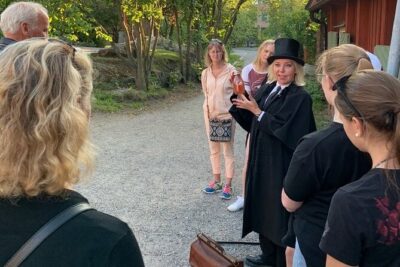
The Original Stockholm Ghost Walk and Historical Tour – Södermalm
Read our review →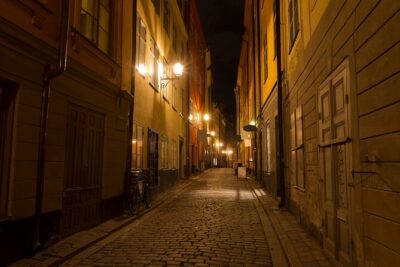
Ghosts of Stockholm: A Guided Tour of Horror and Dark Folklore
Read our review →
Stockholm Ghost Hunt: Self-Guided Tour and Puzzle Adventure
Read our review →Browse the lists this tour appears in