

REVIEW · AMSTERDAM GHOST TOURS
Amsterdam Haunted History and Ghost Walking Tour
Amsterdam keeps its darkest stories after sunset. This two-hour walk pairs ghost tales with real Amsterdam history, taking you from the Nieuwe Kerk to the Red Light District and the old Waag. I like the route’s variety, and I like that guides such as Sunil, Lola, Stefan, and Alexios bring humor and strong storytelling to the streets.
The main drawback is simple: there is a lot of walking, and some of the time between stories is spent moving through busy city streets. At $72, this is not a cheap stroll, but it can be good value if you want an evening tour that mixes folklore, crime, religion, and old city landmarks.
Five things to know before you book
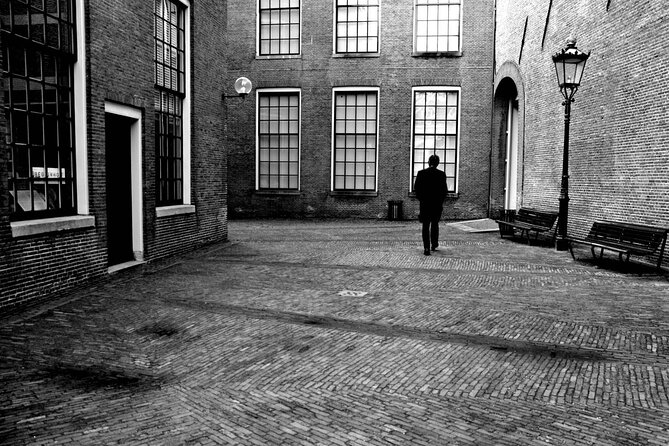
- The route covers five central Amsterdam stops: Nieuwe Kerk, Spinhuis, Begijnhof, De Wallen, and Nieuwmarkt.
- The Spinhuis adds a sobering historical layer: this former women’s prison gives the tour more weight than a standard ghost walk.
- Blood Street brings the darkest stories: expect tales of murder, violence, and Amsterdam’s more grim corners.
- The guides make the difference: Sunil, Lola, Stefan, and Alexios are praised for clear explanations, humor, and lively storytelling.
- The tour ends near the Waag: you finish at Prins Hendrikkade, close to Nieuwmarkt and public transport.
- You need to keep moving: each listed stop is about 24 minutes, but the full outing is a walking tour, not a seated storytelling session.
Why Amsterdam works so well for a ghost walk
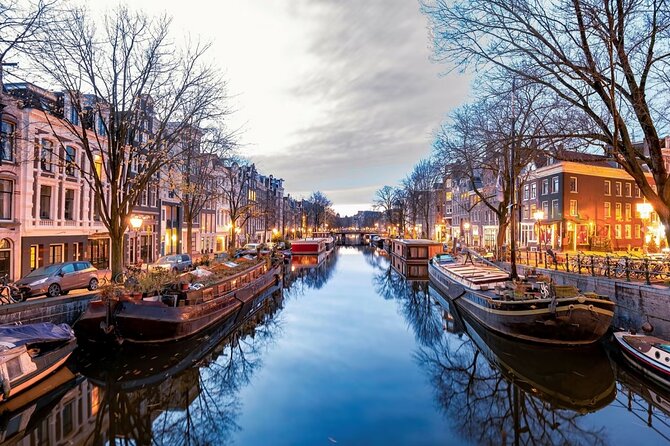
Amsterdam is a natural setting for this kind of evening tour. Its center packs royal churches, old courtyards, former prisons, narrow lanes, and historic public buildings into a fairly compact area. That lets you move from one story to another without spending half the night on a bus.
The tour is also more than a collection of spooky legends. You hear about witch trials, murder, religious punishment, prison life, dissection, and the way Amsterdam dealt with crime and death in earlier centuries. That wider context matters. If every stop were only about a ghost appearing in a window, the evening could feel thin. Here, the supernatural stories are tied to real places and difficult parts of the city’s past.
The tone sounds flexible rather than relentlessly grim. Guides use humor, answer questions, and adjust their position when street noise makes hearing difficult. That is useful in central Amsterdam, where bicycles, conversation, traffic, and nightlife can compete with even the strongest storyteller.
More Ghost Walking Tours in the Netherlands:
- Amsterdam: Haunted History and Ghost Walking Tour
★ 4.5 · 488 reviews - Amsterdam: Ghost Walking Tour and Dark History
★ 4.8 · 118 reviews - Ghost Walking Tour and Dark History in Amsterdam
★ 5.0 · 32 reviews
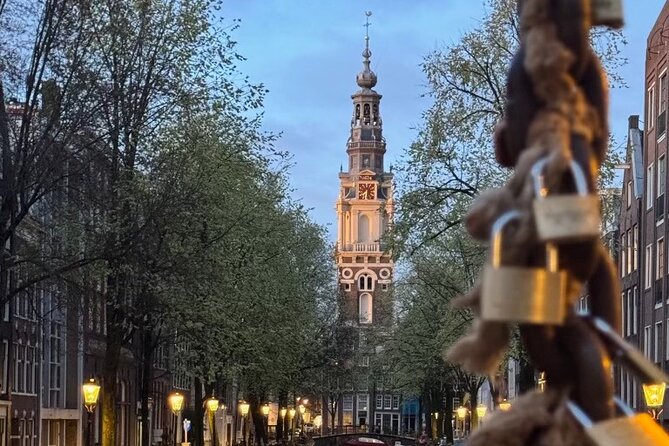
Starting at the Nieuwe Kerk
The walk begins at the Anantara Grand Hotel Krasnapolsky on Dam 9, near Dam Square. From there, the first stop is the Nieuwe Kerk, one of Amsterdam’s major historic churches.
The focus here is on royal ceremonies, crypts, and vaults. You get the familiar grand public side of the building, then a shift toward the people lying below it. The idea of ceremony above and burial beneath gives the opening a suitably uneasy mood without needing theatrical effects.
I like this as a first stop because it sets the pattern for the whole evening. You are not simply told that a place is haunted. You are given a reason the site might hold memories, sorrow, or restless spirits. The church also helps you get oriented in the old center before the route turns toward more troubling stories.
The listed stop time is about 24 minutes. That is enough for a focused account, though you should not expect an extended visit inside the church. Admission is included in the sense that no separate ticket is listed for the stop, but the tour information does not promise a private interior visit or special access to every area.
The Spinhuis and Amsterdam’s prison past
From the church, the route moves toward the Spinhuis, a former women’s prison. This is one of the strongest stops for people who want history with their ghost stories.
The Spinhuis is presented as a place shaped by sorrow, confinement, and despair. The mood is different from the Nieuwe Kerk. Instead of royal ritual and burial, you are thinking about punishment and the lives of women held behind its walls.
This is where the tour’s darker side becomes more serious. Prison stories can easily become cheap horror, but the setting gives them a human center. You are asked to picture people living under harsh conditions, with the building itself carrying the memory of their suffering. The ghost element adds atmosphere, but the historical subject is what gives the stop its force.
The guide’s delivery matters a great deal here. Sunil is praised for adding extra information at each stop, while Alexios is praised for making complex material easy to follow. A good guide can explain the place clearly, then let the unsettling details do their work. A weaker guide could turn it into a string of dramatic claims. Based on the comments about the guides, storytelling is one of this tour’s strongest features.
Quiet corners and the Begijnhof nun
The Begijnhof changes the pace. This enclosed courtyard is calmer than the main streets, and its quieter setting gives the story room to breathe.
The central tale concerns a nun condemned to wander after breaking her vows. The story of her silent punishment is a classic example of how religious rules, guilt, and ghost lore blend together. It also gives the tour one of its more memorable character-based stories. One person specifically singled out the nun story, along with tales involving two sisters and a nun and priest affair.
This stop may appeal to you if you enjoy stories that feel like old moral tales. It is less about blood and more about secrecy, forbidden behavior, and punishment. The courtyard setting helps because you can imagine how an enclosed religious community might produce stories that lasted for generations.
Keep your expectations in check. The tour does not promise paranormal equipment, ghost hunting, or a supernatural encounter. You are listening to stories on location. The atmosphere comes from the place, the darkness, and the guide’s delivery.
More Heritage Tours in the Netherlands:
- Guided Walking Tour Amsterdam – Legends, History & Ghost Stories
★ 5.0 · 28 reviews - Amsterdam: Ghastly Grachten: ghost stories&dark history tour
★ 4.9 · 21 reviews - Dordrecht: Dark History Tour
★ 4.5 · 15 reviews - Guided Walking Tour Amsterdam – Dark History & Ghost Stories
★ 4.9 · 11 reviews
Blood Street in De Wallen
The route then turns toward De Wallen, Amsterdam’s Red Light District, and the street described as Blood Street. This is the point where the subject matter becomes most openly violent.
The cobblestones are linked with stories of murder, mayhem, and long-ago bloodshed. Even without special effects, the setting does much of the work. De Wallen is already one of Amsterdam’s most talked-about areas, and hearing about its grim side gives you a different way to read the streets around you.
I would expect this section to be lively rather than solemn. The guide must compete with street noise and activity, and one guide was praised for moving the group to quieter places when needed. That practical judgment can make a large difference. If you cannot hear the story, the best location in the city is no help.
This is also where the group size matters. The tour can take up to 140 people, which is a substantial maximum for a walking experience. A large group may make it harder to gather close around the guide, especially in a busy district. On the other hand, the route and the guide’s microphone or positioning may help. You should book this knowing that it may not feel like a private lantern walk with six people.
The story selection seems to balance dark material with humor. One account described the ghost content as limited but said the dark history and the guide’s humor worked well. That is a fair description of the tour as a whole: expect a historical walk with spooky elements, not nonstop apparitions.
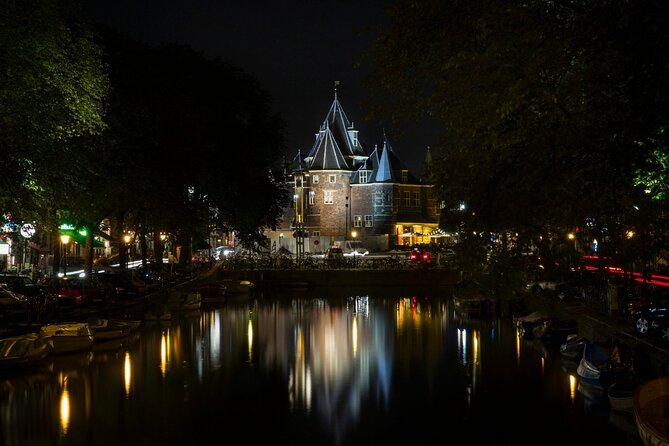
The Waag and the Purgatory of Nieuwmarkt

The final main stop is Nieuwmarkt, home to the Waag. Here the focus turns toward science, anatomy, and the disturbing side of the Enlightenment.
The Waag is connected with the dissection of human bodies and the idea of a purgatory for those who suffered after death. This gives the ending a different flavor from the prison and murder stories. You are now looking at the period when scientific curiosity could involve public anatomy and a very direct relationship with death.
It is a strong place to finish because it gathers several themes from the walk: religion, punishment, bodies, fear, and the attempt to understand what happens after death. The final reflection ties the earlier stories together rather than ending with a random final ghost.
The walk finishes at Prins Hendrikkade 94 to 95. That makes the end point practical if you want to continue near Nieuwmarkt or use public transportation. Remember that the finish is not the same as the starting point, so plan to walk back, take transit, or continue elsewhere in the center.
What the guides add to the evening
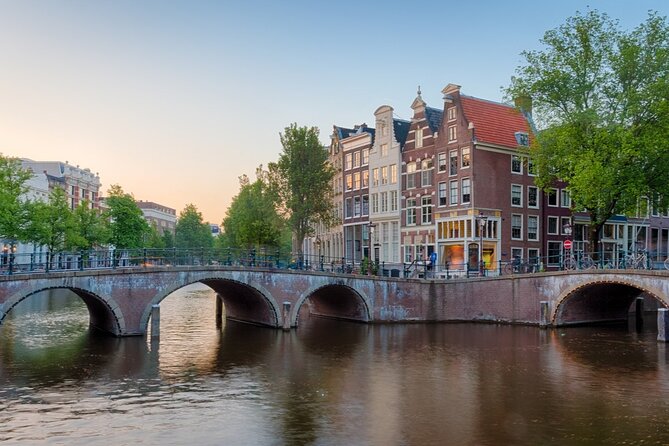
The guide is the make-or-break part of a storytelling walk. This tour appears to have several strong personalities in rotation.
Sunil receives repeated praise for his storytelling and for adding extra information to familiar sites. That matters if you have already visited Amsterdam several times. One person who knew the city well still found new alleys and streets along the route.
Alexios is praised for clear explanations, enthusiasm, and an ability to make each place easy to understand. Stefan is described as especially strong on Amsterdam’s history and storytelling, while Lola is praised for keeping the group interested through an educational evening walk.
You should not assume you will get a particular guide unless your booking confirms it. Still, the repeated praise for different guides suggests that the operator’s strength is not tied to one single person. Good humor also appears often in the feedback, which keeps the subject matter from becoming too heavy.
The best guides on this kind of tour know when to pause. They explain the setting, tell the story, answer questions, and move the group when noise gets in the way. That combination seems to be happening here.
Walking, timing, and group comfort
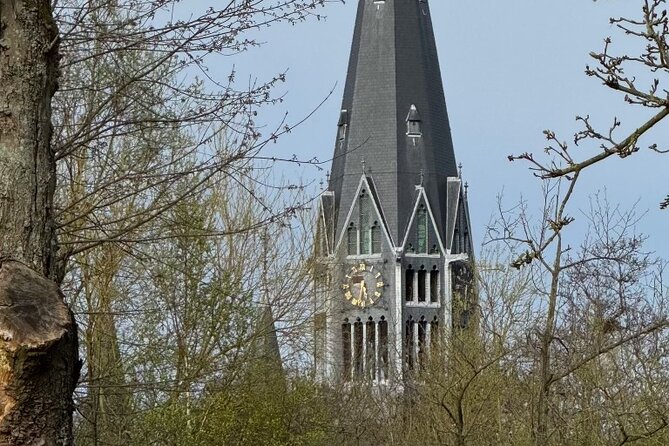
The tour lasts about two hours. The itinerary gives approximately 24 minutes to each of the five stops, which accounts for the full 120 minutes. In practice, that time includes movement between locations, gathering the group, and dealing with city noise.
You should wear comfortable shoes. One person found the amount of walking greater than expected and wished for more stories to break up the movement. That is the clearest practical criticism, and it is worth taking seriously.
The route stays near public transportation, and most people can participate. Service animals are allowed. The tour begins in a central location near Dam Square, so arriving by tram or on foot should be manageable, though the supplied details do not specify a particular transit route.
The mobile ticket is convenient. Keep the confirmation available on your phone, and arrive at the Anantara Grand Hotel Krasnapolsky, Dam 9. Since the group may be large, arriving a little early can make it easier to find the guide and settle in.
Is $72 a fair price?
At $72, this tour asks more than a basic free city walk. You are paying for a guide, a planned route, two hours of storytelling, and the convenience of seeing five historic locations in one evening.
The value depends on what you want. If you are mainly looking for ghost effects, dramatic costumes, or access to closed buildings, the price may feel high. The tour information points to outdoor storytelling and free admission at the stops, so the cost is largely for the guide’s time and the route.
I think the price makes more sense if you want a structured introduction to Amsterdam’s darker past. You get religious history at the Nieuwe Kerk and Begijnhof, social history at the Spinhuis, crime stories in De Wallen, and medical history at the Waag. That is a broad range for two hours.
The 98 percent recommendation rate and 4.8 rating from 47 ratings suggest strong satisfaction, but the sample is not huge. I would treat those numbers as encouraging rather than as a promise that every guide and group will feel identical.
Free cancellation is available if you cancel at least 24 hours before the start time. Inside that window, the payment is not refunded, and changes are not accepted. That is worth noting before you commit to an evening slot.
Who should book this Amsterdam ghost walk?
I would choose this tour for you if you enjoy local stories, old buildings, and history with a slightly spooky edge. It works especially well as an evening introduction to Amsterdam, since you see well-known places from a less familiar angle.
It also suits repeat visitors. The route includes side streets and corners that can feel new even if you have already seen Dam Square, De Wallen, and Nieuwmarkt.
Families with older children may enjoy it, but the murder, prison, punishment, and dissection themes are not gentle bedtime material. The tour is also a good fit for solo visitors who want an organized walk after dark, or for couples looking for something different from a museum or canal cruise.
You may want to skip it if you dislike walking, large groups, or stories that mix fact with folklore. It is not a paranormal investigation, and it may contain fewer ghost stories than the title suggests. The strongest appeal is the combination of Amsterdam’s past, atmospheric locations, and a guide who can tell a good story.
Should you book it?
Book it if you want a dark history walk with real city landmarks, not a staged horror show. The Spinhuis, Begijnhof, Blood Street, and Waag give the route enough variety, while the guides add humor and context.
Skip it if $72 feels too steep for an outdoor walking tour, or if you need a slow pace and a small group. For the right audience, though, this is a compact way to see central Amsterdam, hear unusual stories, and leave with a sharper sense of how religion, punishment, crime, and death shaped the city.
FAQ
How long does the Amsterdam Haunted History and Ghost Walking Tour last?
The tour lasts approximately two hours. The route includes five stops, with about 24 minutes listed for each stop.
Where does the tour begin?
The tour begins at the Anantara Grand Hotel Krasnapolsky, Dam 9, 1012 GJ Amsterdam, Netherlands.
Where does the walking tour end?
The tour ends at Prins Hendrikkade 94 to 95, 1012 AE Amsterdam, Netherlands.
What places are included on the route?
The route includes the Nieuwe Kerk, Spinhuis, Begijnhof, the Red Light District in De Wallen, and Nieuwmarkt near the Waag.
Is food or drink included?
No. Food and drink are not included in the tour price.
Can I cancel for a full refund?
Yes. You can cancel for a full refund up to 24 hours before the experience starts. Cancellations or changes made within 24 hours are not refunded or accepted.
Newly added around the Netherlands
- Hattem’s Windmills, Bakeries and Ghosts: A Self-Guided Audio Tour★ 3.5 · 3 reviews
- Gouda, Witches & Cheese – Private Day Tour★ 5.0 · 15 reviews
- Guided Walking Tour Amsterdam – Legends, History & Ghost Stories★ 5.0 · 28 reviews
- Amsterdam Ghost Hunt: Self-Guided Mystery Adventure★ 4.5 · 4 reviews
- Amsterdam’s Ghostly Experiences Group Tour★ 5.0 · 28 reviews
- Walking Tour of Haunted Amsterdam★ 5.0 · 10 reviews
- Dordrecht: Dark History Tour★ 4.5 · 15 reviews
- Guided Walking Tour Amsterdam – Dark History & Ghost Stories★ 4.9 · 11 reviews
Amsterdam Ghost Tours, compared.


Ghost Walking Tour and Dark History in Amsterdam
Read our review →
Guided Walking Tour Amsterdam – Legends, History & Ghost Stories
Read our review →
Ghastly Grachten: ghost stories&dark history tour
Read our review →
Guided Walking Tour Amsterdam – Dark History & Ghost Stories
Read our review →Browse the lists this tour appears in