
REVIEW · GREECE GHOST TOURS
Athens Ghost Tour
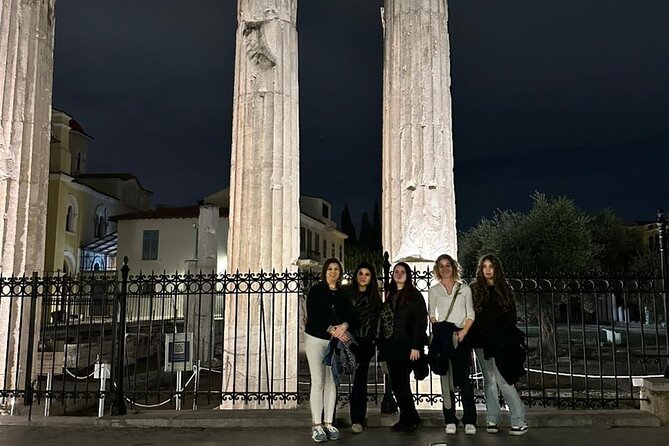
Ancient Athens gets eerie after dark. This two-hour walking tour combines ghost stories, old crimes, Greek legends, and lesser-known historical sites, taking you from the Stenopos Kollytos area to the Prison of Socrates and back through the Plaka area. I like the mix of unusual history and night scenery, especially the views toward the Acropolis and the chance to see places many daytime sightseeing routes skip.
I also like the small group limit of 15 people and the guides’ willingness to answer questions. One guide, an American, added historical context while a Greek friend helped translate questions. The main caution is that this is more historical than frightening. If you want constant paranormal activity, spooky theatrics, and dramatic ghost effects, the $43.62 price may feel high.
Key things to know before you book
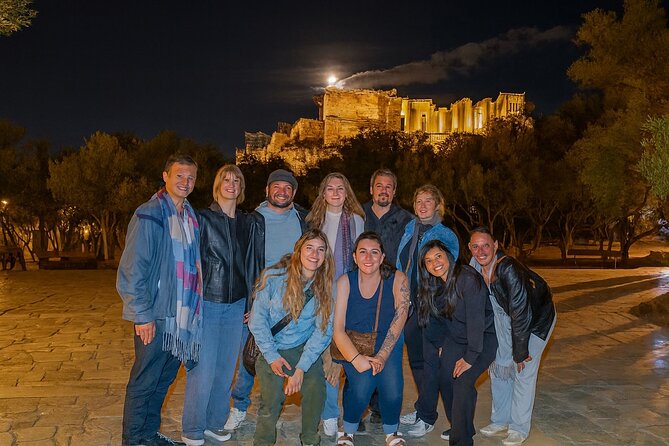
- The oldest ghost story begins with Athenodoros, a Stoic philosopher linked to Emperor Augustus.
- Ten stops cover a lot of ground, including the Acropolis, Areopagus, Roman Agora, and Socrates’ prison.
- The equipment is part of the fun, with a Gauss meter and camera used to search for unusual signals.
- The walk includes hills and steep steps, so moderate physical fitness is required.
- The history is the strongest part, covering Ottoman rule, ancient murder trials, Nazi occupation, Byzantine Athens, and the Greek War of Independence.
- The tour begins and ends at Thision Open Air Cinema at 8:00 pm, with free cancellation up to 24 hours before departure.
Why Athens works so well for a ghost walk
Athens has more than two thousand years of stories packed into a compact central area. Ancient murder trials, Ottoman prisons, Byzantine churches, wartime deaths, and famous philosophers all appear within a short walk of one another. That gives this tour a broader time span than many ghost walks, which tend to focus on one old quarter or one historical period.
You will not hear only tales of haunted houses. The guide moves between mythology, documented events, religious traditions, political violence, and local legends. I find that approach more interesting than a scripted parade of supposedly haunted buildings, but it also explains why the experience may feel like a history walk with paranormal tools rather than a conventional scare show.
The meeting point is Thision Open Air Cinema on Apostolou Pavlou at 8:00 pm. That start time is useful if you want to spend the afternoon at the Acropolis or Ancient Agora first, then see the same part of Athens under streetlights. The activity ends at the starting point, which makes it easier to plan dinner or return to nearby public transportation.
A few more hauntings around the world worth booking
- New Orleans Premier Ghost, Voodoo and Vampire Walking Tour
★ 4.5 · 12,856 reviews - The World Famous Underground Ghost Tour
★ 4.5 · 9,272 reviews - Chicago: Gangsters and Ghosts Walking Tour
★ 5.0 · 7,155 reviews
Stenopos Kollytos and the first ghost story
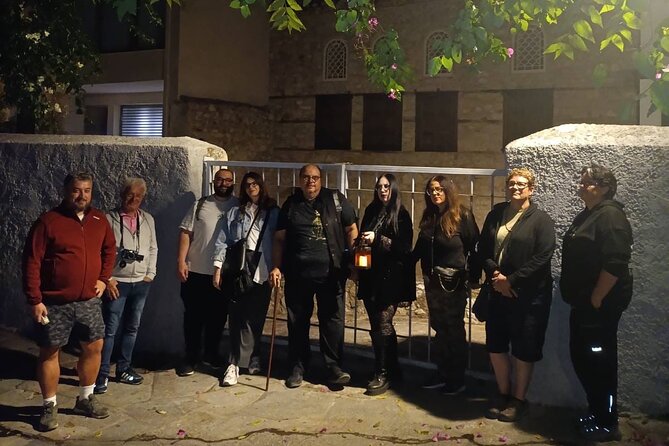
The first stop is the area of Stenopos Kollytos, where the tour introduces the story presented as the world’s oldest ghost account. It centers on the Stoic philosopher Athenodoros, who later became the personal tutor of Augustus, the first Roman emperor.
The tale is important because it connects Athens to an old tradition of ghost storytelling based on a mysterious death, an abandoned house, and a spirit seeking recognition. The stop lasts about 10 minutes, so expect a compact introduction rather than a long lecture.
I like this opening because it gives the rest of the walk a useful frame. The tour is not simply asking you to believe in ghosts. It is asking how people in different periods explained unexplained events, violent deaths, and places associated with suffering.
The Acropolis and its former Turkish cemetery
At the front gate of the Acropolis, the guide discusses a Turkish cemetery that once occupied the area during the approximately four centuries of Ottoman rule. The focus here is not the famous marble monuments inside the Acropolis, but the layers of burial and political change around its entrance.
This is a good reminder that Athens was not frozen in the classical age. The city’s sacred and civic spaces were reused by later communities, including the Ottoman administration. The cemetery story gives the Acropolis a more complicated past than the familiar image of temples and philosophers.
The stop lasts about 15 minutes. Admission is included in the tour listing, though the main value here is the guide’s explanation rather than a separate visit into the Acropolis complex. Bring a light layer if you are walking in cooler weather, since the evening route remains outdoors.
Areopagus, ancient murder trials, and Saint Paul
The Areopagus is one of the strongest historical stops. This rocky hill was associated with ancient Greek murder trials, making it an appropriate place for a tour about crime, death, justice, and the afterlife.
The guide also covers the Christian sermon delivered by Saint Paul to the Council of the Areopagus. That gives the stop two distinct stories: one rooted in ancient Athenian law and another tied to the spread of Christianity.
The site itself involves uneven ground and a climb. If you have mobility problems, take this part seriously. One account of the experience describes uphill walking and steep steps, though a patient guide slowed the pace for an older family group. You should wear firm shoes and avoid treating this as a gentle flat stroll.
Same streets, an entirely different kind of scare:
- Edinburgh: Haunted Underground Vaults and Graveyard Tour
★ 4.6 · 6,607 reviews - Adults-Only New Orleans Ghost, Crime, Voodoo, and Vampire Tour
★ 5.0 · 6,545 reviews - Prague: Ghost Walking Tour Where Legends Come To Life
★ 4.4 · 5,253 reviews - Prague: Ghosts, Legends, Medieval Underground & Dungeon Tour
★ 4.3 · 5,104 reviews
Stratonos and the young flag bearer
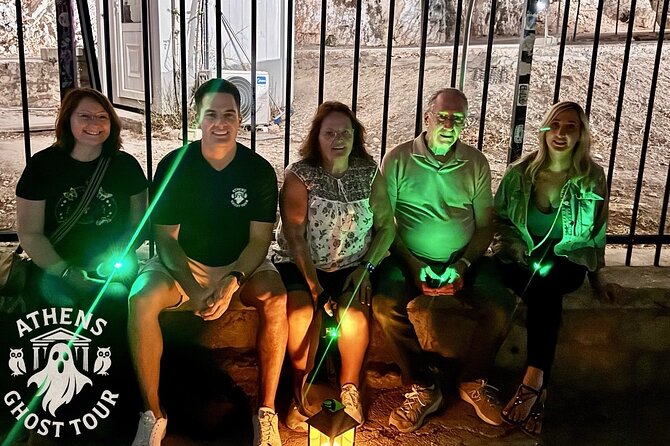
At Stratonos, the subject changes to Konstantinos, a young man who fell while protecting the Greek flag during the Nazi invasion. The group attempts to communicate with him using the tour’s paranormal equipment.
This stop brings the tour into the twentieth century. After several ancient and medieval stories, the account of a modern wartime death can feel more immediate. It also shows how national memory, sacrifice, and ghost stories can overlap.
The equipment may or may not produce anything convincing. A Gauss meter and camera are used to look for unusual signals, but one recorded experience had little luck with the devices. That is worth knowing before you book. The tools can add a playful investigation element, but they are not guaranteed to create a dramatic result.
Saint Nicholas Rangavas and the cannonball story
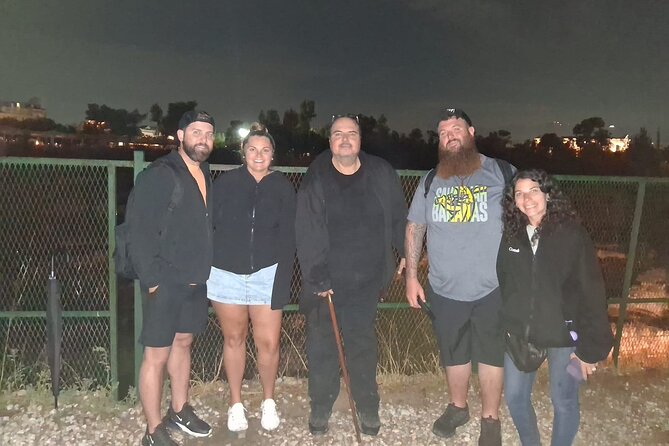
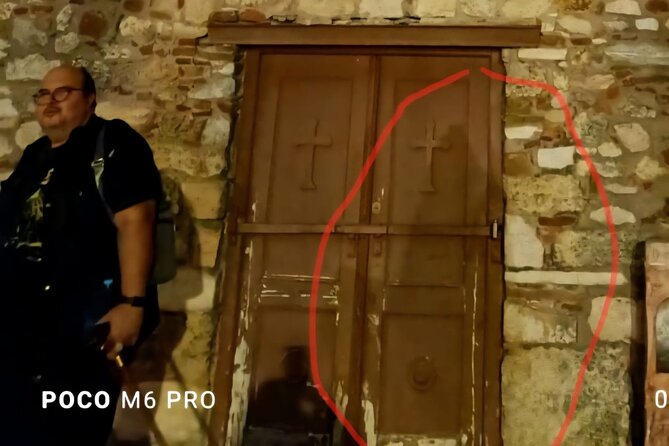
The Church of Saint Nicholas Rangavas is described as the oldest church in Athens. Built by a relative of a Byzantine emperor, it carries a story involving destruction by a cannonball and the death of a monk hiding in the courtyard.
This is one of the tour’s best examples of how a small religious building can hold several centuries of conflict. Byzantine power, later warfare, religious life, and local legend all meet in one compact stop.
You should expect to hear the story from outside rather than receive a full church visit, since the tour is a moving evening walk. The attraction is the setting and the tale, not an extended examination of the interior.
Mansion Benizelou and Saint Philothea
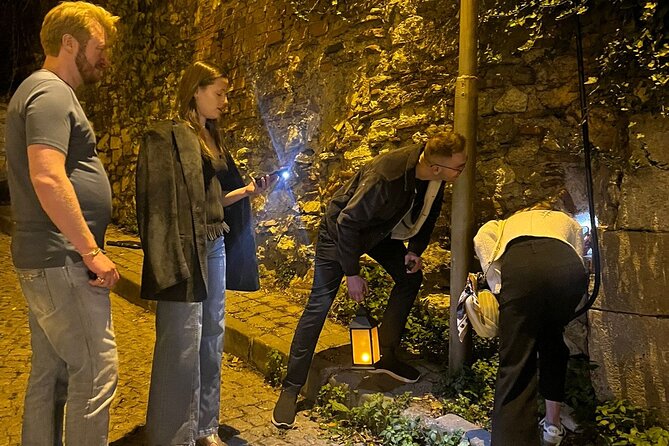
At Mansion Benizelou, the guide points out what is described as the oldest house in Athens. It was once home to Saint Philothea, a significant religious figure, and its backyard contains a 500-year-old olive press.
The olive press is presented as having been used as a torture device for rebellious slaves owned by the Benizelou family. That is a grim story, and it changes the tone from supernatural curiosity to the human cost of power and punishment.
This stop is especially useful if you enjoy finding places you might otherwise miss. One family on the walk was surprised to learn about the house and hoped to return during opening hours. The evening tour does not replace a daytime visit, but it can point you toward sites worth revisiting.
Roman Agora and the Ottoman Madrassa
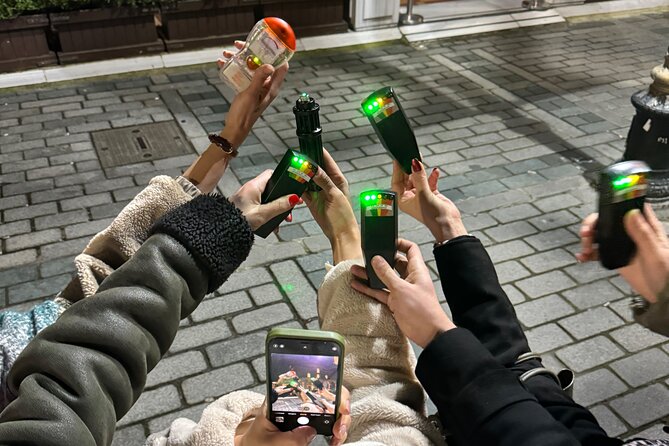
Near the Roman Agora, the walk reaches the Ottoman Madrassa. It began as a religious school for Ottoman residents and later became a prison after the Greek War of Independence.
The courtyard contains the so-called hangman’s tree, linked to the deaths of hundreds of Greeks and Turks. This is one of the darker stops, since the story deals with execution and political upheaval rather than a single restless spirit.
I appreciate the way this section connects the Roman, Ottoman, and modern Greek periods. You get a sharper sense of how the same piece of Athens changed purpose over time. The stop lasts about 10 minutes, so listen closely. The guide has to fit a large amount of context into a short pause.
Ancient Agora and the Tyrannicides
The Ancient Agora was the center of daily Athenian life, with temples, homes, theaters, places of learning, and major festivals. The route also touches on the old road used for the Panathenaic Festival.
The story of the Tyrannicides adds a political murder to the route. These murderous lovers tried to end the rule of the Athenian tyrants, and their story helps explain why violence and public memory mattered so much in ancient civic life.
This stop works best if you have already visited the Agora during daylight. At night, you will not get the same detailed archaeological inspection, but the guide’s stories help you picture the site as a place of arguments, ceremonies, political activity, and danger.
Admission is listed as included. Still, the experience is mainly a guided walk around the historical area, not a replacement for entering the archaeological site during its normal visiting hours.
The Prison of Socrates and his final thoughts
The Prison of Socrates is one of the most recognizable stops on the route. Here, Socrates was left to drink hemlock after his conviction, and his final speech to his friends addressed the soul and the afterlife.
The stop gains extra value because the guide distinguishes the location from the place sometimes marked on maps as Socrates’ official detention site. That kind of clarification is useful if you have seen conflicting information while planning your Athens sightseeing.
This is also where the tour’s central idea comes into focus. Socrates’ death was not a ghost story in the usual sense. It was a historical death surrounded by questions about justice, memory, the soul, and what may come after life. The setting gives those questions a physical anchor.
Church of Metamorphosis and a hurried burial
The final stop is the Church of Metamorphosis, a twelfth-century church whose stones are tied to stories of crime and violence. It was also connected with the hurried burial of a hero of the Greek War of Independence after he was murdered and thrown from the Acropolis.
Ending here gives the tour a final link between religious space, political conflict, and death. The church is not presented as a simple haunted attraction. Its importance comes from the events remembered in and around its walls.
After this stop, you return to the original meeting point. The route covers enough ground that you will see a different side of central Athens, but you should expect some physical effort along the way.
The guide style and paranormal equipment
The strongest praise for this experience focuses on the guides. An excellent guide adjusted the conversation to the group’s interests, answered questions fully, and added local historical context rather than simply reciting a script. Another guide was described as friendly and patient, slowing the walk when needed.
The language is English. One guide was American, and a Greek companion helped translate questions. That arrangement may be useful if you want to ask about Greek names, places, or local details, though it also means the delivery may feel less traditionally Greek than you expect.
The paranormal equipment includes a Gauss meter and camera. You may enjoy checking signals and looking for unusual activity, but you should keep your expectations measured. The tools are an activity within the tour, not proof that every stop will produce a supernatural encounter.
If you want spooky storytelling above all else, this may not satisfy you. If you like historical places, old crimes, and the idea of testing a few locations after dark, the equipment adds a distinctive touch.
Price, group size, and overall value
At $43.62 per person, this is not the cheapest way to spend two hours in Athens. Its value depends on what you want from a night walk.
The price makes more sense if you value a small group, a guide who can answer questions, and access to unusual historical material that would be difficult to assemble on your own. You also cover ten locations, including sites many first-time visitors might pass without understanding.
The price is harder to justify if you expect professional theatrical effects, frequent paranormal activity, or a frightening performance. One disappointed participant considered the cost excessive because the equipment produced little and the experience did not deliver enough spooky entertainment.
The group maximum is 15 people, which is a sensible size for narrow streets, uneven ruins, and group discussion. It is small enough that you can ask questions without shouting across a crowd, but it is not a private tour.
Walking conditions and who should book
Plan for moderate physical fitness. The route includes uphill sections, uneven surfaces, and steep steps, especially around the Areopagus and other old sites. The guide may slow down, but the walk is not designed as an accessible route for every mobility level.
Service animals are allowed, and the starting point is near public transportation. The tour is offered in English, begins at 8:00 pm, and returns to the meeting point.
I would recommend it for:
- First-time visitors who want an unusual introduction to central Athens
- History fans interested in ancient, Ottoman, Byzantine, and modern Greek stories
- Couples and small groups who enjoy nighttime walks
- People who like paranormal equipment but do not need constant supernatural activity
- Anyone who has already seen the main monuments and wants a different angle
I would be cautious if you dislike hills, have difficulty with steep steps, or want a tightly scripted horror show. The tour is also less useful if you want extended time inside archaeological sites, since most stops are brief and the emphasis is on storytelling while moving between locations.
Should you book the Athens Ghost Tour?
Book it if you want Athens after dark with a strong history focus. The best parts are the range of stories, the less familiar locations, the patient guides, and the views of famous sites from a different mood.
Skip it if your main goal is to be frightened or to see repeated paranormal evidence. The equipment may not produce much, and the tour’s strongest material concerns real people, old crimes, religious history, war, and political violence.
At $43.62, I see it as a specialized walking tour rather than a standard sightseeing bargain. The free cancellation policy gives you flexibility up to 24 hours before the start time, which is useful when planning an evening in Athens. If the hills are manageable and you enjoy history with a supernatural question mark, this is a worthwhile way to spend two hours.
FAQ
How long is the Athens Ghost Tour?
The tour lasts approximately two hours.
Where does the tour start?
It starts at Thision Open Air Cinema, Apostolou Pavlou 7, Athens 118 51, Greece.
What time does the tour begin?
The scheduled start time is 8:00 pm.
Where does the tour finish?
The tour ends back at the starting point.
Is the tour offered in English?
Yes. The experience is offered in English.
Can I cancel for a full refund?
Yes. You can cancel up to 24 hours before the experience start time for a full refund. Cancellations or changes made less than 24 hours before departure are not accepted for a refund.
Newly added around the world
- Zion: Harry Potter-Inspired Zion Ghost Tour with Sunset View★ 5.0 · 8 reviews
- York : Private Ghost Hunt★ 5.0 · 3 reviews
- Your evening in Venice – Legends&Ghosts&Aperitif★ 4.7 · 79 reviews
- York’s Haunted Heart : Ghost, Ghouls and Gallows★ 4.6 · 82 reviews
- Witches, Widows, & Wraiths: Wichita Ghost Tours★ 5.0 · 2 reviews
- Wraiths of the West Texas Wind: El Paso Ghost Tour★ 4.5 · 9 reviews
- Witches, ghosts and executioners / Mystical North Hesse★ 4.4 · 4 reviews
- Wraiths & Wicked Whispers: Wilmington Ghost Tour★ 4.2 · 25 reviews
Greece Ghost Tours, compared.

Crete: Quad Safari, Olive Mill with Tasting & Ghost Village
Read our review →
Agia Pelagia: Sunset or Morning Quad Tour & Ghost Town Visit
Read our review →
Corfu Ghost Stories, Dark Legends & Facts Night Tour
Read our review →

Kalamata: Paranormal Walking Tour in the historical center
Read our review →
Athens Ghost Walk: Mystical Ruins & Ancient Legends
Read our review →
Browse the lists this tour appears in