
REVIEW · ITALY GHOST TOURS
Florence Crimes, Murders & Ghosts Walking Tour with Tastings
Florence has a darker side. This lively walk pairs real murders, public executions, and ghostly legends with Tuscan wine and food tastings, giving you a fresh way to read the city’s old streets. I like the strong storytelling, especially the tale of Savonarola and the unsolved Monster of Florence case. I also like the small-group feel praised by guests who toured with guides such as Gabriel, Gabrielle, Ilaria, and Ezgi. The main drawback is that the experience may sound scarier than it actually feels, so horror fans should expect more history and atmosphere than jump scares.
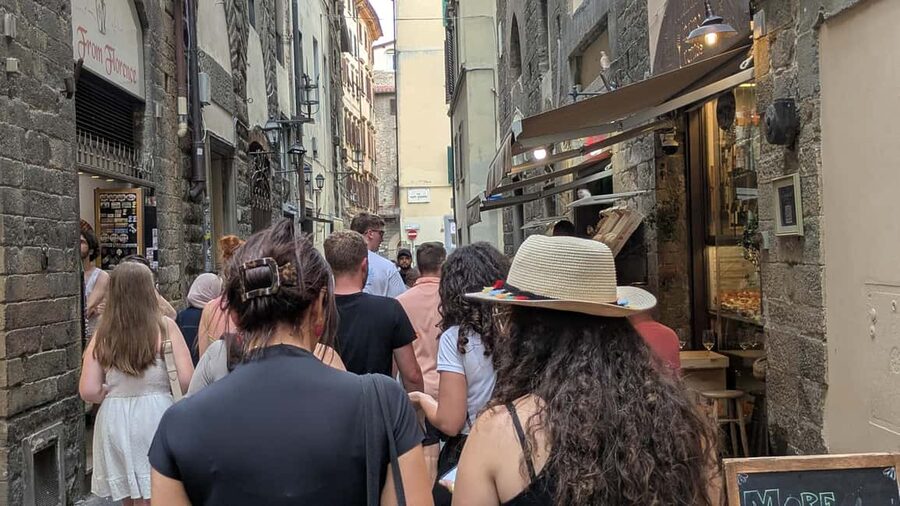
You’ll walk through central Florence for about 90 minutes to two hours, with stops near the Duomo, Bargello, Via Ghibellina, and Santa Croce. The tastings make the pace comfortable, but this is still a walking tour on busy city streets, and the meeting point can vary by the option you book. Check your starting time and location carefully.
Key reasons to consider this Florence night walk
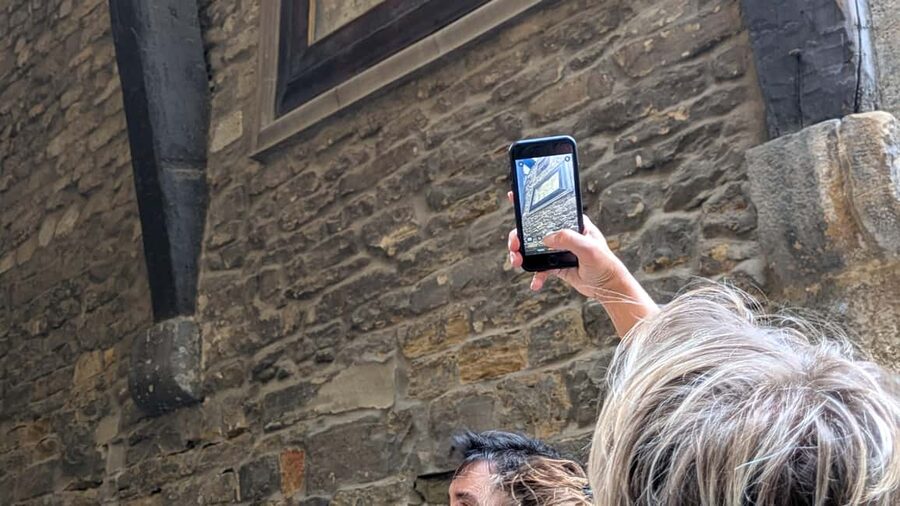
- Savonarola’s final fire: Hear how the preacher who condemned Florentine luxury ended up facing execution in Piazza della Signoria.
- The Monster of Florence mystery: Learn about the unsolved 1984 murder case that gives the tour its most modern true-crime edge.
- Wine with the darker stories: Sip Tuscan wine alongside prosciutto, cold cuts, and local specialties near the Duomo.
- Florence’s old justice system: Visit the area around the Bargello and the former Stinche prison, where punishment was public and theatrical.
- A sweet final stop: Finish with cantucci and Vin Santo at a historic cernacchio.
- Good guide energy: Gabriel, Gabrielle, Ilaria, and Ezgi are praised for warmth, humor, clear explanations, and local tips.
Why Florence’s darker side works so well on foot
Florence is often presented as a city of Renaissance paintings, polished palaces, and elegant squares. That view is accurate, but incomplete. The same streets also saw political killings, public punishment, religious conflict, prison marches, and stories of revenge.
This tour uses that contrast well. You are not taken far from the city center or asked to spend a whole evening in a museum. Instead, you move through familiar places and hear what happened there, or what people once believed happened there. The result is a more human picture of Florence. Beauty and brutality shared the same streets.
I particularly like the way the tour joins storytelling with food. A glass of Tuscan wine and a plate of local specialties give you time to pause and talk, rather than listening to a long lecture without a break. The darker subjects also become easier to handle when the evening includes ordinary Florentine pleasures.
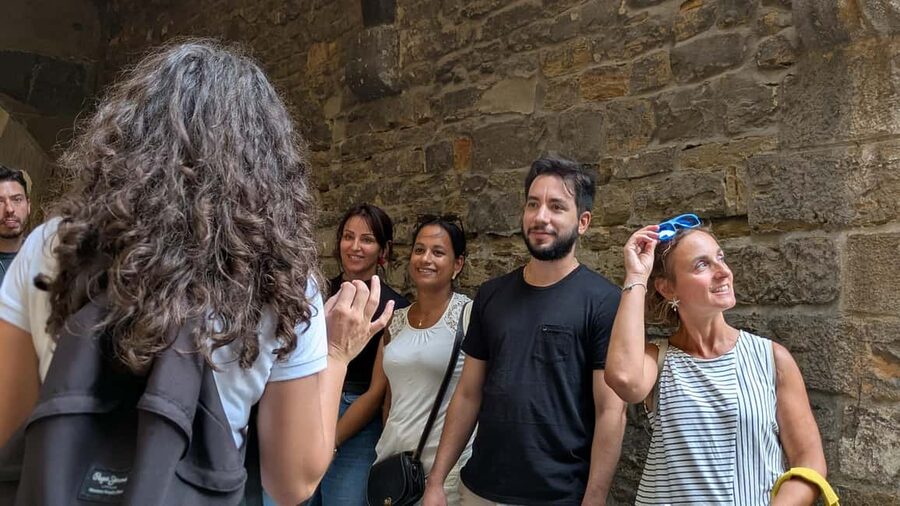
The tone is lively rather than grim. Gabriel is described as fun and engaging, while Ilaria is praised for being welcoming, kind, and generous with local recommendations. One solo participant felt included by both the guide and the other people on the tour. That matters if you are arriving alone or prefer a relaxed group setting.
More Dark History Tours in Italy
- Venice: Mysterious Tales of Ghosts and Murders
★ 4.9 · 636 reviews - Rome: Guided Bar Crawl with Drinks & Dark History
★ 4.9 · 444 reviews - Rome: Small Group Rome’s Dark Side – Ghosts & Legends Tour
★ 4.9 · 343 reviews
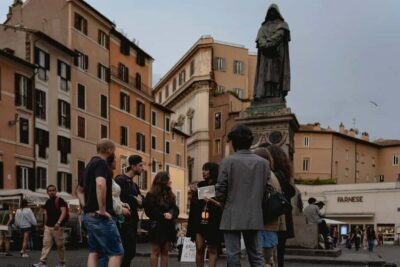
Piazza della Signoria and Savonarola’s dangerous sermons
The usual opening point is Piazza della Signoria, beneath the statue of Cosimo I de’ Medici. Another possible starting point is Piazza di Madonna degli Aldobrandini, 6, so confirm your meeting point before setting out.
Piazza della Signoria is an excellent place to begin. It is one of Florence’s grandest public spaces, yet its political past was often violent. Executions took place here, and public punishment served as theater as much as justice. Crowds gathered, rulers sent messages, and religious or political power was displayed in front of the city.
The guide brings in Girolamo Savonarola, the Dominican friar who attacked luxury, vanity, and what he saw as moral decay. His sermons helped create a feverish mood in Florence, including the famous bonfire associated with the destruction of artworks and expensive goods.
Savonarola eventually lost public support and political protection. He was executed in the same general setting where he had helped stir the city. This is a strong early story because it shows how quickly a public hero could become a condemned criminal.
You will not just hear a name from a textbook. You will hear the story while standing in the square where Florence’s political drama played out. That physical setting gives the tale extra force.
Via dei Calzaiuoli and the turn into darker folklore
From the square, the group follows Via dei Calzaiuoli for about ten minutes. This is one of the city’s central streets, connecting Piazza della Signoria with the Duomo. It is a useful contrast to the tour’s darker mood because you are walking through a major pedestrian route while hearing about fear, penance, and obsession.
The route then turns toward the quieter Vicolo dei Lavatoi. The change in atmosphere is part of the appeal. Florence can shift from grand civic space to a narrow passage in just a few steps, and the guide uses that change to tell stories about hidden rituals and private suffering.
Some of these accounts belong more to folklore and legend than to documented criminal cases. That is worth keeping in mind if you want strict true crime. The tour blends real murders and executions with esoteric tales, lost customs, and ghost stories. I see that mix as a strength for atmosphere, but it may disappoint you if you want only court records and confirmed evidence.
The folklore surrounding the Mugnone adds another layer. In local storytelling, the ancient stream is known as the River of Corpses, linked with disappearances, drownings, and occult legends. The tour presents this as part of Florence’s darker memory, not as a simple sightseeing stop.
Prosciutto, wine, and a pause near the Duomo
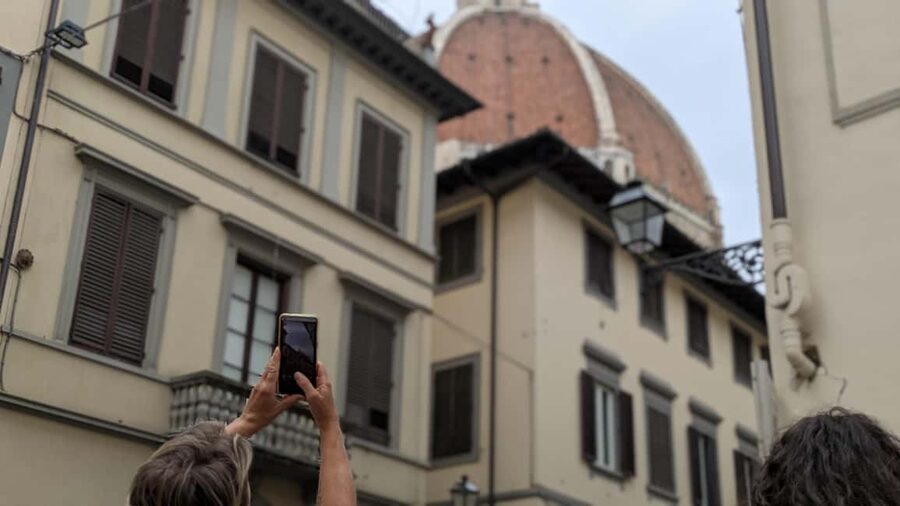
One of the most practical features comes midway through the walk. At Crudi e Bollicine in the Florence San Lorenzo area, you stop for roughly 15 minutes of food and wine.
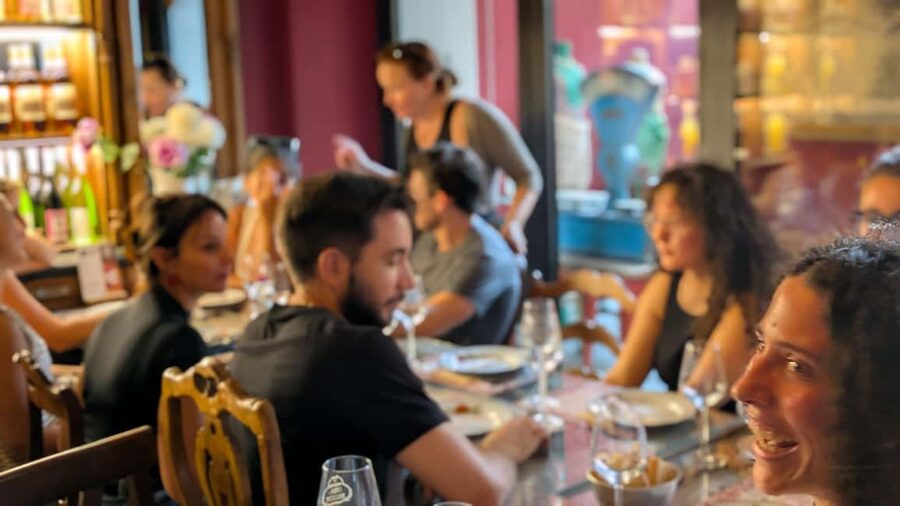
Expect a glass of Tuscan wine with a tasting board of traditional specialties, including prosciutto and other cold cuts. Vegetarian options are available, which makes the stop more useful for mixed groups. The food is not an extra detail tacked onto the end. It breaks up the walking and gives you a chance to reset before the heavier stories continue.
The location near the Duomo also gives the tasting a strong sense of place. You are not being taken to a distant restaurant for a separate meal. The stop fits into the central walking route, and the food helps you connect the region’s everyday flavors with the city’s past.
The portion is best understood as a tasting rather than dinner. If you arrive hungry, do not count on this as a full meal. Several participants praised the food and wine, and one described the local cuisine as authentic. Still, plan another meal if you need something substantial.
More Ghost Walking Tours in Italy
- Rome: Paranormal Night Walking Tour & Secret Backstreets
★ 4.9 · 1,921 reviews - Rome: Haunted City Night Walking Tour
★ 4.9 · 616 reviews - Haunted Rome Ghost Night Walking Tour
★ 5.0 · 495 reviews - Ghosts, Legends & Mysteries of Rome Tip-Based Walking Tour
★ 4.7 · 284 reviews
Piazza del Duomo and the Monster of Florence
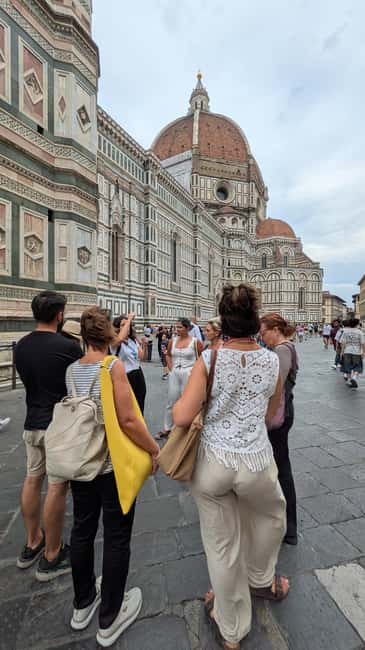
The tour continues toward Piazza del Duomo for about 15 minutes of guided commentary. The cathedral area is one of Florence’s most recognizable spaces, but the stories here turn away from architecture and toward crime.
The key modern case is the Monster of Florence, an unsolved series of murders associated with the year 1984 in the tour’s presentation. The case remains one of Italy’s most unsettling mysteries because of the violence, the investigation, and the questions that remained unresolved.
This portion gives the experience a different feel from the Savonarola story. Instead of a medieval or Renaissance tale shaped by religion and public power, you are hearing about a modern criminal investigation. That shift can be especially interesting if you enjoy true crime but also want to understand how Florence’s older myths and newer fears overlap.
The story is not presented as a solved case. You should expect questions and uncertainty rather than a tidy final answer. That can be satisfying if you enjoy mysteries, but less satisfying if you prefer a clear conclusion.
The Bargello, torture, and Florence’s public justice
Near the Bargello, the tour turns to the city’s former palace of justice and torture. The building’s history helps explain how law operated in Florence before modern ideas of prison reform, privacy, and humane punishment.
The guide discusses instruments of pain and the way punishment controlled more than individual criminals. Public justice sent a message to everyone watching. It showed who held power, what behavior was forbidden, and what could happen to anyone who challenged the established order.
This section may be uncomfortable. The presentation is designed to be thrilling, but the subject is not light. If you are sensitive to stories of torture, you may want to ask the guide about the level of detail before the discussion begins.
The Bargello area also works well because it is not treated as a detached museum topic. You are close to buildings and streets tied to the city’s legal past. That connection keeps the discussion grounded in Florence rather than turning it into a general talk about crime.
Via Ghibellina and the tragedy of Beatrice Cenci
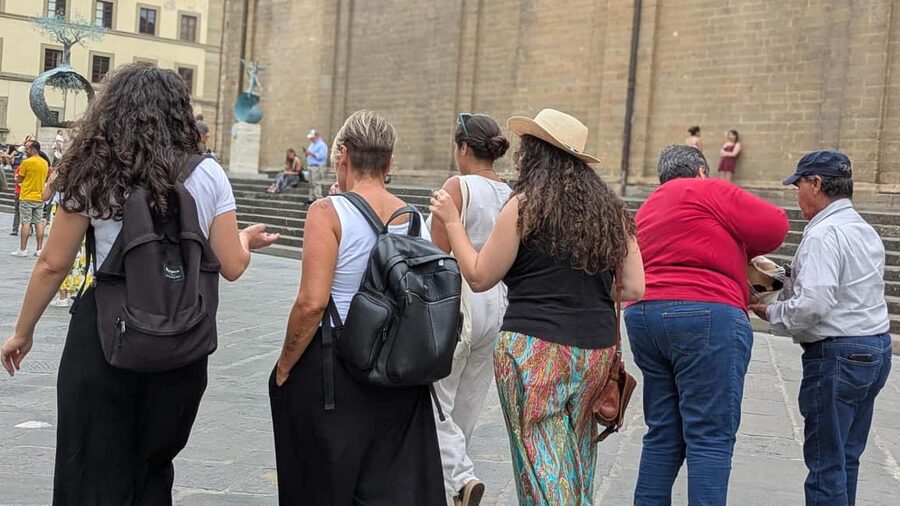
On Via Ghibellina, the guide revisits the case of Beatrice Cenci. Her story involves abuse, family conflict, parricide accusations, and a justice system that turned suffering into public spectacle.
The case has endured because it is morally complicated. It is not simply a story of an innocent victim or a cold-blooded killer. It raises questions about what people do when authority fails them, how courts treat women and families, and how public punishment can become a form of political theater.
I find this one of the more valuable stories on the route because it gives the tour emotional weight. The focus is not only on what happened, but on the pressure surrounding the case. You hear how vengeance, family power, and formal justice collided.
The walk through Via Ghibellina lasts about 15 minutes as part of the wider route. The streets themselves are not presented as a theatrical haunted attraction. The interest comes from hearing a troubling case in the part of the city associated with it.
The Stinche prison and a final prayer
The route then moves along Via del Proconsolo, once the site of the Stinche, Florence’s notorious prison. The prison has largely disappeared as a physical experience, but the place remains important to the story of how condemned people moved through the city.
The Tabernacolo delle Stinche is tied to the tradition of prisoners stopping to pray before their final walk. That small religious detail gives the ending of the justice section a human touch. Before punishment came a last moment of fear, hope, or resignation.
This is where the tour’s title makes sense. You are not only hearing about murder. You are hearing about the rituals around crime, judgment, repentance, and death. Florence’s old streets become a record of how a society explained violence and tried to control it.
The guide’s storytelling style matters here. Ilaria received especially strong praise for warmth, clarity, and local suggestions, while Ezgi was described as a delight to spend time with. The best version of this tour depends on a guide who can keep the material clear without making suffering feel like a cheap prop.
Cantucci, Vin Santo, and the walk toward Santa Croce
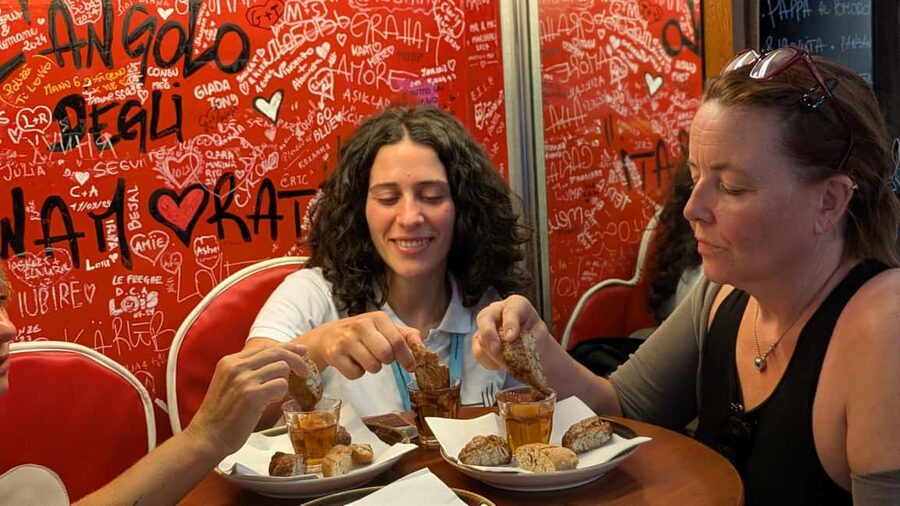
The final tasting brings the mood back toward pleasure. At a historic cernacchio, you taste cantucci with Vin Santo, the classic sweet pairing of crisp almond biscuits and dessert wine.
This is a fitting finish because it gives you a gentle landing after the darker material. Florence is not reduced to murders and prisons. The city’s food, wine, rituals, and social life remain part of the story.
The tour ends near Piazza di Santa Croce. That location is useful for continuing your evening in central Florence, though the exact route and end point can depend on the option booked. You will want comfortable shoes, since the experience includes several walking sections and standing stops.
The final food stop lasts about 15 minutes. Like the earlier tasting, it is a sample rather than a complete meal. I like that the two tastings are spaced apart, since they make the 90-minute to two-hour tour feel less rushed.
Is $34 a fair price?
At $34 per person, the value is good if you would otherwise pay for both a guided walk and several small tastings. The price includes an English-speaking guide, wine, and food tastings, so you are paying for more than a standard street-history tour.
The value depends heavily on what you want. If you mainly want Renaissance art, cathedral interiors, or detailed architectural commentary, another Florence tour may suit you better. If you enjoy unusual stories, local food, and a guide-led evening walk, this package offers a varied use of your time.
The tour is also a sensible choice for a first or second evening in Florence. It helps you get oriented around Piazza della Signoria, the Duomo, Via Ghibellina, and Santa Croce while giving you conversation topics for the rest of your stay.
Free cancellation up to 24 hours before the start and a reserve-now, pay-later option make the booking less risky. Starting times vary, so check availability rather than assuming the tour runs at one fixed hour.
Who should book this experience?
I would choose this tour if you like true crime, ghost stories, unusual local history, and food stops. It is especially suitable for couples, friends, solo visitors, and small groups who want something more unusual than an art gallery visit.
It also suits people who enjoy a guide with personality. The strongest comments focus on engaging hosts, clear explanations, humor, kindness, and local advice. Guides may include Gabriel, Gabrielle, Ilaria, or Ezgi, and the experience can feel different depending on who leads your group.
I would hesitate if you dislike stories about executions, torture, or murder. I would also skip it if you expect a full dinner, a theatrical haunted house, or a purely factual crime investigation. The experience mixes documented cases with folklore and atmosphere.
Should you book the Florence Crimes, Murders & Ghosts Walking Tour?
Book it if you want to see Florence from an angle that most daytime sightseeing misses. The combination of Savonarola, the Monster of Florence, Beatrice Cenci, the Stinche prison, Tuscan wine, cold cuts, cantucci, and Vin Santo gives you a well-paced evening with plenty to talk about afterward.
Just set the right expectations. This is a lively storytelling walk, not a horror production or a full meal. At $34, it offers solid value for an engaging guide, central landmarks, two food and drink pauses, and a darker view of Florence’s past.
FAQ
How long does the Florence Crimes, Murders & Ghosts tour last?
The tour lasts about 90 minutes to two hours. Check the available start times when booking.
How much does the tour cost?
The listed price is $34 per person.
What does the price include?
The price includes an English-speaking guide plus wine and food tastings.
Which languages are available?
The tour is available with a live guide in English or Spanish.
Where does the tour start?
There are two possible starting locations: Piazza della Signoria or Piazza di Madonna degli Aldobrandini, 6. The meeting point depends on the option booked.
Where does the tour finish?
The available drop-off locations include Piazza di Santa Croce in the Santa Croce area.
What food and drinks are included?
The tastings include Tuscan wine, traditional specialties such as cold cuts and prosciutto, and cantucci with Vin Santo. Vegetarian options are available at the savory tasting.
Does the tour discuss the Monster of Florence?
Yes. The tour includes the unsolved Monster of Florence case associated with 1984.
Is the tour only about confirmed crimes?
No. It combines real murder cases and executions with ghost stories, esoteric legends, lost rituals, and local folklore.
Can I cancel for a full refund?
Yes. You can cancel up to 24 hours in advance for a full refund. You can also reserve now and pay later.
Newly added around Italy
- Your evening in Venice – Legends&Ghosts&Aperitif★ 4.7 · 79 reviews
- Venice Ghost Tour: Haunted Palaces & Secret Canals★ 4.8 · 3 reviews
- Venice: Legends, Anecdotes and Ghost Stories Walking Tour★ 4.1 · 137 reviews
- Venice: Ghosts & Murders – Mysterious Tales of San Marco Area★ 4.5 · 80 reviews
- Venice: Ghosts and Legends Evening Private Walking Tour★ 4.5 · 6 reviews
- Venice Ghost & Legends Walking City Tour★ 3.5 · 83 reviews
- Venice Ghostly Legends Explore on Foot★ 5.0 · 2 reviews
- Ghosts of Venice – Discovering the Unknown★ 3.0 · 63 reviews
Italy Ghost Tours, compared.
Paranormal Night Walking Tour & Secret Backstreets
Read our review →
Venice Ghost Stories, Legends and Anecdotes Tour
Read our review →
Browse the lists this tour appears in