
REVIEW · CANADA GHOST TOURS
Ghost Tour of Queen’s University
The dead have office hours. Kingston’s Queen’s University Ghost Tour turns a short evening walk into a brisk lesson in campus history, medical oddities, church lore, and local spirits. I like the small maximum of 20 people, which should make it easier to hear the guide, and I like the mix of famous university buildings with lesser-known haunts such as Dunning Hall.
The tour costs $25.31 per person and lasts about 75 minutes. That is fair value for a focused night activity, especially if you enjoy stories more than theatrical effects. The main point to consider is weather: the walk requires good conditions, and most of it takes place outdoors after an 8:00 p.m. start.
Key points to know before you book
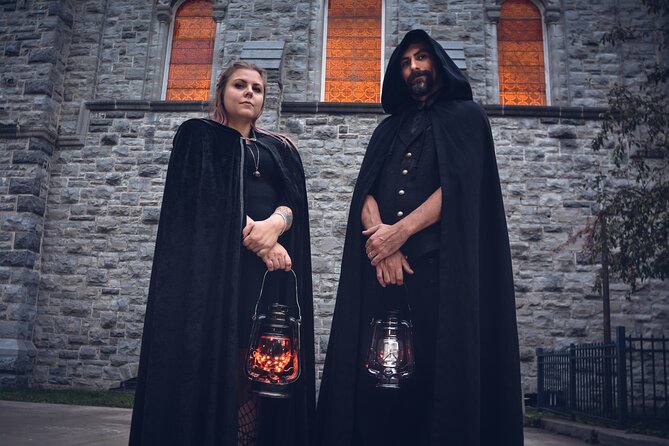
- The courthouse is both meeting point and first story stop, so you begin with a landmark rather than a long walk to the action.
- Queen’s University supplies most of the evening’s settings, with stories tied to academic buildings, student spaces, medical training, and campus figures.
- Summerhill and Kingston General Hospital add a darker edge, including old medical practices and the difficult early years of the hospital.
- The Agnes Etherington Art Centre is an unexpected haunted stop, pairing art and architecture with a ghost story.
- A small group cap of 20 people helps the storytelling, though the experience can still feel intimate rather than theatrical.
- The tour returns to its starting point, and free cancellation is available up to 24 hours before departure.
Why this short Kingston ghost walk works
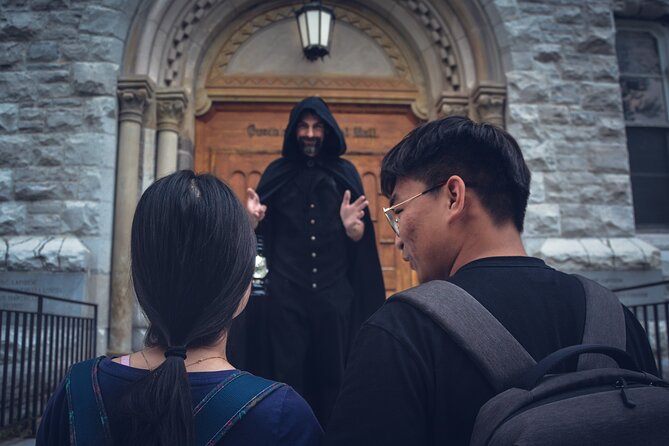
Kingston is a natural place for a ghost tour. Its streets bring together old government buildings, churches, a long-established university, hospitals, and homes linked to well-known Canadian figures. This experience uses that mix well. You are not simply walking past old stone walls while someone recites dates. Each stop connects a building to a person, event, or unsettling story.
The tour begins at 8:00 p.m. and runs for roughly one hour and 15 minutes. That timing matters. Darkness gives the stories a better setting, but the walk is still short enough to fit around dinner or another evening plan. You should arrive ready to listen and walk between stops, with comfortable shoes and clothing suited to the weather.
I also like the scale. A maximum of 20 people is small enough for a guide to keep the group together and project a story without competing with a large crowd. The available feedback points to the guide’s command of the building-based stories as a major strength. One family booking even found it entertaining for a grandson, while another described the guide as passionate and well prepared.
This is not a haunted-house show. You should not expect actors jumping from shadows, special effects, or guaranteed paranormal activity. The appeal is the storytelling, the setting, and the chance to see Queen’s University after dark.
A few more hauntings around Canada worth booking
- Ghostly Walking Tour in Victoria
★ 5.0 · 816 reviews - Old Montreal: Traditional Ghost Walk of the Haunted City
★ 4.7 · 746 reviews - Old Montreal Ghost Walking Tour
★ 4.5 · 726 reviews
The courthouse begins the evening with stone and suspense
The Kingston Frontenac County Courthouse at 5 Court Street is the meeting point and the first storytelling location. The building was designated a National Historic Site of Canada in 1980. Its Greek Revival design and imposing limestone walls give the opening scene the right weight.
Built in the late 1850s, the courthouse introduces an important idea that carries through the walk: in Kingston, architecture is part of the evidence. You do not need a dark forest or abandoned asylum to create an eerie mood. A formal civic building, built for law and order, can feel just as suggestive at night.
Starting here is practical. You know exactly where to go, and the activity ends at the same place. That makes the tour easier to fit into an evening schedule, especially if you are staying near central Kingston or using nearby public transportation.
Chalmers United Church adds a Gothic turn
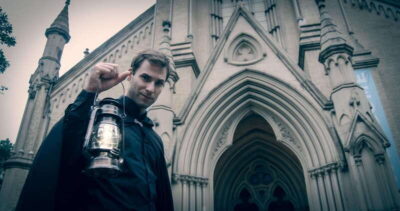
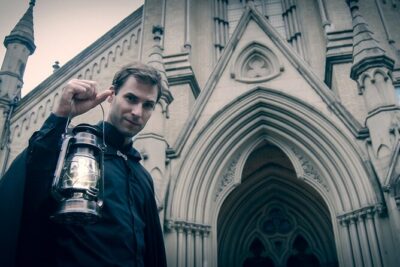
The next story involves Chalmers United Church, a heritage building dating from 1890. Its Gothic Revival design gives the walk a different mood from the courthouse. The pointed architectural forms, age, and religious purpose make an effective setting for a ghost story without needing much decoration.
This stop also helps show the range of the tour. The experience is not limited to Queen’s University property. You get a small slice of Kingston’s wider built history before moving toward the campus and its more concentrated collection of stories.
The church story is one of the points where the guide’s style matters most. The information provided does not identify the spirit or give the full tale in advance, which is useful. You can hear it without having the ending spoiled. The guide’s ability to explain the setting clearly will shape how much you enjoy this part.
Queen’s University supplies the main stage
The Queen’s campus dates back to the 1840s and provides most of the evening’s stops. Its historic buildings and open spaces give the group room to move while keeping the stories tied to real places. You are not hearing a series of unrelated legends. You are following a thread through the university’s academic, social, and medical past.
That setting will suit you if you enjoy local history with your scares. The buildings matter as much as the supernatural claims. You hear about people connected with Queen’s, the way rooms and departments changed over time, and the events said to linger around particular sites.
The campus also gives the tour a strong contrast between ordinary daily life and the stories attached to it. Lecture halls, student facilities, offices, and museums are useful places by day. After dark, their former occupants and old incidents take on a different feel.
Same streets, an entirely different kind of scare:
- Ottawa: Haunted Night Walking Tour
★ 4.5 · 341 reviews - Original Haunted Walk of Ottawa
★ 4.5 · 284 reviews - Toronto: Dark History Nighttime Walking Tour
★ 4.7 · 273 reviews - Ghost Tour of Toronto Original Haunted Walk
★ 4.5 · 185 reviews
Fleming Hall brings a personal story to the route
Fleming Hall is named in part for Sir Sandford Fleming, a former chancellor of Queen’s. Its other wings honor figures connected with electrical engineering, which occupied the building until 1989.
The key story here centers on the Jemmett Wing and Douglas Mill Jemmett. That detail gives the stop a human focus. Instead of treating the building as a generic haunted structure, the guide connects one named person and one specific section of the hall to a chilling account.
This is the sort of stop that rewards close listening. Fleming Hall has several names and layers of university history, so you may want to remember the guide’s explanation of who each person was. The story works best when you understand the building’s purpose and the people linked to it.
Four Directions and Charles Sangster’s tragic tale
Four Directions was founded in 1996 to support Indigenous students at Queen’s. Since 2000, it has occupied a house built in 1886. That house has had notable residents, including Canadian poet Charles Sangster.
The tour uses Sangster’s tragic story here. This stop broadens the experience beyond campus administrators and anonymous ghostly figures. A poet’s connection to the house gives the tale a literary angle, and the building’s domestic past makes it feel different from the larger institutional sites.
You should also value the context of Four Directions itself. The tour passes a place with an important present-day role at Queen’s, while also explaining its earlier residents. That combination gives the walk more substance than a string of spooky claims.
Summerhill reveals the university’s medical past
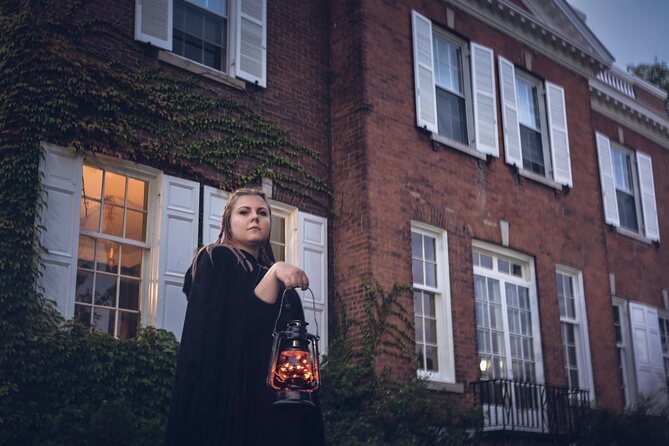
Summerhill may be the most historically layered stop. Constructed in 1839, it was first intended as the country villa of Archdeacon George O’Kill Stuart. When Kingston served as Canada’s capital, the house was used as a boarding house for members of the Legislative Assembly.
Queen’s bought the building in 1854, and for years it was the university’s only building. Later, it housed the medical school. That final chapter supplies the macabre material for the tour, involving medical practices that may be unsettling for some people.
I find this kind of story more effective than a vague haunting because the building has changed roles so many times. A villa, temporary political residence, university center, and medical facility all leave different traces. If you are sensitive to medical or anatomical subjects, pay attention to the tone of the story and decide how much detail you want to hear.
Kingston’s hospitals bring the darkest material
The hospital section covers two Kingston hospitals, including Kingston General Hospital. Built in 1835, Kingston General faced a bleak practical problem when its original building was finished: the budget had run out before furnishings could be purchased. The hospital sat empty for three years.
That fact alone gives the site an unusual story. The hospital also served several purposes over time, including use as Canada’s first temporary parliament building. Its changing role creates a strong link between Kingston’s civic, political, and medical past.
The tour includes ghost stories from two hospitals, and this is likely one of the more serious portions of the evening. Medical history often carries real suffering, so the mood may feel less playful here. You should choose this tour if you enjoy a darker, more reflective style of ghost story rather than a light Halloween walk.
The Agnes Etherington Art Centre is an unexpected haunt
The Agnes Etherington Art Centre is one of the most surprising stops. Located on the Queen’s campus, the museum holds more than 17,000 works of art, with material ranging from ancient to contemporary. It is also used for exhibitions and cultural programs.
The tour adds a ghost story to this otherwise calm art setting. That contrast is the attraction. You move from paintings and museum activity to the idea that something unseen remains attached to the building.
The museum’s presence also gives the route a welcome change of pace. Not every stop is a church, hospital, or old university hall. If you appreciate architecture and cultural institutions, you will likely enjoy seeing the art centre in this unusual evening context, even though the tour does not function as an art tour.
Dunning Hall shows that age is not everything
Dunning Hall was built in 1960, making it newer than most of the other buildings on the route. It houses Queen’s Department of Economics and contains some of the university’s largest lecture halls.
That makes its appearance useful. A ghost tour does not need every building to date from the 1800s. Dunning Hall shows that a relatively modern structure can still acquire its own campus lore. Its inclusion keeps the tour from making the simple assumption that only the oldest stone buildings can feel eerie.
This may be one of the lesser-known locations, which can make the story more interesting for people who already know Queen’s campus. You get a chance to hear about a building that is less likely to appear in a standard Kingston sightseeing plan.
The John Deutsch University Centre closes with Alfie Pierce
The final major setting is the John Deutsch University Centre. Rebuilt in 1947 after the original Student’s Union was destroyed by fire, it is linked to many of the events attributed to the spirit of Alfie Pierce.
A student center is a fitting place to close the walk. Unlike a courthouse or hospital, it is tied to university social life. The Alfie Pierce stories give the final section a recurring figure and a location where people once gathered, studied, and spent time together.
Because the tour ends back at the courthouse, this stop is not a logistical dead end. You return to the original meeting point, which is useful if you have left belongings nearby or need to continue into central Kingston afterward.
What $25.31 buys you
At $25.31 per person, this is a reasonably priced evening activity. The tour lasts about 75 minutes, covers several significant buildings, and includes a guide who supplies the stories and context. You are paying for interpretation rather than admission to a museum or access to an interior attraction.
That distinction matters. If you want a polished stage performance, the price may feel less compelling. If you like walking tours and local stories, the cost compares well with a short guided experience in a historic city.
The value improves if you use the tour as an introduction to Kingston. You will learn which buildings deserve a closer look during daylight, and you may leave with a better sense of how Queen’s fits into the city’s civic and medical past.
The experience is offered in English, with mobile tickets. It is available for a maximum of 20 people, and confirmation is provided when you book. Service animals are allowed, most people can participate, and the start point is near public transportation.
Who should book this tour
I would choose this walk if you like:
- University history tied to real buildings and named people
- Ghost stories with medical, political, and literary angles
- A short evening activity that ends where it starts
- Small-group tours rather than large theatrical productions
- Family outings where older children can follow a story-based walk
The tour may not suit you if you want guaranteed paranormal activity, extensive indoor access, or a long list of jump scares. The material also includes hospitals and macabre medical practices, so consider your group’s comfort level.
The available feedback gives the experience a 4.7 rating from six reviews. The strongest praise focuses on the fun of the walk, the guide’s command of the building stories, and the passion behind the telling. One French-language comment especially praised the interesting stories and the chills they produced. The family feedback suggests children can enjoy it, but the tour remains a history walk with ghost stories, not a children’s attraction.
Weather is the main practical risk. The experience requires good weather, and poor conditions can lead to a new date or a full refund. You can cancel for a full refund up to 24 hours before the 8:00 p.m. start. Changes or cancellations inside that window are not accepted for a refund, so keep an eye on the forecast.
Should you book the Queen’s University Ghost Tour?
Book it if you want a compact Kingston activity that blends old buildings, university life, medical history, and supernatural tales. The best reason to go is the route itself: courthouse, church, campus halls, a poet’s former home, a museum, hospitals, and a student center all appear within one short evening walk.
I would give it extra weight if you are already interested in Queen’s University or want something beyond the usual daytime sights. At $25.31, the tour offers good value for a 75-minute guided experience, especially with a small group limit and a return to the starting point.
Skip it if you prefer indoor attractions or dislike dark medical stories. For everyone else, this is a friendly, focused way to see Kingston’s academic core after sunset and hear the stories that ordinary daytime tours tend to leave out.
FAQ
Where does the Queen’s University Ghost Tour start?
It starts at the Kingston Frontenac County Courthouse, 5 Court Street, Kingston, Ontario, K7L 2N4.
What time does the tour begin?
The tour starts at 8:00 p.m.
How long does the tour last?
The experience lasts approximately one hour and 15 minutes.
Where does the tour end?
It ends back at the Kingston Frontenac County Courthouse, the meeting point.
How much does the tour cost?
The listed price is $25.31 per person.
What language is the tour offered in?
The tour is offered in English.
How many people can join the tour?
The maximum group size is 20 people.
Is the tour suitable for children?
Most people can participate, and the available feedback specifically indicates that the tour can work well with children. The stories include hospitals and macabre medical subjects, so parents should consider their children’s comfort with that material.
Can I cancel for a full refund?
Yes. You can cancel at least 24 hours before the start time for a full refund. If poor weather cancels the experience, you will be offered another date or a full refund.
Newly added around Canada
- Victoria: Ghost Tour of Old Town and Bastion Square★ 4.7 · 70 reviews
- Winnipeg’s Most Haunted: a Smartphone Audio Ghost Tour★ 3.5 · 5 reviews
- University of Toronto Ghost Tour – Campus Secrets & Spectres★ 4.5 · 13 reviews
- Ghosts of the Village at Black Creek★ 4.5 · 6 reviews
- Haunted Walk Experience at the Mackenzie King Estate★ 4.5 · 12 reviews
- Ghosts of the Bytown Museum★ 5.0 · 2 reviews
- Ottawa Valley Haunted Tour – Night Trip From Ottawa★ 4.5 · 5 reviews
- Haunted Mountain★ 4.5 · 34 reviews
Canada Ghost Tours, compared.
Old Montreal: Traditional Ghost Walk of the Haunted City
Read our review →
Browse the lists this tour appears in