
REVIEW · DUBLIN GHOST TOURS
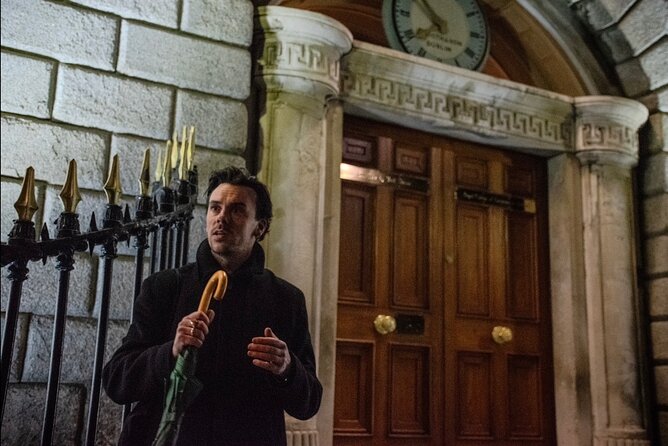
Haunted Dublin Walking Tour
Dublin gets darker after sunset. This two-hour walk turns the city center into a stage for stories about alleged hauntings, grave robbing, witchcraft, murder, old theatres, and the strange characters who once lived around these streets. You move from Temple Bar to St Stephen’s Green, with a nationally accredited guide leading the way in English.
I like the strong mix of Dublin history and ghost stories, and I like that the route uses real places rather than relying on theatrical props. Guides such as Ciaran, Deirdre, Lee, and Ross are often praised for warm storytelling, humor, and quick thinking. The main drawback is that this is more of a dark history walk than a scare attraction. You will also cover plenty of ground, sometimes at a brisk pace.
At $29.02 per person, the tour offers a fair way to see central Dublin at night while learning about its less respectable past. It suits curious adults, history fans, literature lovers, and families with older children who enjoy spooky tales without needing a full horror show.
Key points before you book
- Bram Stoker connection: Dublin Castle includes stories about the author of Dracula and his former workplace.
- A citywide route: You walk from Temple Bar through Dublin Castle, the Liberties, St Stephen’s Green, and several old churches and theatres.
- History comes first: Expect storytelling about real places, notorious figures, crime, folklore, and alleged hauntings.
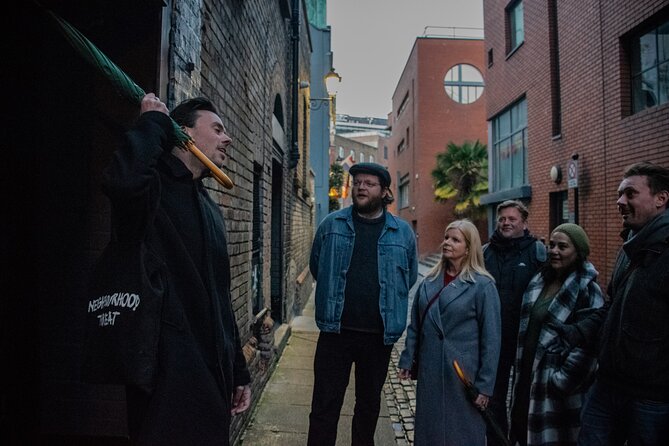
- Good guide reputation: Ciaran, Deirdre, Lee, and Ross are praised for humor, clear explanations, and keeping groups together.
- Comfortable shoes matter: The route covers much of central Dublin, with some quick walking between stops.
- Outdoor evening activity: The tour begins at 6:00 p.m. and ends at St Stephen’s Green, close to Grafton Street, restaurants, pubs, and public transport.
What kind of ghost tour is this?
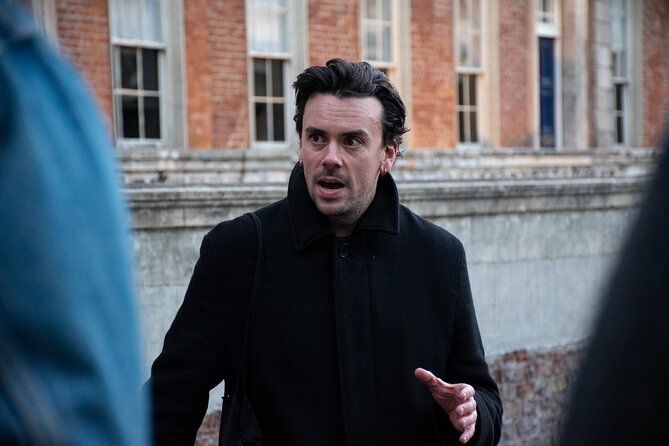
This is a walking history tour with a spooky edge. You will hear about spirits and haunted places, but the guide also explains the events, people, buildings, and social conditions behind the stories. That balance is the best reason to choose it.
If you want actors jumping from dark doorways, special effects, or a purpose-built horror show, this is not that kind of evening. The fright comes from old crimes, violent characters, graveyards, prisons, brothels, battle sites, and stories that have stayed attached to Dublin’s streets.
I think that makes the experience more useful than a standard ghost walk. You get a good orientation to the center of Dublin while also learning why certain corners gained such a grim reputation. The tone can be funny one moment and unsettling the next. Guides are encouraged to tell the stories with personality, and Ciaran is especially praised for mixing Irish literature, practical city tips, theater suggestions, and gruesome historical facts into his talk.
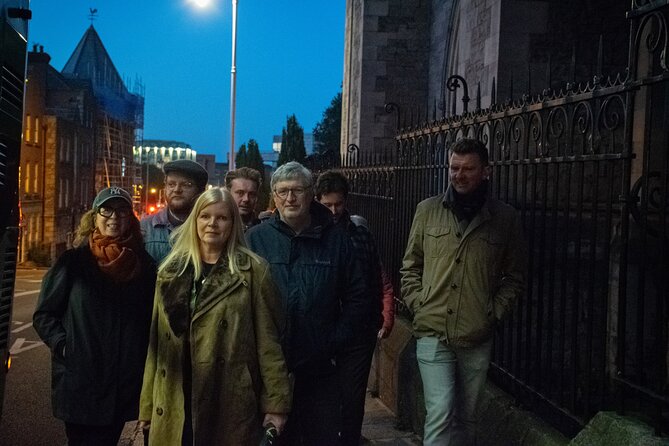
The tour is capped at 30 people. That is not an intimate private walk, but it is small enough for a guide to keep an eye on the group and answer questions. One guide was specifically praised for making sure everyone stayed together and safe, which matters once the group is moving through busy central streets after dark.
More Ghost Walking Tours in Dublin:
- Dublin’s Haunted History Walking Tour
★ 4.3 · 345 reviews - Hidden Dublin: Haunted History Walking Tour v2.0 2026
★ 4.5 · 188 reviews - Dublin: North Quay Guided Ghost Walk
★ 4.2 · 144 reviews
Starting in Temple Bar at 6:00 p.m.
The meeting point is 3 Crown Alley in Temple Bar. This puts you in one of Dublin’s most famous areas, surrounded by pubs, narrow lanes, and evening crowds. It is an easy place to reach by public transport, though you should allow time to find the exact meeting spot in the busy Temple Bar district.
The first stop takes about 10 minutes and serves as the introduction to the city’s darker side. Temple Bar is now known for nightlife, music, and tourist traffic, but the tour uses it as a starting point for older stories and local atmosphere.
You will be outdoors for the full experience, so check the weather before leaving. Rain did not stop one group from enjoying the evening, but wet Dublin streets and fast walking are a poor match for smooth shoes. Wear footwear you can comfortably use for two hours.
Dublin Castle and the Bram Stoker connection
Dublin Castle receives about 15 minutes, making it one of the most important stops on the route. The castle is presented as a former center of imperial rule in Ireland, a place associated with authority, fear, and centuries of political power.
The literary connection is a major draw. Bram Stoker, best known for Dracula, once worked at Dublin Castle. That detail gives the tour a natural bridge between Dublin’s political past and the Gothic tradition. If you enjoy Irish literature, horror writing, or the real people behind famous books, this section should be especially rewarding.
There is one practical warning here. Access to Dublin Castle can be affected by closures or special events. During New Year celebrations, the castle was completely off limits, forcing the guide to adjust the route. The guide managed the change well, but the experience lost a substantial part of its planned content. Check for major closures around your date, especially during holiday periods.
The stop is still useful when you remain outside, but do not assume the tour includes an interior castle visit. The supplied details describe a stop at Dublin Castle, not guaranteed admission into its buildings.
The Olympia and Smock Alley theatres
The next part of the walk shifts from political power to Dublin’s theatrical past. At 3Olympia Theatre, you spend about 10 minutes near a Victorian music hall and long-running concert venue. The setting adds a different type of ghost story, one tied to performance, crowds, entertainers, and the old life of a city venue.
Smock Alley Theatre 1662 follows for another 10 minutes. It is identified as Ireland’s oldest theatre, giving the guide another strong place to discuss the people and events connected with Dublin performance culture.
These stops are not major sightseeing visits in the usual sense. You are not attending a show or taking a formal backstage tour. Their value comes from hearing the stories attached to the buildings while seeing where they fit into the city center.
I like this change of subject. Without it, a ghost walk could become a long sequence of graves and murders. The theatres bring in literature, music, public entertainment, and the human habit of gathering in old buildings. They also show how Dublin’s darker stories are not limited to churches and graveyards.
A few more hauntings around Dublin worth booking
- Dublin Ghost Bus Tour with Professional Actors
★ 4.5 · 949 reviews - From Dublin: Gravedigger Ghost Bus Tour
★ 4.4 · 546 reviews - Gravedigger 2-Hour Ghost Bus Tour From Dublin
★ 4.5 · 501 reviews - North Quay Ghost Walk Tour
★ 4.5 · 91 reviews
Christ Church Cathedral and the old Hell district
Christ Church Cathedral is one of the strongest historical sections of the tour. The cathedral itself represents Dublin’s religious past, but the guide focuses on the rough streets that once surrounded it.
In the cathedral’s shadow was an area known locally as Hell. It was associated with brothels, drinking houses, wealthy patrons, and violence. The tour introduces some of the characters linked with that neighborhood, including figures whose alleged ghostly presence is still connected with the surrounding streets.
This stop lasts about 15 minutes, giving the guide time to build the setting. The interest is not simply that the area was dangerous. It is the contrast between a major cathedral and the disorder that existed around it. Dublin’s past was not neat or polite, and this section makes that clear.
Expect the guide to discuss people and local legends rather than offer proof of the supernatural. That is an important distinction. The tour treats hauntings as stories attached to place, while the historical background gives them shape.
St Patrick’s Cathedral, Marsh’s Library, and the Liberties
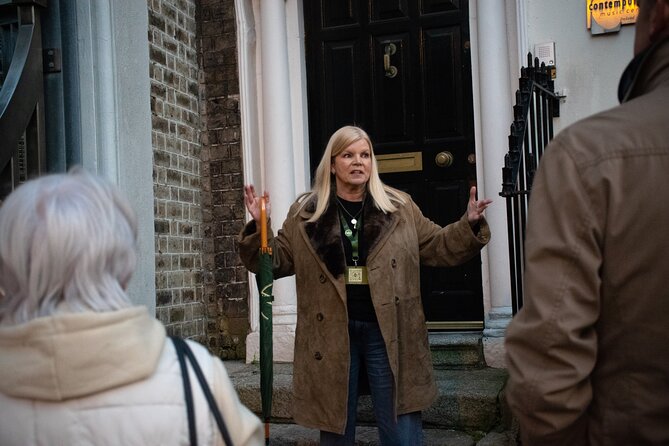
St Patrick’s Cathedral is named for Ireland’s patron saint, but the tour uses it to explore the city’s sinners as much as its saints. The stop takes about 10 minutes and includes stories connected with the Liberties and the notorious Four Corners of Hell.
Nearby Marsh’s Library adds another layer. It is Ireland’s oldest public library and sits in the shadow of St Patrick’s Cathedral. The guide connects the library with ghostly stories and the wider history of Dublin’s old streets.
You may find this section especially appealing if you like places where the building itself carries the story. A library, a cathedral, and the old Liberties create a strong contrast between learning, faith, poverty, crime, and folklore.
The walk does not include admission to either the cathedral or Marsh’s Library. You see these sites from the route and hear their stories from outside. If you want to visit the interiors, plan a separate daytime stop.
St Kevin’s Park and the hidden graveyard
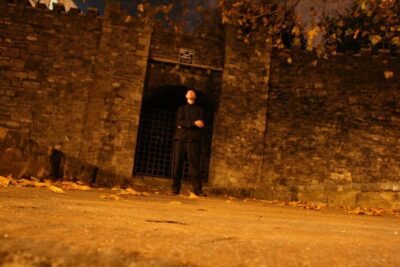
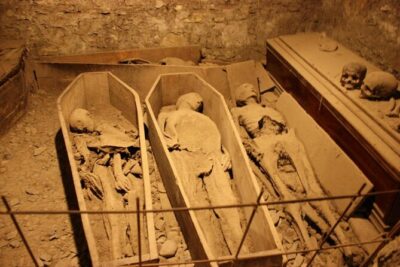
St Kevin’s Park offers one of the most atmospheric locations on the route. It is the site of ruined church remains and an old graveyard down a dark laneway in the middle of the city.
This is the kind of place that gives a walking tour its strongest mood. You are not looking at a modern attraction built to feel spooky. You are standing near old religious ruins and graves while hearing stories about Dublin’s past.
The stop lasts about 10 minutes. The route’s general pace matters here. You will have time to listen, but this is not a long silent exploration of the ruins. Keep close to the group and listen carefully, especially if city noise or nearby activity makes it hard to hear.
St Kevin’s Park also shows why comfortable shoes are essential. The entire route is urban, but it still includes old lanes, parks, and uneven sections. A guide described by the tour company as moving quickly can make the distance feel longer than the two-hour duration suggests.
The 1916 Easter Rising and the Royal College of Surgeons
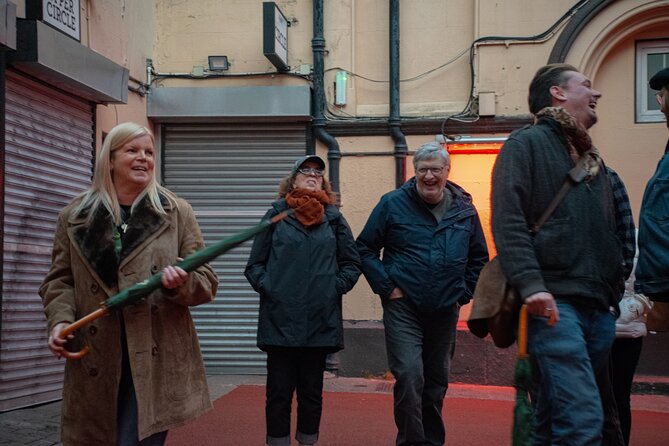
At the Royal College of Surgeons, the subject shifts again, this time to the 1916 Easter Rising. The building was one of the garrisons during the uprising and occupies the west side of St Stephen’s Green.
This is not only a ghost story stop. It brings Dublin’s political struggles into the walk and adds modern Irish history to the older tales of churches, theatres, and graveyards. You get a better sense of how the city has been shaped by conflict as well as folklore.
A strong guide can connect the building’s role in the Rising with the surrounding streets and the people who occupied them. Lee was praised for adapting well when church bells interrupted the talk, moving the group and continuing without losing the thread. That kind of flexibility matters on an outdoor tour, where traffic, bells, weather, and crowds are part of the evening.
Finishing at St Stephen’s Green
The final stop is St Stephen’s Green, one of Dublin’s best-known Georgian squares. You spend about 10 minutes in or near the park before the tour ends.
The finish is practical. St Stephen’s Green is at the top of Grafton Street, close to shops, restaurants, pubs, and public transport. You can continue the night with dinner or drinks without crossing the city again.
The park also provides a calmer closing setting after stories about violence, brothels, and hauntings. It is a fitting contrast to the earlier sections of the route, and it gives you a clear sense of how much central Dublin you have covered.
The end point is not near Temple Bar, so remember that your return journey begins at St Stephen’s Green. That is convenient if you plan to eat or shop around Grafton Street, but less convenient if your hotel is back in the Temple Bar area and you expected to finish where you started.
Guides, storytelling, and the group experience
The guide can make or break a story-based tour. Here, Ciaran receives especially strong praise for humor, storytelling, Irish literature, and useful recommendations. Deirdre is noted for keeping the evening lively, answering questions, and handling a Halloween crowd with energy. Lee is praised for adapting when outside noise disrupted the route, and Ross for bringing older Dublin to life through historical detail and charm.
Those names give you a useful sense of the experience, but your guide will depend on the date. The common thread is an engaging spoken presentation rather than a scripted audio guide.
The humor is important. The subject includes murder, grave robbing, and violent history, but the evening is not relentlessly grim. Stories such as Billy in the Bowl can become comic highlights, even when the wider subject remains dark.
Families can enjoy the walk, and teenagers have responded well to the mix of history and spooky material. Still, parents should consider the subject matter. This is not a gentle children’s ghost story, and the tour includes crime, brothels, death, and alleged hauntings.
Pace, weather, and practical comfort
The advertised duration is about two hours, but the distance is the key detail. You move through much of central Dublin, and some guides walk quickly. Wear walking shoes and bring a rain jacket, especially for an evening in Ireland.
The tour requires a moderate level of physical fitness. You do not need to be an athlete, but you should be comfortable standing and walking for two hours. There are no included snacks, so eat beforehand or plan something at the end.
The tour is offered in English and uses a mobile ticket. Service animals are allowed, and the meeting point is near public transportation. Free cancellation is available up to 24 hours before the 6:00 p.m. start time. Changes or cancellations inside that window are not accepted for a refund.
Is $29.02 good value?
At $29.02, you are paying for a guided introduction to Dublin’s central sights, plus a themed set of stories that you would be unlikely to assemble on your own. The value is strongest if you want both orientation and entertainment.
You are not paying for entrance fees to Dublin Castle, Christ Church Cathedral, St Patrick’s Cathedral, Marsh’s Library, or the theatres. The tour visits these places from the route, but admission is not included. If you want interiors, add those visits separately.
The price is less compelling if you only want supernatural evidence or a frightening theatrical show. The experience depends on the guide’s delivery and your interest in the city’s past. At 4.9 out of 5 from 551 ratings, with 99 percent recommending it, the overall response is very strong, but the one clear limitation remains: the stories matter more than actual hauntings.
Should you book the Haunted Dublin Walking Tour?
Book it if you want an entertaining evening walk that combines ghost lore, true crime, Irish history, and local characters. It is particularly suited to a first Dublin visit because the route passes major sights while showing you a less polished side of the city.
I would choose it for history fans, readers interested in Bram Stoker, couples seeking a low-key night activity, and families with older children. I would also recommend it around Halloween or Samhain, when the subject naturally fits the season.
Think twice if you have limited mobility, dislike brisk walking, or want to enter every building. Also check castle access around New Year and other major events. For most people who enjoy a good story and do not need every ghost to be proven, the tour offers a lively, fairly priced way to see Dublin after dark.
FAQ
How long is the Haunted Dublin Walking Tour?
The tour lasts approximately two hours.
Where does the tour begin?
It begins at 3 Crown Alley in Temple Bar, Dublin, at 6:00 p.m.
Where does the tour finish?
The tour finishes at St Stephen’s Green, near the top of Grafton Street in Dublin 2.
Is entry to Dublin Castle included?
No admission fees are included. The tour visits Dublin Castle as part of the walking route, but interior access is not guaranteed and can be affected by closures.
Is the tour suitable for children?
The experience is described as fun for a wide range of people, and teenagers have enjoyed it. However, the stories include ghosts, murder, grave robbing, brothels, violence, and other dark subjects.
What should I wear or bring?
Wear comfortable walking shoes and prepare for outdoor conditions. The tour covers a good deal of central Dublin, and the walk can be brisk. The tour does not include snacks.
Newly added around Dublin
- Legends, Ghosts and Ghouls Walking Tour Dublin★ 4.5 · 16 reviews
- North Quay Ghost Walk Tour★ 4.5 · 91 reviews
- Hidden Dublin: Haunted History Walking Tour v2.0 2026★ 4.5 · 188 reviews
- Dublin Ghost Hunt Exploration Game and Tour★ 4.0 · 34 reviews
- Macabre, Ghostly & Bloody Walking Tour★ 5.0 · 15 reviews
- Dublin: North Quay Guided Ghost Walk★ 4.2 · 144 reviews
- Dublin walking tour: ghosts & haunted places★ 4.9 · 55 reviews
- Dublin: Legends, Ghosts & Ghouls Walking Tour★ 4.6 · 7 reviews
Dublin Ghost Tours, compared.

Hidden Dublin: Haunted History Walking Tour v2.0 2026
Read our review →
Browse the lists this tour appears in