
REVIEW · ITALY GHOST TOURS
Madame, Saints and Witches: The Women who shaped Turin’s history
Turin keeps its best stories off the postcard. This 1.5-hour walk links the city center to women who shaped Savoyard politics, charity, scandal, and legend. I like the unusual subject and the route from Palazzo Madama to Piazza della Consolata. I also like that a licensed local guide leads every tour, giving the stories a clear historical frame instead of leaving them as loose folklore.
The main consideration is language. The tour is offered in Italian, and some material remains in its original language. The advertised duration also varies between 1.5 and 2 hours, so check the confirmed schedule before booking. At $22 per person, it is a fair price if you want Turin explained through personal stories rather than a standard list of monuments.
Key points at a glance
- Royal women at the center: Learn how Savoyard women handled power, alliances, court politics, and family interests.
- Scandal beside charity: The stories move from the Countess of Verrua and Bella Rosina to Giulia di Barolo’s charitable work.
- Ghosts and witches: Legends, court secrets, and a ghost said to wander a palace give the walk a darker edge.
- A curious royal twist: Discover Charles Emmanuel II and the surprising story behind the name la Carlina.
- Easy city-center route: Begin at Palazzo Madama and finish at Piazza della Consolata.
- Good for families: The stories offer history through drama, mystery, and human personalities.
Why Turin’s women make such good guides to the city
Turin can first seem like a city of grand squares, royal buildings, cafés, and straight avenues. Those sights matter, but they do not tell the whole story. This walk uses women as the thread connecting public power with private life.
That approach matters because women in court history often appear only as wives, mothers, mistresses, or decorative figures. Here, the focus shifts toward strategy, influence, charity, reputation, and survival. You get a different view of Turin, one that asks who truly shaped decisions and who paid the price for them.
I also like the mix of documented figures and local legend. A story about a royal court can show how power worked. A tale about a witch or a ghost shows how people remembered fear, injustice, and scandal. The two forms belong together in an old city.
The subject should work well for families with older children. Court intrigues and ghost stories give younger listeners something to follow, while adults can pay closer attention to the political and social setting. The guide’s job is important here. A licensed guide can help separate established history from stories passed down through the city.
More Witch Tours in Italy:
- New – Maleficia: Inquisition, Torture and Witchcraft between the centuries
★ 4.0 · 13 reviews - Milan: Myths, Legends, and Witches Dark Side Walking Tour
★ 4.4 · 7 reviews - Mysterious Mantua: a history of magic, murder, and witchcraft
★ 3.6 · 3 reviews
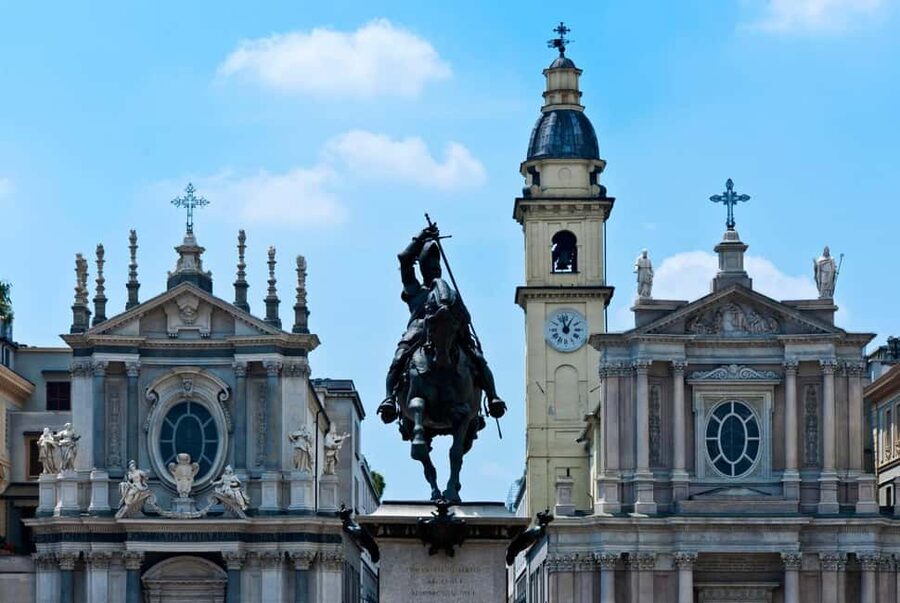
Starting at Palazzo Madama in Piazza Castello
The meeting point is in front of Palazzo Madama, at the Piazza Castello entrance. This is a practical place to begin because it puts you in the heart of central Turin, surrounded by the city’s royal past.
Arrive 10 minutes early. The tour begins on time, and a city-center meeting point can be busy with pedestrians and other groups. You should also confirm the exact starting time when booking, since available departures can vary.
Palazzo Madama is a fitting opening rather than a random meeting spot. Its name recalls the royal women connected with the Savoy court, and the building provides a natural setting for a walk about female power. The experience is not presented as a full interior visit, so you should think of the palace as the starting frame for the outdoor route.
This beginning also sets the tone. You are not simply looking at Turin’s grand architecture. You are being asked to consider the people who used these buildings, lived near them, influenced decisions within them, and became part of the city’s legends.
Royal Madames and the machinery of Savoyard power
The Royal Madames are among the most important figures in the walk. Their stories place women inside the political life of the Savoy dynasty, where marriage, family ties, court alliances, and public image could all carry real weight.
The useful point is that influence did not always look like a formal office. A royal woman might shape relationships, manage interests, support a position, or guide a family decision from behind the scenes. That makes the walk more interesting than a simple parade of famous names.
Your guide can also show the tension between public duty and private pressure. Royal women were expected to represent stability, loyalty, and decorum, yet they operated in a court full of rival interests. Their choices could affect the family, the court, and the city around them.
For you, this part of the tour provides the political backbone. Without it, the later stories of romance, scandal, and rumor would float free of context. With it, Turin’s palaces become places where people negotiated power, not just attractive buildings.
The Countess of Verrua and Bella Rosina
The walk then turns toward more controversial women, including the Countess of Verrua and Bella Rosina. These are the kinds of figures who make court history feel personal and uncomfortable.
Their stories involve reputation, relationships, and the rules imposed on women connected to powerful men. That gives the tour a sharper edge. You are not only hearing about success or noble achievement. You are also seeing how women could be judged, celebrated, condemned, or remembered according to standards they did not control.
Bella Rosina is especially useful in this setting because her story brings private life into the public history of the Savoy court. The Countess of Verrua adds another layer of controversy. Together, these stories show why Turin’s past cannot be reduced to official portraits and polished royal titles.
I would pay close attention to how the guide handles these women. The value is not in repeating gossip for its own sake. The better question is what these stories reveal about class, gender, court behavior, and the unequal cost of scandal. Since the tour is in Italian, your ability to follow the details will depend on your language skills.
More Heritage Tours in Italy:
- Rome: Guided Bar Crawl with Drinks & Dark History
★ 4.9 · 444 reviews - Tipsy Tour: Guided Bar Crawl In Florence with Dark History
★ 5.0 · 271 reviews - Rome Secrets: Dark History & Tasty Bites Tour
★ 5.0 · 37 reviews - Rome After Dark Mysteries Myths and Haunted History
★ 5.0 · 14 reviews
Giulia di Barolo and a different kind of influence
Giulia di Barolo offers a welcome change from royal intrigue. Her story centers on philanthropy and public service, showing how a woman could shape Turin through practical work rather than court authority.
This part broadens the meaning of power. A city is shaped not only by rulers and political schemes, but also by people who support charitable causes and respond to social problems. Giulia di Barolo’s efforts help connect the tour to everyday life beyond palace walls.
The contrast is one of the experience’s strengths. You move from women associated with dynastic strategy and forbidden passions to a figure remembered for helping others. That shift prevents the walk from treating women only as romantic or mysterious characters.
The route also connects Giulia di Barolo with a palace and its ghost story. According to the tale, a ghost still wanders through its halls. The story adds atmosphere, but it also raises a useful question: how does a city preserve the memory of a woman? Sometimes through charitable work, sometimes through scandal, and sometimes through a supernatural tale.
Witches, ghosts, and Turin’s darker stories
The witches section gives the walk its strongest change of mood. Turin has long carried a reputation for mystery, and stories of witches allow the guide to explore fear, belief, and the treatment of women accused of unusual behavior or wrongdoing.
You should not expect a supernatural investigation. This is a historical and cultural walking tour, not a ghost-hunting activity. The legends are used to illuminate how people interpreted danger and difference in earlier times.
The palace ghost adds another layer. A haunting can be entertaining, especially for children, but the stronger value is emotional. Ghost stories often preserve a sense that something unresolved remains. They keep questions alive about loss, betrayal, injustice, or a life remembered imperfectly.
I like this part because it prevents the tour from becoming too formal. Turin’s royal history can feel grand and distant. Witches and ghosts bring the city down to street level, where rumor and memory have always traveled alongside official accounts.
Still, the balance depends on the guide. If you want only documented political history, some of the legends may feel light. If you enjoy stories that sit between fact and folklore, the darker material should make the route more memorable.
The surprising story of la Carlina
One of the more unusual subjects is Charles Emmanuel II, known as la Carlina. This detail promises a story that does not fit neatly into the usual picture of a male ruler and female subjects.
The inclusion matters because it adds complexity to the tour’s central theme. The experience is not limited to famous women who held titles or influenced men. It also looks at how identity, appearance, reputation, and public roles could become part of Turin’s historical memory.
Because the supplied information gives no further detail about this story, you should expect the guide to provide the context during the walk rather than arrive with a complete explanation. That is part of the appeal, but it also means the experience works best when you are open to a narrative tour instead of a tightly documented lecture.
This story may be especially useful for families and younger listeners. A surprising personal detail can make a distant historical period easier to remember. It also gives the guide a chance to show that the past rarely follows the clean categories used in schoolbook summaries.
From Piazza Castello to Piazza della Consolata
The tour ends at Piazza della Consolata. That point gives the walk a clear finish and places you in another central part of Turin rather than returning you to the starting point.
The one-way route is useful for building the walk into a day of sightseeing. Begin near Palazzo Madama, then continue with your Turin plans from Piazza della Consolata. Since the exact streets and stops are not specified, you should ask the guide at the start if you need to coordinate the ending with a reservation or another timed activity.
The route is listed as wheelchair accessible, which is an important practical advantage. As with any historic city walk, you may still want to confirm the precise path and any surface conditions if mobility access is a major concern. The official information supports accessibility, but it does not provide a detailed street-by-street description.
The walk’s length is manageable for most sightseers. The published information gives both 1.5 hours and 2 hours, so allow the longer amount when planning your day. A 30-minute difference can matter if you have a museum entry, train, or meal reservation afterward.
Is $22 a good price for this Turin walk?
At $22 per person, the price is reasonable for a guided experience led by a licensed local professional. You are paying for interpretation, organization, and a focused subject rather than simply walking through places you could find on a map.
The value is strongest if you want a human story to connect Turin’s buildings. The Royal Madames, Bella Rosina, the Countess of Verrua, Giulia di Barolo, witches, and the palace ghost create a route with more personality than a general city orientation.
The value is weaker if you need an English-language tour, a private group, or a detailed interior visit to the buildings mentioned. The available language is Italian, and the experience is primarily an outdoor walking tour. You should also treat the duration discrepancy as a planning issue and confirm the final timing before you pay.
Free cancellation up to 24 hours before the start gives you some protection if your plans change. You can also reserve now and pay later, which helps if you are arranging several Turin activities in advance.
Who should book this experience?
I would choose this tour if you enjoy social history, unusual biographies, court scandals, folklore, and stories about women whose influence was overlooked or misunderstood.
It is a good fit for:
- Families who want history presented through drama and mystery
- Visitors who have already seen Turin’s main squares and want a fresh angle
- Italian speakers who can follow a live guide
- People interested in royal courts, women’s roles, charity, and local legends
- First-time visitors who want a short, central walking route
I would be more cautious if you want a broad overview of Turin, a tour in English, or a museum-heavy experience. This is a focused walk. Its strength is the theme, not the number of attractions covered.
Should you book Madame, Saints and Witches?
Book it if the idea of meeting Turin through its women, scandals, saints, witches, and ghosts sounds more appealing than a standard monument tour. The unusual subject, licensed guide, central route, and moderate price give it a clear purpose.
Before booking, confirm the Italian-language format and the actual duration, since the information gives both 1.5 and 2 hours. If those details suit you, this is a smart way to see Turin with fresh questions in mind: who held power, who was judged, who helped the city, and whose story survived only as a whisper.
FAQ
Where does the tour begin?
The tour begins at Palazzo Madama, in front of the entrance at Piazza Castello, 10123 Turin TO, Italy.
Where does the tour end?
The tour ends at Piazza della Consolata.
How long does the tour last?
The activity information gives a duration of 1.5 hours, while the tour details also state 2 hours. Check the confirmed duration when booking and allow time for the longer option.
What language is the tour offered in?
The live tour guide speaks Italian. Some content is shown in its original language.
Is the tour wheelchair accessible?
Yes. The activity is listed as wheelchair accessible.
Who leads the tour?
A local licensed tour guide leads the experience. The provider is Italia in Tour, which has more than 10 years of experience organizing guided tours in Italy.
What does the tour focus on?
The walk explores women connected with Turin’s history, including the Royal Madames, the Countess of Verrua, Bella Rosina, and Giulia di Barolo. It also includes stories about witches, court intrigues, a palace ghost, and Charles Emmanuel II, known as la Carlina.
Can I cancel for a full refund?
Yes. You can cancel up to 24 hours before the tour for a full refund. You can also reserve now and pay later.
Newly added around Italy
- Your evening in Venice – Legends&Ghosts&Aperitif★ 4.7 · 79 reviews
- Venice Ghost Tour: Haunted Palaces & Secret Canals★ 4.8 · 3 reviews
- Venice: Legends, Anecdotes and Ghost Stories Walking Tour★ 4.1 · 137 reviews
- Venice: Ghosts & Murders – Mysterious Tales of San Marco Area★ 4.5 · 80 reviews
- Venice: Ghosts and Legends Evening Private Walking Tour★ 4.5 · 6 reviews
- Venice Ghost & Legends Walking City Tour★ 3.5 · 83 reviews
- Venice Ghostly Legends Explore on Foot★ 5.0 · 2 reviews
- Ghosts of Venice – Discovering the Unknown★ 3.0 · 63 reviews
Italy Ghost Tours, compared.
Paranormal Night Walking Tour & Secret Backstreets
Read our review →
Venice Ghost Stories, Legends and Anecdotes Tour
Read our review →

Browse the lists this tour appears in