
REVIEW · CHARLESTON GHOST TOURS
Revolutionary Charleston Walks – Ghost Tour
Charleston’s past gets spooky after sunset. This 90-minute walk mixes eerie tales with meaningful places, and I like the way it connects Rainbow Row and the City Market to harder chapters involving slavery, war, and death. I also like that the guide can adjust the mood for the group, making the tour more historical for children or more chilling for adults.
The main drawback is that this is more of a history walk with ghost stories than a full scare fest. You will view Fort Sumter from the seawall rather than visit it, and you will walk past several sites without going inside. Still, guides such as Bri, Sara, and Sarah have earned praise for clear storytelling, humor, and the ability to hold the attention of children as young as seven.
Key points at a glance
- Rainbow Row opens the walk with Charleston’s prettiest street scene, a useful contrast to the darker stories ahead.
- The City Market provides a link to Charleston’s past and present, with more than 300 daily vendors spread across four blocks.
- Fort Sumter is viewed from the seawall, so this tour does not replace a dedicated boat trip to the fort.
- Ryan’s Mart brings the city’s painful slave-trade history into the tour, with stories told from outside the site.
- The tone can be adjusted for children, with less frightening material if your group asks for it.
- The $36 price is fair for a small walking group, especially if you value local storytelling over theatrical effects.
What This Charleston Ghost Walk Really Offers
This tour is best understood as a guided walk through Charleston’s old center, with ghost stories used to bring difficult history closer to the present. You are not being led from one haunted building to another in search of jump scares. Instead, the route uses streets, churches, the harbor, and former sites of violence to explain why Charleston has so many lingering stories.
That mix gives the walk more weight than a simple nighttime scare tour. You might hear about a restless spirit, then find yourself looking across the harbor toward Fort Sumter or standing near a site connected to the domestic slave trade. The mood shifts between eerie, sad, curious, and occasionally funny.
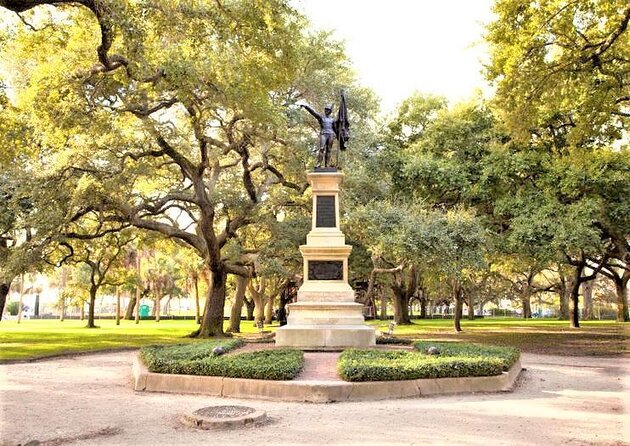
The tour is offered in English and lasts about 1 hour and 30 minutes. It begins at Washington Square, at 80 Broad Street, and finishes back at the same meeting point. With a maximum of 20 people, the group should be small enough for the guide’s voice and stories to remain easy to follow.
The $36 cost is reasonable if you want both local context and entertainment in one outing. It is less appealing if you want extensive interior access, a long harbor view, or a highly theatrical haunted show. This is a walking tour first, and a ghost tour second.
A few more hauntings around Charleston worth booking
- Haunted Evening Horse and Carriage Tour of Charleston
★ 4.5 · 3,678 reviews - Ghosts of Charleston Night-Time Walking Tour with Unitarian Church Graveyard
★ 4.5 · 2,835 reviews - Charleston Haunted Booze and Boos Ghost Walking Tour
★ 5.0 · 1,569 reviews
Starting at Washington Square
Washington Square is a practical place to begin because it puts you in Charleston’s historic core immediately. The opening matters on a tour like this. A good guide needs to set the mood without giving away every story, and the first few minutes help you understand that this is not only about ghosts.
You will want comfortable shoes from the start. Charleston’s historic streets can make a 90-minute walk feel longer than it sounds, especially if the weather is warm. Bring water, sunscreen, and bug spray. Bottled water is not included.
Because the tour returns to Washington Square, you do not need to plan a complicated pickup at the end. That is useful if you have dinner reservations or another evening activity nearby. Mobile tickets make arrival simple, but you should still allow enough time to find the starting point.
The group size of up to 20 is worth noting. It is not a private tour, but it is far more manageable than a large procession. If you want to ask a question or hear a change in tone for younger children, a smaller group gives the guide more room to respond.
Rainbow Row and Charleston’s Picture-Perfect Face
Rainbow Row is one of Charleston’s most photographed stretches of homes. The pastel-colored buildings line East Bay Street near the Battery, and you will likely see couples taking engagement or wedding pictures beside them.
This is a smart early stop because it shows the polished, photogenic side of Charleston before the tour turns toward more troubling subjects. The houses are attractive, but the stop is not simply a photo break. Their bright colors and postcard appeal help establish the public image of Charleston, a city often presented through its graceful homes and old streets.
I would not expect a long architectural lecture here. The value comes from seeing the setting in person and hearing how the city’s attractive surface fits into a much more complicated past. If you arrive before the tour, this is a good place to take your own photograph without rushing.
The drawback is that Rainbow Row can be crowded with people taking pictures. You may need to stand to one side rather than expect an empty view of the houses. That is normal for one of Charleston’s best-known scenes.
The City Market and Four Blocks of Living History
The Charleston City Market dates to the late 18th century and is a National Historic Landmark. It stretches across four city blocks and includes more than 300 daily vendors, making it one of the oldest and largest public markets in the United States.
The market gives the tour a change of pace. Instead of a quiet churchyard or harbor wall, you are near a place still used every day. That helps you picture Charleston as a working city, not just an outdoor museum.
The market also gives the guide a chance to explain how commerce shaped the city. You should listen for the link between ordinary trade, urban growth, and the people whose labor supported Charleston’s wealth. The ghost stories work better when you understand the streets as places where real lives, money, and suffering once intersected.
Depending on the time of day, the market area may be full of shoppers and pedestrians. That can make the stop less atmospheric than a dark, empty lane, but it also keeps the story grounded. You are hearing about the past while standing in a place that still functions as part of Charleston’s daily life.
Same streets, an entirely different kind of scare:
- Charleston’s Pleasing Terrors Night-Time Walking Ghost Tour
★ 5.0 · 1,345 reviews - Charleston Ghost & Graveyard Night-Time Guided Walking Tour
★ 4.5 · 1,100 reviews - Real Hauntings of Charleston! (Small Group Ghost Tour)
★ 5.0 · 724 reviews - Charleston Haunted Jail Night-Time Walking Tour with Admission to Old City Jail
★ 4.5 · 570 reviews
Ryan’s Mart and the Hardest Stop
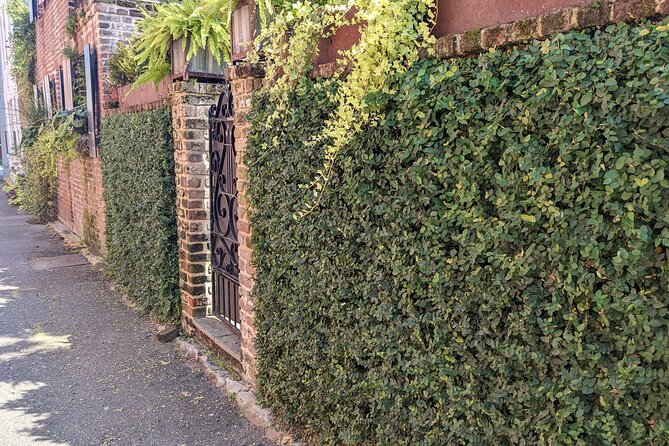
The stop connected with Ryan’s Mart is likely to be the most serious part of the walk. The site was once part of a complex that included a brick-walled yard, a four-story building with a barracoon, a kitchen, and a morgue. The term barracoon refers to a place used to confine enslaved people.
You will hear stories about the mart from outside rather than enter the building. That limitation matters. A street-side explanation cannot provide the same sense of place as walking through an interior museum, but it still gives the guide an important opportunity to address Charleston’s role in the slave trade.
I consider this one of the most valuable stops because it prevents the tour from turning Charleston’s past into harmless ghost entertainment. The supernatural stories may draw you in, but the account of Ryan’s Mart reminds you that many of the city’s darkest stories are not legends. They involve real people and organized cruelty.
Parents should know that the tone can become difficult here. The tour has been adjusted for children when requested, and Sarah was praised for focusing more on history and keeping the frightening material lighter for an eight-year-old. That does not mean every subject becomes cheerful. It means you can tell the guide what suits your group.
Circular Congregational Church and Charleston’s Old Faith
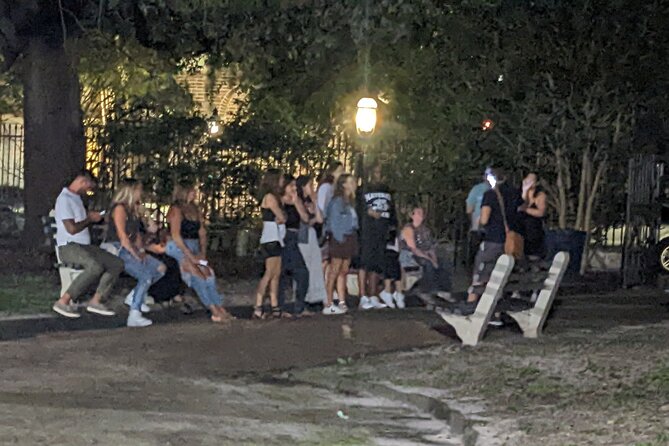
The Circular Congregational Church was founded in 1681 and is one of the oldest continuously worshipping congregations in the South. The tour passes the church but does not go inside.
That outside view still helps place Charleston’s religious life within the city’s long story. Old churches often carry a lot of visual weight on a walking tour, with their age and surroundings doing part of the work before the guide adds the human stories.
Do not expect an interior tour or a detailed examination of the building. The stop is brief and atmospheric. Its purpose is to add another layer to the route, connecting belief, community, death, and memory.
For me, this is the sort of stop that makes a walking tour useful. You may not remember every architectural detail, but you gain a better sense of how close together Charleston’s major stories are. A market, church, waterfront defense, and former slave jail all sit within a compact historic district.
The Seawall View Toward Fort Sumter
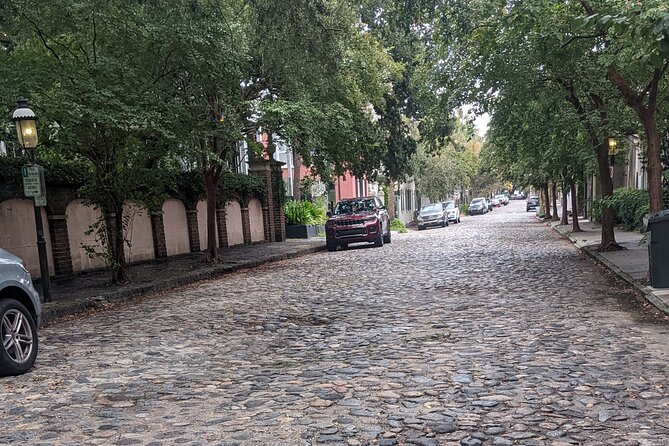
Fort Sumter sits on an artificial island in Charleston Harbor. It was built to protect the city from naval attack, with its origins reaching back to the War of 1812. The fort was still incomplete when the Battle of Fort Sumter began the American Civil War in 1861.
This tour does not take you to the fort. You will view it from the seawall, where you can look across the harbor toward the site. That is a useful distinction when deciding how to spend your time in Charleston. If Fort Sumter is a major priority, you will need a separate boat trip and fort visit.
The seawall stop works well within a ghost and history walk because it gives you physical space to think about the city’s military past. Charleston’s conflicts were not abstract events happening somewhere else. The harbor, walls, and islands are right in front of you.
The view also adds variety. After walking through streets and past buildings, you get open water and a broader sense of the city’s position. Bring sunscreen, especially if your tour takes place during daylight or near sunset. The supplied information does not promise a particular sunset departure, so do not book this solely for sunset color.
The Waterfront Park and the Final Mood
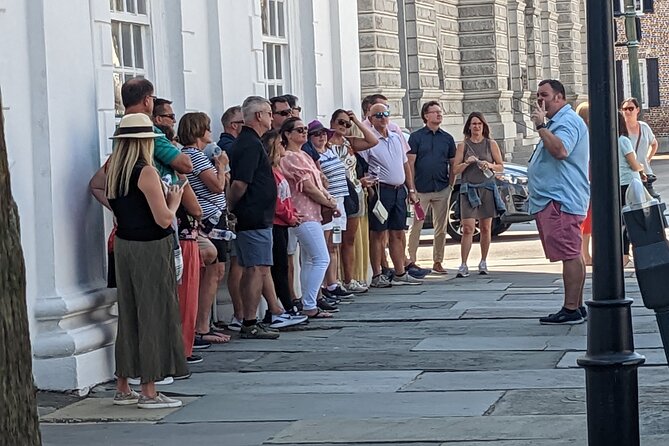
The route also reaches the waterfront park at the tip of Charleston’s historic district. From here, you can see Fort Sumter and Charleston Harbor, where the Ashley and Cooper rivers meet before flowing toward the Atlantic.
The site began as a public garden in 1837. During the Civil War, it became a fortification for the city. That change from garden to military position neatly captures the way Charleston’s pleasant public spaces could also serve practical and strategic purposes.
This is a strong place for the final part of the tour because the view opens up. The guide can connect the city behind you with the water ahead, then bring the ghost stories back to the human events that gave them their force.
One review described the final story as the creepiest and noted that it was reassuring that darkness had not yet arrived. That is useful advice if you are deciding between a daytime or evening departure. The tour can be unsettling even before full darkness, so families should speak up if they want a gentler tone.
Storytelling, Guides, and the Right Amount of Fright
The guide is the heart of this experience. Bri is described as flexible and able to adjust the presentation for children. Sara was praised for being funny, friendly, and down to earth, while Sarah handled a request for a lighter ghost element by placing more attention on history.
Those details tell me more than a general promise of spooky fun. The best guide for you will be one who reads the group well. A family with children aged 7, 11, and 13 found the stories absorbing, while another group asked for a lighter version for an eight-year-old.
The stories are specific enough to be remembered and repeated later. That is important. A ghost tour that relies only on vague claims about a haunted street may entertain for an hour and disappear from memory. Here, the emphasis on clear explanations means you can leave with stories you understand well enough to share.
Still, do not expect every minute to be frightening. One assessment described the tour as more historical than ghostly, while still praising the storytelling. That is the fairest way to set your expectations. You will get spooky facts and creepy accounts, but the route also deals directly with slavery, war, religion, and the city’s public spaces.
Who Will Get the Most From the $36 Price
I think the price works best for three kinds of people:
- You want a short introduction to Charleston’s historic center with a spooky edge.
- You are traveling with children and want a guide who can adjust the tone.
- You prefer stories and context over actors, props, or theatrical scares.
The value is weaker if you have already taken several Charleston history walks and want new interior visits. The tour passes the Circular Congregational Church and Ryan’s Mart without entering, and it only views Fort Sumter from shore.
At $36 per person, you are paying for the guide’s storytelling, the route, and the combination of subjects. You are not paying for admission to a fort, museum, or church. I would compare it with the price of a basic walking tour plus the appeal of an evening ghost story. For many first-time visitors, that combination is convenient and fairly priced.
The 92 percent recommendation rate and 4.6 rating from 13 reviews suggest a strong response, but the sample is small. I would treat those numbers as encouraging rather than conclusive. The written feedback gives more useful guidance: storytelling quality is the strongest point, and the ghost content may feel light to anyone seeking a scare-heavy production.
Practical Advice Before You Book
Wear comfortable shoes and bring water. Add sunscreen and bug spray, since the walk includes outdoor streets, the seawall, and waterfront areas.
Service animals are allowed, and the tour is near public transportation. Most people can participate, though the information provided does not describe a specific accessibility route or surface conditions. If you have mobility concerns, contact the provider before booking.
The tour is capped at 20 people and runs in English. Your mobile ticket is confirmed at booking, and the meeting point is Washington Square, 80 Broad Street. The walk returns there at the end.
Free cancellation is available if you cancel at least 24 hours before the local start time. Changes or cancellations inside that window are not refunded, and the tour requires a minimum number of people to operate. If the provider cancels because that minimum is not reached, you can receive a full refund or choose another date or experience.
Should You Book This Ghost Tour?
Book it if you want Charleston’s ghosts placed in their historical setting. The route gives you Rainbow Row, the City Market, the waterfront, Fort Sumter views, Circular Congregational Church, and the Ryan’s Mart site in one compact walk. The guide’s ability to soften the fright for children is a real advantage.
Skip it if your main goal is to enter Fort Sumter, tour historic interiors, or experience a nonstop haunted-house style performance. For most visitors, I would call this a good first-night activity, especially if you want an entertaining introduction to Charleston that does not hide the city’s painful past behind pretty buildings and ghost stories.
FAQ
How long does the Charleston Ghost Tour last?
The walk lasts approximately 1 hour and 30 minutes.
Where does the tour begin and end?
It begins at Washington Square, 80 Broad Street, Charleston, South Carolina, and ends back at the same meeting point.
Does the tour visit Fort Sumter?
No. You will view Fort Sumter from the seawall because the fort is located in the middle of Charleston Harbor.
Does the tour enter Ryan’s Mart or Circular Congregational Church?
No. The guide tells stories about Ryan’s Mart from outside and walks past Circular Congregational Church without entering.
Is the tour suitable for children?
Most people can participate, and guides can adjust the tone for children when requested. Past groups with children aged 7, 11, and 13 enjoyed the stories, while another group received a lighter ghost presentation for an eight-year-old.
What happens if I cancel?
You receive a full refund if you cancel at least 24 hours before the experience start time. Cancellations or changes made less than 24 hours in advance are not refunded.
Newly added around Charleston
- A Ghost Tour with 10 ORIGINAL Stories AND Equipment!★ 5.0 · 76 reviews
- The ORIGINAL Ghostwalk of Charleston★ 4.5 · 58 reviews
- 108 Elemental Presents Spirits & Spirits: Pub Crawl w/ Adam Miles★ 5.0 · 5 reviews
- USS Yorktown Ghost Tour with Exclusive Night-Time Access★ 5.0 · 176 reviews
- The Spectral Adventure Charleston Ghost Tour★ 3.0 · 4 reviews
- Charleston Nightmares and Nightcaps Ghost Walking Tour★ 5.0 · 18 reviews
- Charleston Haunted Horse and Carriage Evening Tour★ 4.5 · 253 reviews
- Ghost Tour Charleston★ 4.5 · 22 reviews
Charleston Ghost Tours, compared.
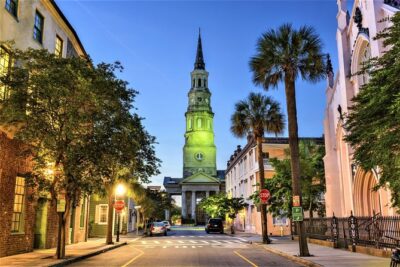
Haunted Evening Horse and Carriage Tour of Charleston
Read our review →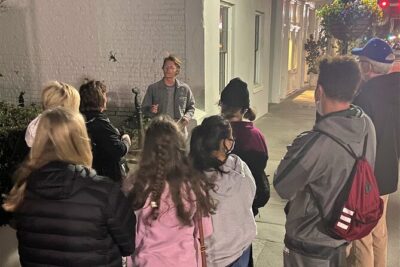
Ghosts of Charleston Night-Time Walking Tour with Unitarian Church Graveyard
Read our review →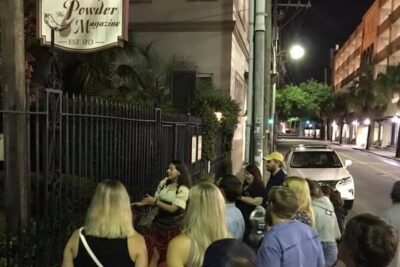
Charleston Haunted Booze and Boos Ghost Walking Tour
Read our review →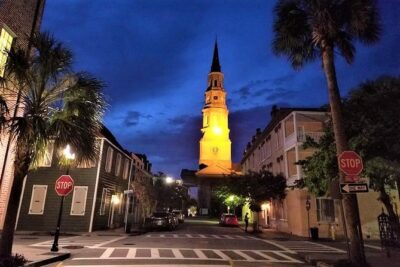
Charleston’s Pleasing Terrors Night-Time Walking Ghost Tour
Read our review →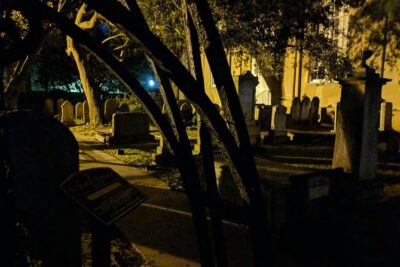
Charleston Ghost & Graveyard Night-Time Guided Walking Tour
Read our review →
Real Hauntings of Charleston! (Small Group Ghost Tour)
Read our review →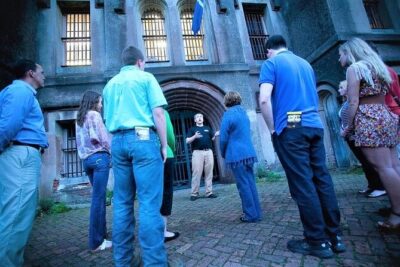
Charleston Haunted Jail Night-Time Walking Tour with Admission to Old City Jail
Read our review →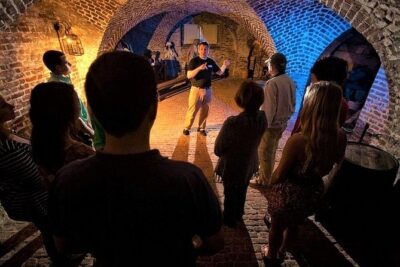
Charleston Ghost & Dungeon Night-Time Walking Tour with Entry to Provost Dungeon
Read our review →Browse the lists this tour appears in