
REVIEW · JAPAN GHOST TOURS
Tokyo: True Crime And Ghost Stories Tour
Tokyo has a darker side than neon and sushi. This three-hour walk links Kabukicho, Toyama Park, and Aoyama Cemetery through stories of organized crime, wartime atrocities, murder, prostitution, and Japanese ghosts. I like the unusual route, and I like that guide John adds historical context instead of serving up simple horror tales. The main drawback is clear: the subject matter is grim, adult, and sometimes handled with very dark humor.
I also like the small-scale feel. John’s lively acting, jokes, and willingness to answer questions give the tour a personal edge, and the $35 price is fair for three hours of guiding with no admission charges. You should be ready to walk quite a bit, climb some stairs, and spend part of the evening discussing material that can be disturbing.
Key points to know before you go
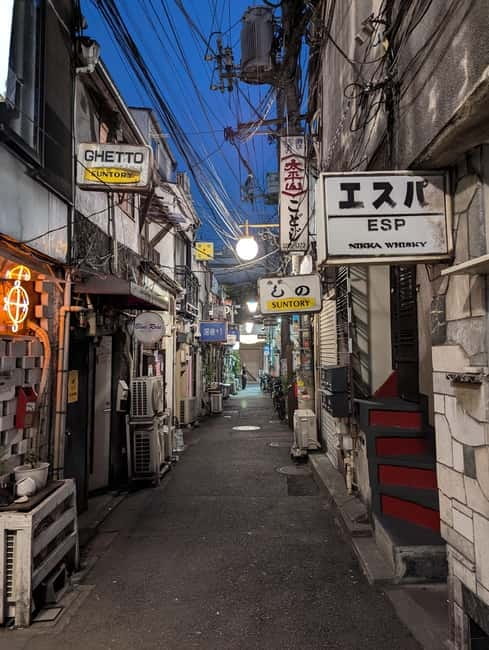
- The route begins at Hanazono Shrine, right by the Golden Gai area of Shinjuku.
- John is the heart of the tour, mixing research, dramatic storytelling, jokes, and practical help with Tokyo trains.
- Toyama Park brings serious wartime history, including the human experimentation linked to Unit 731.
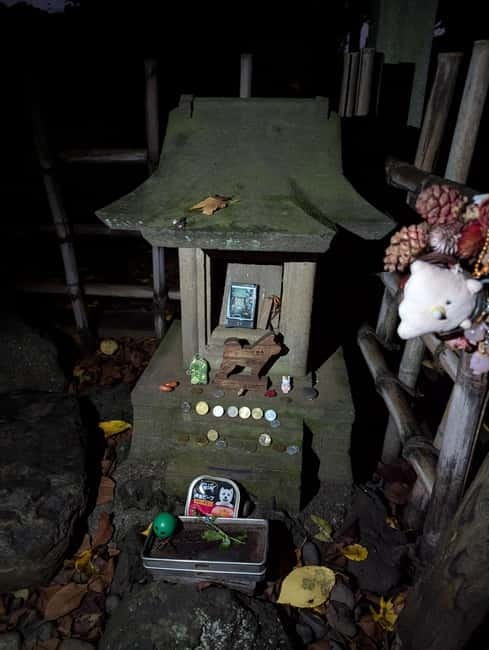
- Aoyama Cemetery works best after dark, when Japanese ghost stories have the right setting.
- The tour costs $35, with about 200 yen extra for transportation and no entry fees along the route.
- This suits adults who enjoy true crime and dark history, not young children or anyone who tires easily.
Starting at Hanazono Shrine beside Golden Gai
The tour begins inside Hanazono Shrine, in Shinjuku, near the stairs leading to the main shrine building. You are told to meet just in front of those stairs. The location matters because it puts you at the edge of Golden Gai, Tokyo’s famous drinking quarter, before the tour even gets properly underway.
Look for John, described as a thin, bald white man. That is more useful than searching for a tour flag in one of Tokyo’s busiest districts. Check your booking messages before setting out, since the precise meeting instructions are sent there.
Hanazono Shrine provides a fitting opening. It is a calm religious site surrounded by the noise and nightlife of Shinjuku. That contrast gives the tour its basic mood: old beliefs beside modern entertainment, quiet worship beside bars, clubs, and the city’s commercial sex industry.
John sets the tone early. His presentation is not solemn in the usual museum-guide style. He uses jokes, dramatic delivery, and occasional acting to keep the group engaged. That approach works well for stories about crime and ghosts, since three straight hours of grim detail could become exhausting.
Still, the humor will not suit everyone. Adult language is sometimes used, and the jokes can be dirty or irreverent. If you prefer a restrained academic talk, this may feel too loose. If you enjoy crime documentaries, horror stories, and a guide who does not mind making himself part of the performance, you will probably settle into it quickly.
More Ghost Story Tours in the world:
- Prague: Ghost Walking Tour Where Legends Come To Life
★ 4.4 · 5,253 reviews - Prague: Ghosts, Legends, Medieval Underground & Dungeon Tour
★ 4.3 · 5,104 reviews - Prague: Ghosts and Legends of the Old Town Evening Tour
★ 4.5 · 3,091 reviews
Kabukicho and Golden Gai: Tokyo after dark
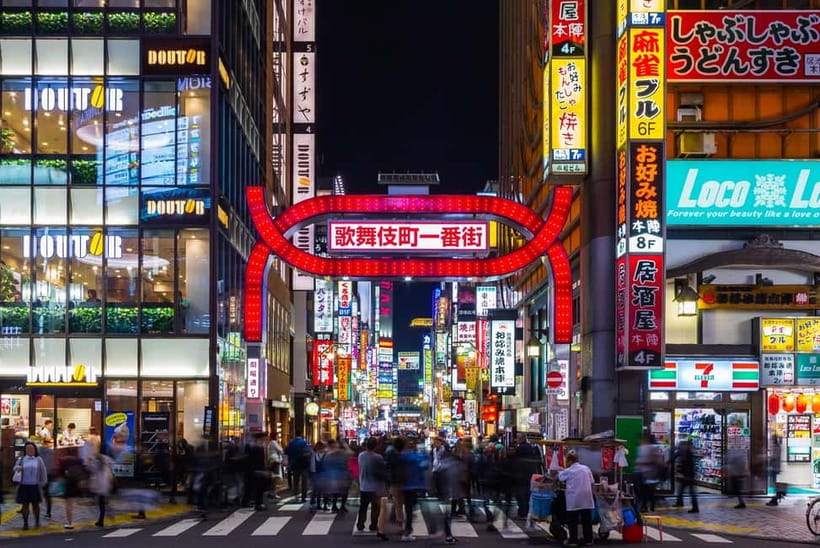
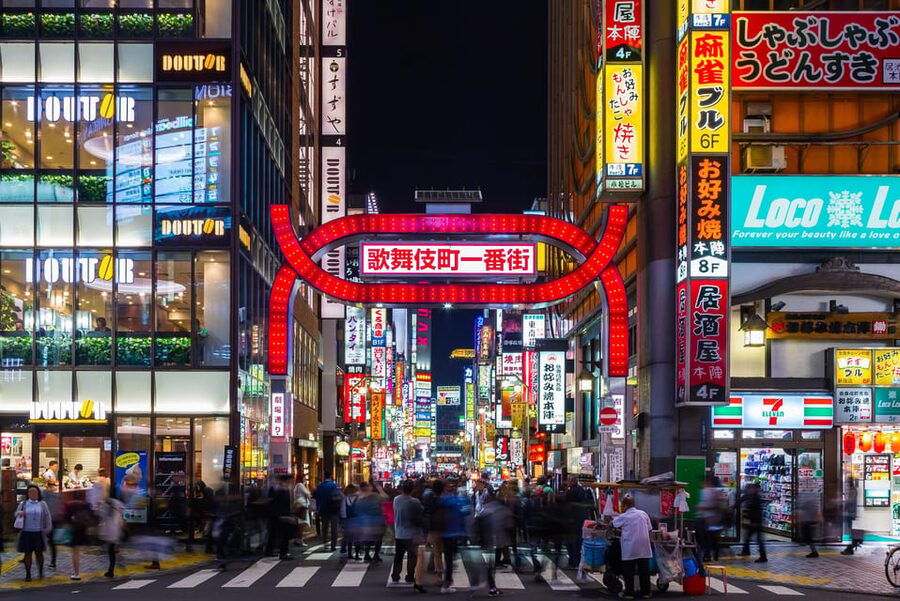
The first major section covers Shinjuku, with about 45 minutes of guided discussion. Kabukicho is Japan’s largest red light district and one of the most useful places in Tokyo for understanding the gap between the city’s polished public image and its less tidy corners.
The focus here includes gang wars, shocking murders, broken relationships, and the area’s quasi-legal sex industry. You are not simply shown a collection of nightlife streets. John explains how organized crime and entertainment have overlapped in this part of Tokyo, and how the district’s businesses operate in a space that is not always straightforward.
Golden Gai adds another layer. Its narrow lanes and tightly packed bars are now famous, but the tour places them within a broader story about drinking, nightlife, and the people who work around it. The point is not that every bar or alley is sinister. The point is that Tokyo has always had places where normal rules become less visible.
I appreciate this part because it gives you a way to read the streets. A visitor can walk through Kabukicho and see bright signs, themed venues, and crowds. John’s stories ask you to notice the power structures and risks behind that surface.
The material can also be uncomfortable. Stories involving prostitution, sex clubs, love hotels, and murder are handled openly. You may hear details that are not suitable for children, which is why the minimum age is 14, though the adult tone may still be better suited to older teenagers and adults.
Toyama Park and the weight of Unit 731
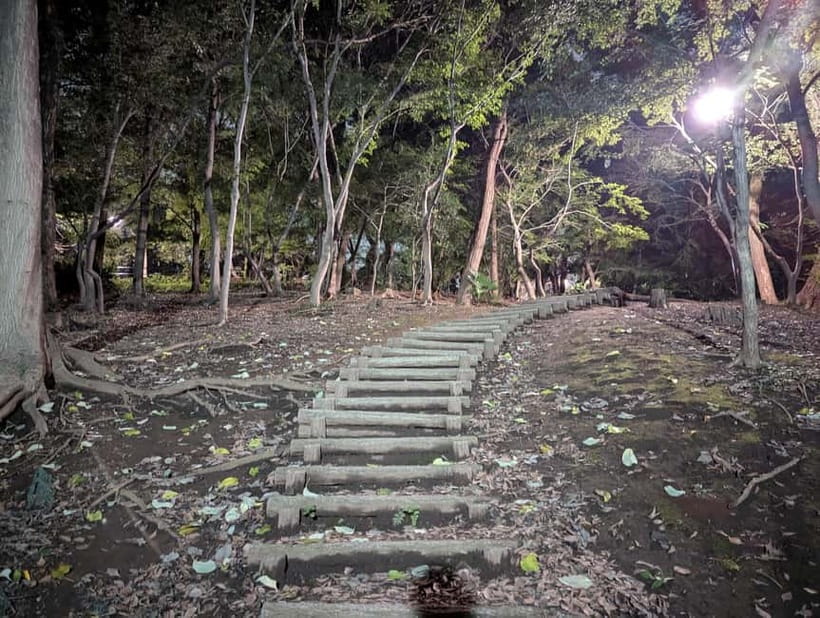
The route then moves toward Toyama Park, with roughly 30 minutes of guided discussion. This is where the tour shifts from present-day crime and nightlife to some of the darkest wartime history connected with Japan.
Toyama Park has been described as Tokyo’s mini-Auschwitz because of its connection to the victims of Unit 731 and its human experimentation projects. The comparison is deliberately stark. This is not a ghost story invented for atmosphere. It is a stop tied to real suffering and war crimes.
That change in subject is important. The tour is not only about lurid murders or haunted cemeteries. It also asks you to face parts of Japanese history that are often left out of a standard sightseeing route. You may find this section more thought-provoking than frightening.
John’s historical knowledge is especially useful here. The best moments of the tour seem to come when he explains the wider setting, answers questions, and connects individual stories with the city and the country’s past. Several comments about the experience point to this balance between entertainment and serious historical discussion.
The wording used to describe this stop is intentionally provocative, so you should not expect a gentle presentation. The material involves human experimentation and victims of war crimes. If you are easily upset by descriptions of violence or abuse, this is the point to consider most carefully before booking.
Toyama Park is also a useful reminder that Tokyo’s history is not limited to temples, imperial buildings, and economic success. A modern city can hold places connected with shame, silence, and grief. This tour gives those subjects room, even while keeping the tone accessible.
Aoyama Cemetery, Hachiko, and Japanese ghost stories
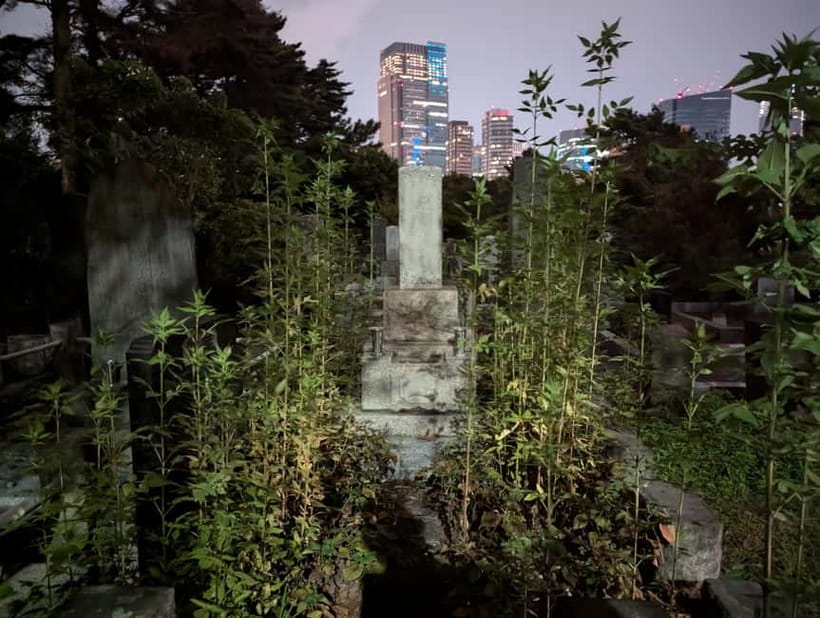
The final major section takes place at Aoyama Cemetery, Tokyo’s largest cemetery, with about 45 minutes of guided material. The cemetery is the natural setting for the tour’s traditional ghost stories, especially if your booking begins late enough for the light to fade.
One practical point is worth noting: the tour involves walking through the cemetery, and one comment suggested that an earlier start could allow people to see more of it before full darkness. That is a fair observation. The spooky atmosphere is part of the appeal, but daylight would make the cemetery easier to understand as a real place rather than simply a horror backdrop.
John tells Japanese ghost stories here, using the cemetery’s paths and quiet spaces to create a change of pace from Kabukicho’s street noise. The stories are theatrical, and his acting is a major part of the fun. You may find the guide more frightening than the ghosts, at least for a moment.
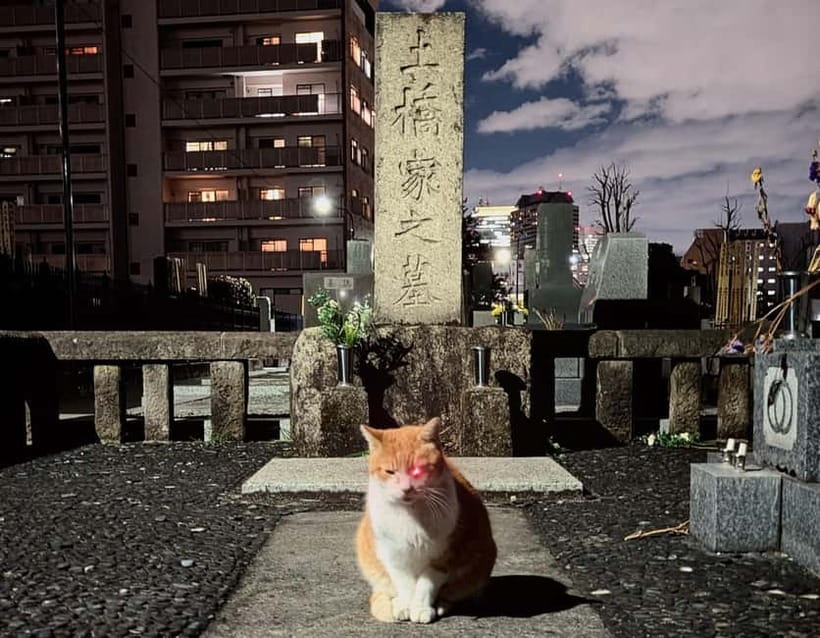
The cemetery visit also includes the grave of Hachiko, Japan’s famous loyal dog. This detail gives the final stop a welcome change in mood. After stories of violence, wartime crimes, and restless spirits, Hachiko offers a familiar tale of loyalty and affection.
The mix is one of the tour’s strengths. You get true crime, organized crime, wartime history, folklore, and one of Japan’s best-known animal stories. The subjects do not all have the same emotional weight, but that variety helps the three hours pass quickly.
The tour ends at Aoyama-Itchome Station. That is useful because you finish near public transport rather than being left in an unfamiliar cemetery area. John has also helped some people work out their trains after the tour, though you should still know your own route back.
More Dark History Tours in the world:
- Adults-Only New Orleans Ghost, Crime, Voodoo, and Vampire Tour
★ 5.0 · 6,545 reviews - Edinburgh: Dark Secrets of the Old Town Ghost Walking Tour
★ 4.6 · 1,671 reviews - New Orleans Adults-Only True Crime and Ghost Walking Tour
★ 5.0 · 1,666 reviews - Genteel and Bard’s Savannah Dark History and Ghost Encounter Walking Tour
★ 5.0 · 1,546 reviews
Why John matters so much
This experience depends heavily on the guide. John is not simply reading dates and case summaries. His strengths are storytelling, comic timing, acting, and a clear interest in Japanese history.
He also appears comfortable with questions outside the exact route. That can make the walk feel less rigid. You are not just moving from one speaking point to another. You can ask about Japan’s history, crime, folklore, or the social background of the places you pass.
His personality is unusual. One description called him an introverted scholar who enjoys day drinking with his cat, which gives you a sense of the offbeat humor involved. You should expect a quirky host rather than a polished corporate presenter.
That style receives the strongest praise. People repeatedly point to his passion, funny delivery, strong memory for local history, and ability to make unpleasant subjects watchable. His dramatic retellings help keep your attention, especially during a long walk in hot or humid weather.
His humor is also the tour’s main risk. Dark jokes can lighten a difficult subject, but they can also feel too casual when the material involves murder, sexual exploitation, or war crimes. I would not book this expecting a solemn memorial walk. It is an educational tour with an irreverent edge.
Walking, timing, and the real cost
The advertised price is $35 per person. For a three-hour walking tour with an English-speaking guide, that is reasonable, especially since there are no entrance charges along the route. You should budget about 200 yen extra for transportation.
Dinner is not included. That is not a serious problem, since the route begins in an area full of food and drinking options, but plan your meal separately. The end point at Aoyama-Itchome Station also gives you a chance to continue your evening elsewhere.
The walking requirement deserves more attention than the price. The route connects parts of Shinjuku, Toyama, and Aoyama, so you will not be standing in one neighborhood. You may also need to climb stairs. The experience is not recommended for people with a low level of fitness, people who tire easily, or wheelchair users.
The tour also lists a weight limit of 300 pounds, or 136 kilograms. That is a practical restriction to note before booking. The route is not designed as an accessible experience.
Weather can affect the experience. On a warm, humid evening, three hours on foot may sound less appealing. Yet the storytelling helps keep the pace moving, and the cemetery section is likely to feel more atmospheric in cooler or darker conditions.
Private groups are available. That could be worthwhile if you want to ask many questions, prefer a more personal setting, or are traveling with friends who share an interest in crime and folklore. A regular group may offer a livelier exchange, but the supplied details do not specify a standard group size.
The overall rating is 4.9 from 163 reviews, which supports the idea that the format works very well for its intended audience. Still, the high rating does not change the basic warning: the subject matter is graphic, the jokes are adult, and the tour is physically active.
Who should book this Tokyo walk?
I would recommend it most strongly to adults who enjoy true crime, horror, Japanese folklore, unusual history, and walking tours with a strong guide personality.
It is also a good choice if you have already seen Tokyo’s main sights and want a different way to understand the city. You will not get the usual postcard version of Shinjuku. You will hear about organized crime, red light districts, hidden graves, wartime wrongdoing, and stories that reveal how fear and belief shape urban life.
The tour can suit a cautious companion, too, if that person is willing to hear the material. The ghost stories are theatrical, and the guide’s humor keeps the mood from becoming relentlessly bleak. But do not pressure someone who is genuinely uncomfortable with violence, sex-related subjects, or cemeteries.
I would skip it if you want a quiet cultural walk, a family activity, or a carefully formal account of Japanese history. I would also skip it if you have already walked a full day and do not want another three hours on foot.
My call: book it for the guide and the subject
Book this tour if you want Tokyo explained through its uncomfortable stories, not just its bright signs and famous viewpoints. The best reason to go is John’s combination of research, comic timing, acting, and genuine interest in the city’s darker past.
At $35, the experience offers good value for a focused three-hour walk, with no admission fees and only a small transportation cost. Go prepared for adult language, grim subjects, stairs, and a fair amount of walking. If that sounds like part of the fun, this is an unusual and memorable addition to a Tokyo visit.
FAQ
Where does the Tokyo True Crime and Ghost Stories Tour begin?
It begins at Hanazono Shrine in Shinjuku, just in front of the stairs leading to the main shrine building. The meeting point is inside the shrine grounds near Golden Gai.
Where does the tour finish?
The tour finishes at Aoyama-Itchome Station after the visit to Aoyama Cemetery.
How long does the experience last?
The tour lasts three hours.
What language is the tour conducted in?
The tour is conducted in English with a live guide.
How much does the tour cost?
The listed price is $35 per person.
Are transportation costs included?
Transportation is not included. You should allow about 200 yen for transportation during the route.
Are entrance fees included?
There are no entry fees for the places visited along the route.
Is the tour suitable for children?
Children under 14 are not permitted. The tour also includes adult subjects, occasional adult language, and dark humor.
Is the tour suitable for people with limited mobility?
The tour is not recommended for wheelchair users or people with a low level of fitness. It involves considerable walking and some stairs.
Newly added around the world
- Zion: Harry Potter-Inspired Zion Ghost Tour with Sunset View★ 5.0 · 8 reviews
- York : Private Ghost Hunt★ 5.0 · 3 reviews
- Your evening in Venice – Legends&Ghosts&Aperitif★ 4.7 · 79 reviews
- York’s Haunted Heart : Ghost, Ghouls and Gallows★ 4.6 · 82 reviews
- Witches, Widows, & Wraiths: Wichita Ghost Tours★ 5.0 · 2 reviews
- Wraiths of the West Texas Wind: El Paso Ghost Tour★ 4.5 · 9 reviews
- Witches, ghosts and executioners / Mystical North Hesse★ 4.4 · 4 reviews
- Wraiths & Wicked Whispers: Wilmington Ghost Tour★ 4.2 · 25 reviews
Japan Ghost Tours, compared.
Kyoto Ghost Tour: Dark Tales, Urban Legends, Bamboo Forest Night
Read our review →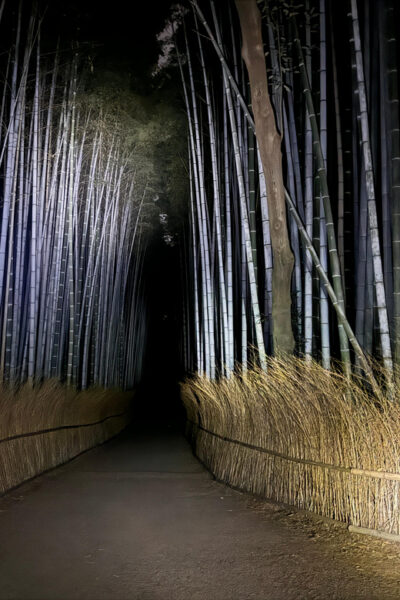
Ghost Tour – Legends, Dark Tales, Bamboo Forest Night
Read our review →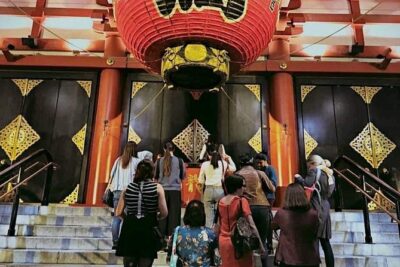
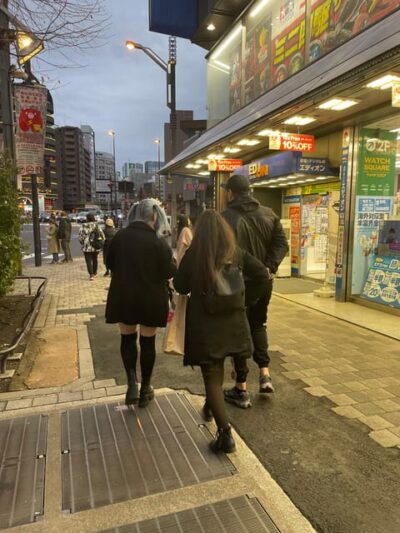
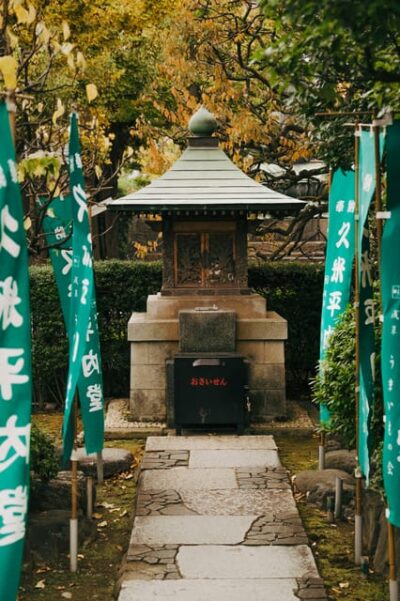
Ghost Tour with Scary Japanese Stories and Folklore
Read our review →
Tokyo Ghost Tour Through Haunting Japanese Legends
Read our review →
Ghost Stories and Nightlife Tour of Takayama (Private Tour – Price per Group)
Read our review →
Browse the lists this tour appears in