
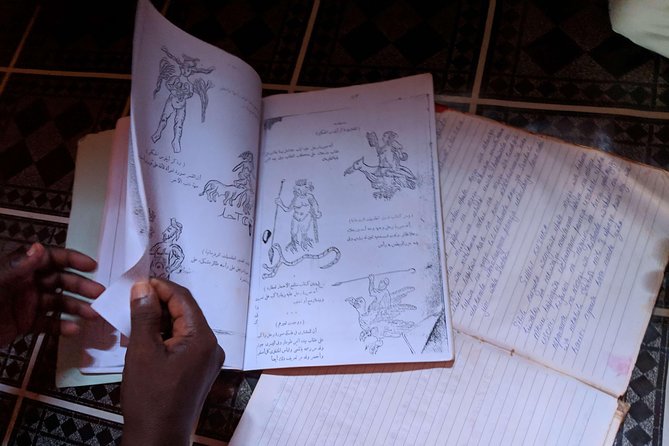
REVIEW · WITCH TRIAL & WITCHCRAFT TOURS
Village Tour With Witch Doctor Visit
Zanzibar begins beyond the hotel gates. This six-hour private tour takes you to Jambiani for a close look at village life, from women’s handicrafts and seaweed farming to coconut-fiber rope making and natural medicine. I like the personal format, and I like that lunch, bottled water, and air-conditioned transport are included.
The main consideration is the long transfer, especially if you start from Zanzibar City or the port. The ride to the village can take about 90 minutes, so this is not a quick sightseeing stop. Still, the chance to meet local people in their own setting gives the day more weight than a standard beach outing.
Key points before you book

- Jambiani is the heart of the day: You visit a women’s handicraft group, seaweed farms, a school, a hospital, and village homes.
- The traditional healer visit is personal: A local practitioner explains how old natural remedies are still used to help people.
- Coconut husk becomes practical craft: You see how fibers are prepared and twisted into rope.
- Private guiding keeps the pace flexible: Only your group takes part, with a guide leading the village walk.
- Lunch and water are included: That matters during a six-hour outing in warm coastal weather.
- The transfer takes time: Plan on roughly 90 minutes each way from the port, according to one detailed booking experience.
Reaching Jambiani from Zanzibar City

The tour begins around 8:00 am, with pickup offered. If you are staying in Zanzibar City or arriving at the port, allow plenty of time for the road journey. One detailed account describes a comfortable, air-conditioned minivan and a ride of about 90 minutes to the village.
That transfer is both the tour’s cost and part of its value. You spend a good portion of the day getting to and from Jambiani, but the destination gives you a look at daily life that is difficult to find around resort areas. If you have only a short stop in Zanzibar, the timing may feel heavy. If you want a fuller cultural day, the journey makes sense.
The private setup helps here. You are not tied to the pace of a large coach group, and your guide can focus on your questions. Abdul is identified as a village resident and guide, which gives the walk a useful local connection. Other arrangements have included drivers named Achmec, Zahran, and Abdulkarm, so the exact driver and guide pairing may vary.
More Witch Tours in the world:
- Edinburgh: Witches & Haunted History Walking Tour
★ 4.8 · 1,290 reviews - Wicked Awesome Tours: Witch Trial History and Salem Haunts!
★ 5.0 · 1,032 reviews - Edinburgh: Witches & Haunted History Walking Tour
★ 5.0 · 632 reviews
Meeting the women’s handicraft group
The first village activities include a visit to a women’s handicraft collective. This is not simply a shopping stop. It gives you a chance to see how local women organize work, make goods, and connect craft production with household income.
I like this part because it puts faces and hands behind the idea of supporting local communities. You are not only looking at finished items. You can ask about the work and learn how a small local group fits into village life.
Keep your expectations sensible. The information provided does not specify which handicrafts are made or whether purchases are expected. Treat the visit as a chance to learn first. If something appeals to you, buying directly may support the makers, but you should confirm prices and payment details with your guide.
Seaweed farming along the coast
Seaweed farming is another important stop in Jambiani. The activity gives you a view of work shaped by the sea and the tides. It also shows why coastal life is about more than beaches and swimming.
The tour description does not promise a particular farming schedule or a hands-on harvest. Your experience may depend on the day, tide, and local conditions. Your guide can explain what you are seeing and how the work fits into the community.
For me, this is one of the stronger parts of the tour because it connects a familiar holiday setting with the labor that supports local families. You may look at the coast differently after seeing it as a workplace as well as a place for recreation.
A local school and hospital visit
The village walk also includes a school and a hospital. These stops add a wider view of community life. Instead of focusing only on traditional craft or rural work, the day also shows the institutions people rely on now.
The school visit may be especially useful if you want to understand everyday services in the village. The hospital visit can provide another angle on local needs and care. However, the available details do not state whether you enter classrooms, meet staff, or receive a formal presentation. The format may be brief and dependent on what is happening that day.
You should also approach both stops with respect. A school and hospital are working places, not exhibits. Follow your guide’s instructions about photography and where you may walk. The tour is strongest when you observe carefully rather than treat every stop as a photo opportunity.
Same streets, an entirely different kind of scare:
- New Orleans Premier Ghost, Voodoo and Vampire Walking Tour
★ 4.5 · 12,856 reviews - The World Famous Underground Ghost Tour
★ 4.5 · 9,272 reviews - Chicago: Gangsters and Ghosts Walking Tour
★ 5.0 · 7,155 reviews - Edinburgh: Haunted Underground Vaults and Graveyard Tour
★ 4.6 · 6,607 reviews
Learning to make rope from coconut husk
One of the more unusual parts of the day is a demonstration of rope making. A local woman shows you how coconut husk fibers are turned into rope.
This is a small but memorable detail. Coconut is a familiar symbol of tropical Zanzibar, yet the rope-making process shows how useful the material can be after the fruit is gone. You get to see a simple local skill rather than a polished performance designed only for tourists.
The description does not say how much hands-on practice is included. You may watch the process and perhaps try part of it, but ask your guide before assuming you will make a full length of rope. Either way, the demonstration helps you notice the work behind ordinary household materials.
Visiting the traditional healer
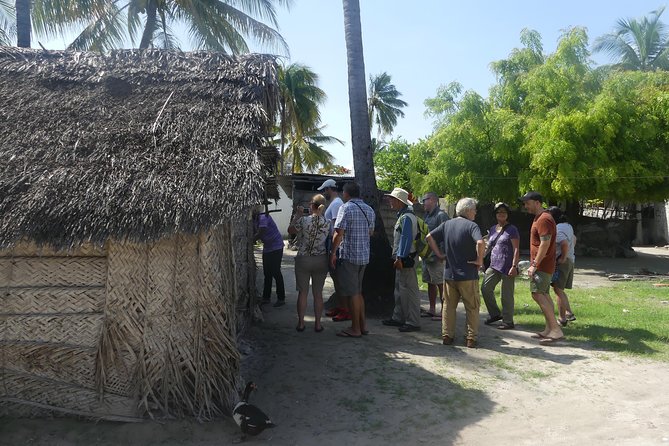
The traditional healer is the most distinctive stop and the one that requires the most thoughtful approach. The practitioner uses old natural medicine to help people and is still working in the village. This offers a direct look at a form of care that exists alongside modern medical services.
One person described receiving an herbal treatment that helped a chronic headache. That is a personal account, not a medical guarantee. You should not treat the visit as a replacement for professional medical care, and you should tell the guide about allergies, medication, or health concerns before accepting anything.
I like that this stop is presented as a working local practice rather than a staged folklore display. At the same time, the phrase witch doctor can carry unfair or misleading baggage. A more respectful way to understand the visit is as an introduction to a traditional healer and natural remedies.
Ask questions. What plants are used? How are treatments prepared? Which problems does the healer commonly address? You may learn more by showing curiosity than by expecting a dramatic demonstration.
Lunch, water, and a private guide
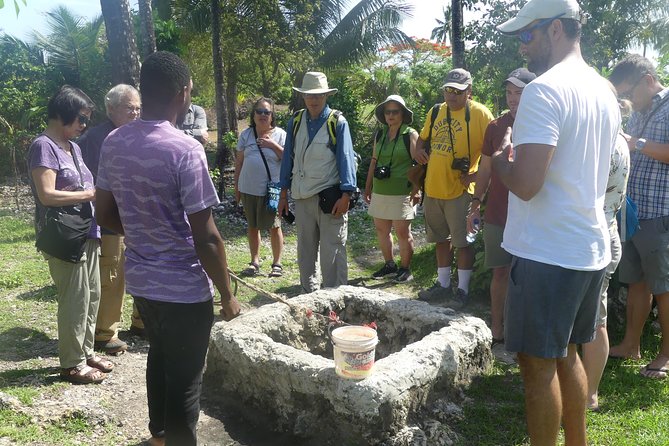
Lunch is included at no extra charge, and the food is described in one account as home cooked. That detail matters. A meal prepared in a local setting can give you another way to connect with the village, especially after a morning of walking and conversation.
The exact menu is not provided, so do not book this expecting a particular dish. If you have allergies or dietary restrictions, raise them when booking or with the guide before lunch. The tour also supplies bottled water, a useful inclusion in Zanzibar’s warm conditions.
The private guide is the day’s practical advantage. With only your group taking part, you can ask more questions and adjust the rhythm of the walk. One account gives Abdul particular credit for explaining village life and answering questions. That kind of local guide can turn a string of stops into a connected story.
The quality of a private tour still depends on communication. Pickup arrangements, driver details, and the amount of time at each stop can vary. Confirm the meeting point and tell the provider what interests you most, especially if you want extra time at the handicraft group, seaweed area, or healer.
Is $96 a fair price?

At $96 per person, the tour is not the cheapest way to spend six hours in Zanzibar. Its value comes from what is bundled into the price: private transport, an air-conditioned vehicle, a guide, lunch, bottled water, and several community-based visits.
The price makes more sense if you are sharing the experience with family or friends, since the private format lets your group avoid a large scheduled outing. Group discounts are offered, though the exact reduction is not provided. Ask for the current group rate before booking.
The cost is harder to justify if you mainly want a short cultural stop or a beach day. You are paying for the transfer as well as the village time. But if you want to meet local people, learn about work and services, and support a locally run experience, the package offers solid value.
The average booking lead time is about 46 days. That suggests you should not leave it until the last minute if your dates are fixed, particularly if you need a private pickup or are traveling during a busy period.
Who will enjoy this six-hour outing?
I would choose this experience if you want to see beyond resort life and do not mind spending much of the day on the road and on foot. It suits curious visitors who enjoy conversations, demonstrations, and ordinary community settings more than polished attractions.
It is also a good fit for couples, families, and small groups who want their own guide. The private format can make a difference if you have children, older relatives, or a specific interest in natural medicine, crafts, or coastal work.
I would think twice if you want a fast itinerary, a luxury-style cultural excursion, or a tightly scripted program with exact start and finish times at every stop. The tour includes several community visits, but the available information does not give precise timing for each one.
Most people can participate, and service animals are allowed. The activity is near public transportation, though pickup is offered. If you have mobility concerns, ask the provider for more detail before paying, since the village walk and stop-by-stop access are not described in full.
Practical advice for a better day
Start early and keep the morning free. The advertised start time is 8:00 am, and the drive to Jambiani may take about 90 minutes from the port.
Wear comfortable clothing for a village walk, and bring sun protection even though the vehicle is air-conditioned. Bottled water is supplied, but carrying any personal essentials you need for six hours is sensible.
Bring questions rather than fixed expectations. Ask how seaweed farming works, how the rope fibers are prepared, and how the healer chooses natural remedies. The guide can help you connect these separate stops into a better understanding of local life.
Use discretion with cameras. A school, hospital, home, and healer’s workplace all deserve respect. Ask before taking pictures, especially of people receiving care or children.
The tour has a 4.6 rating from nine reviews, with strong praise for the guides, village access, comfortable minivan, lunch, and personal attention. The most useful pattern is clear: people who enjoyed the day wanted an honest look at daily life, not a resort-style show.
Should you book the Jambiani village tour?
Book it if you want a grounded cultural experience and are willing to give it six hours. The women’s collective, seaweed farming, school, hospital, rope making, home-cooked lunch, and traditional healer create a varied day with a clear local focus.
Skip it if your Zanzibar schedule is tight or if a 90-minute transfer each way sounds tiring. This is not a quick add-on. It asks for time, patience, and respect for places that are still part of everyday village life.
For the right visitor, the $96 price is reasonable because it covers private transport, guiding, food, water, and several personal encounters. Free cancellation is available up to 24 hours before the 8:00 am start, so you have some flexibility if plans change. I would book early, confirm pickup details, and tell the provider what you most want to understand.
FAQ
How long does the Village Tour With Witch Doctor Visit last?
The experience lasts approximately six hours.
What time does the tour start?
The listed start time is 8:00 am.
Is pickup available?
Yes. Pickup is offered, and one detailed experience included collection from the port.
Is lunch included?
Yes. Lunch is included at no extra charge, and one description identifies it as home cooked.
Is bottled water provided?
Yes. Free bottled water is provided during the tour.
Is this a private tour?
Yes. Only your group participates, and the experience uses a private guide and air-conditioned vehicle.
Newly added around the world
- Zion: Harry Potter-Inspired Zion Ghost Tour with Sunset View★ 5.0 · 8 reviews
- York : Private Ghost Hunt★ 5.0 · 3 reviews
- Your evening in Venice – Legends&Ghosts&Aperitif★ 4.7 · 79 reviews
- York’s Haunted Heart : Ghost, Ghouls and Gallows★ 4.6 · 82 reviews
- Witches, Widows, & Wraiths: Wichita Ghost Tours★ 5.0 · 2 reviews
- Wraiths of the West Texas Wind: El Paso Ghost Tour★ 4.5 · 9 reviews
- Witches, ghosts and executioners / Mystical North Hesse★ 4.4 · 4 reviews
- Wraiths & Wicked Whispers: Wilmington Ghost Tour★ 4.2 · 25 reviews
Witch Trial & Witchcraft Tours, compared.



Wicked Awesome Tours: Witch Trial History and Salem Haunts!
Read our review →
Best Salem Witch Trials Historical Walking Tour
Read our review →
Browse the lists this tour appears in