
REVIEW · ROME GHOST TOURS
Rome’s Dark Side: Ghosts, Scandals and Crypts – small group
Dark Rome is hiding in plain sight. This two-hour evening walk trades the usual monuments for execution sites, scandalous popes, grim legends, and a rare visit to an underground crypt. I especially like the small group of no more than 12 and the chance to enter the Crypt of the Confraternity of Death outside normal opening hours. The bone chandeliers and marked skulls offer a memorable look at Rome’s religious past.
I also like the route through quieter lanes between Trastevere and Piazza Navona, where the stories make the streets feel different after the day crowds thin out. The main consideration is tone: the crypt and stories of death are not for everyone, and the $70 price is worthwhile mainly if you value unusual access and strong storytelling over a long list of major sights.
Key points at a glance
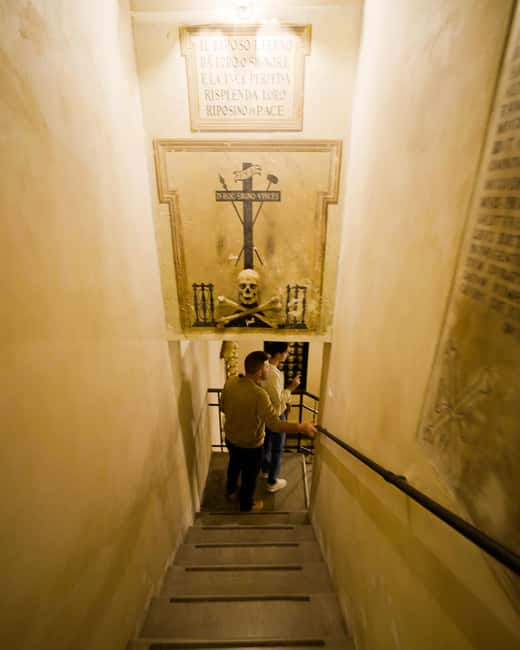
- A secret crypt visit: Enter the underground Crypt of the Confraternity of Death with a nun from the confraternity.
- Real events, not only ghost tales: Hear about public executions, dead bodies found in Rome’s streets, and corrupt popes.
- A compact historic-center route: Walk from Piazza Trilussa across Ponte Sisto, through Via Giulia, and on to Piazza Navona.
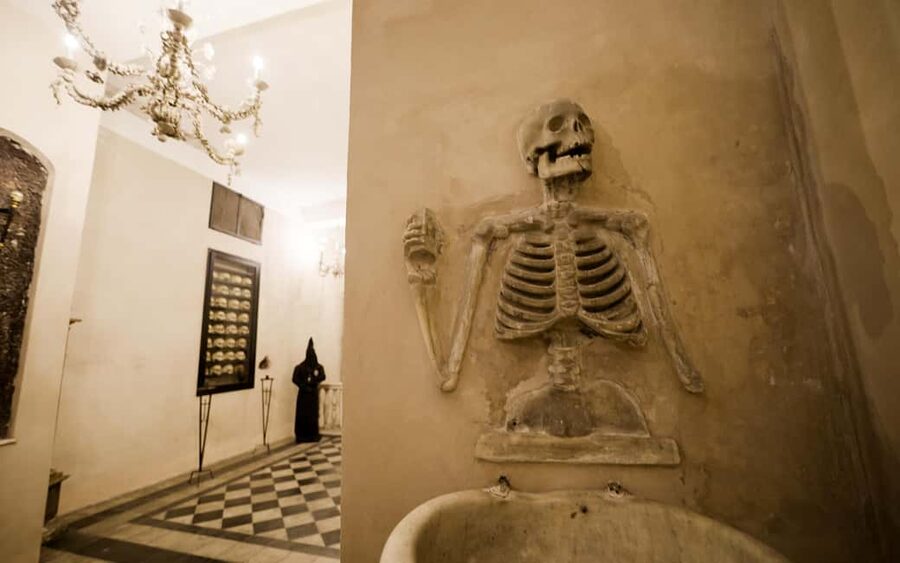
- Bone chandeliers and named skulls: The crypt contains stark reminders of the confraternity’s work and beliefs.
- A small English-speaking group: The maximum group size is 12, giving you a better chance to ask questions.
- A lively guide matters here: Federica has an engaging, enthusiastic style and encourages questions from the group.
Why Rome’s darker stories are worth your evening
Rome is often presented through emperors, fountains, basilicas, and famous painters. Those sights deserve their place, but they do not tell the whole story. This walk focuses on the city’s less polished past: punishment in public squares, bodies left without care, religious groups devoted to the dead, and powerful churchmen whose behavior was far from saintly.
That shift in subject gives you a different way to read the city. A narrow lane is no longer just a pleasant shortcut. A square becomes a place where people once gathered to watch justice being carried out. A church facade can reveal an entire set of beliefs before you even step inside.
I like the fact that the experience is built around documented events and local traditions rather than a parade of made-up scares. There are ghost stories and urban legends, but they sit beside stories about real deaths, public rituals, and the social work of a confraternity. That mix makes the tour more useful than a standard haunted walk.
The tour begins after the busy sightseeing hours, which suits the subject. Rome’s central streets do not become empty, but the change in pace helps. You can pay attention to the guide instead of trying to compete with daytime crowds for space around every fountain.
More Dark History Tours in Italy
- Rome: Guided Bar Crawl with Drinks & Dark History
★ 4.9 · 444 reviews - Rome: Small Group Rome’s Dark Side – Ghosts & Legends Tour
★ 4.9 · 343 reviews - Rome’s Dark Side Ghosts and Legends Tour
★ 5.0 · 93 reviews
Piazza Trilussa and the walk across Ponte Sisto
The meeting point is Piazza Trilussa, on the Trastevere side of the Tiber. Your guide carries a Live Virtual Guide sign, so look for that rather than relying on a hard-to-spot shop or hotel entrance.
Piazza Trilussa is a practical starting point for this kind of walk. It places you near the river and the old center, while also giving the guide room to set the mood before the group moves on. The opening stories introduce the darker side of Rome without requiring a museum visit or a long indoor lecture.
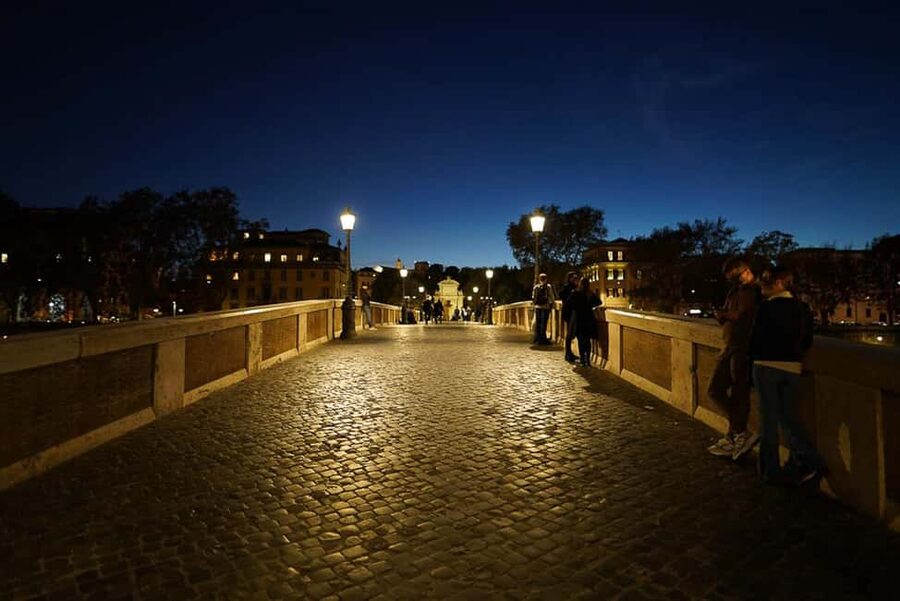
From there, the route crosses Ponte Sisto. The bridge connects Trastevere with the historic center and gives you an early look at the city from the Tiber. The stop is not presented as a major sightseeing break, so do not expect a long photography session or a detailed architectural tour of the bridge. Its value is in the transition: you leave the lively Trastevere side and move toward the streets where much of the evening’s history unfolded.
Because the tour lasts only two hours, the guide needs to keep the pace moving. You will hear stories while walking rather than stopping for long explanations at every point. That format works well if you prefer a flowing walk, but it may feel quick if you want to study every building or take lots of photographs.
Via Giulia and Rome’s less polished past
Via Giulia brings you into one of the historic center’s most atmospheric streets. The route uses backstreets and smaller lanes instead of simply linking the biggest tourist sights. That choice is important. You are not paying $70 to stand outside a famous landmark and hear the same basic facts available in every guidebook.
Here, the guide connects the physical street to darker chapters of Roman life. The stories concern executions, deaths, and the people who dealt with bodies abandoned in the city. These details show how Rome worked at street level, beyond grand palaces and papal ceremonies.
I would pay close attention to the guide’s explanation of public executions. The locations help make the subject concrete. Rather than treating punishment as an abstract idea, the walk shows you where it happened and how public squares could be used for ceremony, warning, and spectacle.
The pace and group size matter on Via Giulia. With up to 12 people, you should be able to hear the guide more easily than in a large walking group. Federica’s reported strength is her ability to keep the atmosphere relaxed while inviting questions. That is useful on a subject that can otherwise become a grim list of dates and names.
The Church of Santa Maria dell’Orazione e Morte
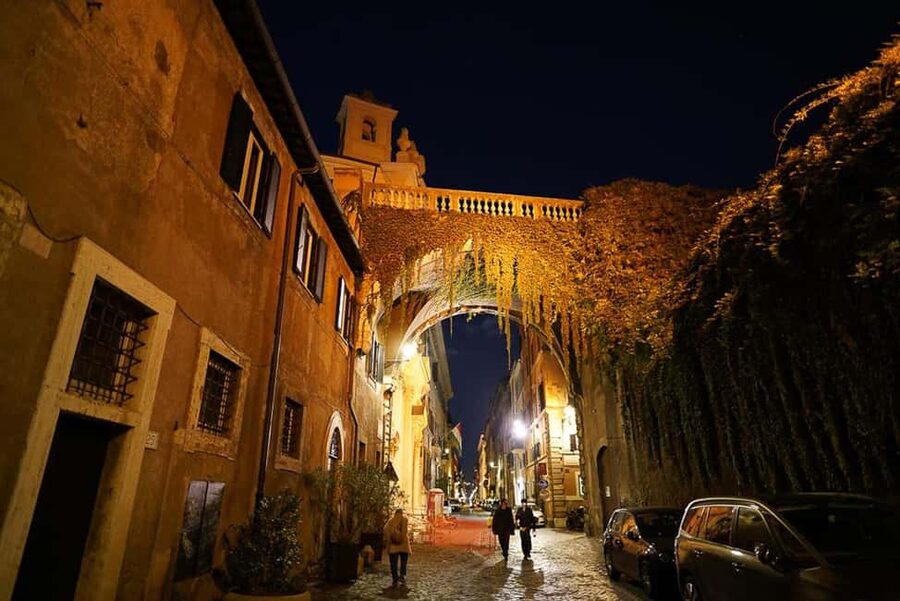
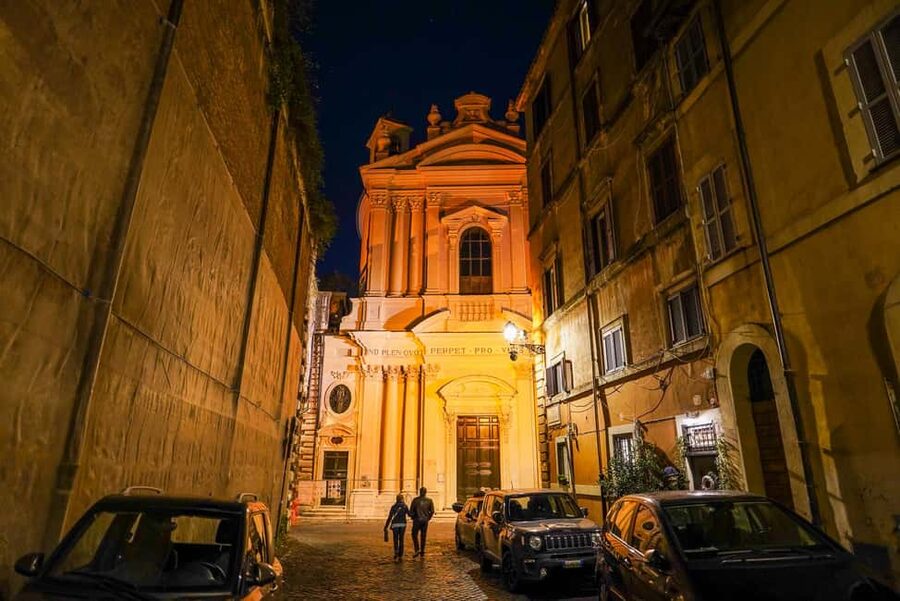
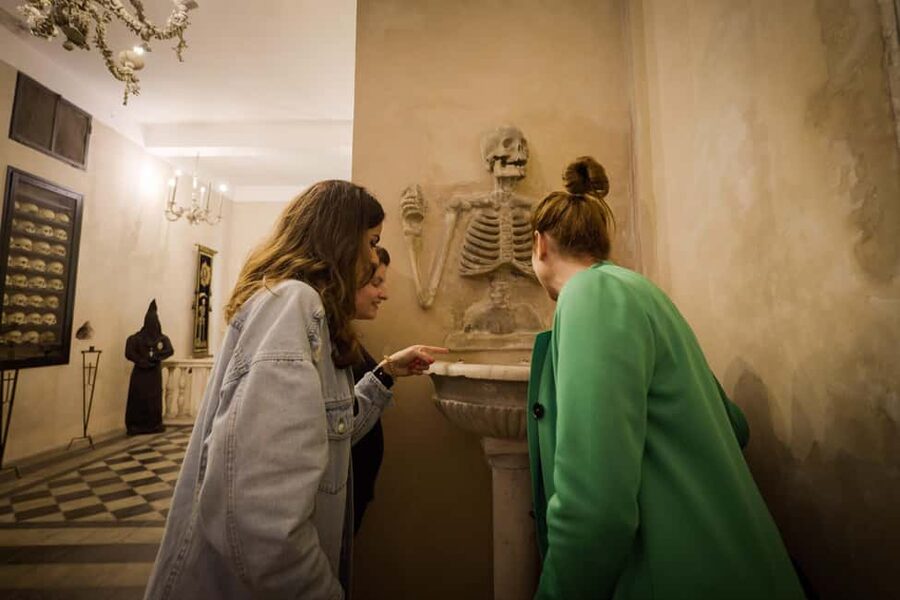
The central moment arrives at the Church of Santa Maria dell’Orazione e Morte, or Saint Mary of Prayer and Death. You will recognize it by the skulls on the facade, an unusually direct sign of what lies within.
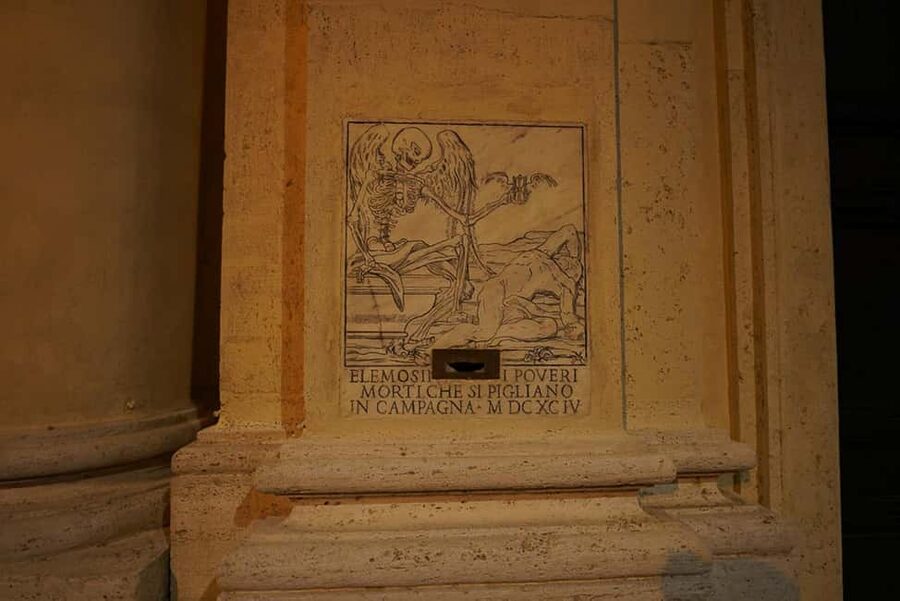
The group knocks at the door, and a nun from the Confraternity of Death welcomes you inside outside the church’s regular opening hours. This is the part that sets the walk apart from an ordinary city tour. You are not simply looking at a church from the street. You are being given access to an underground space connected to a group whose purpose included caring for dead bodies found in Rome’s streets.
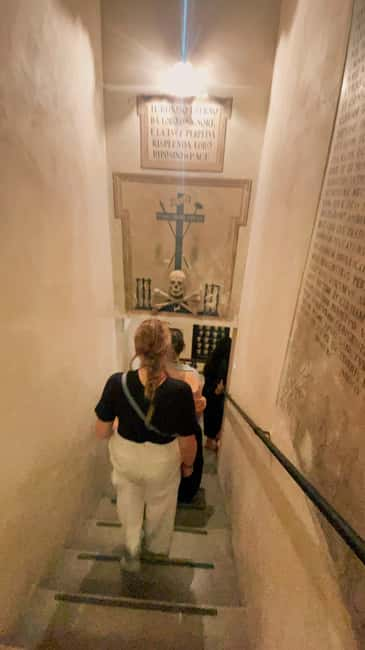
The crypt is stark. It contains chandeliers made from real bone, along with the skulls of confraternity members. Their names are carved into their foreheads. These details are likely to stay with you, but they also require a respectful attitude. This is not a theatrical haunted house. It is a religious and funerary space, so you should follow the guide’s instructions and treat it as a place of remembrance.
The crypt visit also gives the tour its strongest historical point. The confraternity was not simply a strange group with macabre decorations. It was connected to the practical problem of what happened to people who died without anyone to claim or bury them. The underground room makes that uncomfortable part of city life visible.
You should also allow for the possibility that the visit feels intense. The experience is described as suitable for children, but families know their own limits best. Young children who enjoy spooky stories may find the visit fascinating. Others may not be comfortable around real bones and repeated discussion of death.
More Dark History Tours in Rome
- Rome Secrets: Dark History & Tasty Bites Tour
★ 5.0 · 37 reviews - Rome’s Dark Side: Ghosts, Scandals and Crypts – Small Group Tour
★ 5.0 · 28 reviews - Haunted Rome & True Crime: The Cenci Curse Game
★ 4.5 · 27 reviews - COMBO: Rome’s Capuchin Crypts Tour & Rome’s Dark Side Ghost Tour
★ 5.0 · 21 reviews
Piazza Farnese and stories of power
After the crypt, the route continues to Piazza Farnese. The square is famous for its grand setting, but the tour uses it to explore the darker side of Rome’s political and religious power.
This is where stories about corrupt popes fit naturally. Rome’s history includes men who held spiritual authority while behaving like political rulers, and the walk looks at the gap between public office and private conduct. The subject is entertaining, but it also explains why scandals mattered so much in a city shaped by the papacy.
Do not expect an academic seminar on church politics. The style is more conversational, with obscure facts and local stories woven into the walk. That approach suits an evening experience. You get enough context to understand why the stories matter without spending the entire night on names and family connections.
Piazza Farnese is also a useful reminder that Rome’s beauty can disguise difficult history. The grand facades and open space make a polished setting for stories about ambition, power, and wrongdoing. I like that contrast. It keeps the tour from treating the past as a simple contest between good people and bad people.
Campo de’ Fiori and public punishment
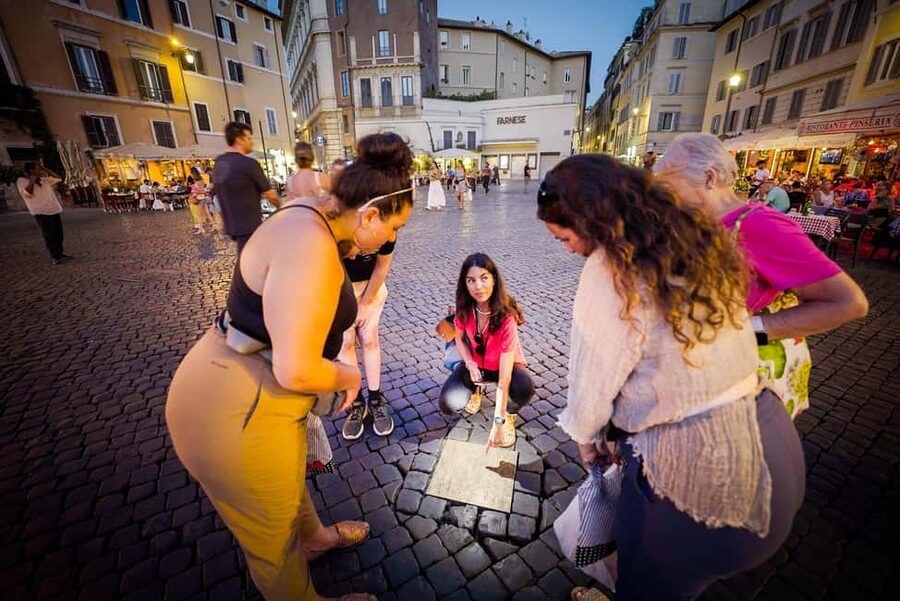
Campo de’ Fiori is one of Rome’s most recognizable squares, known today for its daytime market and restaurants. On this walk, you see it through a harsher lens, as one of the places connected with public executions.
The subject can change how you view the square. A place now used for food stalls and social life once had a far more threatening public role. The guide explains the history while you stand in the same urban space, making the story easier to picture than it would be inside a museum gallery.
This stop is especially useful for people who want the city’s social history, not just its art and architecture. Executions were public events, and their location tells you something about how authority was displayed. The crowd was part of the message. Punishment was meant to be seen.
Campo de’ Fiori is also one of the busier points on the route, depending on the time of day and the season. The tour is scheduled after the busy tourist hours, but the square remains a public place. Stay close to the guide and keep your attention on the explanation, especially if the area is active.
Piazza Navona and the final change of perspective
The walk finishes in Piazza Navona, one of Rome’s grandest open spaces. You will have seen the square before, or may plan to visit it separately, but the stories from the evening can change how you understand it.
The tour does not promise a lengthy art-history lesson about every fountain and facade. Instead, Piazza Navona provides a fitting end to a route about public life, spectacle, and death. Its open form makes it easy to imagine how Roman squares could host ceremonies, celebrations, and punishments across different periods.
Ending here is convenient. Piazza Navona is central, and you can continue to dinner or walk on to other parts of the historic center. The tour does not return to Piazza Trilussa, so plan your evening from the finish point rather than assuming you will end where you started.
The final effect is less about being frightened than seeing familiar Rome from another angle. The city’s churches, bridges, and squares carry stories that are not always printed on the usual sightseeing signs. That is the real strength of the experience.
What the $70 price includes
At $70 per person, this is not the cheapest way to spend two hours in Rome. You can walk across Ponte Sisto or visit Piazza Navona without paying anything, and many historic-center routes cost less.
The price makes more sense when you separate the ordinary street walk from the special access. Entry to the underground crypt is included, and the visit takes place outside normal opening hours with a nun from the confraternity welcoming the group. That is a rare feature, not something you can easily reproduce on your own.
The small group also adds value. A maximum of 12 people is large enough to create a pleasant social atmosphere but small enough for questions and clearer communication. Since the stories are the main attraction, a strong guide matters as much as the locations.
I would recommend comparing this cost with your interests. If you want major monuments, detailed Roman architecture, or a full evening of sightseeing, the price may feel high for a two-hour route. If you have already seen the major sights and want unusual access, local stories, and a focused look at death and punishment in Rome, the price is easier to justify.
Who will enjoy this walk most
I would choose this experience if you enjoy history that is messy, unsettling, and tied to real places. It suits repeat visitors who have already covered the Colosseum, Trevi Fountain, and Vatican highlights and want a less obvious side of Rome.
It also works well for curious first-time visitors who want an unusual introduction to the historic center. You will still walk through important areas, but the subject matter gives you a different framework for understanding them.
Families can consider it because the experience is described as suitable for children. Still, the crypt includes real bones and the stories focus on death, executions, and dark events. I would explain the subject to children beforehand rather than treating it as a harmless ghost-themed outing.
The walk is conducted in English, and the guide’s friendly, question-friendly approach is a clear advantage. Federica is described as enthusiastic and engaging, which matters here because dry delivery would make the material feel heavy.
You should skip it if you want a relaxed stroll with no disturbing imagery, or if you prefer long visits inside major monuments. You should also be comfortable walking through central Rome for two hours, since the experience is built around moving between locations rather than sitting in one place.
Practical points before you reserve
The tour lasts two hours and runs with a guaranteed maximum of 12 people. The meeting point is Piazza Trilussa, where you should look for the Live Virtual Guide sign. The finish is Piazza Navona, so leave extra thought for your onward plans.
Only English is listed for the live guide. The experience includes direct contact by phone or WhatsApp for questions, which can be useful before the meeting point or if you need to clarify arrangements.
You can reserve now and pay later, keeping your plans flexible. Cancellation is free up to 24 hours before the start time for a full refund. Starting times vary, so check availability for the evening that fits your Rome schedule.
Wear shoes you can walk in comfortably. That advice is basic but important, since the route crosses bridges, squares, and smaller streets, with no promise of extended seated stops. Bring a respectful attitude for the crypt, and keep your phone use discreet once you enter the church and underground room.
Should you book Rome’s Dark Side?
Book it if you want Rome beyond the usual checklist. The strongest reasons are the after-hours crypt access, the small group, and the guide-led stories about executions, abandoned bodies, and papal scandals. The bone chandeliers and skulls give the walk a visual focus that ordinary ghost tours cannot match.
Skip it if you are looking for major monuments, formal art history, or a cheap orientation walk. At $70, the value depends on your interest in unusual access and dark social history.
For me, the best match is a curious visitor who has time for one focused evening walk and wants the city to feel less familiar by the end. You will not simply collect more facts about Rome. You will look at its churches, squares, and alleys with a sharper sense of what happened there after the grand stories ended.
FAQ
How long does Rome’s Dark Side tour last?
The tour lasts two hours.
What language is the tour conducted in?
The live guided tour is conducted in English.
Where does the tour begin?
The meeting point is Piazza Trilussa. Your guide will hold a Live Virtual Guide sign.
Where does the tour finish?
The tour finishes in Piazza Navona.
Is entry to the underground crypt included?
Yes. Entry to the Underground Crypt is included in the tour price.
How large is the group?
The group has a guaranteed maximum of 12 people.
Can I cancel for a refund?
Yes. You can cancel up to 24 hours before the tour starts for a full refund.
More Cemetery Tours in Rome
- Rome: Capuchin Crypts & Ghostly Legends Small-Group Tour
★ 4.9 · 133 reviews - Rome: Ghosts & Bone Crypts Tours: 2 Tours, 1 Discount Ticket
★ 4.9 · 37 reviews - Edinburgh: Haunted Underground Vaults and Graveyard Tour
★ 4.6 · 6,607 reviews - Paris: Haunted Père Lachaise Cemetery Guided Tour
★ 4.6 · 3,591 reviews
Newly added around Rome
- Ghost & Legends in Night Rome Walking Tour★ 5.0 · 36 reviews
- Rome Secrets with Dark History and Tasty Bites Tour Experience★ 4.5 · 3 reviews
- Rome After Dark Mysteries Myths and Haunted History★ 5.0 · 14 reviews
- Rome: Private Night Ghost Walking Tour★ 5.0 · 38 reviews
- Haunted Rome: Eternal City Night Walking Tour★ 5.0 · 38 reviews
- Experience Rome in this Mysterious Ghost Tour★ 3.5 · 3 reviews
- Haunted Rome & True Crime: The Cenci Curse Game★ 4.5 · 27 reviews
- Rome’s Dark Side: Ghosts, Scandals and Crypts – Small Group Tour★ 5.0 · 28 reviews
Rome Ghost Tours, compared.
Paranormal Night Walking Tour & Secret Backstreets
Read our review →

Small Group Rome’s Dark Side – Ghosts & Legends Tour
Read our review →
Ghosts, Legends & Mysteries of Rome Tip-Based Walking Tour
Read our review →
Browse the lists this tour appears in