
REVIEW · ROME GHOST TOURS
Rome Secrets with Dark History and Tasty Bites Tour Experience
Rome has a darker side. This two-hour evening walk links ancient ruins, Jewish legends, executions, poison, religion, and a few well-timed bites. I like the unusual route, which takes you beyond Rome’s standard monuments, and I like the way the stories connect ordinary streets with the city’s stranger past. Guide Costanza is praised for sharing stories that are not usually part of a daytime sightseeing walk.
The main consideration is pace. Stops at several sites last only about five minutes, so you will hear the story outside rather than explore interiors at length. The tour also is not suitable for a gluten-free diet, and the small amount of available feedback means you should treat the 4.7 rating as encouraging, not definitive.
Key points before you book
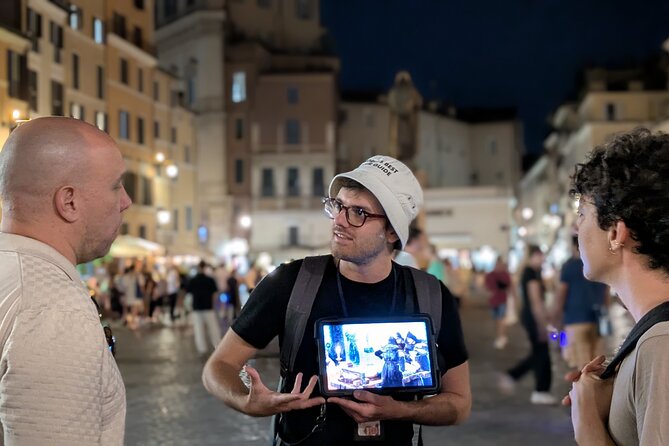
- Ancient ruins meet Jewish mysticism: At the Portico of Octavia, you hear about Kabbalah, the number 7, and the legend of the Golem.
- Rome’s famous squares take on a darker mood: Campo de’ Fiori becomes a place of executions, heresy, and Giordano Bruno’s final moments.
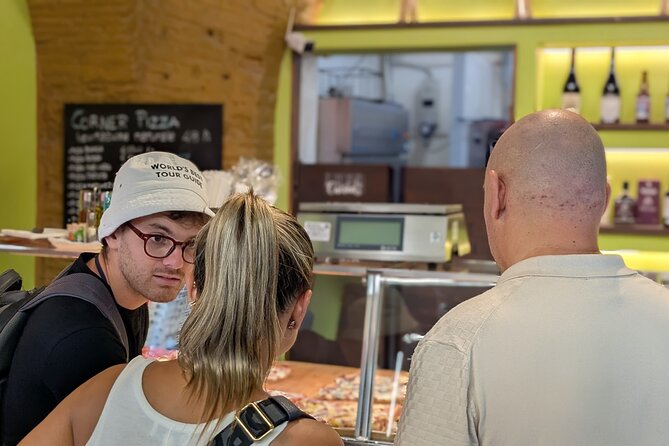
- The food breaks up the storytelling: Pizza, an alcoholic drink, a local sweet, and another beverage are included.
- The route is made for a small group: A maximum of 15 people gives the guide a better chance to keep the walk personal.
- The finish is especially atmospheric: Ponte Sant’Angelo, Castel Sant’Angelo, and the Tiber provide a dramatic setting for the final stories.
- This is an outside-looking tour: Most stops are brief, and admission tickets are free because the experience centers on streets, façades, bridges, and public spaces.
Why this Rome walk feels different
At $35.07 per person, this is priced as an affordable specialty walk rather than a full museum tour. You are paying for a guide, a carefully linked route, and several food and drink inclusions, not for entry into major monuments.
That distinction matters. If you want the Colosseum, Vatican Museums, or an extended look inside a church, this is not the right choice. If you have already seen Rome’s headline sights and want a short evening route with a macabre theme, the price is easier to justify.
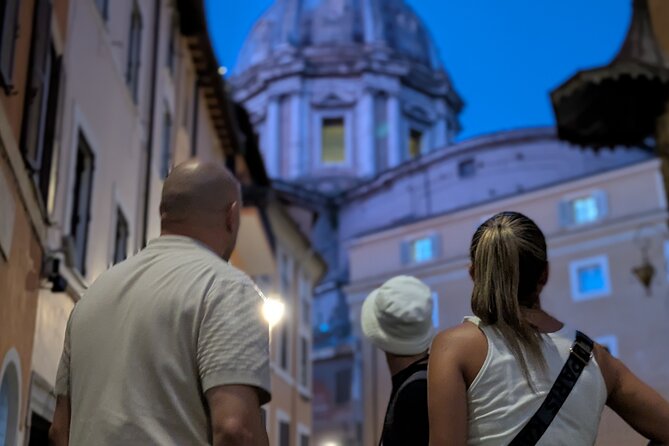
The walk moves through the Jewish Ghetto, Campo de’ Fiori, Via Giulia, and the streets near Castel Sant’Angelo. These areas are close enough to connect on foot, yet each has a different mood. You get ancient Rome, religious Rome, Renaissance commerce, Baroque fear, and stories of crime and punishment in one compact outing.
The English-language tour accepts mobile tickets and has a maximum group size of 15. That is a useful balance for a city walk. The group is large enough to feel social but small enough that Costanza, or another assigned guide, should be easier to hear than on a large coach-style tour.
More Dark History Tours in Italy
- Rome: Guided Bar Crawl with Drinks & Dark History
★ 4.9 · 444 reviews - Rome: Small Group Rome’s Dark Side – Ghosts & Legends Tour
★ 4.9 · 343 reviews - Rome’s Dark Side Ghosts and Legends Tour
★ 5.0 · 93 reviews
Portico of Octavia and the Jewish Ghetto
The meeting point is the Portico of Octavia, at Via del Portico d’Ottavia 29. This is a strong starting place because the ruins already look mysterious, especially as daylight fades.
The complex was built under Emperor Augustus for his sister Octavia. You do not need a long archaeology lecture to appreciate the setting. Broken columns, old stone, and the surrounding lanes immediately show how Rome places different centuries on top of one another.
The story here turns toward the Jewish Ghetto and its traditions. You hear about Kabbalah, the symbolic role of the number 7, and the Golem, a creature said to have protected the Jewish community during persecution. These tales give the ancient stones a second layer. The stop is not only about what Rome built, but also about what people feared, believed, and passed down.
The scheduled stop is about five minutes. That is enough for a focused introduction and a few photographs, but not enough for a detailed visit to every nearby site. I would arrive early and take a moment to look around before the group begins.
The Jewish Ghetto itself adds texture to the route. By day, it is a working neighborhood with narrow lanes and kosher bakeries. At dusk, the tour turns its attention to the ghost of Berenice and to the way faith and superstition have shaped local stories.
This is one of the better parts of the experience for anyone who wants atmosphere instead of a list of dates. You are not simply hearing that the neighborhood is old. You are learning how Roman streets can carry religious memory, folklore, and fear at the same time.
Via dei Giubbonari and the ghost of the Pimpaccia
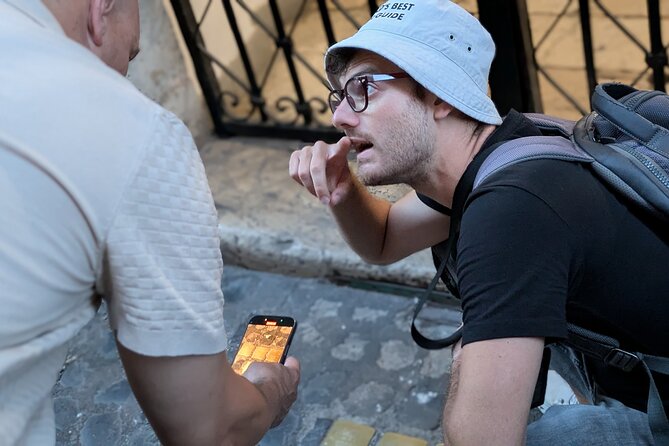
The walk continues toward Via dei Giubbonari, the street linking Campo de’ Fiori with Piazza Cairoli. Its name comes from the tailors who once worked here, though today you pass shops and historic façades rather than a street devoted to one trade.
The darker tale belongs to Olimpia Maidalchini, known as the Pimpaccia. She was a powerful 17th-century noblewoman associated with greed and manipulation. According to local legend, her spirit still wanders the street at night.
This is a good example of the tour’s method. A normal walk might hurry through Via dei Giubbonari on the way to a larger sight. Here, the street becomes the story. The ordinary details, shop fronts, paving stones, and people going about their evening, are set against an unsettling tale from Rome’s political past.
The story is presented as legend, so you should enjoy it as folklore rather than expect a documented ghost encounter. That balance is important. The fun comes from seeing how a real person and a real street became part of a supernatural tradition.
Campo de’ Fiori and Giordano Bruno
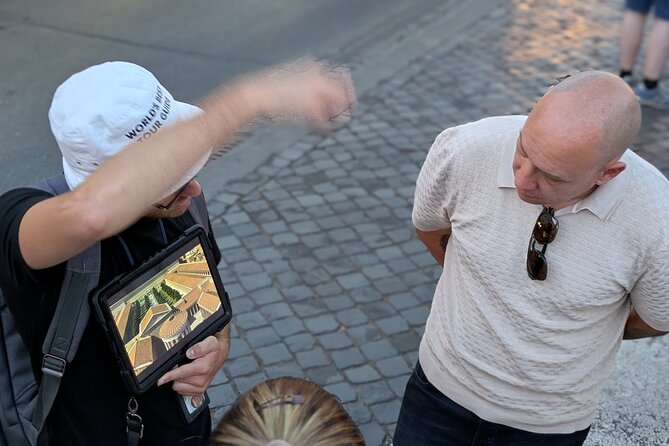
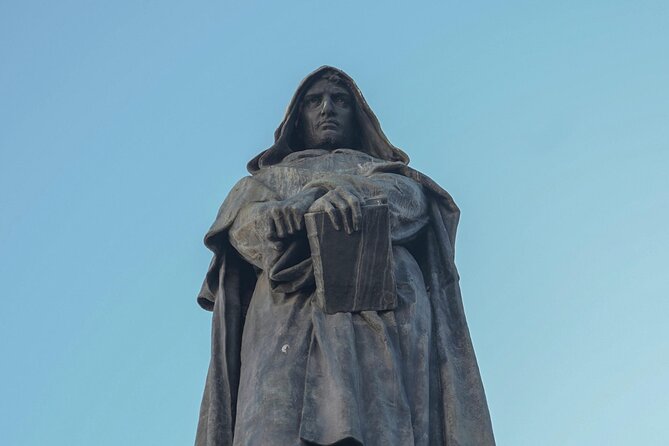
Campo de’ Fiori is one of Rome’s most recognizable public squares. During the day, it is associated with flowers, market stalls, cafés, and social life. On this route, you see the square through the statue of Giordano Bruno at its center.
Bruno was a philosopher and friar condemned for heresy and burned here in 1600. His hooded statue faces toward the Vatican, giving the square a stern focal point. The image is hard to miss, and the story gives it weight.
The guide explains Bruno’s trial and execution, as well as the square’s use for public punishments and executions. This is where the tour’s title makes sense. Rome’s beauty and brutality are often found within a few steps of one another, and Campo de’ Fiori makes that contrast plain.
The stop lasts about 10 minutes, longer than several of the other locations. That extra time helps because Bruno’s life and death need more context than a quick ghost story. You can also take in the square itself, which still functions as a lively meeting place despite its grim past.
I like this part for its historical seriousness. The route is not all haunted whispers. It also deals with censorship, religious authority, free thought, and the cost of challenging accepted ideas.
More Dark History Tours in Rome
- Rome Secrets: Dark History & Tasty Bites Tour
★ 5.0 · 37 reviews - Rome’s Dark Side: Ghosts, Scandals and Crypts – Small Group Tour
★ 5.0 · 28 reviews - Haunted Rome & True Crime: The Cenci Curse Game
★ 4.5 · 27 reviews - COMBO: Rome’s Capuchin Crypts Tour & Rome’s Dark Side Ghost Tour
★ 5.0 · 21 reviews
Santa Maria dell’Orazione e Morte beside the Tiber
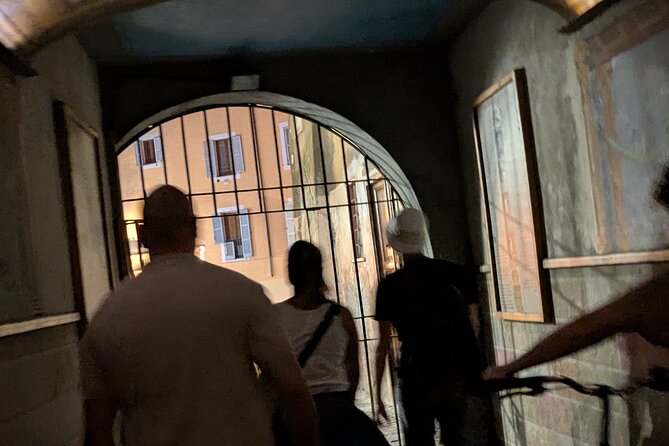
The Church of Santa Maria dell’Orazione e Morte is one of the strangest locations on the route. Its name refers to prayer and death, and its purpose was tied to a confraternity that gave proper burials to people who drowned in the Tiber or died without family.
The church’s exterior uses skulls, winged skeletons, and Latin inscriptions to make its message clear: life is short, and death is never far away. The account of niches containing real human bones adds a more physical edge to the stop.
This is not a cheerful sightseeing pause, but it is more than shock value. The church reflects an old religious duty to care for the forgotten dead. The macabre art served as a warning about mortality while also marking a place where abandoned souls received prayers and burial.
The scheduled visit is about five minutes, so you should expect an explanation from outside or near the church rather than a long interior visit. If you are sensitive to human remains or stark images of death, this may be the most challenging stop.
For everyone else, it gives the walk a useful change of tone. The stories move from ghosts and executions to the way a religious community responded to people who had no family to claim them.
Via Giulia and the story of Aqua Tofana
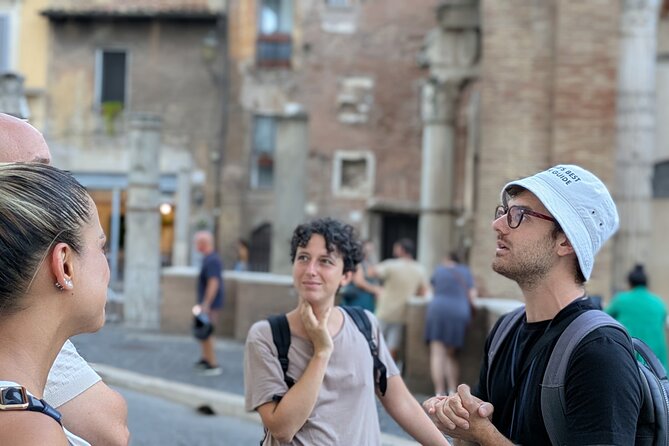
Via Giulia provides a sharp contrast. It is elegant, quiet, and lined with the kind of architecture that suggests wealth and order. The story attached to it concerns Giulia Tofana and the poison known as Aqua Tofana.
According to the tale, the substance was sold discreetly to women trapped in abusive marriages. A few drops in wine or soup could kill slowly and without obvious detection. The story links noble households, desperate wives, secret networks, and the fear of betrayal.
This stop works because the street looks so composed. You are walking past refined façades while hearing about the hidden dangers that could exist behind them. Rome’s grand buildings often invite you to admire the surface. This story asks you to consider what might have happened in private rooms.
The stop lasts about five minutes. That is enough to establish the setting and the main facts, though anyone fascinated by Giulia Tofana will probably want to research the subject afterward. The tour gives you a vivid introduction rather than a full crime-history lecture.
I would also keep an open mind about the line between fact and legend here. The guide blends historical figures with stories that have grown through retelling. That is part of the appeal, but it is best enjoyed as a guided look at Roman folklore and social history, not as a courtroom record.
Arco dei Banchi and the route toward Castel Sant’Angelo
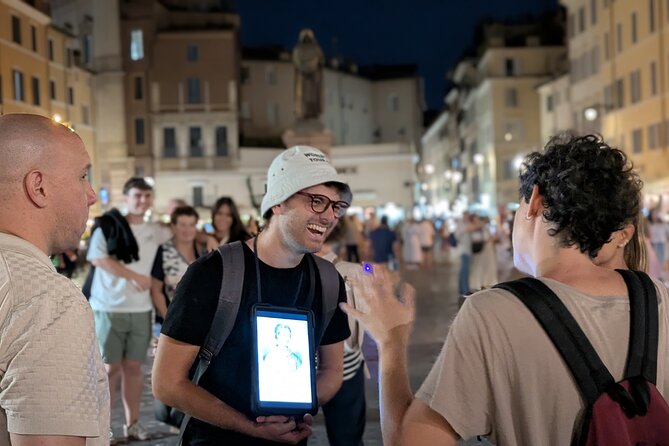
Arco dei Banchi is a small passageway with an outsized sense of place. The name recalls the bankers and merchants whose benches once occupied the area. The arch was also used by pilgrims heading toward the Vatican, who could find shelter and guidance along the route.
A small image of the Madonna once lit the passage at night. A plaque recalls destructive floods from the Tiber. Together, those details show several sides of Renaissance Rome: commerce, pilgrimage, devotion, and the constant threat of the river.
This is a quieter stop than Campo de’ Fiori. You are not looking at a huge monument or a dramatic statue. Instead, you are being asked to notice a corridor that many people could pass without a second thought.
The stop lasts around five minutes. That short pause makes sense here because the appeal is visual and atmospheric. Look up at the vaulted ceiling, notice the narrow passage, and listen for the connection between money, faith, and secrecy.
The end point is near Via del Banco di Santo Spirito, in front of Sant’Angelo Restaurant. That is useful to know because the meeting point and final point are different. You finish near Ponte Sant’Angelo rather than returning to the Jewish Ghetto.
Ponte Sant’Angelo, angels, and Mastro Titta
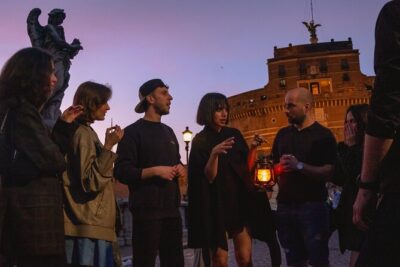
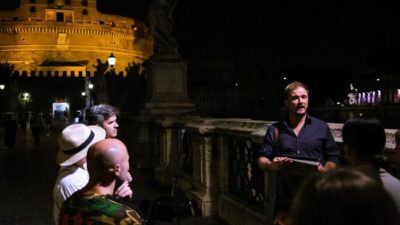
The final setting is the most cinematic part of the route. Ponte Sant’Angelo crosses the Tiber toward Castel Sant’Angelo and is lined with Baroque angel statues associated with Bernini’s designs. The bridge is beautiful in daylight, but its illuminated arches take on a more serious mood after dark.
The closing story concerns Mastro Titta, Rome’s notorious executioner. The area became connected with his grim work, adding a human figure to the broader story of punishment and public fear.
The contrast is striking. Angels carrying symbols of Christ’s Passion look down while the guide discusses executions. Castel Sant’Angelo rises nearby, and the river moves below. It is a fitting place to end because the tour has repeatedly paired beauty with violence, belief with superstition, and public grandeur with private suffering.
A food and drink stop near the end helps soften the mood. Pizza and a local sweet are included, along with alcoholic beverages. A direct account of the outing also notes an additional snack and beverage at the end, with a view toward Castel Sant’Angelo. Since the exact food choices are not specified, you should not book this expecting a particular pizza style, dessert, or drink.
Food, group size, and practical comfort
The included food is a real part of the value. A two-hour walk can feel much easier when it includes pizza, something sweet, and a drink rather than asking you to wait until dinner. The food also gives the group a natural pause between stories.
The tour is not suitable for gluten-free diets. That is the clearest food limitation provided, so plan another meal if you need gluten-free options. Alcoholic beverages are included, but the details do not specify the type or amount.
You can use a mobile ticket, and confirmation arrives at booking. The route is near public transportation, and service animals are allowed. Most people can take part, but you should remember that this is a walking experience through historic streets and passages.
The maximum group size is 15. That is small enough to support conversation and make it easier to follow the guide in narrow spaces. It also means the tour can sell out, especially since it is booked an average of 69 days ahead. If your Rome dates are fixed, booking early is sensible.
Free cancellation is available if you cancel at least 24 hours before the start time. Changes or cancellations inside that window are not accepted for a refund, and the cut-off follows local Rome time.
Who should book this tour?
I would choose this tour if you enjoy Rome’s lesser-known stories, ghost lore, religious oddities, and the gap between polished monuments and uncomfortable history. It suits a return visit especially well, since you can spend your first days on the major sights and use this walk to see familiar neighborhoods differently.
It also works for couples, friends, and older children who can handle stories about executions, poisoning, human bones, and death. The material is not gentle, so families should decide based on the child rather than the short duration.
The tour is less suitable if you want long stops, museum access, or a detailed architectural lecture. The short five-minute pauses mean you must listen closely. You will not have much time to wander off, browse, or study each site at your own pace.
At $35.07, the combination of a guide, a small group, pizza, a sweet, and drinks makes the price fair for a themed walk. The strongest value comes from the route and storytelling, not from any single monument.
Should you book Rome Secrets with Dark History and Tasty Bites?
Book it if you want a compact evening stroll with unusual stories and a little food built in. The route has a clear personality, and the finish at Ponte Sant’Angelo gives the experience a memorable final scene.
Skip it if you need gluten-free food, dislike macabre subjects, or prefer entering major attractions. For everyone else, this is a smart way to spend two hours in Rome after the standard sightseeing is done, especially if you reserve ahead and arrive ready to listen rather than rush from monument to monument.
FAQ
Where does the tour start?
It starts at the Portico of Octavia, Via del Portico d’Ottavia 29, 00186 Rome, Italy.
Where does the tour end?
It ends on Via del Banco di Santo Spirito, in front of Sant’Angelo Restaurant, near Ponte Sant’Angelo.
How long is the experience?
The tour lasts approximately two hours.
What language is offered?
The experience is offered in English.
How much does the tour cost?
The listed price is $35.07 per person.
What food and drink are included?
Included items are alcoholic beverages, pizza, and a local sweet. An additional snack and beverage are also described near the end of the walk.
Is the tour suitable for a gluten-free diet?
No. The tour is specifically noted as not suitable for gluten-free diets.
How many people can join the group?
The tour has a maximum of 15 participants.
Can I cancel for a full refund?
Yes, if you cancel at least 24 hours before the experience start time. Cancellations or changes made less than 24 hours before the start are not accepted for a refund.
More Heritage Tours in Rome
- Rome After Dark Mysteries Myths and Haunted History
★ 5.0 · 14 reviews - Rome: Colosseum and Ancient Dark History Walking Tour
★ 5.0 · 10 reviews - Savannah History and Haunts Candlelit Ghost Walking Tour
★ 5.0 · 3,235 reviews - Stockholm: Ghost Walk and Historical Tour
★ 4.7 · 2,685 reviews
Newly added around Rome
- Ghost & Legends in Night Rome Walking Tour★ 5.0 · 36 reviews
- Rome After Dark Mysteries Myths and Haunted History★ 5.0 · 14 reviews
- Rome: Private Night Ghost Walking Tour★ 5.0 · 38 reviews
- Haunted Rome: Eternal City Night Walking Tour★ 5.0 · 38 reviews
- Experience Rome in this Mysterious Ghost Tour★ 3.5 · 3 reviews
- Haunted Rome & True Crime: The Cenci Curse Game★ 4.5 · 27 reviews
- Rome’s Dark Side: Ghosts, Scandals and Crypts – Small Group Tour★ 5.0 · 28 reviews
- Ghosts and Crimes of Rome Night Walk★ 5.0 · 61 reviews
Rome Ghost Tours, compared.
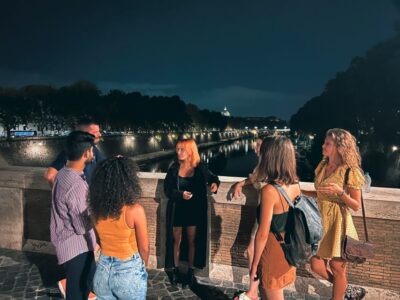
Paranormal Night Walking Tour & Secret Backstreets
Read our review →
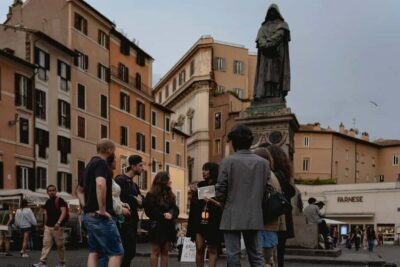

Small Group Rome’s Dark Side – Ghosts & Legends Tour
Read our review →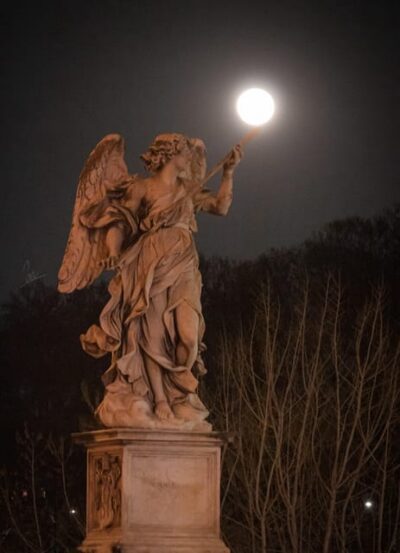
Ghosts, Legends & Mysteries of Rome Tip-Based Walking Tour
Read our review →
Browse the lists this tour appears in