
REVIEW · ROME GHOST TOURS
Ghosts and Crimes of Rome Night Walk
Rome’s darkest stories begin after sunset. This 90-minute walk trades grand monuments for grim crimes, old prisons, and eerie piazzas, giving you a different view of the city. I like the small maximum of 15 people, and I like the playful use of dowsing rods to give the ghost theme something hands-on.
The main thing to consider is the balance between fact and folklore. Much of the tour focuses on murders, executions, torture, and brutal Roman history, while the ghost-hunting element is lighter. Some guides, including Lara, Elvira, Bryan, Yash, and Arianna, have earned especially warm praise for lively storytelling, but one visitor found the presentation a little long-winded.
Key points to know before booking
- A crime walk with ghosts around the edges: Expect far more true crime, executions, and Roman cruelty than supernatural sightings.
- The route crosses Rome’s Centro Storico: You begin near Castel Sant’Angelo and finish at Campo de’ Fiori.
- Dowsing rods make the theme interactive: Everyone gets a chance to try the simple ghost-hunting tools.
- Small groups help with storytelling: The maximum is 15 people, so it should be easier to hear the guide on busy streets.
- Guides make or break the evening: Strong storytellers such as Lara, Elvira, Bryan, Yash, and Arianna add humor and drama.
- Good value at $25.09: For an evening walk lasting about 90 minutes, the price is reasonable if you enjoy unusual history.
Rome after dark, with a darker purpose
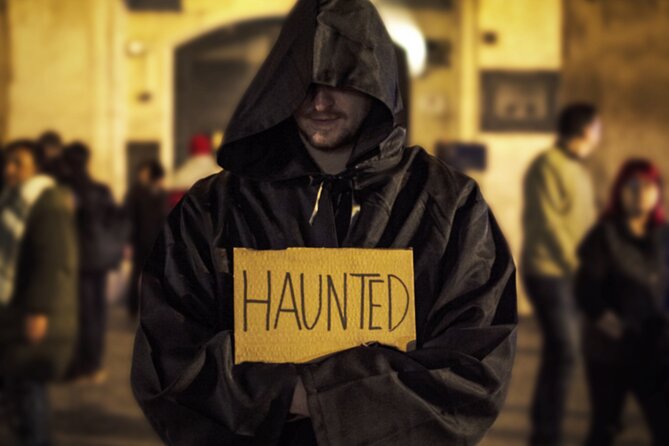
Rome has no shortage of famous ruins, churches, fountains, and emperors. This tour looks elsewhere. It follows the city’s darker streets and tells stories about people who were imprisoned, tortured, executed, poisoned, or burned alive.
I like that approach because it gives you a break from the standard Roman highlights. You are not spending the evening listening to another explanation of ancient temples. Instead, you hear about the people who lived, suffered, and died in the city’s less polished corners.
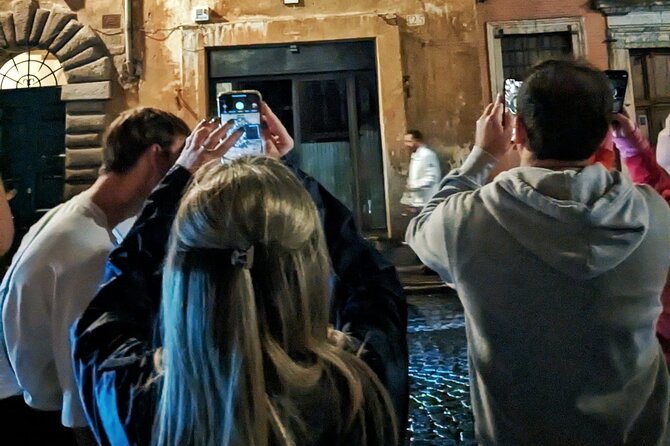
The mood is atmospheric rather than terrifying. You walk through Rome at night, hear tales of crimes and punishment, and test dowsing rods at selected points. The experience works best if you enjoy a bit of theatrical storytelling and do not need a ghost to appear on schedule.
The rating of 4.8 out of 5, with 97 percent of customers recommending it, fits the strongest feature of the tour: its guides. Names praised repeatedly include Elvira, Bryan, Yash, Lara, Arianna, Clara, Amber, Allie, Emma, and Elvie. The exact guide can vary, but the pattern is clear. A lively storyteller adds far more to this walk than a long list of dates and names.
More Evening Tours in Rome:
- Rome: Paranormal Night Walking Tour & Secret Backstreets
★ 4.9 · 1,921 reviews - Rome: Haunted City Night Walking Tour
★ 4.9 · 616 reviews - Haunted Rome Ghost Night Walking Tour
★ 5.0 · 495 reviews
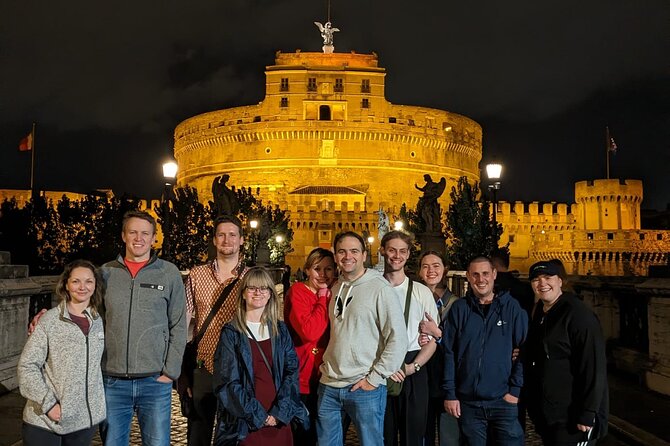
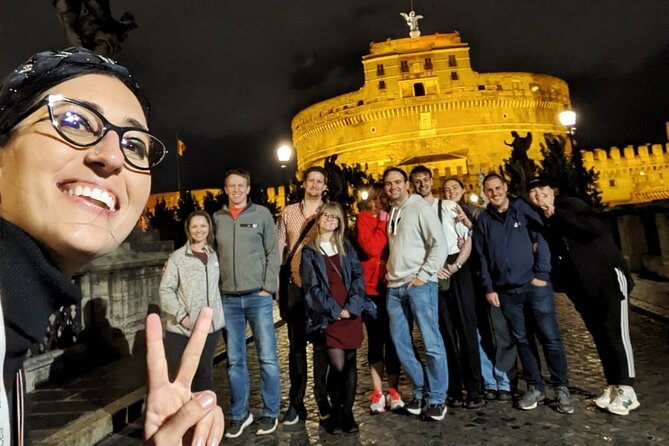
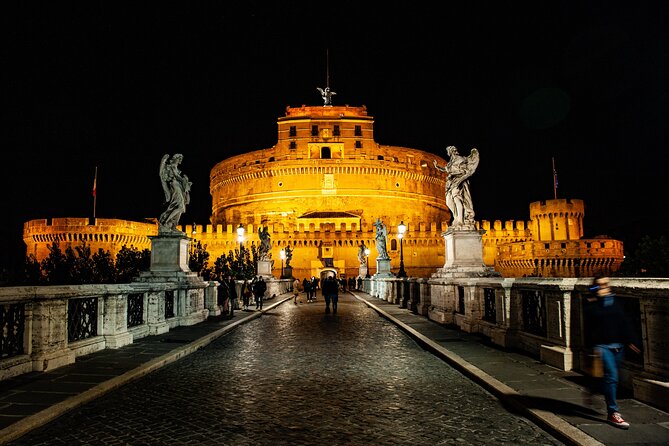
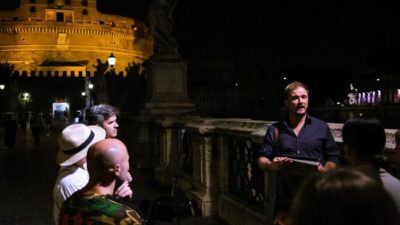
Starting near Castel Sant’Angelo
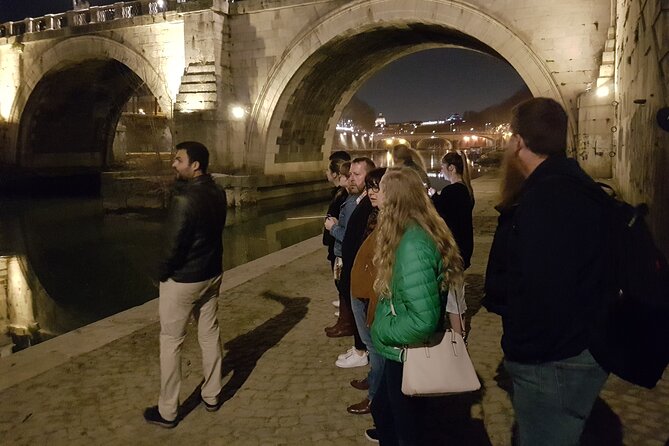
The meeting point is at Lungotevere Castello 50, near the Vatican-side stretch of the Tiber. The route begins with the dark tale of people executed for crimes they did not commit and the dungeons inside the Papal fortress.
That opening sets the tone well. Castel Sant’Angelo is easy to recognize, and its original role as a mausoleum later gave way to military and papal use. Here, the focus is not on the building’s grand exterior. You hear about confinement, judgment, and the human cost of power.
The story works because the setting does much of the atmospheric work. At night, the fortress walls and riverfront give the guide a strong backdrop. You do not need special equipment or a separate admission ticket for the castle. The tour uses the surrounding area as the stage.
This first section may feel more like a history talk than a ghost hunt. That is not a flaw, but it is useful to know. If you want constant supernatural activity, you may find the opening too grounded in crime and punishment.
Leaving the main tourist track
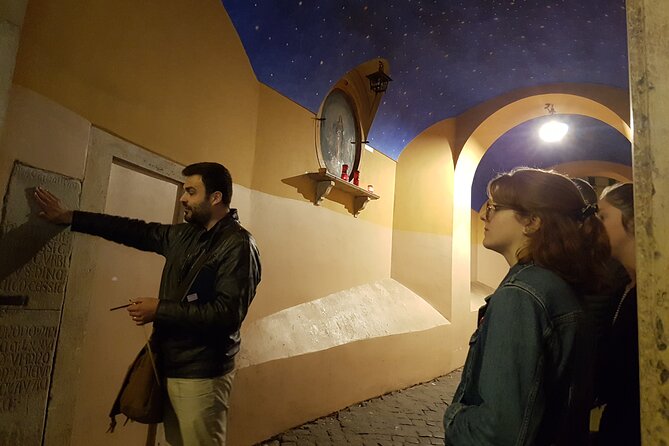
From the fortress area, the walk moves through darker streets toward piazzas connected with some of Rome’s most violent stories. The route is designed to show you corners you might otherwise pass without much thought.
I like this part because Rome’s historic center can feel familiar and unfamiliar at the same time. You may recognize the broad area, yet the guide directs your attention toward side streets, old buildings, and ordinary-looking spots tied to disturbing events.
The stories include an alleged serial killer who poisoned more than 600 men. You also hear about an executioner who carried out roughly 500 executions during a career lasting 65 years. These details are memorable because they turn abstract Roman history into personal stories about fear, crime, and public punishment.
The guide’s delivery matters here. A strong presenter keeps the names and numbers from becoming a lecture. Bryan was praised for explaining difficult subjects clearly, while Lara was described as funny, friendly, and captivating. Yash was noted for his wit and ability to hold attention. These are useful clues for families and mixed-age groups, since the storytelling seems to appeal to teenagers as well as adults.
One caution: the subject matter is grim. You will hear about poisoning, torture, executions, and other violent acts. The experience may not suit young children or anyone who prefers lighter evening sightseeing.
The prison, torture, and tools of death
One stop takes you to an ancient prison where hundreds of women were tortured and executed. The guide also explains the tools used to put people to death.
This is one of the tour’s strongest historical sections. Rome is often presented through art, empire, and religion, but systems of imprisonment and public punishment shaped the city too. Listening to those stories near old structures gives you a better sense of how justice worked before modern courts and prisons.
The guide does not simply point at a building and move on. The focus is on the people who passed through the prison and the methods used against them. That makes the stop more personal, though also more upsetting.
You should expect descriptions rather than a museum-style display of torture devices. The tour information promises an explanation of the tools, not an indoor exhibition or a separate collection visit. If you are sensitive to graphic subjects, stay aware of the theme before booking.
This stop also explains why the tour can feel more like a crime walk than a traditional ghost tour. The supernatural material supports the historical stories instead of replacing them.
A few more hauntings around Rome worth booking
- Haunted Rome Ghost Tour – The Original
★ 4.5 · 668 reviews - Rome: Small Group Rome’s Dark Side – Ghosts & Legends Tour
★ 4.9 · 343 reviews - Ghosts, Legends & Mysteries of Rome Tip-Based Walking Tour
★ 4.7 · 284 reviews - Ghosts Legends and Mysteries of Rome Walking Tour
★ 5.0 · 149 reviews
The private road built for Pope Julius
The route then follows a street built to allow Pope Julius to visit his mistresses in privacy. It is an unusual detail, and exactly the kind of small fact that gives the walk its personality.
This is where a good guide can help you see Rome differently. The street is not only a route from one place to another. It becomes evidence of how powerful people shaped the city around private needs, secrecy, and privilege.
The story also adds a touch of scandal without changing the tour’s serious tone. Rome’s past was not only about saints and emperors. Popes, criminals, executioners, prisoners, and ordinary citizens all left their mark on the city.
You may find that the walk’s best moments are not the most obviously spooky ones. A surprising fact about a street can stay with you longer than a staged scare, especially when the guide connects it to the city’s wider social and political life.
The Brotherhood of Death and a church with a grim purpose
Another stop brings you to the head church of the Brotherhood of Death. The name alone tells you why it belongs on this route.
The church connects the tour’s crime stories with Rome’s religious traditions around death, burial, and remembrance. In a city filled with churches, this stop gives you a less familiar angle. The guide explains the role of the brotherhood and why a religious organization tied to death became part of the city’s story.
The information provided does not promise an interior visit, so you should expect to see and discuss the site from the route rather than assume entry. That keeps the tour moving, but it also means the experience depends on the guide’s explanation and the atmosphere outside.
This is a good example of the tour’s wider appeal. You are not simply hunting for ghosts. You are learning how Rome dealt with death in public, religious, and criminal life.
A piazza without churches
The guide next leads you to a piazza described as having no churches. In Rome, that is unusual enough to deserve attention.
The point is not just the absence of a church. It gives the guide another way to discuss how public spaces were used and how certain locations became associated with crime, punishment, or spectacle. The square becomes part of the story, not just a place to pause.
This section may appeal to you if you enjoy small pieces of urban history. It is not one of the city’s standard headline sights, so you are likely to remember it as part of the tour’s less familiar route.
At the same time, you should keep your expectations practical. This is a walking narrative, not a sequence of dramatic set pieces. Some stops may be visually modest. Their value comes from the story told there.
Campo de’ Fiori and the final grim chapter
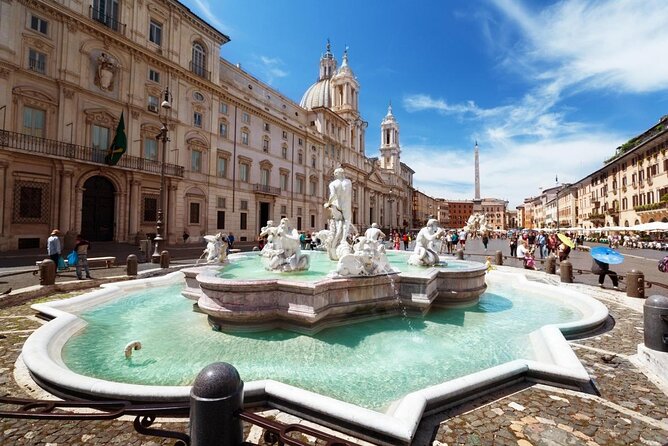
The walk ends at Piazza Campo de’ Fiori, where thousands were burned alive. The square is now one of Rome’s best-known public spaces, which makes the darker account especially striking.
Campo de’ Fiori is often associated with its lively daytime market and central location. Hearing about executions there changes the way you see it. The same open space that feels social and energetic today once served as a place of public punishment.
This final stop gives the tour a strong ending because it connects ordinary modern Rome with a violent past. You finish in a central part of the city rather than at an isolated location, which is convenient for continuing your evening.
The end point also makes the experience practical for a night out. You can remain in the historic center after the tour, though the tour itself does not include food or drinks. Plan to eat before or after. Do not count on refreshments during the walk.
Ghost stories, dowsing rods, and the real level of fright
The dowsing rods are the tour’s main interactive feature. You get to use them while searching for signs of spirits, which gives the group something to do beyond listening.
Some people will enjoy the playful ritual. It can loosen up a small group and keep younger participants involved. One family with children and teenagers rated the experience highly, and the tools were specifically praised as a good addition.
Still, you should know what kind of ghost tour this is. The route is not presented as a guaranteed paranormal investigation. The strongest material concerns real crimes, historical punishments, and notorious figures. Ghost stories and folklore appear along the way, but they are not the whole show.
A few people felt the tour was mostly about who was killed and where. That is a fair description. I would book it for the combination of grim history, nighttime Rome, and playful ghost-hunting, not because I expect to see an apparition.
The reports of flickering lights and supernatural connections add fun to the evening, but they are best treated as part of the storytelling atmosphere. You can enjoy the experience as a believer, a skeptic, or simply someone who likes a good spooky tale.
Why the small group matters
The tour accepts no more than 15 people. That is a useful limit for a walking story tour, especially in Rome’s narrow streets and busy piazzas.
A small group makes it easier to hear the guide and stay close during pauses. Allie was praised partly because the group was a comfortable size and easy to hear. The format also gives the experience a more social feel without becoming a large crowd.
Small does not mean private. You are still sharing the walk with other people, and the exact atmosphere will depend on the guide and the group. Most guides appear to use humor and audience interaction, but one slower, more detailed presentation may feel long to some people.
You receive the guide’s name and phone number to make communication easier. Confirmation is provided at booking, and the experience is offered in English.
Price, timing, and practical value
At $25.09 per person, this is fairly priced for a 90-minute guided walk in central Rome. You are paying for a local storyteller, a planned route, group organization, and the dowsing rods. There is no food, drink, or separate monument admission included.
The value is strongest if you enjoy unusual city stories. A standard sightseeing walk may show you more major landmarks, but this tour gives you a different lens on familiar areas. It can also work well after a day spent visiting museums and churches, when you want something lighter in structure but darker in subject.
The walk operates in all weather, so dress for the conditions. Comfortable shoes are important, and an umbrella or rain layer may be useful. Because it takes place at night, check the meeting details carefully and allow time to reach Lungotevere Castello 50.
The route ends at Campo de’ Fiori, not back at the starting point. That is helpful if you plan to continue into the historic center, but it matters if you need to return to a hotel near the Vatican.
Free cancellation is available if you cancel at least 24 hours before the start time. A late cancellation is not refunded, and the tour may be changed or refunded if its minimum group size is not reached. Some monuments may be under restoration during the Jubilee, so pay attention to any updates before setting out.
Service animals are allowed, the route is near public transportation, and most people can participate. The tour is still a 90-minute walk, so consider your comfort with standing and walking through city streets.
Who should book this Rome night walk?
I would recommend it to you if you like true crime, unusual history, folklore, and lively guides. It is especially suitable for older children and teenagers who can handle stories about torture and execution. The small group, English format, and central route make it easy to add to a Rome itinerary.
It is also a good choice for repeat visitors. If you have already seen the Colosseum, Trevi Fountain, and Pantheon, this walk gives you another way to read the city. Even people from Rome have enjoyed it as a family activity because the stories reveal parts of the city they had not considered before.
I would hesitate if you want a serious paranormal investigation or a tour built around constant scares. You may find the evening too focused on crimes and punishment. I would also think twice if graphic stories of death are not your idea of fun.
Should you book it?
Book this tour if you want Rome after dark with a macabre twist. The best reason to go is not a promise of ghosts. It is the chance to hear memorable stories about prisons, executions, poisoned victims, secret papal routes, religious brotherhoods, and Campo de’ Fiori from a guide who knows how to hold a group’s attention.
At $25.09, the price is reasonable, and the 15-person limit adds real value. Choose it for the storytelling and the unusual route, then treat the dowsing rods and ghost tales as entertaining extras. If that sounds like your kind of evening, this is an easy addition to a Rome visit.
FAQ
Where does the Ghosts and Crimes of Rome Night Walk start?
The tour starts at Lungotevere Castello 50, 00193 Rome, Italy.
Where does the tour end?
The walk ends at Piazza Campo de’ Fiori, 00186 Rome, Italy.
How long does the tour last?
The experience lasts approximately 1 hour and 30 minutes.
How much does the tour cost?
The listed price is $25.09 per person.
Is the tour offered in English?
Yes. The experience is offered in English.
How many people can join the tour?
The tour has a maximum of 15 participants.
Are food and drinks included?
No. Food and drinks are not included.
Can I cancel for a full refund?
Yes, if you cancel at least 24 hours before the experience start time. Cancellations made less than 24 hours before the start time are not refunded.
Newly added around Rome
- Rome Secrets with Dark History and Tasty Bites Tour Experience★ 4.5 · 3 reviews
- Rome After Dark Mysteries Myths and Haunted History★ 5.0 · 14 reviews
- Ghost & Legends in Night Rome Walking Tour★ 5.0 · 36 reviews
- Rome: Private Night Ghost Walking Tour★ 5.0 · 38 reviews
- Haunted Rome: Eternal City Night Walking Tour★ 5.0 · 38 reviews
- Experience Rome in this Mysterious Ghost Tour★ 3.5 · 3 reviews
- Haunted Rome & True Crime: The Cenci Curse Game★ 4.5 · 27 reviews
- Rome’s Dark Side: Ghosts, Scandals and Crypts – Small Group Tour★ 5.0 · 28 reviews
Rome Ghost Tours, compared.
Paranormal Night Walking Tour & Secret Backstreets
Read our review →

Small Group Rome’s Dark Side – Ghosts & Legends Tour
Read our review →
Ghosts, Legends & Mysteries of Rome Tip-Based Walking Tour
Read our review →
Browse the lists this tour appears in