
REVIEW · JAPAN GHOST TOURS
Tokyo’s Scariest Shitamachi Ghost Tour
Tokyo gets stranger after sunset. This evening walk links Otemachi, Minamisenju, and Asakusa through stories of revenge, death, folklore, and spirits that refuse to settle down. I like the way the tour reaches places most visitors would miss, and I like the small group size, with no more than eight people. The one catch is clear: this is as much a Tokyo history walk as a ghost tour, and the amount of walking may surprise you.
At $114.95 per person, the tour is not cheap, especially since public transportation costs about 400 yen extra. Still, the price can make sense if you want a personal guide, evening access to less familiar parts of the city, and stories connected to actual shrines, temples, cemeteries, and old neighborhoods. Guides such as Joris, Maik, Frank, Melissa, Haruka, and Michael have earned strong praise for their warmth, humor, and storytelling.
Key points to know before you book
- Three districts, one dark thread: The route connects Otemachi, Minamisenju, and Asakusa, using Tokyo’s old tragedies and spiritual beliefs as its theme.
- Small groups help: The tour has a maximum of eight people, so you can ask questions and hear the guide without fighting a crowd.
- Expect a serious walk: The route can cover around 8,000 steps, and comfortable shoes are essential.
- Ghost stories vary by guide: Some evenings lean heavily into spooky tales, while others focus more on death, culture, and Edo-period history.
- You get one local snack: A small food item is provided, but this is not a dinner tour.
- Public transit costs extra: Bring cash for roughly 400 yen in subway or train fares during the evening.
What this Tokyo ghost tour is really like
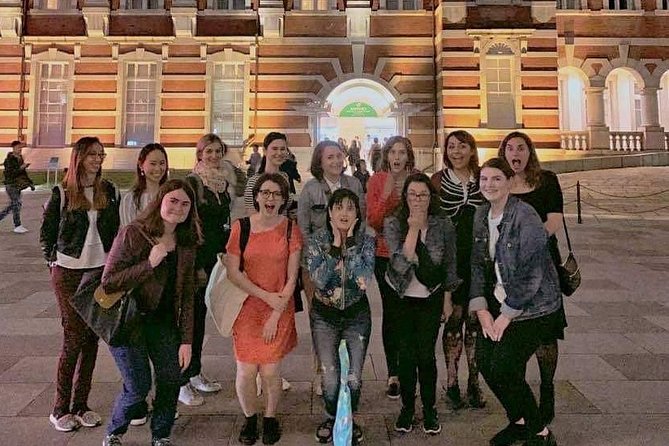
The tour begins at 6:00 p.m. at the Yamato Transport baggage service counter near the Marunouchi North Exit of Tokyo Station. That starting point is practical, but Tokyo Station is large, so give yourself time to find the correct exit and meeting spot.
From there, the route moves east toward old neighborhoods and sites tied to unsettling stories. You are not simply standing in dark alleys waiting for a theatrical scare. The guide explains the place, the events connected with it, and the way Japanese religious traditions address angry or restless spirits.
That difference matters. If you want jump scares, actors, special effects, or a parade of haunted houses, this is the wrong experience. If you enjoy learning why a shrine exists, why a site is treated with caution, or how a tragic event became part of local folklore, you will get more from the evening.
The group is capped at eight people. That is a useful size for narrow streets and quiet religious sites. It also gives you a better chance to ask about Japanese customs, the Edo period, or the meaning behind a particular ritual.
The tone can shift depending on the guide. Joris has been praised for his conversation and command of Tokyo’s past. Maik is known for combining scary tales with cultural explanations. Frank has received strong marks for answering questions, while Haruka has helped people find other places to visit after the tour. Melissa and Michael have also been singled out for making the evening friendly and engaging.
A few more hauntings around the world worth booking
- New Orleans Premier Ghost, Voodoo and Vampire Walking Tour
★ 4.5 · 12,856 reviews - The World Famous Underground Ghost Tour
★ 4.5 · 9,272 reviews - Chicago: Gangsters and Ghosts Walking Tour
★ 5.0 · 7,155 reviews
Otemachi: an uneasy beginning among office towers
The first stop is Otemachi, where modern office buildings surround an old shrine with a grim reputation. Your guide explains why some people working nearby still avoid turning their backs toward the shrine because of the vengeful spirit associated with the site.
This is an effective opening because it places old beliefs beside present-day Tokyo. You may be standing in one of the city’s most modern business areas, yet the story points to fears that have survived alongside glass towers and commuter traffic.
The stop lasts about 20 minutes and has no admission fee. Do not expect a long walk through the shrine grounds or a staged paranormal event. The value is in hearing the story in the actual setting and learning how a place of worship can serve as a response to a troubled spirit.
For me, this part works best when the guide takes time to explain the local customs rather than rushing toward the next scare. One of the most interesting themes of the evening is the Japanese practice of appeasing spirits. The tour connects frightening stories with shrines, prayers, and acts of respect, which gives the subject more depth than a simple haunted-place tale.
Minamisenju: tragic places and reported activity
The tour then heads to Minamisenju, an area with several sites connected to painful events and supernatural reports. The itinerary includes two separate places of worship, each with a tragic past, along with another location associated with paranormal activity.
This section can be emotionally heavier than frightening. Expect stories about death, violence, and suffering rather than light Halloween entertainment. Some people may find that approach more affecting because the places are tied to real human loss. Others may feel that the tour title promises more ghosts than the middle section delivers.
The sites are free to enter, but the route requires public transportation. The fare is not included, so keep about 400 yen available for the evening. That extra cost is modest in Tokyo terms, but it should be part of your budget when comparing this tour with a standard walking tour.
Minamisenju is also where the walking begins to feel substantial. The full experience can reach around 8,000 steps, and some participants have found the pace tiring. Wear sneakers or other shoes you can comfortably walk in for several hours. This is not the night to test a new pair of stylish but unforgiving shoes.
Asakusa after dark: temples, ponds, and old streets
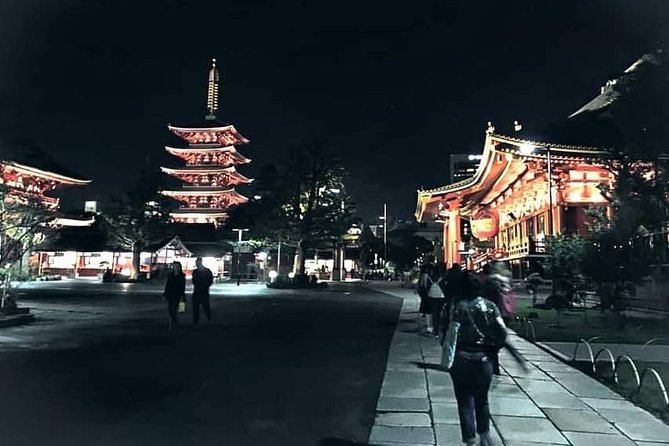
The longest part of the tour takes place in Asakusa and lasts about 1 hour and 20 minutes. This is the section with the broadest mix of sights, including a viewpoint, Sensoji Temple, the streets around the temple, Old Hag’s Pond, and Kappabashi.
Asakusa is well known during the day, but the evening changes its feel. The tour directs your attention away from the usual postcard view and toward stories connected with the district’s older religious and folk traditions. You may see familiar places from a different angle, while also visiting spots that do not appear on standard first-time Tokyo routes.
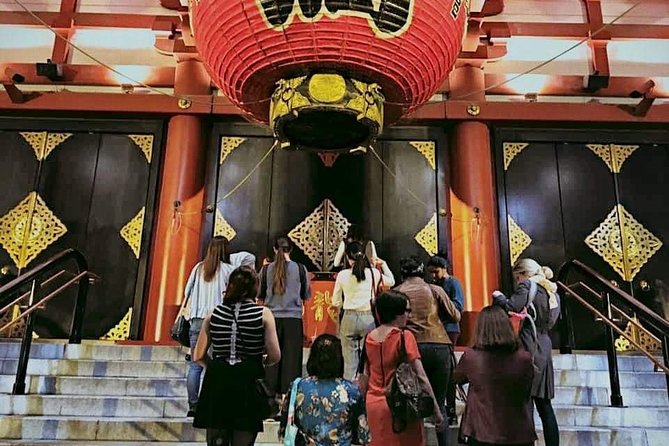
Sensoji gives the guide a chance to explain proper behavior at a sacred site. One participant particularly enjoyed learning how to pray and pay respects. That cultural guidance is one of the tour’s strongest features, especially if you have never visited a Japanese shrine or temple before.
Old Hag’s Pond adds another eerie stop to the route. The name alone suggests the kind of folklore the tour seeks out, but the experience is not presented as a haunted attraction. The guide’s storytelling and the atmosphere of the place do most of the work.
Kappabashi provides a change of setting and connects the walk with one of Asakusa’s most distinctive streets. The combination of temple grounds, side streets, a viewpoint, and old stories helps the final section feel like an exploration of the neighborhood rather than a string of unrelated ghost tales.
The tour ends in Asakusa, where your guide can leave you at a restaurant or bar in the neighborhood, or at the entrance to a metro station. That is useful because you finish near places where you can continue the evening. Just remember that the tour does not include a proper dinner stop.
Same streets, an entirely different kind of scare:
- Edinburgh: Haunted Underground Vaults and Graveyard Tour
★ 4.6 · 6,607 reviews - Adults-Only New Orleans Ghost, Crime, Voodoo, and Vampire Tour
★ 5.0 · 6,545 reviews - Prague: Ghost Walking Tour Where Legends Come To Life
★ 4.4 · 5,253 reviews - Prague: Ghosts, Legends, Medieval Underground & Dungeon Tour
★ 4.3 · 5,104 reviews
Ghost stories, folklore, or Tokyo history?
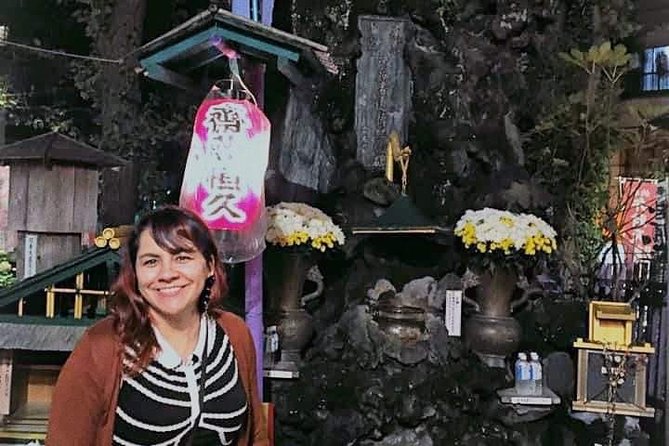
This is the most important question to ask before booking. The experience is marketed as a ghost tour, and some evenings clearly deliver creepy tales, frightening locations, and stories about supernatural activity. Several guides have been praised for making the stops genuinely eerie.
But the subject matter is not always supernatural. You may hear only a handful of ghost stories during a long walk. Other stories concern death, old crimes, tragic events, religious traditions, or the history of Tokyo’s neighborhoods.
That is not necessarily a weakness. Many of the best moments come from understanding why a shrine was built, how a community responds to an angry spirit, or how a dark event became part of local memory. The tour gives you a look at a side of Tokyo that a standard temple visit may not reveal.
Still, you should set your expectations carefully. If your priority is a constant stream of frightening stories, the $114.95 price may feel high. If you want a thoughtful evening about Japanese folklore with some unsettling stops, the experience offers more value.
The guide makes a large difference. Joris has been praised for mixing cultural facts with funny conversation. Maik has been appreciated for balancing scary tales and history. Frank is a good choice for people who like to ask questions, while Haruka has been especially attentive to individual interests and follow-up suggestions.
The walking demands are real
The tour lasts about three hours, but some evenings may run longer. Several accounts describe three or more hours on foot, and one estimate puts the route at around 8,000 steps. Public transportation helps connect the districts, but it does not turn this into a low-effort tour.
Plan to eat before meeting the guide. A local snack is included because the tour takes place around dinner time, but it is only one snack. There is no guaranteed meal break, and you should not rely on it as dinner.
The walking is part of the appeal. You move through different parts of Tokyo instead of staying in one attraction zone. It also lets the stories unfold in their actual surroundings, which is far more effective than hearing everything in a pub or tour room.
For people with limited stamina, the length may be the main drawback. Most participants can take part, and service animals are allowed, but the supplied information does not promise a particular accessibility arrangement. If you have mobility concerns, ask the operator before booking.
Is $114.95 a fair price?
At first glance, $114.95 per person feels steep for a tour that includes no admission tickets and only one snack. You also pay public transportation separately, at about 400 yen per person.
The price becomes easier to justify if you value a small group and a guide who can adapt the conversation. A group of eight or fewer is much more personal than a large night tour. You can ask about Japanese beliefs, the Edo period, religious customs, and the details behind each story.
You are also paying for an unusual route. The evening links three districts and includes places you might not find on a typical sightseeing plan. If you were already planning to explore Otemachi, Minamisenju, and Asakusa on your own, the tour can add meaning to those stops.
The value is weaker for anyone seeking simple entertainment. You may walk for a long time and hear fewer ghost stories than expected. In that case, a shorter haunted attraction or themed event might provide more scares for less money.
Group discounts are available, but the exact savings are not provided here. Since the experience is non-refundable and cannot be changed after booking, make sure everyone in your party is comfortable with the walking, price, and folklore-focused format before you commit.
Family suitability and the tone of the stories
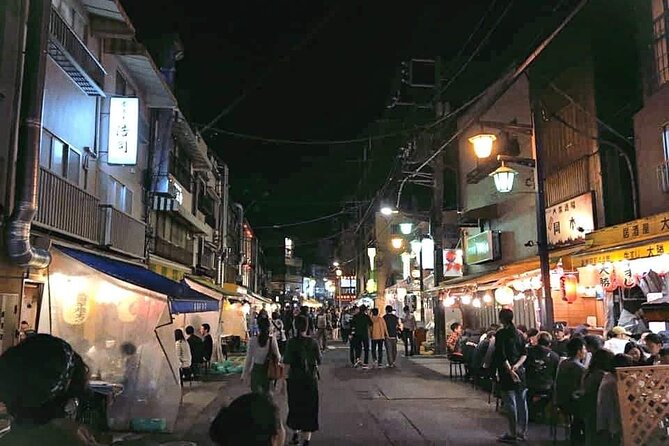
The tour can be made family-friendly, but that does not mean every story is light. Some tales involve death, violence, missing heads, tragic women, and angry spirits. Parents should ask the operator what tone is suitable for their children.
For adults, the darker material is part of the appeal. The stories are not presented only for shock. They also show how Japanese culture treats death and spiritual unrest, often through respect, prayer, and ritual.
The small group makes it easier for the guide to adjust the tone. A family may receive a gentler version, while an adult group can hear the more disturbing details. Ask about this when confirming your booking rather than assuming the standard version will suit everyone.
Practical details for a smoother night
Your confirmation arrives within 48 hours, subject to availability. The tour starts at 6:00 p.m., so allow extra time to reach the Tokyo Station meeting point.
Bring:
- Comfortable walking shoes
- Cash for approximately 400 yen in public transportation
- A light meal before the tour
- A phone with the meeting details available
- A respectful attitude at shrines, temples, and other sacred places
The tour ends in Asakusa. You can finish at a nearby restaurant or bar, or take the metro from the station entrance. This makes it easy to continue with dinner, but do not expect the guide to provide a full meal during the tour.
Who should book this experience?
I would recommend it to you if you like folklore, old stories, religious customs, and unusual city walks. It is especially good for a second or third Tokyo visit, when you want something beyond the standard Shibuya, Harajuku, and Sensoji circuit.
It also suits adults who enjoy discussing a story after hearing it. The guides are often praised for being friendly, funny, and easy to talk with, so the evening can feel like a long conversation while walking through Tokyo.
I would hesitate if you want a fright every few minutes. The tour may spend more time on history and cultural context than the title suggests. I would also skip it if you dislike long walks, have not eaten before an evening activity, or prefer a tightly scripted tour with frequent rest stops.
Should you book Tokyo’s Scariest Shitamachi Ghost Tour?
Book it if you want a personal, unusual look at Tokyo after dark and you are happy for the ghost stories to share space with culture and history. The best parts are the real locations, the small group, the guides’ personalities, and the way Japanese traditions of appeasing spirits shape the stories.
Skip it if your main goal is theatrical horror. At $114.95, plus transportation, you should want more than a few scares. Wear good shoes, eat first, bring cash, and think of the tour as a long night walk through Tokyo’s unsettling past. With those expectations, it can be a memorable way to see parts of the city that most visitors pass without noticing.
FAQ
Where does the Tokyo ghost tour begin?
It begins at 6:00 p.m. at the Yamato Transport Tokyo Station Marunouchi North Exit Baggage Service Counter near the Marunouchi North Exit.
Where does the tour end?
The tour ends in Asakusa at 1-chome-2-35 Asakusa. The guide can leave you at a restaurant or bar nearby, or at the entrance to a metro station.
How long does the tour last?
The listed duration is approximately three hours. Because the route involves substantial walking, you should allow extra time in case the evening runs longer.
How many people can join the tour?
The maximum group size is eight people.
Is public transportation included?
No. Public transportation costs about 400 yen per person during the tour and should be paid separately.
Is food provided?
Yes. The guide provides one local snack because the tour takes place around dinner time. It is not a full dinner, so eat before the tour.
Can children join the tour?
The experience can be made family-friendly. Some stories are dark, so parents should ask the operator about the version suitable for their children.
Newly added around the world
- Zion: Harry Potter-Inspired Zion Ghost Tour with Sunset View★ 5.0 · 8 reviews
- York : Private Ghost Hunt★ 5.0 · 3 reviews
- Your evening in Venice – Legends&Ghosts&Aperitif★ 4.7 · 79 reviews
- York’s Haunted Heart : Ghost, Ghouls and Gallows★ 4.6 · 82 reviews
- Witches, Widows, & Wraiths: Wichita Ghost Tours★ 5.0 · 2 reviews
- Wraiths of the West Texas Wind: El Paso Ghost Tour★ 4.5 · 9 reviews
- Witches, ghosts and executioners / Mystical North Hesse★ 4.4 · 4 reviews
- Wraiths & Wicked Whispers: Wilmington Ghost Tour★ 4.2 · 25 reviews
Japan Ghost Tours, compared.
Kyoto Ghost Tour: Dark Tales, Urban Legends, Bamboo Forest Night
Read our review →
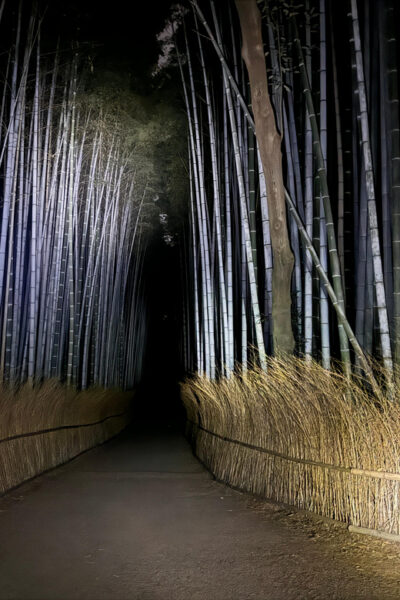
Ghost Tour – Legends, Dark Tales, Bamboo Forest Night
Read our review →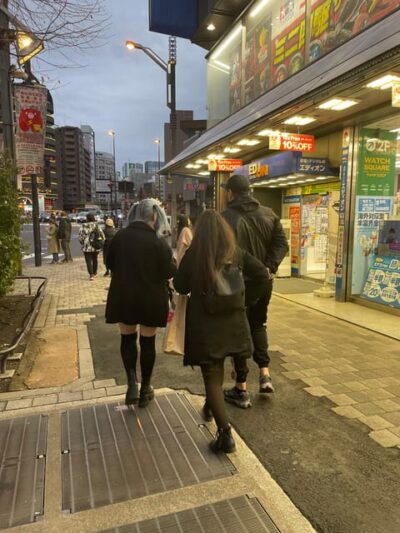
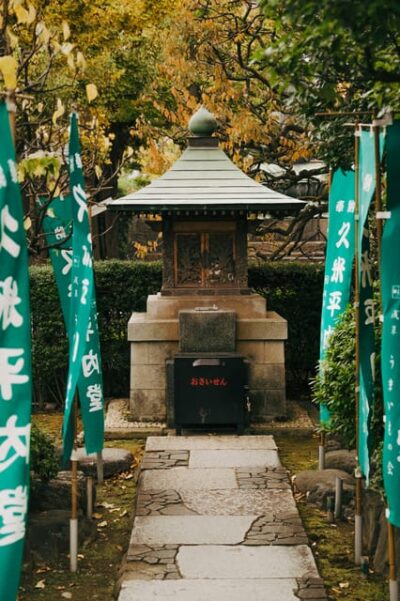
Ghost Tour with Scary Japanese Stories and Folklore
Read our review →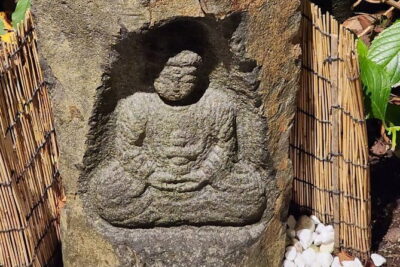
Tokyo Ghost Tour Through Haunting Japanese Legends
Read our review →
Ghost Stories and Nightlife Tour of Takayama (Private Tour – Price per Group)
Read our review →
Browse the lists this tour appears in