
REVIEW · GREECE GHOST TOURS
Athens Ghost Walk: Mystical Ruins & Ancient Legends
Ancient Athens gets stranger after sunset. This 90-minute to two-hour walk links famous ruins with ghost stories, Byzantine folklore, and darker city legends, giving you a fresh way to see central Athens. I especially like the small group of no more than 10 people, and the lantern-led storytelling gives the walk a theatrical mood without turning it into a haunted-house show. The special card reading at the end is another unusual touch. The main drawback is that entry to the archaeological sites is not included, so you see the monuments from the outside rather than touring their interiors.
The route works best for you if you enjoy history with a supernatural edge. Guides such as Beyla have been praised for warm storytelling, humor, and answering questions, while Emese has also led the experience. Keep in mind that this is a walking tour through old streets and archaeological areas, so comfortable shoes and an evening suitable for outdoor walking matter more than fancy dining clothes.
Key points to know before you book
- Ancient sites after dark: The route passes Kerameikos, the Ancient Agora, Hadrian’s Library, the Roman Forum, Plaka, and the Acropolis area.
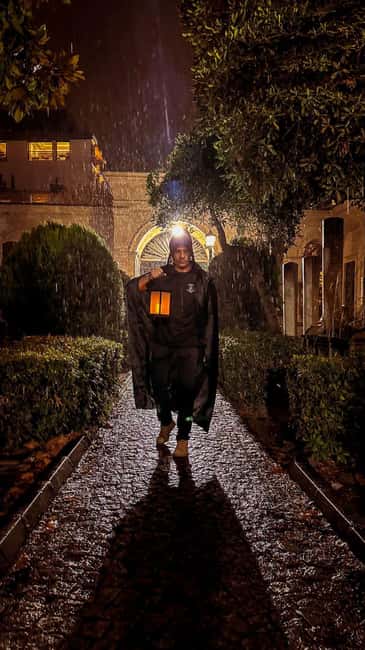
- A lantern-led atmosphere: Whispered stories, deliberate pauses, and lantern light create suspense without relying on stage effects.
- A genuinely small group: With a maximum of 10 people, you have a better chance to hear the guide and ask questions.
- A card reading finishes the evening: The tour includes a specialized reading from the guide, making it different from a standard sightseeing walk.
- No archaeological admission included: You pass the sites and learn about them, but entry tickets are separate and not part of the $36 price.
- Four guide languages: Tours are offered in English, Arabic, French, and Spanish.
Why Athens feels different after dark
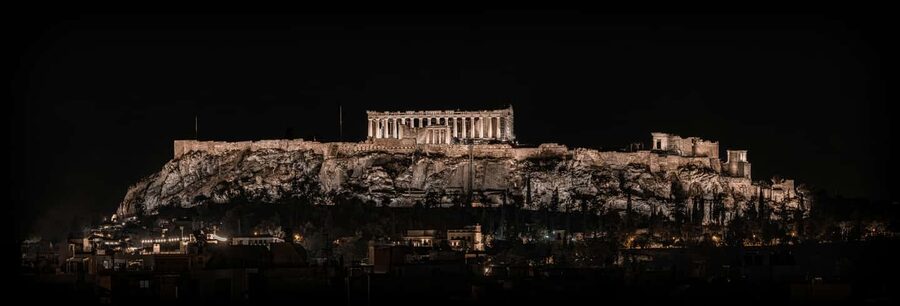
Athens is often presented through daylight views of the Acropolis, marble temples, and crowded squares. This walk takes another route. It asks you to picture the people, beliefs, rituals, fears, and rumors that gathered around these places long after the stones were laid.
That change in mood is the real point. You are not simply ticking off monuments. You are hearing about Athens as a city with layers of memory. Ancient religious customs, stories connected to philosophers, medieval spirits, and newer urban legends all share the same streets.
I like that the tour keeps one foot in documented history and one in folklore. You can learn why a site mattered while also hearing the eerie tale attached to it. The best moments are likely to come during the pauses, when the guide lets the setting do some of the work.
The lanterns help. Their light narrows your attention and makes a dark alley or broken wall feel more intimate. Do not expect a jump-scare attraction. This is closer to an atmospheric history walk with mystical storytelling.
More Ghost Story Tours in the world:
- Prague: Ghost Walking Tour Where Legends Come To Life
★ 4.4 · 5,253 reviews - Prague: Ghosts, Legends, Medieval Underground & Dungeon Tour
★ 4.3 · 5,104 reviews - Prague: Ghosts and Legends of the Old Town Evening Tour
★ 4.5 · 3,091 reviews
Meeting at the Pompeion Propylon

The starting point is the Pompeion Propylon, near the Kerameikos archaeological area. Look for the map of the archaeological site, a large stone, and stairs. That description is useful because ancient Athens has plenty of stone, stairs, and confusing edges. Arrive with enough time to identify the map and meeting area before the group sets off.
The opening location sets the tone well. Kerameikos was Athens’ cemetery, a place of tombs and mausoleums where the city’s relationship with death becomes part of the physical setting. Beginning here lets the guide introduce the idea that the dead were not pushed far outside daily life. Their monuments, rituals, and stories remained close to the city.
You may hear about spirits linked to the cemetery and the old beliefs surrounding death. The value is not only the ghost story. The setting gives you a clearer sense of how ancient Athenians marked burial places and remembered the dead.
Because the tour does not include site admission, you should expect to view the archaeological area from the route rather than walk through every section. If you want a full look at Kerameikos in daylight, plan a separate visit.
Ancient Agora: where philosophy meets folklore
From the starting point, the walk continues toward the Ancient Agora. This was once the center of civic and intellectual life, a place tied to public debate, political decisions, commerce, and philosophy.
The guide connects the ruins to Socrates and the idea of his presence lingering among the stones. That image is effective because the Agora is not just an old collection of walls. It was a working part of the city, filled with people arguing, buying, selling, teaching, and listening.
Here, the tour can give you a useful contrast between the official story and the whispered one. You learn what made the Agora important, then consider the old voices and unseen presences that might be imagined in the ruins after sunset.
I would pay close attention to the guide’s pauses at this stop. The experience depends heavily on delivery. A rushed explanation would make the Agora feel like another photo stop, while a well-timed story can help you picture the place as a human setting rather than a silent ruin.
The path around the archaeological area can also be uneven. Wear shoes that are comfortable for a full evening on foot, especially if you plan to continue exploring Athens afterward.
Hadrian’s Library and the Roman Forum
The next part of the walk brings you to Hadrian’s Library and the Roman Forum of Athens. These places add a different tone to the route. The library recalls scholarship and the storage of texts, while the Roman Forum points to the practical and public side of later Athens.
The stories here focus on echoes: scholars, merchants, ancient conspiracies, and the sounds that might seem to remain in the ruins. That approach works well because libraries and forums naturally invite stories about lost knowledge and private dealings.
Hadrian’s Library is especially suited to a mystical retelling. Even if you know little about the site, the name suggests books and learning, while the surviving stonework gives the guide an atmospheric backdrop. The tour can connect the formal world of scholarship with rumors about what was known, hidden, or forgotten.
At the Roman Forum, the mood shifts toward public life. You may hear about the people who passed through, the business conducted there, and the traces left behind by centuries of use. The guide also brings in the idea of ancient conspiracies, which adds suspense without requiring the site to be treated as a horror set.
Again, you are not paying for admission to these monuments. The $36 fee covers the guided walk and card reading, not entry tickets. That makes the experience a good choice if you want interpretation and atmosphere without committing to several separate archaeological admissions.
More Ghost Walking Tours in the world:
- New Orleans Premier Ghost, Voodoo and Vampire Walking Tour
★ 4.5 · 12,856 reviews - Chicago: Gangsters and Ghosts Walking Tour
★ 5.0 · 7,155 reviews - Savannah History and Haunts Candlelit Ghost Walking Tour
★ 5.0 · 3,235 reviews - Ghosts of Charleston Night-Time Walking Tour with Unitarian Church Graveyard
★ 4.5 · 2,835 reviews
Plaka’s narrow streets and later legends
Plaka brings the group out of the main archaeological areas and into a neighborhood known for older lanes and traditional Athens imagery. In the evening, the narrow streets create a natural change in mood. Walls, shadows, and turns in the road make the stories feel closer to everyday life.
This is where the tour moves beyond ancient Greece. The guide brings in medieval ghosts, Byzantine spirits, and urban legends tied to Athens. That wider time span is one of the walk’s strongest features. You are not hearing only about temples and philosophers. You are following the city through different periods of belief and memory.
I like this section because it makes Athens feel like a living city with old stories still attached to ordinary places. A doorway or side lane can carry a tale that is less grand than a myth about a god, but sometimes more unsettling because it feels closer to modern life.
The group size matters most in Plaka. A large crowd would make it harder to hear a low voice or gather around a story. With up to 10 participants, the guide can respond to questions and keep the group together without shouting.
The walk is also described as intimate and good-humored, with guides sharing local details along the way. That balance is important. A tour made entirely of grim tales could become tiring, while a little humor keeps the evening relaxed.
Around the Acropolis as daylight fades
The route then circles the base of the Acropolis, where mythology, ritual, philosophy, and architecture meet. You are not climbing the Acropolis as part of this experience. The emphasis is on the area around its base and the stories attached to the ancient center above you.
This is likely to be one of the most visually striking parts of the evening. The fading light changes the famous monument’s character, and the guide can connect the physical setting to myths and religious practices. The Acropolis is familiar to almost everyone, but a good story can make the place feel less predictable.
The walk does not promise a private viewpoint or special access. You should think of it as a guided exterior route with storytelling, not as an archaeological visit or a sunset photography tour.
That distinction helps set the right expectations. If you want interior access, detailed architectural study, or time for close photographs, book a separate Acropolis visit. If you want to understand how the monument fits into Athens’ web of myths and rituals, this portion adds useful context.
Ending near the Odeon of Herodes Atticus
The stated finish is the Odeon of Herodes Atticus, the ancient theater beneath the Acropolis. The monument is associated with music, performance, tragedy, and the echoes of voices carried through stone. It is a fitting final setting for a tour built around sound, memory, and stories of the past.
The card reading is included in the experience and takes place at the end. One account describes the reading as taking place in the Theater of Dionysus area, so the exact final spot may depend on the guide or route. The key point is that you receive a specialized reading rather than simply being left at the last monument.
This part will appeal most if you enjoy symbolic or spiritual experiences. It is not an essential history lesson, and you should not book the tour expecting a formal archaeological interpretation of cards. Instead, treat it as a personal, unusual finish to an evening of legends.
The reading also helps distinguish this walk from ordinary ghost tours. Many tours end with the final story and a goodbye. Here, the guide gives the group a more personal closing moment, which can make the small-group format feel worthwhile.
What the $36 price really covers
At $36 per person, the value rests on three things: the guide, the small group, and the unusual combination of historical sites, folklore, and card reading.
You are not paying for admission to Kerameikos, the Ancient Agora, Hadrian’s Library, the Roman Forum, or other archaeological sites. If you want to enter them, those costs are extra. That may make the tour less appealing if your main goal is to study the ruins from inside.
For a guided evening walk, though, the price is reasonable if you enjoy interpretation more than a checklist of entrances. You get a route through several important areas, stories that connect different eras, and a specialized reading at the end. The limit of 10 people gives the guide room to speak quietly and respond to questions.
The rating of 4.8 from 15 reviews points to strong satisfaction, though the sample is not large. Praise centers on the storytelling, the history and folklore together, the atmosphere after dark, and the personal quality of guides including Beyla and Emese. One three-star response was brief and neutral, which is a useful reminder that the mystical style will not suit every personality.
The reserve-now-and-pay-later option gives you some flexibility, and cancellation is free up to 24 hours before the tour for a full refund. Starting times vary, so check availability before planning dinner or another evening activity around it.
Who will enjoy this walk most
I would recommend it to you if you enjoy:
- Ancient Greek history with a supernatural twist
- Folklore, urban legends, and ghost stories
- Small-group tours where you can ask questions
- Evening walks through historic neighborhoods
- A personal card reading as part of the experience
- Seeing familiar Athens sites in a less formal way
It is also a good fit for repeat visitors who have already seen the Acropolis in daylight and want another angle on the city.
You may want something else if you prefer strict historical fact, museum interiors, long explanations of architecture, or a fast route with little storytelling. The ghost stories and mystical material are central, not decorative. Children may enjoy the suspense, but the supplied information does not give a recommended age range, so families should decide based on their own comfort with darker tales.
The tour is offered in English, Arabic, French, and Spanish. A small group can make the language experience more comfortable because the guide has fewer people to manage and more room for questions.
Practical tips for a smoother evening
Meet at the Pompeion Propylon by the archaeological site map, large stone, and stairs. Give yourself time to find it, since the meeting description relies on visible landmarks rather than a conventional shop or hotel entrance.
Wear comfortable walking shoes. The route covers ancient-site surroundings, old streets, and Plaka, and the experience can last anywhere from 90 minutes to two hours depending on the schedule and storytelling pace.
Bring a light layer if you are visiting during a cooler evening. The tour is outdoors, and there is no mention of indoor stops or transport.
Do not buy archaeological entry tickets expecting them to be part of the tour. They are not included. Book separately only if you want to visit the interiors of the sites.
Finally, keep your expectations focused on mood and storytelling. The lanterns, whispered delivery, and pauses are designed to pull you into the tales. The tour works best when you allow room for imagination instead of demanding a factual explanation for every ghost.
Should you book the Athens Ghost Walk?
Book it if you want Athens after dark to feel mysterious, personal, and a little uncanny. The combination of Kerameikos, the Agora, Roman and Byzantine stories, Plaka’s lanes, the Acropolis area, and a closing card reading gives you more variety than a standard ghost walk.
I would be especially inclined to book if you value a small group and a guide who can mix history with folklore. Beyla’s warm, expressive style has been singled out, and the tour’s strongest praise focuses on the way the stories bring ancient and later Athens together.
Skip it if you mainly want site admission, detailed architecture, or a strictly academic tour. At $36, you are paying for atmosphere, storytelling, and personal interaction rather than access behind archaeological gates. For the right audience, that is a fair trade and a memorable way to meet Athens’ darker side.
FAQ
Where does the Athens Ghost Walk begin?
It begins at the Pompeion Propylon. Look for the archaeological site map, a large stone, and stairs.
Where does the tour finish?
The stated finish is the Odeon of Herodes Atticus.
How long does the tour last?
The tour lasts between 90 minutes and two hours. Starting times vary, so check availability when booking.
What is included in the price?
The price includes the guided walking tour and a specialized card reading from the guide.
Are archaeological site entrance tickets included?
No. Entry to the archaeological sites is not included.
How many people can join the group?
The group is limited to 10 participants.
Which languages are available?
The tour is offered in English, Arabic, French, and Spanish.
Can I cancel for a full refund?
Yes. You can cancel up to 24 hours in advance for a full refund.
Newly added around the world
- Zion: Harry Potter-Inspired Zion Ghost Tour with Sunset View★ 5.0 · 8 reviews
- York : Private Ghost Hunt★ 5.0 · 3 reviews
- Your evening in Venice – Legends&Ghosts&Aperitif★ 4.7 · 79 reviews
- York’s Haunted Heart : Ghost, Ghouls and Gallows★ 4.6 · 82 reviews
- Witches, Widows, & Wraiths: Wichita Ghost Tours★ 5.0 · 2 reviews
- Wraiths of the West Texas Wind: El Paso Ghost Tour★ 4.5 · 9 reviews
- Witches, ghosts and executioners / Mystical North Hesse★ 4.4 · 4 reviews
- Wraiths & Wicked Whispers: Wilmington Ghost Tour★ 4.2 · 25 reviews
Greece Ghost Tours, compared.

Crete: Quad Safari, Olive Mill with Tasting & Ghost Village
Read our review →
Agia Pelagia: Sunset or Morning Quad Tour & Ghost Town Visit
Read our review →
Corfu Ghost Stories, Dark Legends & Facts Night Tour
Read our review →

Kalamata: Paranormal Walking Tour in the historical center
Read our review →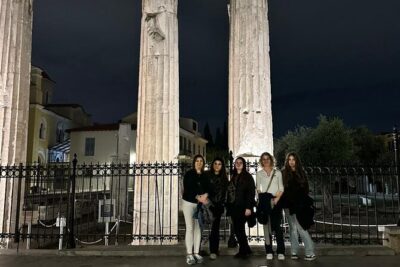
Browse the lists this tour appears in