
REVIEW · LONDON GHOST TOURS
Ghosts, Gore & Other Ghasty Stories in the City of London
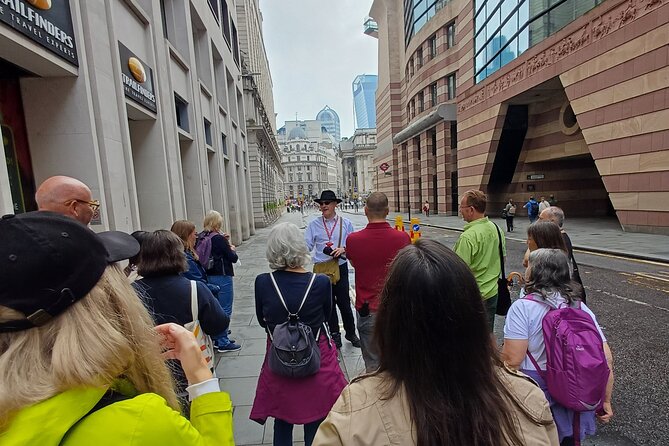
London’s oldest streets have a dark side. This private walk links ghosts, executions, lost rivers, and notorious prisons across the City of London, with guide Ross bringing the tales to life through humor and sharp local detail. I like the private format, which lets your group ask questions and set the pace. I also like the compact route, which packs Bank, Cheapside, St Paul’s, and Smithfield into one manageable outing.
The main drawback is the price if only two or three people join. At $342.79 per group of up to 15, it becomes good value for a full party, but expensive for a small one. You should also expect some stories to be grisly, and admission charges are not included at every stop.
Key points to know before you book
- Bank Station begins the story underground, with a haunting tied to the station and the Bank of England.
- Cheapside reveals unpleasant medieval realities, including a lost river, human skulls, and the strange job of Human Lavatory.
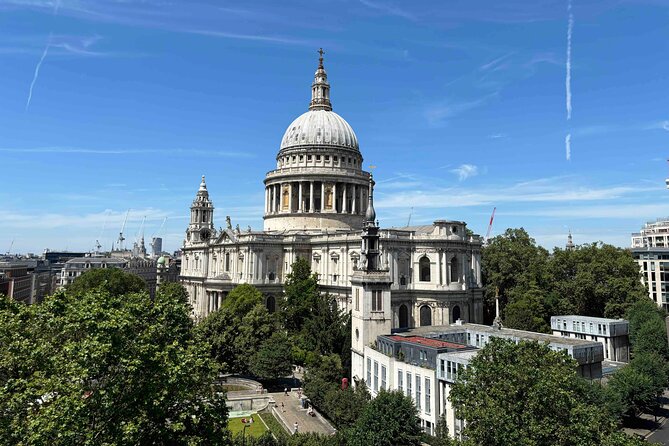
- Paternoster Square combines history and film-worthy sights, from London’s printing trade to the city gate and public punishments.
- Smithfield provides the darkest finish, with tales of body snatchers, executions, Newgate Prison, and a haunted church.
- Ross is the guide to request if available, praised for humorous storytelling, good pacing, and answering questions.
- The full-group price makes the tour strongest for families and larger parties, especially if you want a private experience rather than a shared walk.
Why this private City of London walk works
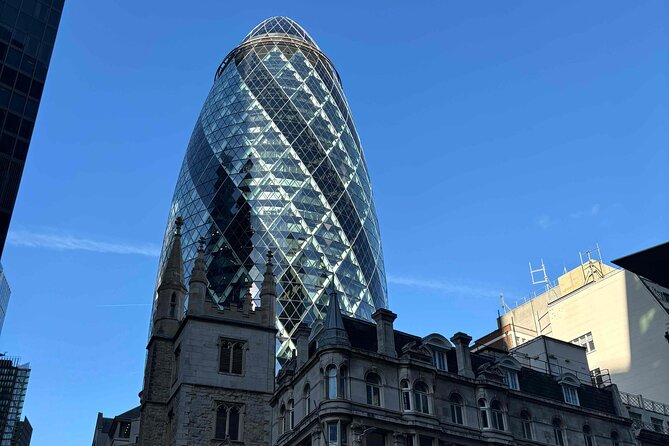
The City of London can feel like a modern business district, all polished offices, stone facades, and financial institutions. Look closer, though, and the streets hold stories of prison gates, public executions, buried rivers, churchyard legends, and bodies stolen from graves.
This tour gives you a useful way into that older London. Instead of stopping at one famous building and moving on, you follow a chain of connected places from Bank Station to the area around Smithfield. The subject is dark, but the format is not simply a parade of horror stories. You also get context about medieval life, law, religion, printing, transport, and the changing shape of London.
I especially like the private setup. Your guide can slow down when a story catches your interest, move along when a stop is less appealing, or answer questions without a group of strangers waiting. That matters on a walk built around storytelling. A good guide needs room to explain why a place matters, not just point at it and recite a date.
The tour lasts about two to three hours. The listed stop times add up to roughly 105 minutes, so the extra time allows for walking, questions, pauses, and the natural rhythm of the route. Wear comfortable shoes, and keep some room in your schedule. This is not a hurried checklist of sights.
A few more hauntings around London worth booking
- Ghost, Ghouls and Gallows Tour : Guided Tour with Boat Ride
★ 4.5 · 3,212 reviews - London: Comedy Horror Ghost Tour on a Bus
★ 4.4 · 2,084 reviews - London: Ghost Walk and River Thames Boat Ride
★ 4.5 · 1,251 reviews
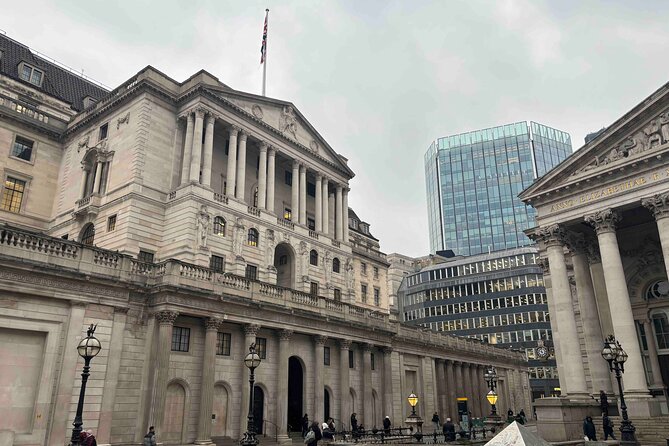
Bank Station and the Bank of England’s uneasy past
The walk starts at Bank Station, in the Bank and Monument underground complex on Princes Street. That is an excellent opening point because the story begins below street level, in one of London’s busiest transport areas.
You hear why the station may be one of the most haunted on the Underground network. The story then moves above ground to the Bank of England, where a ghost is said to linger. You also hear about the only alleged robbery of the building.
That mix gives the first stop a useful balance. You get a ghost story, but also a piece of financial history and a question about what can be proved. The word allegedly matters here. This is a tour of legends and old stories as well as documented events, and it is better when the guide lets you enjoy the tale without pretending every detail is certain.
The Bank area is also a strong place for photographs. Neoclassical buildings, broad streets, and grand institutional architecture give your camera plenty to work with. The spooky material is only part of the appeal. I would allow a little extra time before the tour if you want to look at the surroundings, since the meeting point is in a complicated station area.
Cheapside, lost rivers, and medieval London’s worst jobs
From Bank, the route continues along Cheapside. This is where the walk turns from institutional London to the harsher daily life of the medieval city.
You learn about one of the City of London’s two lost rivers. That detail changes the way you see the street. Modern London hides much of its water system, so the idea of a river running through an area now filled with traffic, shops, and offices can be hard to picture without a guide drawing the old city in words.
Then comes the pile of human skulls. It is a grim story, but it also shows how much the city has been rebuilt and rearranged. Much of London’s past is not displayed in a museum. It lies beneath the pavement, behind newer facades, or survives only in a place name and a local tale.
Cheapside also brings stories about a priest who was hanged and the person who held the job of Human Lavatory. The latter is exactly the sort of odd detail that helps a walking tour stick in your mind. It shows that the guide is not only interested in kings, churches, and grand buildings. Ordinary sanitation, punishment, and work could be strange and unpleasant too.
This section may be the best fit for you if you enjoy social history. It is less about famous monuments and more about how people lived, suffered, worked, and were punished in a crowded old city.
Paternoster Square and the city gate
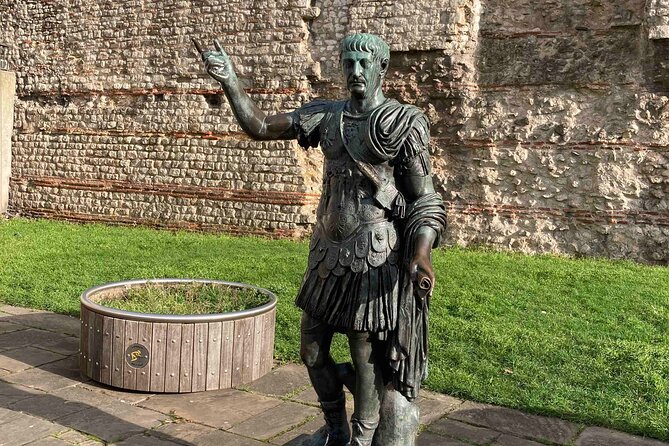
Paternoster Square offers a change of mood and setting. Here, the focus shifts to medieval homes, the City’s printing industry, punishments, and the last City Gate.
You hear what daily life was like in medieval London when this area was linked with printing. The story helps you picture the city as a place of cramped work, trade, and residential life rather than the polished business center you see today.
The punishments are not treated as an abstract list of laws. They show how public authority worked and how strongly punishment was meant to be seen. The last City Gate adds another physical marker to the old city, while the horrible display placed there greeted people entering London.
That is one reason I like this stop. It connects architecture with power. A gate controlled movement, while the display outside it sent a clear warning. You do not need a background in English history to follow the point, and the guide can tailor the level of detail to your group.
Paternoster Square is also useful for photographs, with major city landmarks nearby and plenty of neoclassical detail. If you want a tour that combines dark stories with striking urban scenery, this part helps keep the walk from becoming visually repetitive.
Same streets, an entirely different kind of scare:
- London: The Original Jack the Ripper Walking Tour
★ 4.7 · 7,833 reviews - London Jack the Ripper Guided Tour with Ripper-Vision
★ 4.5 · 4,840 reviews - London: Jack the Ripper Small Group Tour
★ 4.7 · 3,159 reviews - London Jack The Ripper Guided Walking Tour
★ 5.0 · 3,131 reviews
Holy Sepulchre Church and the prison connection
The next major stop is Holy Sepulchre Church. The church is linked with one of England’s most notorious jails and with the legend of a Black Dog haunting its walls.
This section brings together religion, crime, folklore, and public entertainment. You hear how much you might have had to pay to watch a hanging while eating breakfast. That detail is especially telling. It shows how executions could become public events, and how close violence could sit to everyday meals and business.
The neighboring pub adds another layer of local ghost stories. A pub is a natural setting for tales passed from one generation to the next, and the guide uses the location to connect the physical street with its folklore.
Admission is not included at this stop, so check the arrangements when you book if you want to enter any building rather than hear the stories from outside. The supplied details do not promise interior access, and the strength of this tour appears to be the guided route through the district rather than a series of formal museum visits.
For me, this is also where the tone may feel most theatrical. That can be fun if you enjoy legends, but anyone wanting strictly documented history should listen for the difference between a recorded event and a haunting story.
Smithfield Market and the grim final stretch
The walk finishes at Smithfield Market, where the subject matter becomes especially dark. The stop covers body snatchers, executions, a Scottish national hero, and one of the City of London’s most haunted churches.
Smithfield is a fitting ending because so many strands come together here. You get crime, punishment, religion, political history, and the treatment of the dead. The body-snatching stories are particularly effective because they show the uneasy relationship between medical needs, graveyards, and the law.
The tour also passes the area associated with Newgate Prison and the story of St. Bartholomew’s body snatchers. That gives the final section a strong narrative finish. The route has moved from ghosts beneath a modern station to human remains, public death, and the afterlife of old institutions.
The Scottish national hero story adds a different note. It keeps Smithfield from becoming one long sequence of similar ghost tales and gives the guide a chance to connect the site with wider British history.
One of the most haunted churches in the City is also part of this stop. Again, you should expect a mix of fact, local tradition, and supernatural claims. The best way to enjoy it is to treat the ghost stories as part of London’s cultural memory, not as a promise of proof.
The tour ends at the Old Red Cow pub on Long Lane, opposite the Long Lane entrance to Farringdon Street Station. That is practical for continuing your evening, especially since the route includes chances to stop for food or drinks at pubs along the way.
Ross’s storytelling style and the value of a private guide
Ross is the guide name connected with the strongest praise for this experience. His style is described as humorous, enthusiastic, well prepared, and good at keeping a group involved. He is also known for answering questions and adjusting the walk to suit the group’s interests.
That matters more than a long list of sights. A ghost walk can quickly become a string of similar legends if the guide relies on atmosphere alone. Ross appears to add facts, trivia, and historical links so the route has shape and variety.
The private format gives him room to do more than deliver a fixed speech. You can ask about the Bank of England, medieval punishments, Roman London, the churches, or the places you pass between the main stops. Previous tours with Ross have also included an extra visit to the Roman amphitheater in the Guildhall Gallery and a stop at the Temple of Mithras on other walks. Those details suggest a guide with broad knowledge of the City, though you should not assume those locations are part of this specific route.
The private group limit is up to 15 people. That is large enough for a family reunion or walking club, while still giving you control over the pace. If your group has mixed interests, agree in advance on how much time you want to spend on ghosts, executions, architecture, or general city history.
Is $342.79 good value?
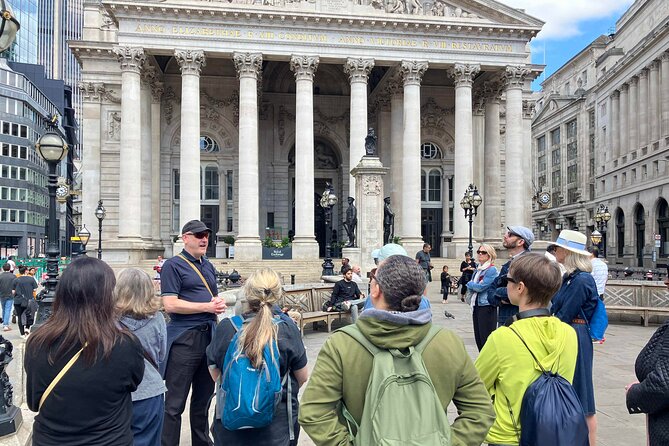
The price is $342.79 for the whole group, with up to 15 people included. At the maximum group size, that works out to about $23 per person. For five people, it is about $69 each. For two people, it is about $171 each.
That makes group size the key value question. A family, club, or group of friends can get a good deal from the flat rate. A couple booking alone should compare the cost with shared walking tours before deciding.
You are paying for a private guide, not for entrance tickets or a set meal. The value comes from personal attention, flexible pacing, and the ability to ask questions. If you want a polished sightseeing route with major interiors included, this may not be the right choice. If you want an informed storyteller to make ordinary streets meaningful, the price is easier to justify.
Food and drinks are not included, but there are opportunities to stop at pubs along the route. That gives you flexibility. You can keep the walk focused, or turn it into part of an evening in the City.
Who should book this walk?
I would recommend it most strongly to:
- Families with older children or teenagers who enjoy spooky stories and unusual facts
- Friends who want a private evening activity with a historical edge
- Walking clubs and larger groups that can share the flat price
- First-time visitors who want to see the City of London beyond the standard postcard stops
- London residents who think they already know the financial district
- Anyone who enjoys storytelling more than formal museum interpretation
You should think twice if you dislike grisly material, public execution stories, or ghost legends. The route is not presented as a gentle architectural walk. It includes skulls, hanging, body snatching, prison history, and haunted churches.
The tour is near public transport, service animals are allowed, and most people can take part. The supplied details do not give a precise accessibility assessment for every pavement or interior, so contact the operator if your group has specific mobility needs. Confirmation arrives at booking, and free cancellation is available up to 24 hours before the start time. Changes or cancellations inside that window are not accepted for a refund.
Should you book Ghosts, Gore & Other Ghastly Stories?
Book it if you want a private, story-led walk through London’s oldest financial district, especially if you can fill much of the 15-person capacity. The strongest features are Ross’s humor and pacing, the freedom to ask questions, and the route’s mix of famous places and unsettling details that are easy to miss on your own.
Skip it if you want a cheap shared tour, extensive interior access, or a strictly academic account of London’s past. For everyone else, this is a lively way to see Bank, Cheapside, Paternoster Square, Holy Sepulchre Church, and Smithfield through stories of crime, punishment, religion, and ghosts.
FAQ
Where does the tour start?
It starts at Bank Station, in the Bank and Monument Underground complex at Princes Street, London EC3V 3LA.
Where does the tour end?
It ends at the Old Red Cow pub on Long Lane in Barbican, opposite the Long Lane entrance to Farringdon Street Station.
How long does the tour last?
The experience lasts approximately two to three hours.
How many people can join the private tour?
The price covers one private group of up to 15 people.
Is the tour offered in English?
Yes. The tour is offered in English and includes guided services.
Can I cancel for a full refund?
Yes, if you cancel at least 24 hours before the experience start time. Cancellations or changes made less than 24 hours before the start time are not accepted for a refund.
Newly added around London
- Wicked Whitechapel: Where Now’s Jack The Ripper Audio Tour★ 5.0 · 2 reviews
- Afternoon Jack the Ripper : Guided Tour★ 5.0 · 183 reviews
- Visit Jack the Ripper in French★ 5.0 · 33 reviews
- The Fading Light London Ghost Walk★ 5.0 · 35 reviews
- Self-Guided Audio Tour-Behind the shadow of evil: Jack the Ripper★ 4.0 · 2 reviews
- The Haunted Pubs of Old London: Small Group Tour★ 5.0 · 38 reviews
- Jack the Ripper – What About the Women?★ 5.0 · 39 reviews
- The Ghosts of the secret alleyways of old London town★ 5.0 · 2 reviews
London Ghost Tours, compared.
London Jack the Ripper Guided Tour with Ripper-Vision
Read our review →
Ghost, Ghouls and Gallows Tour : Guided Tour with Boat Ride
Read our review →
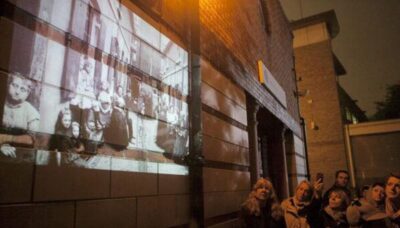
Jack the Ripper Tour with Immersive Ripper Vision
Read our review →
German Language : Original Jack the Ripper Tour
Read our review →Browse the lists this tour appears in