
REVIEW · LONDON GHOST TOURS
London: Jack the Ripper Tour with Immersive Ripper Vision
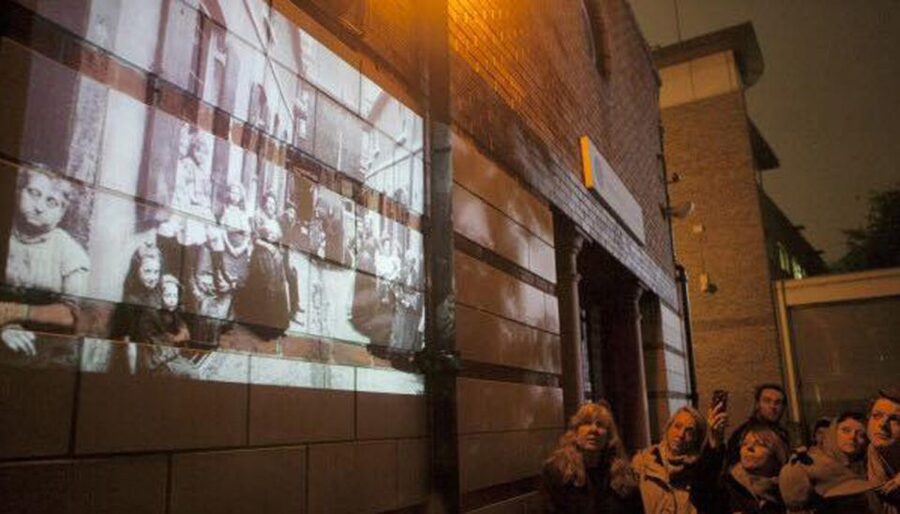
The past appears on the walls here. This 105-minute Whitechapel walking tour uses handheld projectors to cast old photographs, maps, newspaper drawings, and crime scene images onto the streets where the murders took place. I like that the experience puts the victims and the social conditions of Victorian London ahead of cheap shocks. I also like the guides’ mix of evidence, theories, and dry humor.
The main drawback is the walking. You spend much of the tour outdoors, often on uneven ground and cobblestones, and some groups have been large enough to make hearing or seeing the projections difficult. Start times in brighter months can also reduce the impact of Ripper Vision until darkness arrives.
Key points to know before you book
- Ripper Vision changes the experience: Historic images appear directly on Whitechapel buildings and streets, not just on a guide’s phone or printed sheet.
- The victims receive real attention: The storytelling covers their lives, the police investigation, and the wider poverty of Victorian Whitechapel.
- Expect a serious walk: You need comfortable shoes, weather protection, and the ability to stand for long periods.
- Guides make the difference: Alan, Rob, Harry, Mick Priestly, Andre, and others have earned praise for clear storytelling, humor, and strong command of the subject.
- The meeting point is precise: Go to Aldgate East Tube Station, Exit 3, outside the Whitechapel Art Gallery beside the KFC. This is not Aldgate Station.
- At $24, the value is strong: You get a live guide, a substantial walking route, visual material, and a focused look at one of London’s most enduring mysteries.
Meeting outside Aldgate East, not Aldgate
The tour begins outside Aldgate East Tube Station at Exit 3, beside the Whitechapel Art Gallery and next to KFC. Pay close attention to the station name. Aldgate and Aldgate East are separate stops, and arriving at the wrong one can turn the first few minutes into a rushed dash.
I would arrive early enough to find the guide and hear the opening explanation. The introduction sets the tone: this is a historical walking tour about real violence, not a haunted-house act. The guide also needs time to gather the group before moving into the narrow streets.
The location works well for the subject. You begin near the edge of Whitechapel, an area tied to the story but also part of modern East London. The contrast between today’s traffic, shops, and Tube entrances and the projected images of 1888 is part of the point. The city has changed dramatically, but fragments of the old street plan and several named locations remain.
More Jack the Ripper Tours in London:
- London: The Original Jack the Ripper Walking Tour
★ 4.7 · 7,833 reviews - London Jack the Ripper Guided Tour with Ripper-Vision
★ 4.5 · 4,840 reviews - London: Jack the Ripper Small Group Tour
★ 4.7 · 3,159 reviews
Ripper Vision puts the evidence on the street
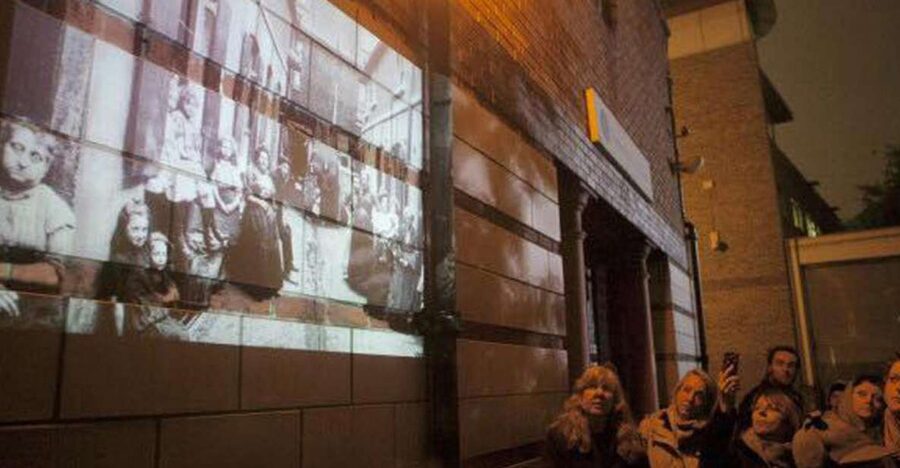
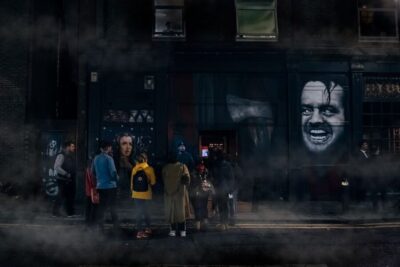
The tour’s special feature is a handheld projector. As the guide talks, historic photographs, maps, press illustrations, and crime scene images appear on nearby walls or buildings. This gives you a quick visual reference while you stand in the place being discussed.
That matters because a conventional walking tour can leave you trying to picture an old street from words alone. Here, you can see how a building or lane looked in the late nineteenth century, then compare it with the same area today. The images also help connect names and faces to the story, which gives the victims more human presence.
The projections work best after sunset. During summer or on a tour that starts before full darkness, daylight can make the images harder to see. This is a real consideration if Ripper Vision is your main reason for booking. The tour still has value in daylight because of the guide and the locations, but the visual effect is stronger later in the evening.
Weather matters, too. The tour operates in rain and other conditions, and the projections depend on both weather and available light. Bring a waterproof layer rather than hoping an umbrella will solve everything. A large umbrella can block the view for people behind you, especially on narrow streets.
Walking through the murder sites
The route visits the key places connected with the Whitechapel murders. You move from one location to another while the guide explains what is known, what was reported at the time, and what later writers may have exaggerated.
The value here is geographic. The murders are often presented as a list of names and dates, but walking between the sites shows how close some locations were to busy streets, lodging houses, pubs, markets, and police activity. It also gives you a sense of why the investigation was so difficult in 1888. The district was crowded, poorly lit, and changing fast.
At each stop, the guide uses the projector to add context. A map can show the relationship between sites. An old photograph can reveal the appearance of a lane or building. A newspaper illustration can show how the case reached the public. These images are not decoration. They help you understand how the story developed at the time.
You should expect a moderate amount of walking, not a gentle stroll with long pauses. There are periods of standing while the guide speaks, and some surfaces are uneven. If you have limited mobility, heart problems, or difficulty walking for an extended period, this is not a suitable choice. Wheelchair users are also advised not to book this experience.
The victims come before the killer
The title naturally draws attention to Jack the Ripper, but the stronger parts of the tour put the victims at the center. The guide discusses their lives, circumstances, and the conditions faced by poor women in Victorian London. That approach helps prevent the evening from becoming a parade of gruesome details.
This wider context is important. You hear about poverty, housing, work, alcohol, policing, and the economic pressures of Whitechapel. The murders did not happen in a vacuum. The tour’s better moments show you the district as a real community, not merely a backdrop for a mystery.
The material can be graphic. Guides may warn you before showing disturbing images, giving you the choice to look away. That courtesy is useful, especially if you are sensitive to photographs of real violence. The tour is not recommended for children under 10 unless accompanied by a parent who gives consent, and I would think carefully before bringing younger teenagers.
Older teenagers may find it compelling if they can handle the subject. Several families have enjoyed the tour with teenage children, partly because the visual material makes the historical setting easier to understand. Still, this is not family entertainment in the usual sense.
Same streets, an entirely different kind of scare:
- Ghost, Ghouls and Gallows Tour : Guided Tour with Boat Ride
★ 4.5 · 3,212 reviews - London Jack The Ripper Guided Walking Tour
★ 5.0 · 3,131 reviews - London: Comedy Horror Ghost Tour on a Bus
★ 4.4 · 2,084 reviews - German Language : Original Jack the Ripper Tour
★ 4.6 · 1,805 reviews
Separating evidence from popular myth
A good portion of the tour examines the identity of Jack the Ripper. You will hear about the main suspects, the police investigation, the letters and reports associated with the case, and the theories that have grown around the murders.
The guide’s job is to distinguish documented evidence from later speculation. That balance is one of the tour’s biggest strengths. You are not simply handed a dramatic answer and told to accept it. Instead, the guide explains why certain suspects remain popular and where the evidence becomes uncertain.
Individual guides may have their own favored theory. That can make the final part lively, especially when the group asks questions. One guide may offer a personal explanation of the strongest suspect, while another may focus more firmly on what can and cannot be proved. Treat the final theory as an informed interpretation, not a solved case.
The subject invites wild claims, so listen for the difference between a contemporary document, a later reconstruction, and a guide’s opinion. The most useful tours leave you with a clearer sense of the mystery without pretending to settle it.
Guides who make the walk work
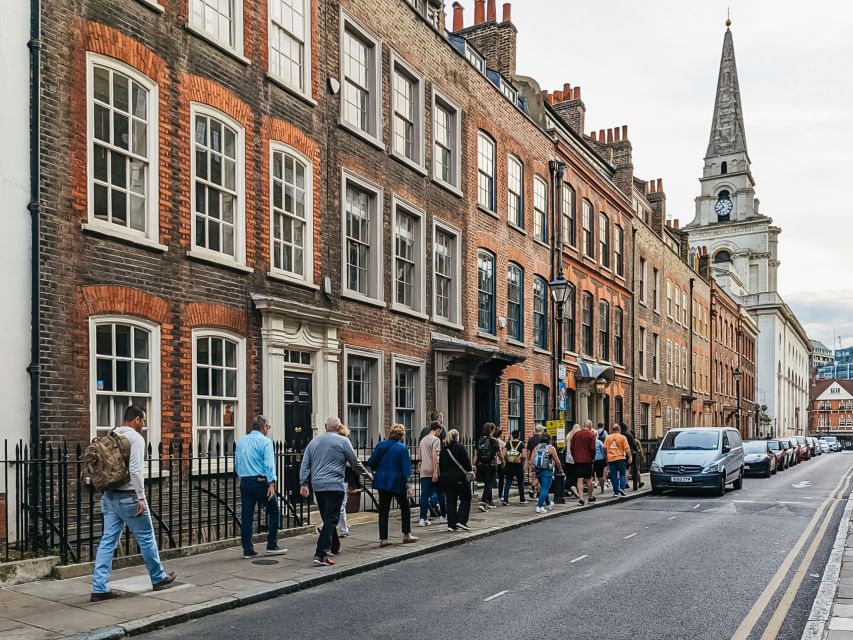
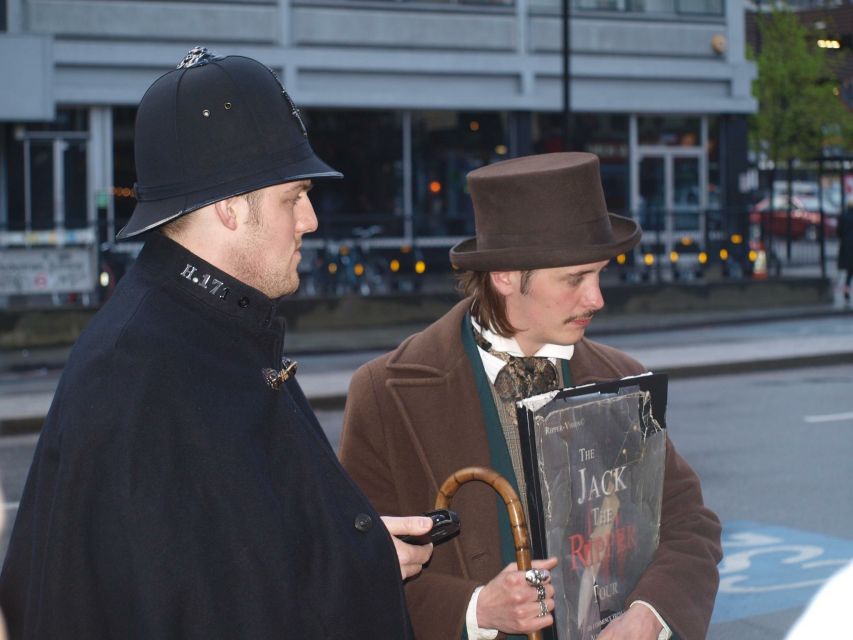
The experience depends heavily on the guide. The strongest feedback has singled out Alan, Rob, Harry, Mick Priestly, Andre, Andrew, Matt, and Sinead for clear speech, humor, enthusiasm, and strong storytelling.
Rob is praised for handling large groups while keeping the presentation lively. Harry is known for explaining the story clearly and adding humor without losing the serious tone. Alan has been praised for bringing in the economic conditions of late nineteenth-century London and for answering questions openly. Mick Priestly receives particularly strong praise for his depth of subject knowledge and engaging delivery.
You may not receive one of these specific guides, and the exact style can vary. Still, the repeated strength of the guiding team is reassuring. The guide needs to project their voice, control a moving group, position the projector, and maintain a steady pace. That is harder than it sounds on narrow East London streets.
A guide’s voice matters more than theatrical acting here. You need to hear dates, names, and evidence clearly. If the group is too large, this can become difficult. One reported group exceeded 40 people after two tours were combined, and some people struggled to see or hear in tight spaces. The guide worked hard to include everyone, but group size remains a fair concern.
Narrow streets, real atmosphere, and modern London
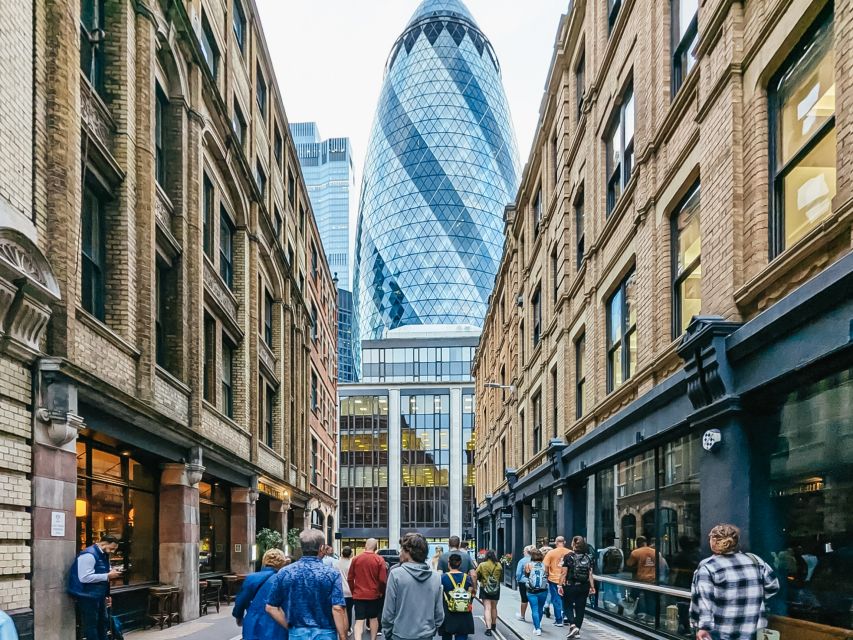
Whitechapel today is not a preserved Victorian film set. You will see modern buildings, traffic, businesses, and ordinary city life. That is a benefit, not a flaw, if you want to understand how history sits inside a living city.
The route takes you through back streets and areas you might not visit on a standard first-time London walk. You get a look at a part of East London that has been reshaped many times. The old photographs projected onto present-day walls create a quick before-and-after comparison.
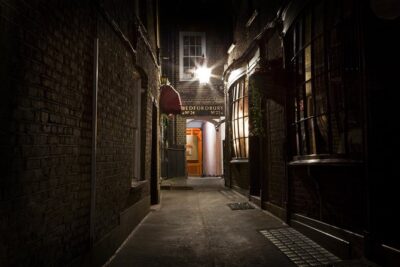
Night adds atmosphere, but do not expect theatrical fog or actors jumping from doorways. The tour aims for tension through place, weather, evidence, and storytelling. A dark, damp evening can suit the subject, but you should be comfortable walking outdoors in those conditions.
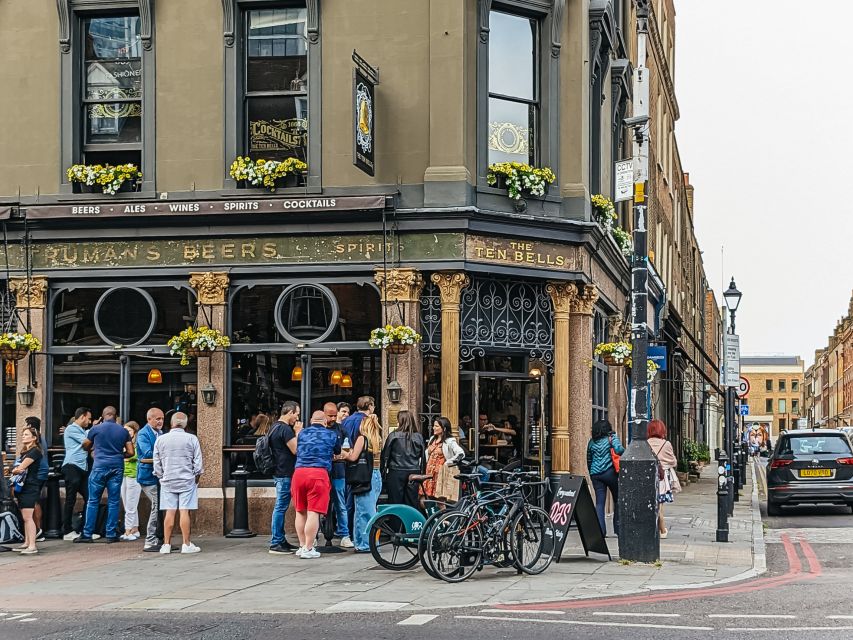
Some tours have finished near a pub, and the Ten Bells has been mentioned as a popular place to continue the evening. Do not assume a drink is included or that every guide will end there. Think of it as a possible follow-on, not part of the guaranteed package.
Is $24 good value in London?
At $24 per person, this is good value for a London activity lasting 105 minutes. You are paying for a live English-speaking guide, a walking route through the historic area, and the projector equipment that gives the tour its distinctive character.
The price looks especially fair if you already enjoy walking tours, crime history, or atmospheric evening activities. A standard sightseeing walk may cover more famous landmarks, but this tour gives you a focused story and a visual method that is difficult to reproduce on your own.
Value depends on group size and timing. If the group is very large, the experience can feel less personal and the projections can be harder to see. If the tour begins while the sky is still bright, you may not get the full visual effect. I would check the available start times and choose the latest practical option, particularly in spring or summer.
The tour also offers free cancellation up to 24 hours before departure and a reserve-now, pay-later option. Those terms are useful if your London plans are still shifting, but the main value comes from the content, guide, and route rather than the booking flexibility.
Who should book this Whitechapel tour?
I would recommend it if you want a story-led London evening with real locations, historical evidence, and a little suspense. It suits adults, older teenagers, fans of investigative history, and people who enjoy seeing a city on foot rather than moving between major attractions.
It is a good choice for a first visit if you want to explore East London beyond the usual Tower Bridge and museum circuit. It also works for returning visitors who have already covered central London and want something more specific.
I would skip it if you dislike stories about real violence, cannot walk and stand for nearly two hours, or need step-free access. I would also reconsider if you want a small private tour. The group may be manageable, but it can sometimes become large.
Bring comfortable shoes and weather-appropriate clothing. Wear something warm on a clear night, and carry rain protection even if the forecast looks uncertain. The tour runs in all weather, and London has a habit of changing its mind.
Final verdict: book it for the visual history
This is one of the better choices for seeing Jack the Ripper’s Whitechapel through both place and image. The Ripper Vision projections give the tour a clear purpose, while the strongest guides add context, humor, and respect for the victims.
Book it if you can handle the subject and the walking. Choose a darker start time when possible, arrive at Aldgate East Exit 3 early, and prepare for uneven pavement. At $24, it offers a memorable and fairly priced way to explore a difficult part of London’s past without pretending that the mystery has a neat answer.
FAQ
Where does the Jack the Ripper tour meet?
Meet outside Aldgate East Tube Station at Exit 3, outside the Whitechapel Art Gallery beside the KFC. Do not go to Aldgate Station.
How long does the tour last?
The walking tour lasts 105 minutes.
What language is the tour conducted in?
The live tour is conducted in English.
What is included in the price?
The price includes the guide and the guided walking tour.
What is Ripper Vision?
Ripper Vision uses handheld projectors to display historic photographs, crime scene images, maps, and press illustrations on the streets, walls, and buildings connected with the murders.
Does the tour operate in bad weather?
Yes. The tour operates in all weather conditions, so you should bring suitable clothing and rain protection.
How much walking is involved?
A moderate amount of walking is involved, including periods of standing and sections with uneven ground or cobblestones. You must be able to walk and stand for a prolonged period.
Is the tour suitable for children?
The tour is not suitable for children under 10 unless they have parental consent. The subject includes real historical violence and some graphic images.
Is the tour suitable for wheelchair users?
No. The experience is listed as unsuitable for wheelchair users and people with mobility impairments.
Can I cancel the booking?
You can cancel up to 24 hours in advance for a full refund. A reserve-now, pay-later option is also available.
Newly added around London
- Wicked Whitechapel: Where Now’s Jack The Ripper Audio Tour★ 5.0 · 2 reviews
- Ghosts, Gore & Other Ghasty Stories in the City of London★ 5.0 · 7 reviews
- Afternoon Jack the Ripper : Guided Tour★ 5.0 · 183 reviews
- Visit Jack the Ripper in French★ 5.0 · 33 reviews
- The Fading Light London Ghost Walk★ 5.0 · 35 reviews
- Self-Guided Audio Tour-Behind the shadow of evil: Jack the Ripper★ 4.0 · 2 reviews
- The Haunted Pubs of Old London: Small Group Tour★ 5.0 · 38 reviews
- Jack the Ripper – What About the Women?★ 5.0 · 39 reviews
London Ghost Tours, compared.
London Jack the Ripper Guided Tour with Ripper-Vision
Read our review →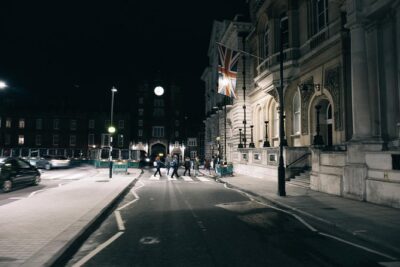
Ghost, Ghouls and Gallows Tour : Guided Tour with Boat Ride
Read our review →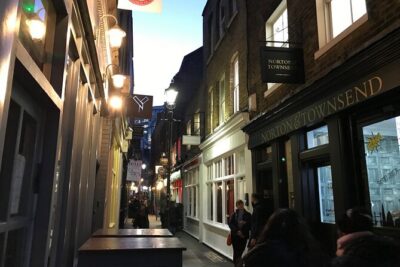
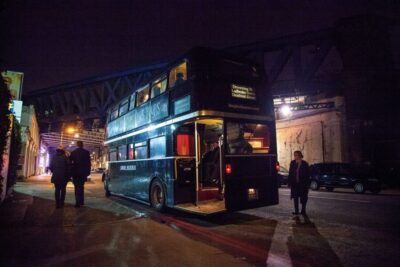

German Language : Original Jack the Ripper Tour
Read our review →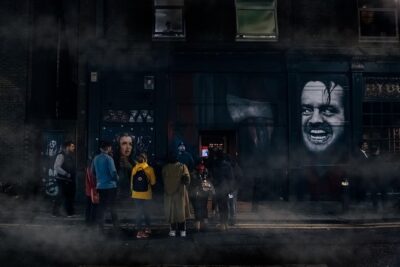
Ultimate Jack the Ripper : Guided Tour of London
Read our review →Browse the lists this tour appears in