
REVIEW · SPAIN GHOST TOURS
Inquisition, The Executioner, Witches, Expulsion Jews and Muslims
Madrid’s darkest stories begin in the prettiest squares. This walking tour links churches, royal spaces, and quiet corners to the Spanish Inquisition, religious persecution, and the forced expulsion of Jews and Muslims. I like its clear route through central Madrid, and I like that the guide uses printed material and teaching tools rather than relying on talk alone. The main consideration is its grim subject matter, which includes torture, executions, false accusations, and burning at the stake.
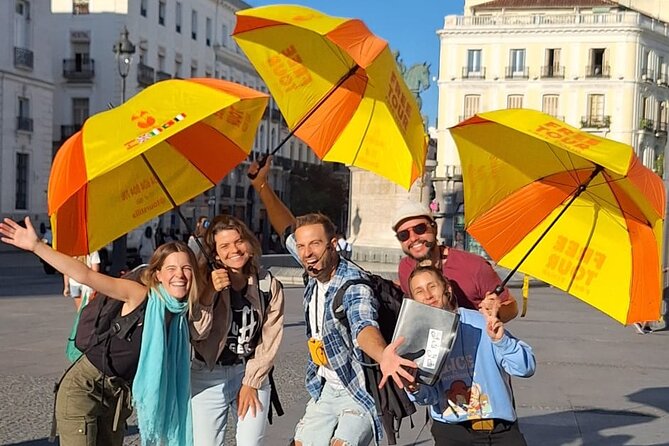
The tour lasts about 2 hours and 15 minutes and is offered in English. The listed price is only $3.61 per group of up to 15, although this operates like a tip-supported walking tour, so you should budget a tip if the guide gives you a strong experience. Guide David Onion earned particular praise for his dramatic delivery and tactful handling of tips, while Jackie was praised for making the subject easy to follow.
Key points to know before you go
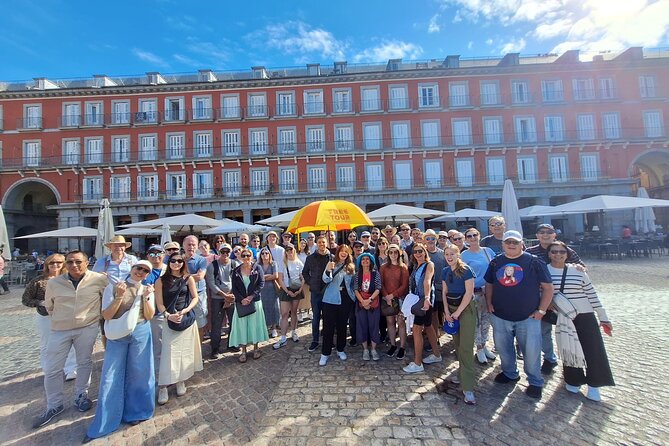
- A walking lesson in central Madrid: The route begins at Plaza Mayor and finishes at Plaza de la Armería, passing eight locations tied to the Inquisition and Spain’s religious past.
- The three faiths are central: Christianity, Judaism, and Islam are discussed together, including conversion, suspicion, expulsion, and long-lasting cultural legacies.
- The route stays outdoors: The stops are churches, plazas, and historic buildings viewed as part of the city walk. Entry tickets are not required.
- The guide shapes the experience: Jackie and David Onion received specific praise for clear explanations, strong storytelling, and an engaging presentation.
- The final stop looks at present-day conflicts: The tour does not end with medieval history. It closes with questions about religious conflict, holy wars, and the continued legacy of Jews and Muslims in Spain.
- Plan for a serious tone: Torture, executions, garroting, beheading, and burning at the stake are part of the subject. This is history with very little sugar coating.
Why this Madrid walk is worth your time
The Spanish Inquisition is often reduced to a few familiar images: secret prisons, torture chambers, and people accused of heresy. This tour gives you a wider frame. It connects the Inquisition to the relationship among Christianity, Islam, and Judaism, then follows that story through court procedure, public punishment, forced religious identity, and later attempts at apology.
That wider view is the tour’s main strength. You are not simply shown an old church and told a date. You are asked to consider how authorities decided who was a true Christian, how suspicion became evidence, and how religious policy affected entire communities.
I also like the route because it uses ordinary city spaces. Plaza Mayor and the area around the Royal Palace are busy parts of Madrid, but the tour asks you to look again. A church entrance, a formal square, or a building that seems easy to pass can become a setting for a trial, proclamation, or public punishment.
The walking time is broken into short sections. Most stops last 15 or 20 minutes, with one 10-minute stop at Casa Cisneros. That pacing helps with a dense topic. You get one main idea at a time rather than a long lecture that blurs together.
More Witch Tours in Spain
- Seville: City of Queens, Nuns, Sex Work & Witches
★ 4.3 · 27 reviews - Gran Canaria: Green Witchcraft in the Magic Island
★ 4.9 · 26 reviews - Tour of the Inquisition and Witchcraft in Toledo
★ 3.3 · 13 reviews
Starting at Iglesia de Santa Cruz
The first stop, Iglesia de Santa Cruz, sets up the religious framework. Here the guide explains the Spanish Inquisition and its relationship with Christianity, Islam, and Judaism.
This opening matters because it prevents the tour from treating the Inquisition as an isolated institution. You begin with the tension among faith, political power, conversion, and suspicion. The subject is not only what the Church did. It is also how religious identity became tied to public loyalty.
Expect about 15 minutes here. Since the stop is listed as free and no site entry is required, the value comes from the guide’s explanation and the printed material supplied along the route.
This is also a good point to decide if the subject suits you. The tour is educational, but it is not light sightseeing. If you want a cheerful introduction to Madrid’s architecture, choose another walk. If you want difficult history explained in place, this is a strong start.
At Plaza de la Provincia, law turns into fear
The second stop focuses on the executioner and the Inquisition’s investigation process. The guide covers torture, confessions, and the machinery used to turn an accusation into a formal case.
This section should help you understand the gap between a legal process and a fair process. The language of investigation and confession can sound orderly. The reality becomes much darker when torture is used to obtain evidence or force an admission.
I appreciate the short 15-minute format here. Torture is a subject that can quickly become sensational. A good guide needs to explain what happened without turning suffering into entertainment. The strongest guides on this route appear to keep the group focused on the historical system rather than simply listing gruesome details.
You may want to listen closely to how the guide explains accusations. That idea returns later, especially at Basilica de San Miguel, where false allegations and religious identity become major themes.
Casa de la Carniceria and the autos de fe
At Casa de la Carniceria, the focus shifts to the autos de fe, public acts connected with Inquisition trials. The tour covers the major trial and the most famous painting associated with the subject.
This is one of the route’s useful transitions. You move from private investigation and forced confession to public ceremony. The Inquisition was not only about what happened behind closed doors. It also used public events to display authority and reinforce religious conformity.
The guide’s visual material should be especially useful here. A painting can show clothing, staging, crowds, and symbols that are hard to picture from spoken description alone. The supplied teaching tools give the group something concrete to follow.
The stop lasts about 15 minutes. Do not expect a museum visit or a long look at an artwork inside the building. The attraction is the story attached to the place and the way the guide explains the public meaning of the trial.
Same streets, an entirely different kind of scare:
- Barcelona: Gothic Quarter Ghosts and Legends Walking Tour
★ 4.7 · 1,443 reviews - Madrid Oscuro: Torture, Ghosts, Crimes and Legends
★ 5.0 · 1,363 reviews - Seville Evening Historical Tour with Haunted History
★ 5.0 · 626 reviews - Barcelona Ghosts & Legends Tour
★ 4.5 · 548 reviews
Basilica de San Miguel and the problem of false identity
The fourth stop asks two unsettling questions: how could authorities identify a false Jew, and how could they identify a false Moorish person?
The wording reveals the basic problem. Once people were pressured or forced to convert, outward religious identity became a matter of suspicion. A person could attend church and still be accused of secretly following another faith. That left room for rumor, spying, and false claims.
The guide also covers proclamations of the Edicts of Faith and false allegations. These topics show how religious enforcement could reach beyond the accused person. A proclamation could encourage people to report behavior, while an accusation could damage a family or community even before a final judgment.
This may be one of the most thought-provoking stops because it moves beyond famous figures and dramatic punishments. You are looking at the everyday mechanics of suspicion. The history becomes less like a distant courtroom story and more like a warning about what happens when private belief is treated as something authorities can police.
Casa Cisneros: Cisneros and Torquemada
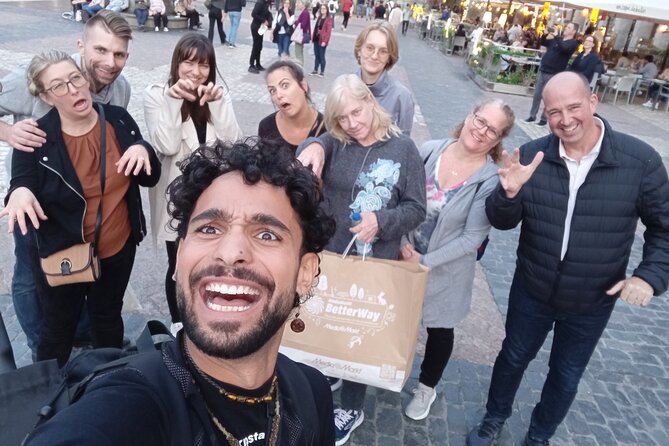
Casa Cisneros receives the shortest stop, about 10 minutes, but it introduces two important figures: Cisneros and Torquemada.
The contrast between these names gives the guide a chance to clarify personalities, roles, and reputation. Visitors who know only Torquemada’s name may find this section useful because it places him within a broader political and religious setting. The stop also keeps the focus from becoming a single-villain story.
Because the stop is brief, you may want to ask a question if the comparison catches your interest. The tour includes personalized attention after the walk, and the guide offers ongoing recommendations about what to do in Madrid. That makes it easier to follow up on a person or event that receives only a short explanation here.
Plaza de la Cruz Verde and public punishment
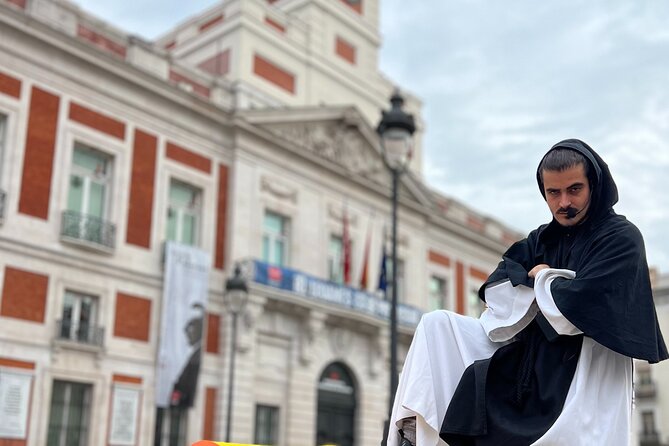
The sixth stop is the heaviest part of the route. At Plaza de la Cruz Verde, the guide explains the symbol of the Inquisition, its implementation, and several methods of execution.
The subjects include the gallows, beheading, the garrote vil, burning at the stake, and Bruges. The supplied details do not explain Bruges further, so you should ask the guide for clarification if that reference interests you.
This section is not for anyone who wants history kept at a comfortable distance. The point is to show how punishment was made visible and how different methods carried different meanings. The tour asks you to consider the public nature of these acts, not just the physical details.
I would listen for the distinction between an Inquisition trial and the actual carrying out of a sentence. Historical institutions often worked through several layers of authority. Understanding those layers gives you a clearer picture than simply memorizing a list of punishments.
The stop lasts about 20 minutes. That is enough time for a serious explanation, though the subject may feel intense after the earlier sections. A quiet break after the tour could be wise, especially if you are traveling with children. The experience is not described as child-focused, and the material is plainly mature.
Almudena Cathedral and the end of the Inquisition
At Catedral de Sta Maria la Real de la Almudena, the tour moves toward the modern period. The guide covers the Vatican Archives, Pope John Paul II, a pardon from the Catholic Church, the end of the Inquisition, and the question of its last execution.
The tour also addresses the last execution connected with the Inquisition and the 1974 execution by garrote vil. These are powerful reminders that the story does not end in the medieval period. The mention of 1974 places execution and institutional memory much closer to the present than many people expect.
The church stop lasts around 20 minutes. It gives you a chance to think about how institutions remember wrongdoing. A pardon or apology does not erase the damage, but it can change how later generations discuss it.
This section also returns to the legacies of Jews and Muslims in Spain. That is important. The tour does not treat expulsion as a closed chapter with no effect on modern Spanish culture. It asks what remains in language, customs, memory, and identity.
Ending at Plaza de la Armería
The final stop is Plaza de la Armería, about a 10-minute walk from the meeting point at Plaza Mayor. It is also close to the Royal Palace area and about three minutes from Metro Opera, making the finish practical for continuing your day in Madrid.
Here the guide discusses current religious conflicts, holy wars, and the legacies of Jewish and Muslim communities in Spain. The closing reflection gives the tour a wider purpose. You are encouraged to connect the history of the Inquisition with present-day questions about religious power and conflict.
I like this ending because it avoids a simple lesson in which the past is safely separated from the present. You may not agree with every interpretation offered, but the structure gives you something to consider after the walk.
The final stop also makes the tour feel more useful than a collection of grim stories. It asks you to think about how societies remember persecution and how old religious divisions can continue to shape public life.
How the guides affect the experience
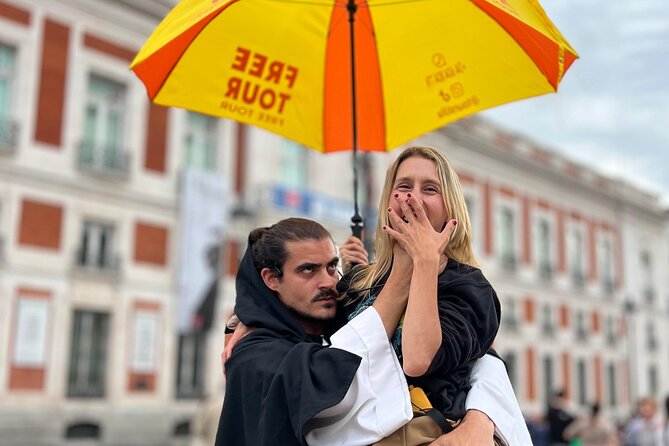
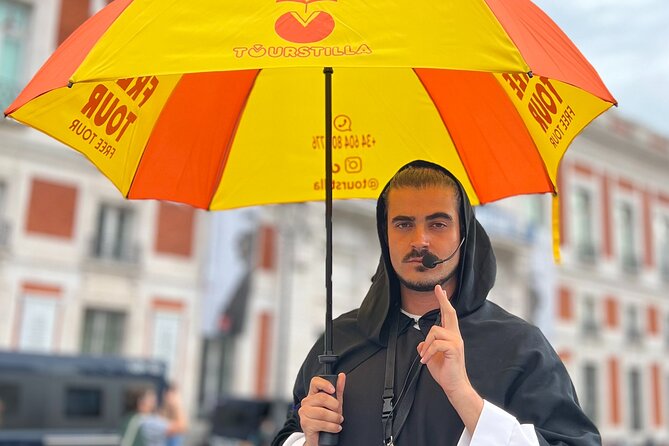
This tour depends heavily on the person leading it. Jackie was praised for making the material interesting and easy to follow. David Onion was singled out for dramatic storytelling, keeping the group engaged without turning the subject into a cheap spectacle.
That difference matters. The route has many heavy terms and connected events: investigations, confessions, public trials, religious tests, punishments, expulsions, and later apologies. A guide who can explain the order clearly will make the whole walk far more rewarding.
The tour includes printed material and teaching tools throughout the route. Those aids should help you follow names, images, and processes. Still, you may want to ask questions when a point feels unclear, especially around the historical figures and the references to Vatican records or Bruges.
The guide also provides a link with personalized Madrid recommendations and offers continued attention after the tour. That is a useful extra if you want suggestions for the rest of your stay, though the quality of that help will naturally depend on how much time the guide can give.
Price, group size, and what to expect
At $3.61 per group of up to 15, the listed cost is exceptionally low for a 2-hour, 15-minute guided walk. You should view it as a low-cost reservation for a tip-supported experience rather than a fully paid private tour.
The tour has a maximum group size of 30. The pricing information refers to groups of up to 15, so confirm the arrangement when booking if you are traveling with a larger party. A group of 30 can feel less personal, especially in a busy central square, while a smaller group should make it easier to hear and ask questions.
Tips are not included. David Onion handled this well by explaining the usual tipping practice at the end without pressure. If the guide gives you a clear, engaging history lesson, prepare to tip according to the effort and value you received.
No food or drink is included. Bring water before you start, since the walk runs more than two hours. No entry tickets are required, so you will not face extra admission costs at the stops.
The tour is offered in English and includes a mobile ticket. It is near public transportation, and the route begins at Plaza Mayor. Service animals are allowed, and most people can take part, though the provided details do not give a full description of walking surfaces or seating.
Who should book this experience
I would recommend this tour to you if you enjoy political, religious, and social history more than postcard sightseeing. It suits visitors who want to understand how Madrid’s public spaces connect to Spain’s difficult past.
It is also a good choice if you want a guide to organize a complicated subject. The stops are short, the route is central, and the material is supported by printed tools.
I would hesitate to recommend it to anyone sensitive to descriptions of torture and execution. Families should use their own judgment, since the subject matter includes garroting, beheading, hanging, and burning.
The tour may also disappoint you if you expect interior visits or major museum collections. Entry to the sites is not required, and the experience is built around outdoor explanations at historic locations.
Should you book the Inquisition walking tour?
Book it if you want a serious, low-cost history walk with a strong focus on religious persecution, Jewish and Muslim legacies, and the public machinery of the Inquisition. The central route, English-language format, teaching materials, and strong guide feedback make it good value.
Go in prepared for a sober subject and a tip-supported format. I would also keep your schedule flexible because one cancellation has been reported when a guide was unavailable and no replacement could be found. The cancellation policy allows a full refund if you cancel at least 24 hours before the start, which gives you some protection.
For a thoughtful look at Madrid beyond royal buildings and grand plazas, this is a worthwhile choice. It leaves you with difficult questions, which is exactly what a good history walk should do.
FAQ
Where does the tour start?
The tour starts at Plaza Mayor in central Madrid, Spain.
Where does the tour finish?
It finishes at Plaza de la Armería, about a 10-minute walk from Plaza Mayor.
How long does the tour last?
The tour lasts approximately 2 hours and 15 minutes.
What language is the tour offered in?
The tour is offered in English.
Are entrance tickets required?
No. Entry tickets to the sites are not required, and the listed stops have no admission charge.
How much does the tour cost?
The listed price is $3.61 per group of up to 15 people. Tips are not included.
Can I cancel for a full refund?
Yes. You can cancel up to 24 hours before the experience begins for a full refund. Changes or cancellations made less than 24 hours before the start are not accepted for a refund.
Newly added around Spain
- Zaragoza: Only excommunicated and cursed town with witches in Spain and food★ 4.7 · 6 reviews
- Self-Guided Audio Tour – Ghosts of Madrid: History and terror★ 3.5 · 9 reviews
- Ghosts of Madrid: Exploration Game and Tour★ 5.0 · 4 reviews
- Walking Tour Mysteries and Legends of Barcelona and its Ghosts★ 5.0 · 3 reviews
- Witch Hunt on Montjuïc: Self-Guided Puzzle Quest in Barcelona★ 4.5 · 9 reviews
- Barcelona Ghosts of a Dark Past Gothic Walking Tour★ 5.0 · 55 reviews
- The Gothic Trail – Ghosts of Barcelona Exploration Game★ 4.5 · 33 reviews
- Dark History and Legends Night Walk of Gothic Quarter★ 5.0 · 2 reviews
Spain Ghost Tours, compared.
Gothic Quarter Ghosts and Legends Walking Tour
Read our review →
Seville Evening Historical Tour with Haunted History
Read our review →

Barcelona Dark History Night Walking Tour With Drinks
Read our review →Browse the lists this tour appears in