
REVIEW · SPAIN GHOST TOURS
Tour of the Inquisition and Witchcraft in Toledo
Fear has a long memory. This 90-minute Toledo walk connects the Inquisition, witchcraft, old prisons, public penance, and the city’s Jewish Quarter in a way that makes the past feel close at hand. I like the route’s focus on documented history rather than ghost stories, and I also like the guide’s attention to sensitive subjects, especially when the group includes people with a personal connection to Jewish history. The main caution is reliability: the tour requires at least six participants, and it has been canceled with little notice when that minimum was not met.
The $10 price offers strong value if you want a short introduction to Toledo’s darker past without paying for entrance tickets. I also appreciate that the route is led in Spanish by an official local guide, with stops spread across the old center rather than confined to one building. Still, this is not a theatrical mystery walk. If you expect dramatic legends, torture reenactments, or a tour in English, you should choose something else.
- Zocodover begins the story: Learn why this busy square was linked to public acts of penance called autos de fe.
- History comes before horror: The guide emphasizes the Inquisition’s structure, legal process, punishments, and eventual end.
- The route includes the old Jewish Quarter: This adds essential context to Toledo’s religious tensions and changing communities.
- You visit several important sites: Stops include Posada de la Hermandad, Toledo Cathedral, San Pedro Mártir, the Jesuit church, and Plaza de San Vicente.
- Vanesa has earned warm praise: Her sensitivity and energy were especially appreciated during a group that included a Jewish participant.
- Plan around the minimum group size: Six people are required, and last-minute cancellation is the biggest practical risk.
Starting at Zocodover, Toledo’s Stage for Public Penance
Meet at Calle Armas 3, opposite the Rodilla café at the beginning of Plaza de Zocodover. Look for the guide carrying a small colored flag, described in the meeting instructions as a pink flag on the side of the square.
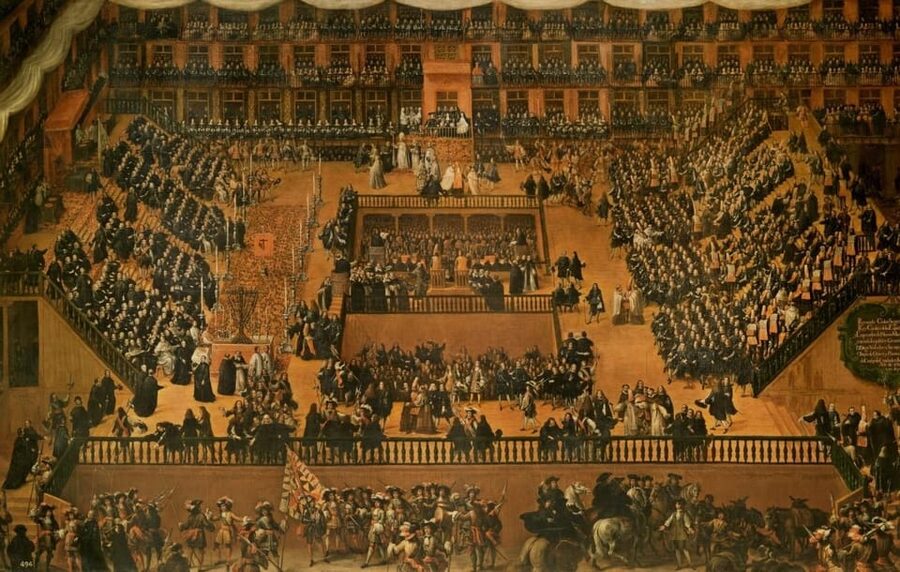
Zocodover is a useful starting point because it is easy to find and closely tied to the subject. During the period of the Spanish Inquisition, the square hosted autos de fe, public ceremonies in which condemned people acknowledged their sins and showed repentance in the hope of reconciliation with the Catholic Church.
That distinction matters. An auto de fe was not simply an execution. It was a public religious and legal ceremony, designed to display the authority of the Church and the consequences of religious disobedience. Executions could follow, but the public ritual itself had its own purpose.
I like beginning here because the setting remains part of daily Toledo. You are not entering a sealed museum room with the past safely behind glass. You are standing in a central city square and hearing how public punishment once used the same urban spaces people still cross today.
The guide also explains that the Inquisition began in the late 15th century under Ferdinand and Isabella and continued into the 19th century. In Toledo, the court pursued practices it regarded as heretical or contrary to Catholic teaching. The tour’s subject is grim, but the opening gives you a framework before the details become more difficult.
Posada de la Hermandad and the Machinery of Punishment
From Zocodover, the walk continues toward Posada de la Hermandad. Here the discussion turns from public ceremony to imprisonment, punishment, and torture.
This is one of the most useful parts of the experience because it shows that the Inquisition was not just a dramatic name from a history book. It had officials, procedures, places of detention, and a hierarchy. The guide describes how the system moved from an accusation or suspected offense toward interrogation, judgment, and sentencing.
The tour also covers punishments that could include confiscation of property, public penance, and execution in the most severe cases. People accused of witchcraft or sorcery could be arrested and questioned, with torture used to obtain confessions.
I would approach this section with patience. A 90-minute walk cannot explain every legal distinction or regional variation in the Inquisition. You will receive a focused overview, not a university lecture. The value lies in connecting the organization of the tribunal with the physical streets around you.
If you are sensitive to descriptions of torture, keep in mind that the subject is central to the route. The tone, however, is presented as historical rather than sensational. One of the strongest comments about the guide Vanesa describes her as pleasant, energetic, and considerate when discussing difficult material. That kind of handling makes a real difference on a tour built around persecution.
More Witch Tours in Spain
- Inquisition, The Executioner, Witches, Expulsion Jews and Muslims
★ 5.0 · 85 reviews - Seville: City of Queens, Nuns, Sex Work & Witches
★ 4.3 · 27 reviews - Gran Canaria: Green Witchcraft in the Magic Island
★ 4.9 · 26 reviews
Toledo Cathedral and the Religious Power Behind the Court
The route includes Toledo Cathedral as a guided stop. The information provided does not indicate that cathedral admission is part of the experience, so you should expect an exterior discussion rather than assume you will enter.
The cathedral gives the guide a natural place to explain the religious world in which the Inquisition operated. Toledo was an important religious and cultural center, and the court’s authority cannot be understood apart from the strength of Catholic institutions in the city.
The guide may also connect the cathedral to the wider question of how religious conformity was defined. The Inquisition pursued heresy and practices considered contrary to Catholic belief. That made religious identity a matter of public scrutiny, not only private conviction.
I like this stop because it gives the story a larger setting. The tour is not just about individual prisoners or frightening legends. It asks how institutions used faith, law, and public ritual to shape behavior.
Still, do not expect a full cathedral tour. If you want detailed art history, architecture, or access to the interior, you will need a separate visit. This walk uses the cathedral as one piece of a wider historical route.
The Jewish Quarter and a More Sensitive Reading of Toledo
The walk passes through Toledo’s ancient Jewish Quarter, an important part of the city’s religious history. This stop adds needed context because discussions of the Inquisition can become too narrow if they focus only on torture and punishment.
Toledo’s identity was shaped by Christian, Jewish, and Muslim communities, though the tour information specifically highlights the Jewish Quarter in connection with the Inquisition. The route gives you a chance to consider how religious pressure affected people whose beliefs or backgrounds were viewed with suspicion.
One particularly useful detail comes from the guide’s handling of a group that included a Jewish participant. Vanesa was praised for showing sensitivity while explaining the subject. That is worth noting because this is not a neutral theme for everyone. The history involves persecution, forced conformity, and the targeting of religious communities.
I would choose this tour if you want the Jewish Quarter placed within a wider story of power and fear. I would not choose it if you want a dedicated tour of Toledo’s synagogues, Jewish art, or medieval daily life. Those subjects may appear only as they relate to the Inquisition.
The route also includes Calle de la Espadería, identified as one of the historic streets connected with the story. Toledo’s narrow lanes help you picture how accusations and rumors could move through a close-knit city, although the tour does not turn that idea into a made-up mystery tale.
San Pedro Mártir and the First Auto-da-Fé
At the Convento de San Pedro Mártir, the guide explains the Inquisition’s headquarters and the steps followed from the detection of an alleged crime to the prisoner’s execution.
This is also where you hear about the first auto-da-fé that left from the site in the 15th century, involving more than 700 people. That number gives the ceremony a scale that is easy to miss if you think of the Inquisition only through individual cases.
The stop is valuable because it links a real location to the tribunal’s organization. Instead of hearing a loose collection of frightening anecdotes, you follow a process: accusation, investigation, interrogation, sentencing, public display, and, in extreme cases, execution.
The wording matters here. People accused of witchcraft were not necessarily guilty of what they were accused of, and stories of sorcery were often shaped by fear and superstition. The guide’s emphasis on history rather than mystery helps keep the distinction clear.
At the same time, the route includes folklore about witches and sorcerers meeting in secret places. You will hear that some of these tales may be exaggerated or fictional. I appreciate that warning. Toledo has plenty of atmospheric corners, but atmosphere is not proof.
Same streets, an entirely different kind of scare:
- Barcelona: Gothic Quarter Ghosts and Legends Walking Tour
★ 4.7 · 1,443 reviews - Madrid Oscuro: Torture, Ghosts, Crimes and Legends
★ 5.0 · 1,363 reviews - Seville Evening Historical Tour with Haunted History
★ 5.0 · 626 reviews - Barcelona Ghosts & Legends Tour
★ 4.5 · 548 reviews
The Jesuit Church and Toledo’s Religious Setting
The itinerary also passes Iglesia de los Jesuitas. The supplied information gives no indication that the tour includes entry, so plan to hear an exterior explanation unless the guide says otherwise.
This stop helps maintain the religious thread of the walk. The Inquisition did not operate in isolation from churches, religious orders, and the wider Catholic culture of Toledo. A building such as this gives the guide another chance to explain the beliefs and institutions that shaped the period.
For me, the benefit is variety. A route that moved only between prisons and execution sites could become repetitive. Religious buildings widen the picture and show that Toledo’s story includes worship, education, authority, and public identity as well as punishment.
If your main interest is witchcraft folklore, this may feel like a slower section. If you want to understand how the religious court fitted into city life, it should be useful.
Plaza de San Vicente and the End of the Inquisition
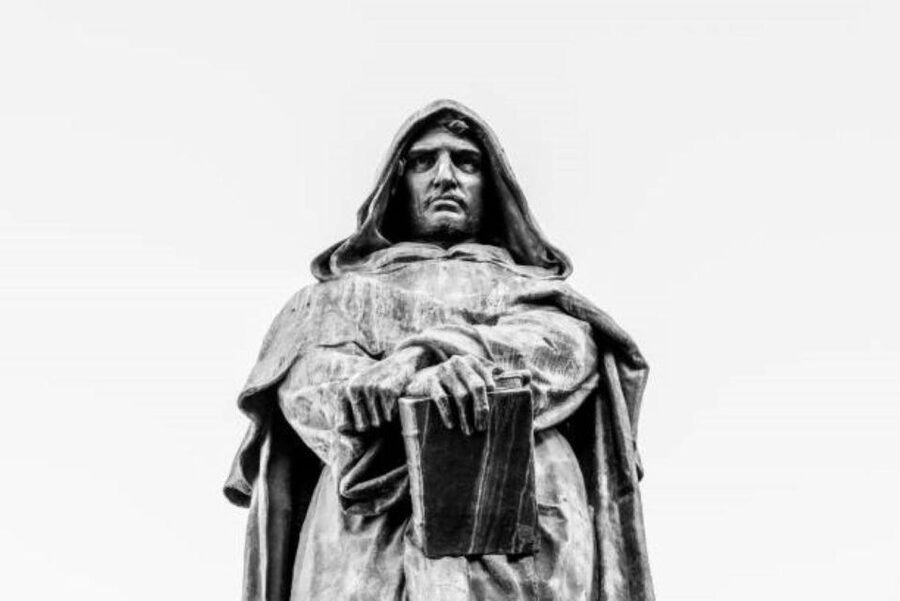
Near the old Church of San Vicente, the guide discusses the end of the Inquisition in Spain and some of the most famous prisoners associated with Toledo.
This is an important final chapter. The Inquisition did not simply appear and disappear in one moment. The tour explains its long duration, from the late 15th century into the 19th century, then brings the story toward its close.
I like ending with this subject because it prevents the tour from becoming a frozen portrait of medieval cruelty. Institutions change, public attitudes shift, and systems that once seemed permanent can eventually be dismantled.
The stop also brings the focus back to individuals. Stories of famous prisoners give the broad history a human scale, though the information provided does not name those prisoners in advance. If one particular figure matters to you, ask the guide for names and details during the walk.
Plaza de San Vicente is also a practical endpoint for the historical arc. From public ceremonies and accusations, you move through prisons and procedure, then finish with the decline of the tribunal and personal stories from its history.
What the $10 Price Really Gets You
At $10 per person, this is an inexpensive way to spend 90 minutes in central Toledo. The tour does not require separate ticket payments or added expenses, which makes the cost easy to understand.
The value is strongest if you want a focused walking introduction. You receive an official local guide, a route through several historic areas, and explanations that connect public squares, religious buildings, the Jewish Quarter, and former sites of imprisonment.
The price does not buy a long museum visit or a private guide. Large group reservations are not accepted, and each family or friend group may include no more than six people. The total group size is not otherwise specified, so you should not assume a private or very small walk.
A minimum of six people is required for the tour to operate. This is the main weakness. Two separate cancellations were reported as occurring less than an hour before the start because there were not enough bookings. One cancellation also led to concern about a delayed refund.
Because of that risk, I would avoid placing this tour immediately before a train, timed attraction, or important meal. If you book, keep some flexibility in your Toledo schedule and cancel your reservation if you know you cannot attend. The guide may otherwise wait at the meeting point unnecessarily.
Language, Access, and Who Will Enjoy It
The live tour is in Spanish. You should have enough Spanish to follow explanations about religious history, legal procedure, and sensitive subjects. This is not advertised as an English-language walk.
The tour is wheelchair accessible, though Toledo’s historic center can still require care because the route moves through old streets. The information provided does not specify the exact surface conditions or slope of every section, so contact the operator if you need details for a particular mobility device.
I would recommend this experience for:
- Spanish-speaking visitors interested in religious and legal history
- People who want a short, inexpensive walking tour
- Anyone curious about the Inquisition beyond popular horror stories
- Visitors interested in how the Jewish Quarter fits into Toledo’s wider past
- Families with older children who can handle serious historical themes
I would look elsewhere if you want English, a supernatural show, interior visits to major monuments, or a private group larger than six people. The tour is also not ideal for a rigid schedule because of the six-person minimum.
Should You Book the Toledo Inquisition Tour?
Book it if you want a low-cost, Spanish-language history walk with a serious tone and a clear route through central Toledo. The strongest reasons are the range of locations, the explanation of the Inquisition’s structure, and the guide’s reported care with a subject that can easily be treated as cheap entertainment.
Go in expecting history, not horror. You may hear stories about witches and secret meetings, but the emphasis is on persecution, procedure, public punishment, and the eventual end of the tribunal.
My final advice is simple: confirm that the tour is still operating, avoid scheduling it before something you cannot miss, and meet at Calle Armas 3 with enough time to find the guide’s colored flag. If six people are confirmed and Spanish works for you, $10 is a fair price for this compact look at one of Toledo’s most troubling chapters.
FAQ
Where does the tour meet?
The meeting point is Calle Armas 3, opposite the Rodilla café at the beginning of Plaza de Zocodover. The guide carries a small colored flag, described as pink in the meeting instructions.
How long does the tour last?
The walking tour lasts approximately 1.5 hours.
What language is the tour in?
The live tour guide speaks Spanish.
What is the price?
The listed price is $10 per person.
What sites are included on the route?
The route begins at Calle Armas 3 and includes Posada de la Hermandad, Toledo Cathedral, the ancient Jewish Quarter, the Convento de San Pedro Mártir, Iglesia de los Jesuitas, and Plaza de San Vicente before returning to the starting point.
Does the tour include entrance tickets?
The tour does not require payment for tickets or additional expenses.
Is the tour wheelchair accessible?
Yes, the activity is listed as wheelchair accessible.
How many people are required for the tour to operate?
At least six people are required for the tour to take place.
Can I make a large group reservation?
No. Large group reservations are not accepted, and the maximum allowed for a family or friends group is six people.
Can I cancel the reservation?
Yes. You can cancel up to 24 hours in advance for a full refund. You can also reserve now and pay later, according to the booking conditions.
Newly added around Spain
- Zaragoza: Only excommunicated and cursed town with witches in Spain and food★ 4.7 · 6 reviews
- Self-Guided Audio Tour – Ghosts of Madrid: History and terror★ 3.5 · 9 reviews
- Ghosts of Madrid: Exploration Game and Tour★ 5.0 · 4 reviews
- Walking Tour Mysteries and Legends of Barcelona and its Ghosts★ 5.0 · 3 reviews
- Witch Hunt on Montjuïc: Self-Guided Puzzle Quest in Barcelona★ 4.5 · 9 reviews
- Barcelona Ghosts of a Dark Past Gothic Walking Tour★ 5.0 · 55 reviews
- The Gothic Trail – Ghosts of Barcelona Exploration Game★ 4.5 · 33 reviews
- Dark History and Legends Night Walk of Gothic Quarter★ 5.0 · 2 reviews
Spain Ghost Tours, compared.
Gothic Quarter Ghosts and Legends Walking Tour
Read our review →
Seville Evening Historical Tour with Haunted History
Read our review →

Barcelona Dark History Night Walking Tour With Drinks
Read our review →Browse the lists this tour appears in