
REVIEW · ROME GHOST TOURS
Rome: Haunted City Night Walking Tour
Rome gets stranger after sunset. This two-hour walk turns familiar sights into scenes from Rome’s darker past, with stories of ghosts, murders, executions, popes, emperors, and artists. I like the night setting, which brings cooler air, fewer crowds, and a different mood to central Rome. I also like the $29 price, especially since the route covers several famous sights and lesser-known corners.
The main consideration is that this is more historical than haunted for much of the evening. You get eerie tales and paranormal legends, but the strongest part is the storytelling and the grim history behind the streets. The walk also finishes at Castel Sant’Angelo, so you should be comfortable spending two hours on foot.
Five things to know before you go
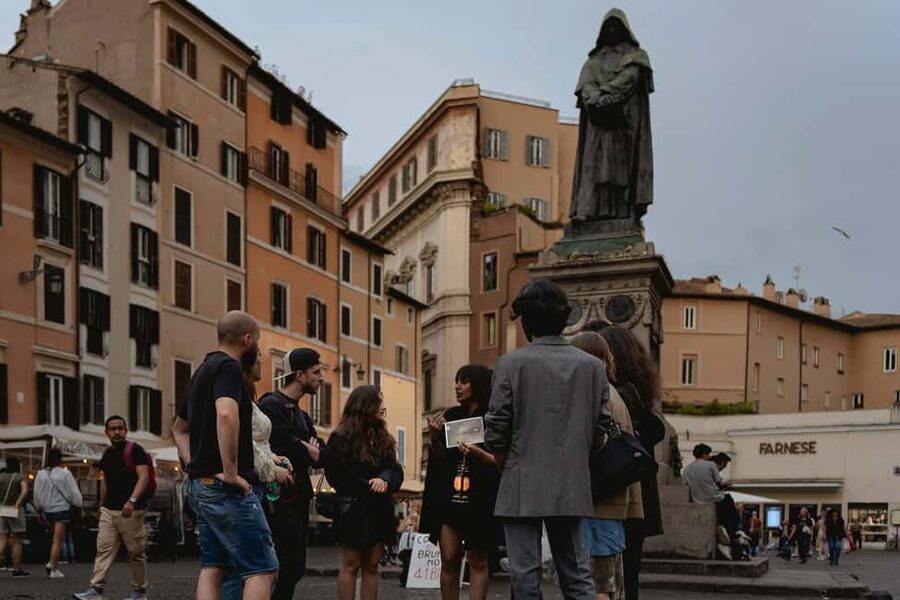
- Giordano Bruno sets the tone: The tour begins beneath the statue of a philosopher executed in Campo de’ Fiori, an effective first stop for Rome’s darker side.
- The route crosses central Rome: You walk from Campo de’ Fiori through Piazza Farnese, Ponte Sisto, Via Giulia, and toward Castel Sant’Angelo.
- Stories matter more than special effects: The experience depends on a lively guide, clear English, and good timing rather than props or theatrical scares.
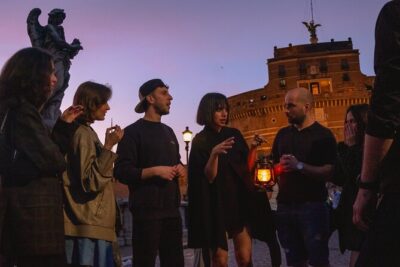
- Guides make a real difference: Yousef, Antonio, Maham, Domenica, Sara, Simon, Dinara, and others have been praised for humor, energy, storytelling, and clear explanations.
- Small details keep you involved: Some guides add a game of finding small madonna statuettes, while others use pictures or invite questions along the way.
- The group can reach 20 people: That is manageable for a walking tour, but a private group is available if you want a more personal evening.
Why Rome works so well after dark
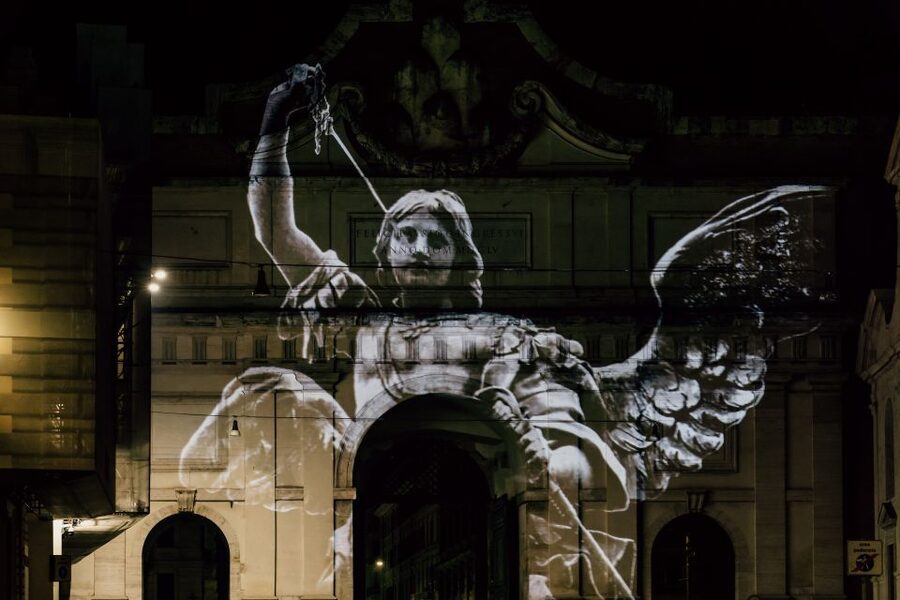
Rome is often presented as a city of emperors, churches, fountains, and grand art. That is only half the story. The city also has a long record of public punishment, political violence, religious conflict, poisonings, executions, and dramatic deaths.
This tour uses that darker material to change the way you see the city. Campo de’ Fiori is not just a lively square with restaurants and a market by day. Ponte Sant’Angelo is not only a pretty crossing toward the castle. A small devotional image on a wall can become a clue to old beliefs and local customs.
The night setting helps. You avoid the worst daytime heat and crowds, and the main monuments take on a quieter mood. You still walk through active parts of central Rome, so this is not a silent cemetery tour. Expect restaurants, street life, traffic, and city noise along the way. The contrast between modern Rome and the grim stories is part of the appeal.
The tone also seems to be more entertaining than frightening. Guides such as Yousef and Antonio have been praised for using humor to keep the tales from becoming too heavy. That makes the tour a good choice if you enjoy spooky subjects but do not want a full horror performance.
More Ghost Walking Tours in Italy
- Rome: Paranormal Night Walking Tour & Secret Backstreets
★ 4.9 · 1,921 reviews - Haunted Rome Ghost Night Walking Tour
★ 5.0 · 495 reviews - Ghosts, Legends & Mysteries of Rome Tip-Based Walking Tour
★ 4.7 · 284 reviews
Campo de’ Fiori and Giordano Bruno
Meet beneath the statue of Giordano Bruno in Campo de’ Fiori. Your guide will be holding a yellow Carpe Diem Tours flag or sign, and you should arrive at least 10 minutes early. Late arrivals are not eligible for a refund, so this is one meeting point where arriving on time matters.
The statue gives the opening a strong sense of place. Bruno was executed in the square, and his monument immediately introduces the themes of punishment, belief, and Rome’s complicated past. Your guide uses the setting to explain the story, rather than simply pointing out a famous statue.
Campo de’ Fiori is also a practical starting point. It is easy to recognize, lively before the tour, and close to several other sights on the route. You can arrive early for a look around, but do not expect the daytime market atmosphere to continue into the night.
The first 15 minutes are listed for the statue and surrounding square. That pace is useful because it gives the guide time to establish the mood without keeping you in one place too long.
Piazza Farnese and Rome’s powerful families
From Campo de’ Fiori, the walk continues to Piazza Farnese. This is one of Rome’s grand urban spaces, and the tour uses it to connect architecture with power and personality.
The square gives you a different type of dark-history setting. Instead of focusing only on ghosts, the guide can place old stories against the background of palaces, churches, and influential families. That mix is important because Rome’s sinister tales are often tied to politics and status, not isolated supernatural events.
Plan on roughly 15 minutes here, including walking and explanation. You will want to look up as well as listen. The point is not simply to collect a scary anecdote. It is to notice how the buildings and open spaces helped shape public life in earlier centuries.
This is also where a strong guide can make the evening work. The best comments from the supplied feedback repeatedly praise clear English, a good sense of humor, and the ability to answer questions. Antonio, Domenica, Maham, and Dinara were singled out for those qualities at different times.
Madonnelle and the small details of Rome
The stop at Madonna della Pietà, one of Rome’s small madonna images known as madonnelle, adds a more intimate note. These modest religious images can be easy to miss if you are racing between major monuments.
This part of the walk shows why a guided route can be more useful than a simple list of famous sights. You might pass these small images without noticing them, while a guide can point out their place in the city’s religious life and local stories.
One guide also added a game of finding statuettes during the walk. That kind of small activity can help younger visitors and anyone who loses focus during long historical explanations. It gives you something to look for while the guide builds the larger story.
The subject matter here may feel less conventionally frightening than an execution or ghost tale. Its value is in making you look closely at Rome’s walls and corners. I would treat this as a pause from the larger, more dramatic stories.
More Ghost Walking Tours in Rome
- Ghosts Legends and Mysteries of Rome Walking Tour
★ 5.0 · 149 reviews - Rome: Private Night Ghost Walking Tour
★ 5.0 · 38 reviews - Haunted Rome: Eternal City Night Walking Tour
★ 5.0 · 38 reviews - Ghost & Legends in Night Rome Walking Tour
★ 5.0 · 36 reviews
Ponte Sisto and the Fountain of the Mask
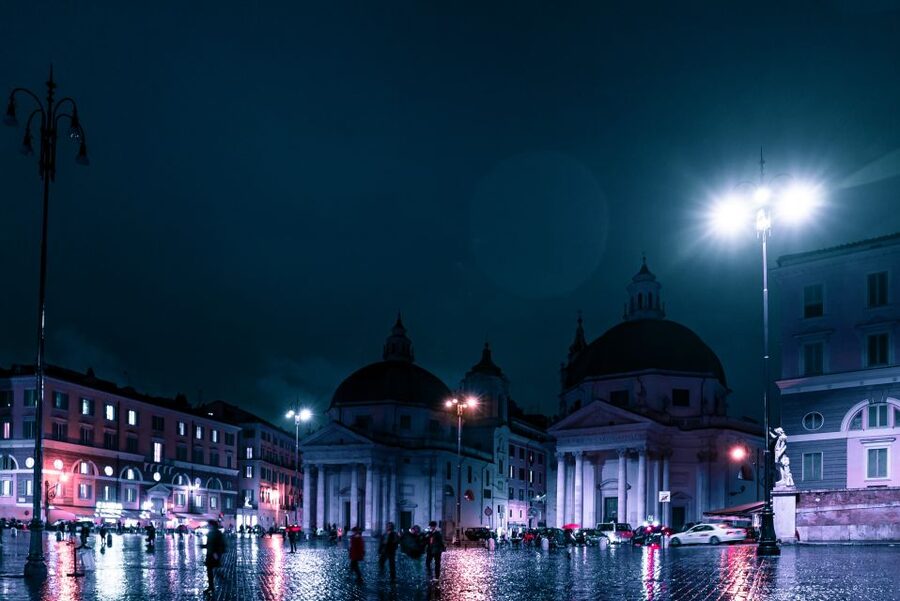
The route then reaches Ponte Sisto, a bridge that leads you across the Tiber and toward the final stretch of the evening. Bridges are natural places for ghost stories because they connect districts, carry travelers through the city, and often have long associations with public life.
Here, the guide discusses Rome as a city where the past was visible in daily life. The stories are linked to places you can actually see, rather than being presented as disconnected legends. That makes the walk feel grounded, even when the subject turns paranormal.
Next comes the Fountain of the Mask. The name alone gives the guide a useful visual starting point, and the stop continues the tour’s habit of finding unsettling meaning in ordinary urban features.
Each of these stops receives about 15 minutes. The steady rotation helps keep the evening moving, but it also means you should not expect a long architectural lecture at every site. The emphasis is on a focused story, a look at the location, and then onward through the streets.
Santa Maria dell’Orazione e Morte
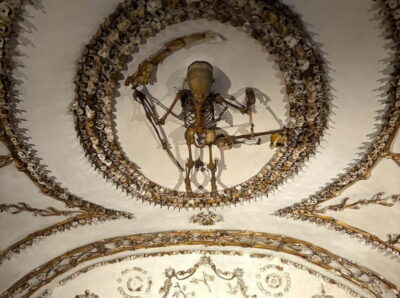
The church of Santa Maria dell’Orazione e Morte is likely to be one of the strongest stops for visitors who enjoy macabre religious history. The tour describes a chapel decorated with human bones, a detail that shifts the experience from ghost stories toward the physical reality of death in earlier Rome.
This is the sort of stop that gives the tour its bite. You are not only hearing about spirits. You are also confronting old customs surrounding death, prayer, burial, and remembrance.
The subject may not suit everyone, especially younger children or anyone uncomfortable with human remains. The tour information does not promise that every interior will be entered, so you should think of this as a guided visit to the church and its story rather than a guaranteed extended indoor viewing.
Still, the stop adds substance. A night walk built only around ghosts could become repetitive. A church associated with death gives the guide a chance to explain how faith and fear shaped the city.
Santa Maria in Monserrato degli Spagnoli
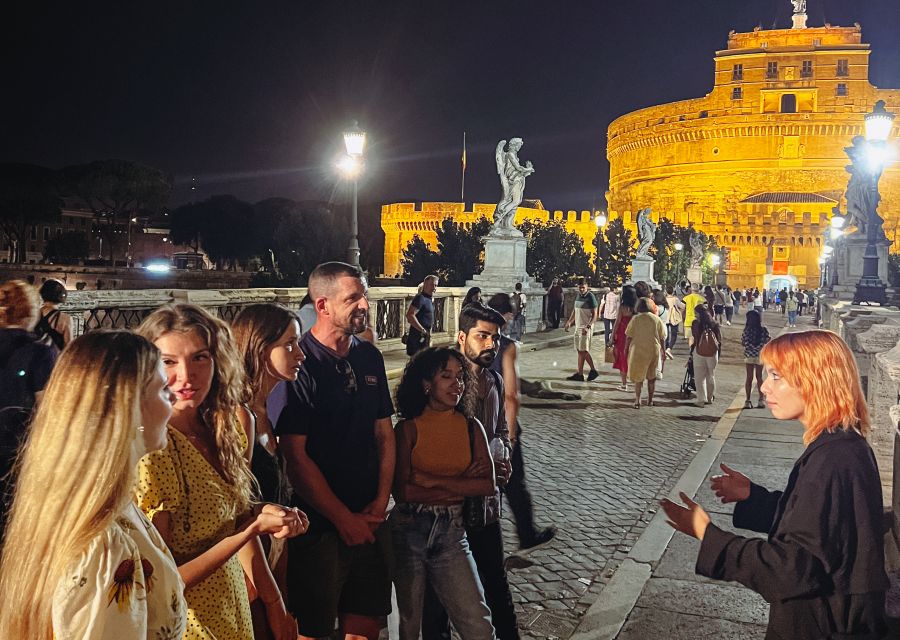
Santa Maria in Monserrato degli Spagnoli continues the religious side of the route. The church adds another layer to Rome’s long connection between art, faith, nationality, and power.
You will hear about the people and events tied to the location, with the guide framing the church through unusual or disturbing episodes rather than a standard art-history talk. That approach is useful if you have already seen Rome’s major basilicas and want something less familiar.
The experience is still a walking tour, not a sequence of museum entries. You should expect explanations outside or around the sites, with the guide directing your attention to important details. Bring comfortable shoes, since the route includes repeated stops, street crossings, and several sections on foot.
A camera is also listed as something to bring. Night photography can be difficult, but the monuments and streets provide plenty of visual reminders of the evening. The most useful pictures may be the ones you take after the guide has explained what you are looking at.
Castel Sant’Angelo and the final stories
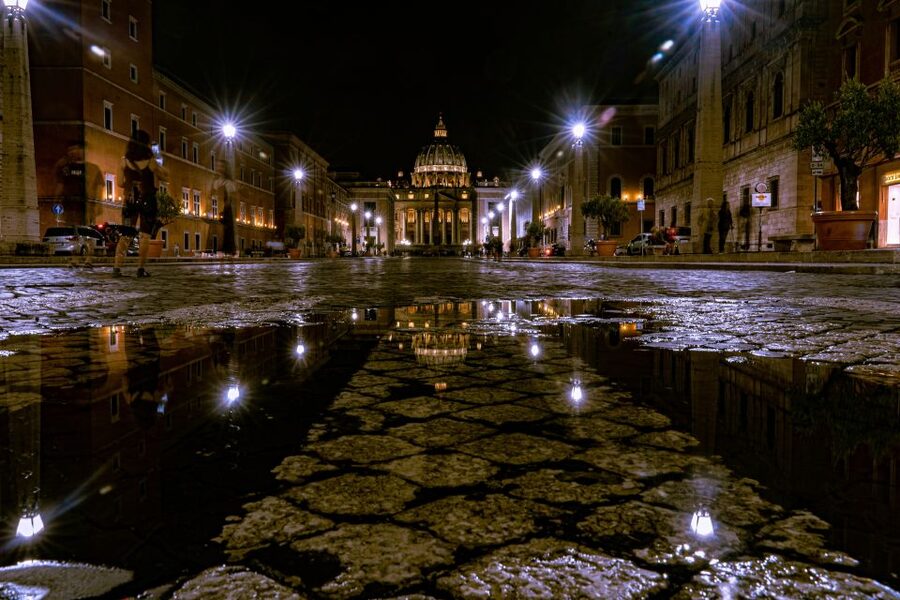
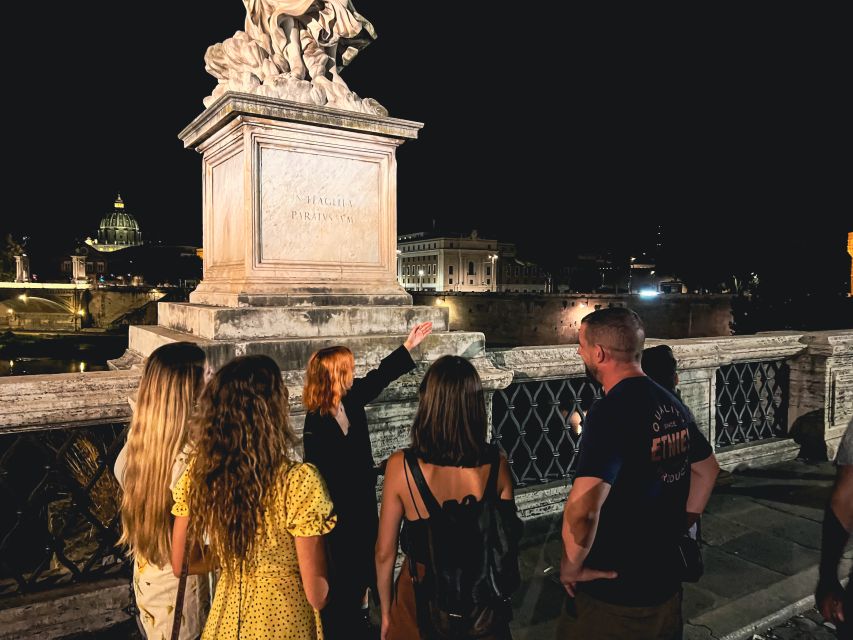
The walk ends at Castel Sant’Angelo, one of Rome’s most memorable night-time landmarks. Its heavy walls, river position, and connection to papal Rome make it a natural final setting for stories of imprisonment, death, and supernatural activity.
You do not need a ticket to the castle for this walking tour. The route finishes at the exterior, after about two hours. That is a practical ending because the area gives you options for continuing your evening, finding food, or walking toward other central sights.
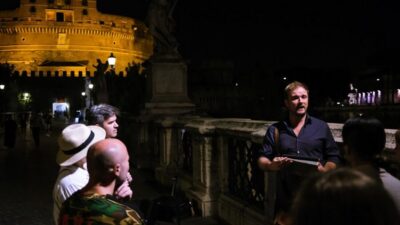
The bridge leading to Castel Sant’Angelo is especially effective after the earlier stories. The route includes the idea of a bridge once lined with corpses, which gives the approach a grim historical edge. Even if you are not convinced by ghost stories, the location makes the old tales easy to picture.
This final stop also gives you a good chance to ask questions. Guides praised for their interaction, including Domenica, Maham, Sara, and Antonio, tend to make the experience feel less like a speech and more like a shared walk through the city.
The guides and the group experience
The guide is the most important part of this tour. The material is strong, but a flat delivery would weaken it. The feedback repeatedly highlights guides who are friendly, funny, energetic, and easy to understand.
Yousef was praised for light humor and storytelling, while Antonio received strong marks for clear English and his ability to answer questions. Maham was noted for unusual facts, enthusiasm, and helpful Rome tips. Domenica was praised for being engaging and caring toward the group. Simon, Dinara, Sara, and Csenge were also credited with preparation and good storytelling.
Guide assignments can change, so you cannot book the tour expecting one particular person. What you can reasonably expect is a company working with guides who have different styles. Some may lean more toward history, some toward ghost stories, and some toward playful interaction.
The maximum group size is 20 people. That is small enough for a guide to maintain a conversation, though you may need to stay close when the streets are busy. A private group is available if you want more control over the pace or prefer a quieter experience.
Is $29 a good value?
At $29 per person, the tour offers good value if you want an organized evening walk with local storytelling. Two hours gives you enough time to cover a wide part of central Rome without committing an entire night or paying for an expensive private excursion.
You are paying for the guide, the route, and the interpretation of places you might otherwise pass without understanding. There are no added admissions listed, so the price stays simple. The value is strongest for a first visit, or for a repeat visit when you want a different angle on familiar streets.
It is less suitable if you want a rigorous academic lecture or a dedicated paranormal investigation. One strong comment described the experience as more historical than ghostly, though still bone-chilling. That is a fair way to set your expectations.
Book it for the stories, atmosphere, and unusual route. Do not book it expecting special effects, guaranteed proof of ghosts, or long visits inside every church.
Practical advice for your evening
Wear comfortable shoes. The walk lasts two hours and includes streets, bridges, squares, and several stops. You should also bring a camera, though listening will be more valuable than trying to photograph every location in low light.
Arrive at Campo de’ Fiori at least 10 minutes early. Look for the guide beneath Giordano Bruno’s statue and identify the yellow Carpe Diem Tours sign or flag. Since late arrivals are not refundable, give yourself extra time to reach the square.
The tour is in English. If clear spoken English matters to you, the guides praised for easy-to-understand delivery include Antonio, Yousef, Maham, and others, but the assigned guide can vary.
You can cancel for a full refund up to 24 hours before the start time. You can also reserve now and pay later, which helps if your Rome plans are still changing.
Who should book the Haunted City Night Walking Tour?
Book this tour if you want to see Rome after dark, enjoy unusual history, and prefer a guide with personality. It suits couples, friends, solo visitors, and families with older children who can handle stories about executions, murder, death, and human bones.
It is especially useful early in a Rome visit because the guides sometimes offer tips for other places to see and eat. It also works well as a final evening activity, when the city’s familiar monuments can take on a different mood.
Skip it if you dislike walking, want a pure ghost hunt, or prefer quiet sightseeing without a group. For everyone else, the combination of central sights, grim stories, humor, and a fair price makes this a smart addition to a Rome itinerary.
FAQ
How long does the Rome Haunted City Night Walking Tour last?
The tour lasts two hours.
How much does the tour cost?
The listed price is $29 per person.
Where does the tour begin?
It begins at Piazza Campo de’ Fiori, beneath the statue of Giordano Bruno.
Where does the tour finish?
The tour finishes at Castel Sant’Angelo.
What language is the tour offered in?
The live guided tour is offered in English.
What should I bring?
Bring comfortable shoes and a camera.
How large is the group?
The group can include up to 20 people. A private group option is also available.
More Evening Tours in Rome
- Ghosts and Crimes of Rome Night Walk
★ 5.0 · 61 reviews - Haunted Evening Horse and Carriage Tour of Charleston
★ 4.5 · 3,678 reviews - Edinburgh: Evening Underground Ghost Tour
★ 4.4 · 3,092 reviews - Prague: Ghosts and Legends of the Old Town Evening Tour
★ 4.5 · 3,091 reviews
Newly added around Rome
- Rome Secrets with Dark History and Tasty Bites Tour Experience★ 4.5 · 3 reviews
- Rome After Dark Mysteries Myths and Haunted History★ 5.0 · 14 reviews
- Ghost & Legends in Night Rome Walking Tour★ 5.0 · 36 reviews
- Rome: Private Night Ghost Walking Tour★ 5.0 · 38 reviews
- Haunted Rome: Eternal City Night Walking Tour★ 5.0 · 38 reviews
- Experience Rome in this Mysterious Ghost Tour★ 3.5 · 3 reviews
- Haunted Rome & True Crime: The Cenci Curse Game★ 4.5 · 27 reviews
- Rome’s Dark Side: Ghosts, Scandals and Crypts – Small Group Tour★ 5.0 · 28 reviews
Rome Ghost Tours, compared.
Paranormal Night Walking Tour & Secret Backstreets
Read our review →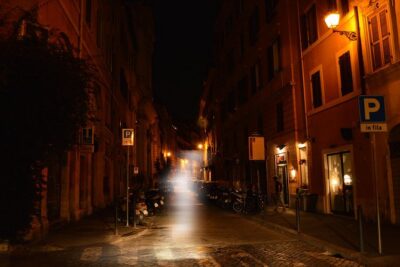

Small Group Rome’s Dark Side – Ghosts & Legends Tour
Read our review →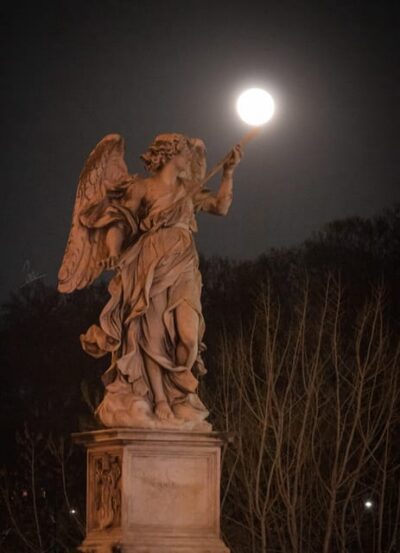
Ghosts, Legends & Mysteries of Rome Tip-Based Walking Tour
Read our review →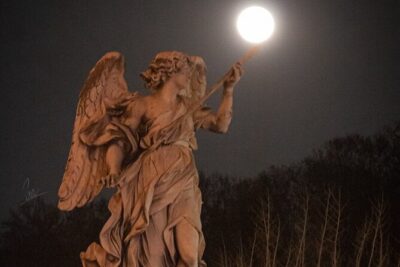
Capuchin Crypts & Ghostly Legends Small-Group Tour
Read our review →Browse the lists this tour appears in