REVIEW · LONDON GHOST TOURS
Interactive Jack the Ripper Night Walk: London’s Murder Mystery
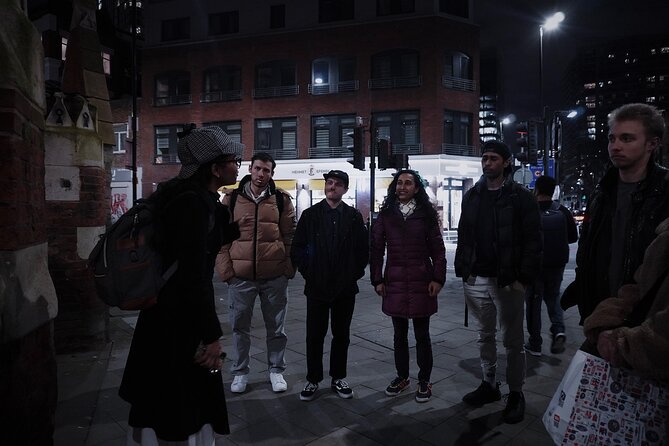
Dark streets tell old stories. I like this tour because it uses real East London streets, not a stage set, and because it connects the murders to poverty, crowded slums, pubs, churches, and narrow passages. I also like the guide-led mystery: you are not just shown crime scenes, you are asked to consider clues and decide who Jack the Ripper may have been.
The $22.99 price is fair for two and a half hours of guiding in central London, especially if you enjoy social history as much as crime. The main drawback is practical: the walk ends at Mitre Square, not back at the starting point, and one past participant found it hard to hear the guide at times.
Key points to know before booking
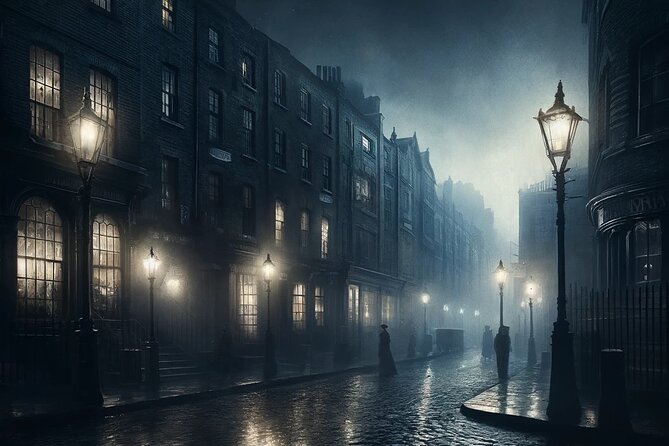
- Seven atmospheric East London stops connect Brick Lane, Spitalfields, Whitechapel, and Aldgate.
- The route finishes at Mitre Square, so you need to plan your return journey from there.
- Guides shape the experience, with Tyson, Sadie, Jess, and Lisa receiving especially warm praise for clear storytelling and personal attention.
- The focus includes women’s lives, poverty, danger, and survival, not only the identity of the killer.
- The group can reach 25 people, large enough for energy but potentially challenging for hearing in busy streets.
- Private-tour upgrades are available if you want more control over the pace and discussion.
What this Jack the Ripper walk is really about
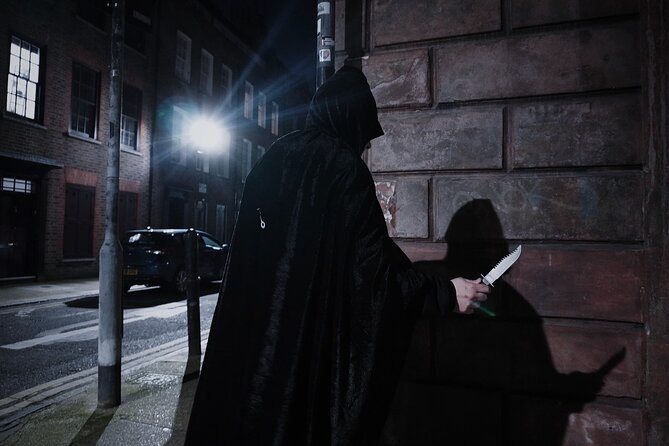
Jack the Ripper is the hook, but London social history gives this tour its weight. The walk takes you into Whitechapel and nearby Spitalfields, where crime, poverty, unstable housing, and desperation shaped daily life in the late 19th century.
That context matters. If the tour only listed murders and gruesome details, it would feel thin and exploitative. Instead, the route looks at the women involved, the places where they lived and worked, and the wider conditions that left many people exposed after dark.
You will spend about two and a half hours on foot. Each listed stop is planned for roughly 17 minutes, which gives the guide time to explain a location without turning every pause into a long lecture. I would expect the pace to feel steady rather than rushed, though you should be comfortable walking for the full session.
The central mystery remains unresolved. You will examine competing clues and theories, but you should not expect a tidy final answer. That uncertainty is part of the appeal, and the guide’s job is to keep the evidence interesting without pretending the case is solved.
More Dark History Tours in London
- Jack the Ripper: Night Murder Mystery Walking Tour in London
★ 5.0 · 79 reviews - Jack the Ripper Tour: Murder, Mystery, & the Women of Whitechapel
★ 5.0 · 40 reviews - Jack the Ripper: Solve the Crime Walking Tour (Kids Free!)
★ 4.5 · 36 reviews
Starting at St Mary’s Whitechapel Church
The meeting point is at the St Mary’s Whitechapel Church Memorial on an unnamed road in London E1 1FE. The tour begins in Whitechapel, a fitting place to set the scene before moving into the surrounding streets.
From the first minutes, you are likely to get a feel for the gap between modern London and the East End of the 1880s. The current city continues around you, but the subject matter points back to alleys, lodging houses, pubs, and streets shaped by hardship.
This is a walking tour, not a museum visit. Admission to the stops is free, and the value comes from the guide’s explanation. A strong guide can make an ordinary street meaningful by showing how it connects to people and events that are no longer visible.
The group size is capped at 25. That keeps the walk from becoming enormous, but 25 people is still enough to create a loose crowd on narrow streets. If you have trouble hearing, stay close to the guide and avoid drifting to the back. One participant specifically found the volume difficult at times, so this is useful advice, not a minor detail.
Brick Lane and the world behind the headlines
Brick Lane is now associated with street art and curry houses, but the tour presents its earlier identity as part of one of London’s most notorious slums. This contrast gives you a useful opening lesson: the fashionable or lively street you see today once carried a far harsher reputation.
Here, the guide explains how crime and poverty affected ordinary lives. That helps keep the Jack the Ripper story from becoming a string of sensational scenes. You begin to understand the pressures surrounding the case, including the lack of safety and support available to vulnerable women.
I like this stop because it offers social context before the route becomes more focused on individual murders. You are not simply told who died. You are shown the kind of place in which people struggled to survive.
Brick Lane can also be one of the more active parts of the route. Street life, restaurants, and passing crowds may compete with the guide’s voice. This is another reason to keep near the front and pay attention when the group moves.
Princelet Street and Annie Chapman’s story

Princelet Street gives the walk a different mood. Its cobbled surface and older appearance offer a clearer sense of 1880s East London than a busy modern thoroughfare can provide.
The stop connects the street to Jack the Ripper’s movements and to Annie Chapman. That personal focus matters. It puts a name and a life beside the crime, rather than reducing the victim to a date and a location.
The guide also uses the setting to explain how people lived in this part of London. You may find the quiet street more effective than a dramatic presentation because the surroundings leave room for you to picture the period yourself.
The drawback is that the connection between a surviving street and the past cannot be exact. London has changed, and the tour cannot recreate every building or condition from the 1880s. Think of Princelet Street as a prompt for historical imagination, supported by the guide’s account, not as a perfectly preserved crime scene.
More Dark History Tours in the UK
- Jack The Ripper Tour : Solve The Crime
★ 4.5 · 28 reviews - Dark History of the Tudors: Private Tour of Hampton Court Palace
★ 5.0 · 10 reviews - Jack the Ripper Walking Tour: Murder, Mystery, & the Women
★ 4.2 · 6 reviews - The murders of Jack the Ripper with a pub
★ 5.0 · 2 reviews
Puma Court and the danger of narrow alleys
Puma Court is presented as one of the eeriest alleys in Spitalfields. Here, the tone shifts toward vulnerability. The narrow passage helps you consider why dim, quiet corners could be so dangerous for people moving through the city alone.
This stop works best when the guide keeps the focus on the victims rather than piling on shock value. The setting itself does much of the work. You do not need elaborate effects when a confined passage and a serious account can make you think about how exposed someone might have been.
I would pay close attention here, since the group may bunch together in a narrow space. The walk is designed for a maximum of 25 people, and the smaller the passage, the more important it becomes to remain with the group without blocking others.
The experience is atmospheric, but it is not a ghost tour based on supernatural claims. The mood comes from the streets, the documented case, and the knowledge that these places were tied to real people and real violence.
The Ten Bells and the final hours
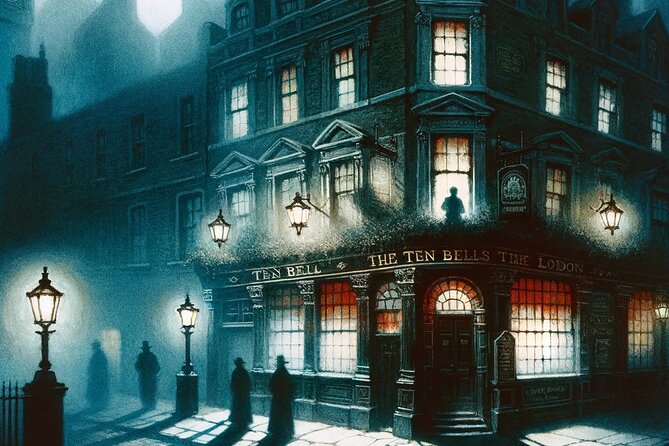
The Ten Bells is one of the route’s best-known locations. The historic pub is linked to several victims who were reportedly seen there before their deaths, and the group gathers outside to hear about their final hours.
You do not enter as part of the stated route, so the value is in the explanation and the location itself. The pub’s presence gives the story a strong physical anchor. It is easier to grasp the movement of people through the neighborhood when you can see the place connected to the account.
This stop also raises a useful question about evidence. Being seen at a pub does not solve a murder, and a guide should help you separate documented facts from later theories. The best parts of the tour appear to come from that balance, with plenty of detail but no false promise that every clue leads to a firm answer.
The Ten Bells may be busy, depending on the evening. Listen closely, and do not expect the quiet of a private historical site. You are standing in a living neighborhood, which can make the experience feel more real but can also create distractions.
Gunthorpe Street and Martha Tabram
Gunthorpe Street is tied to Martha Tabram, whose violent death is often discussed in connection with the Ripper case. She is not officially included among the canonical victims, yet many people consider her a possible early victim.
That uncertainty gives the guide a chance to explain how the case has been built and debated over time. You will see that the label Jack the Ripper victim is not always simple or agreed upon. Some deaths fit the pattern more closely than others, and historians continue to question the links.
I value this part because it avoids treating the case as a neat list. It shows how evidence can be incomplete and how later theories can influence public memory. You get a better sense of why the mystery has lasted so long.
This stop may appeal most to people who enjoy questions and competing explanations. If you want a clear villain, a solved case, and a final declaration, the unresolved material may frustrate you. The tour is stronger when you accept uncertainty as part of the subject.
Goulston Street and the disputed clue
Goulston Street brings the investigation to one of its most debated pieces of evidence. The guide discusses a bloodied fragment of apron found after the double murder and a chalk message that caused fierce argument among investigators and later historians.
This is where the mystery element becomes most direct. You are encouraged to examine what the clue might mean, how it was interpreted, and why it failed to settle the case. The detail gives the group something concrete to consider rather than relying only on atmosphere.
A good guide can make this stop feel like a group investigation. Tyson, in particular, has been praised for remembering people’s names, answering questions, and keeping everyone involved. That kind of personal attention can make a difference in a group of up to 25.
You should still keep your expectations realistic. The walk does not provide a newly discovered answer. It gives you background, arguments, and enough evidence to understand why the identity remains unknown.
St Botolph’s Aldgate and a different side of the story
St Botolph’s Aldgate adds a needed pause from the murder narrative. The church stood at the edge of Whitechapel and offered shelter to many women during the Victorian era.
This stop helps you see that the area was not only a place of danger. It also contained institutions and people trying to offer safety, aid, or refuge. That contrast gives the tour more depth and prevents the neighborhood from being reduced to a collection of dark alleys.
I especially like the attention to the women’s stories. Sadie has been praised for telling them in a spirited and empowering way, while Jess is noted for combining humor, patience, and clear explanations. Those qualities matter because the subject can become grim very quickly.
The church stop also reminds you that the social problems behind the case were much larger than one murderer. Poverty and insecurity did not begin or end with the Ripper killings. The wider setting is one of the strongest reasons to choose this walk over a simple crime-themed attraction.
Mitre Square and the route’s final scene
The tour ends at Mitre Square, where Catherine Eddowes was murdered. The description of the violence is among the darkest parts of the experience, and the guide recounts why the crime shocked London.
Mitre Square gives the walk a clear final point, both geographically and emotionally. You have moved from the broader streets of East London through specific locations and clues, ending at one of the case’s most notorious scenes.
The practical issue is important: you do not return to St Mary’s Whitechapel Church. You need to orient yourself from Mitre Square for the journey afterward. The ending is near the City of London, but the supplied information does not specify a transport arrangement, so plan your onward route before the walk begins.
This finish also means the tour works well as one part of an evening in London. You can arrange dinner or another activity after the walk, but give yourself time to get your bearings rather than assuming you will finish where you started.
What the $22.99 price gets you
At $22.99 per person, the tour offers a reasonably priced way to spend an evening in London. You are paying for a guided route, historical explanation, and local storytelling rather than entry to a paid attraction.
The value depends heavily on the guide. Tyson is praised for subject knowledge, humor, and remembering names. Sadie’s approach gives attention to the women’s experiences, while Jess is described as funny, patient, and clear. Lisa has also been helpful with practical questions and historical information.
That range of guide styles is worth noting. You may get a lively storyteller, a careful history-focused guide, or someone who puts more emphasis on participation. The strongest feedback points to guides who make the walk feel personal and answer questions rather than reciting a script.
Group discounts may reduce the cost for larger parties, and you can upgrade to a private tour for a more personal experience. The private option makes the most sense if your group wants to ask many questions, move at its own pace, or avoid the hearing issues that can occur in a larger group.
Who should book this experience
I would recommend the walk to you if you enjoy London history, unsolved crimes, evening walks, and real locations with a strong sense of place. It also suits people who want more than a list of murders, since the route addresses poverty, women’s lives, churches, pubs, and the city’s social conditions.
It may not suit you if you dislike grim subject matter or prefer a tour that returns to its starting point. The violence is part of the story, and the route ends elsewhere. You should also be ready for outdoor walking after dark and for occasional street noise.
The tour is offered in English. Confirmation arrives when you book, most people can take part, and the group limit is 25. You can cancel for a full refund up to 24 hours before the start time, but cancellations or changes inside that window are not refunded or accepted.
Should you book the Jack the Ripper night walk?
Book it if you want a thoughtful crime walk with real historical setting, especially at a modest price. The strongest reason to go is not the promise of discovering Jack the Ripper’s identity. It is the chance to connect the mystery to the people, streets, and social conditions of East London.
I would choose the private upgrade for a small group that wants a quieter, more flexible experience. For everyone else, the standard tour offers solid value, provided you stay close enough to hear the guide and plan your route home from Mitre Square.
FAQ
How long does the Jack the Ripper night walk last?
The walk lasts approximately two hours and 30 minutes.
Where does the tour begin?
It begins at the St Mary’s Whitechapel Church Memorial, on an unnamed road in London E1 1FE, United Kingdom.
Where does the tour end?
The final stop is Mitre Square, London EC3A 5DE, where Catherine Eddowes was murdered.
Does the tour return to its starting point?
No. The tour ends at Mitre Square, so you need to arrange your onward journey from there.
How much does the experience cost?
The listed price is $22.99 per person. Group discounts are available.
Is a private option available?
Yes. You can upgrade to a private tour for a more personal experience.
What is the cancellation policy?
You can cancel at least 24 hours before the start time for a full refund. Cancellations or changes made less than 24 hours before the experience are not accepted, and the amount paid is not refunded.
More Murder Mystery Games in London
- Jack the Ripper Escape Room Game for Private Group
★ 5.0 · 253 reviews - Escape Room: Escape Hunt Dubai – Jack The Ripper
★ 5.0 · 95 reviews - Witch House Escape Room in Las Vegas
★ 5.0 · 90 reviews - Master Of Illusions Magic & Paranormal Escape Room at Extreme Escape San Antonio
★ 5.0 · 74 reviews
More Jack the Ripper Tours in London
- London: The Original Jack the Ripper Walking Tour
★ 4.7 · 7,833 reviews - London Jack the Ripper Guided Tour with Ripper-Vision
★ 4.5 · 4,840 reviews - London: Jack the Ripper Small Group Tour
★ 4.7 · 3,159 reviews - London Jack The Ripper Guided Walking Tour
★ 5.0 · 3,131 reviews
Newly added around London
- Wicked Whitechapel: Where Now’s Jack The Ripper Audio Tour★ 5.0 · 2 reviews
- Ghosts, Gore & Other Ghasty Stories in the City of London★ 5.0 · 7 reviews
- Afternoon Jack the Ripper : Guided Tour★ 5.0 · 183 reviews
- Visit Jack the Ripper in French★ 5.0 · 33 reviews
- The Fading Light London Ghost Walk★ 5.0 · 35 reviews
- Self-Guided Audio Tour-Behind the shadow of evil: Jack the Ripper★ 4.0 · 2 reviews
- The Haunted Pubs of Old London: Small Group Tour★ 5.0 · 38 reviews
- The Ghosts of the secret alleyways of old London town★ 5.0 · 2 reviews
London Ghost Tours, compared.
London Jack the Ripper Guided Tour with Ripper-Vision
Read our review →
Ghost, Ghouls and Gallows Tour : Guided Tour with Boat Ride
Read our review →
Jack the Ripper Tour with Immersive Ripper Vision
Read our review →