REVIEW · LONDON GHOST TOURS
Private Jack the Ripper Walking Tour of Whitechapel and Brick Lane
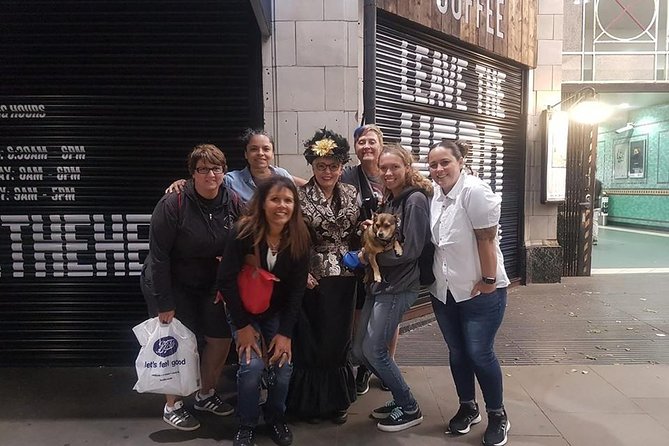
Some streets remember more than names. This private Whitechapel walk turns the Jack the Ripper case into a close look at Victorian East London, using real locations, old photographs, and careful discussion of fact versus folklore. I especially like the small group format, which gives you time to ask questions, and Jenny’s theatrical approach, including Victorian dress and years of local experience. The main drawback is that the subject is grim, and the walking route requires moderate fitness.
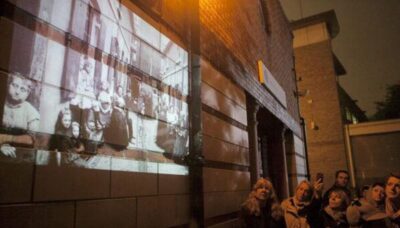
I also like the large, backlit tablet Jenny uses to show photographs of victims, suspects, buildings, and newspaper material. It makes vanished places easier to understand. Just remember that this is a serious crime story, not a light ghost walk, and some scenes may be unsuitable for younger children despite the suggested minimum age of 12.
Key details that shape the experience
- A private group of up to five: You receive the guide’s full attention rather than joining a large crowd.
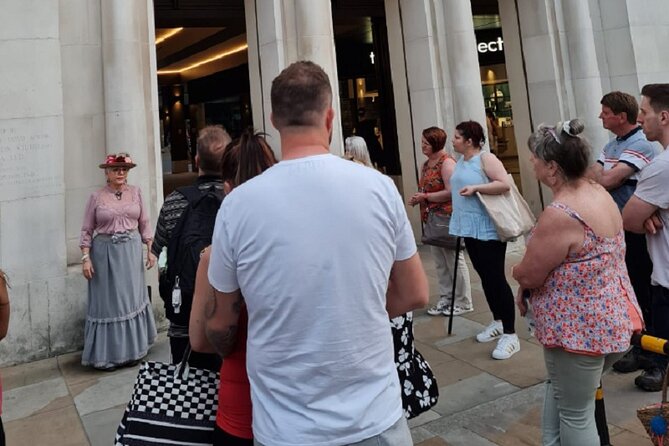
- Jenny’s Victorian presentation: Her costume and storytelling give the walk a strong sense of period without replacing the facts.
- A 14-inch backlit tablet: Historic photographs and documents help connect today’s streets with 1888.
- A route through Whitechapel and Brick Lane: You visit murder sites, old courts, pubs, markets, graveyards, and former workhouse districts.
- A 2-hour-30-minute evening walk: The tour runs Monday through Thursday from 3 p.m. to 9 p.m. during the listed operating period.
- A Liverpool Street finish: The walk ends near Liverpool Street Station, about five minutes from the final stop.
Why this private walk works better than a large group
Jack the Ripper tours are common in Whitechapel. The difference here is the private format. The basic price is $205.76 per group of up to five, with the tour information also listing a base price of £150 for five people and an additional £25 per extra person. Check the price shown when you book, since the listing gives both dollar and pound figures.
For a couple, the cost is higher per person than joining a public walk. For four or five people, the value improves sharply. You are paying for privacy, a slower pace, and the chance to ask about specific suspects, evidence, or local places without waiting for a group of strangers to catch up.
Jenny appears to be the main reason this format works. She has been leading these walks for decades and is described as a familiar presence in the neighborhood. Her approach combines enthusiasm with serious research. She does not simply point at a doorway and repeat a familiar legend. She uses the setting to explain what can be established, what remains disputed, and how later stories changed the case.
The tablet is another useful touch. A bright 14-inch screen lets you see period images clearly, even during an evening walk. That matters because many locations have changed beyond recognition. A photograph of an old courtway or yard can give you a much better sense of the cramped spaces than a verbal description alone.
More Ghost Walking Tours in London
- London: The Original Jack the Ripper Walking Tour
★ 4.7 · 7,833 reviews - London Jack The Ripper Guided Walking Tour
★ 5.0 · 3,131 reviews - London: Jack the Ripper Evening Walking Tour
★ 4.9 · 1,449 reviews
Starting at St Botolph’s Aldgate and Aldgate Square
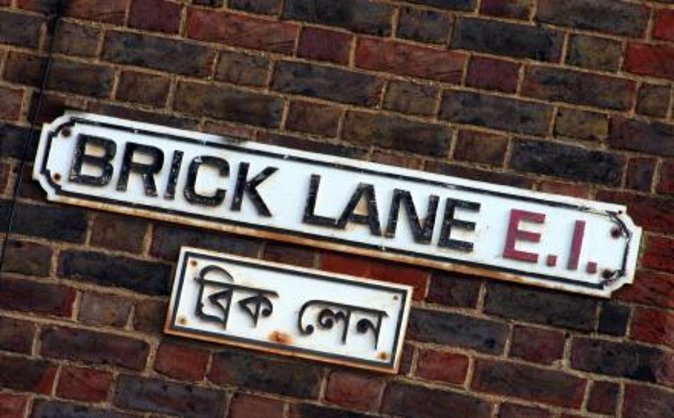
The walk begins on Aldgate High Street near St Botolph’s Aldgate. This is a practical meeting point near public transportation, and the opening section introduces Whitechapel as it existed in 1888.
The first stop is short, only about five minutes, but it sets the frame for the whole tour. You are not just following a killer through London. You are also looking at a district shaped by poverty, overcrowding, insecure work, workhouses, and common lodging houses.
At Aldgate Square, Jenny explains the conditions endured by local residents. This context matters. The victims were not mysterious figures who appeared only in sensational newspaper accounts. They were women living with unstable housing and limited choices, and their lives were often reduced to stereotypes after their deaths.
That social background gives the tour more weight. You get a better sense of why the police struggled, why rumors spread, and why the case became such fertile ground for newspaper drama.
Mitre Square and the night of the double event
The route then reaches Mitre Square in the City of London. This is one of the most important locations because Elizabeth Stride and Catherine Eddowes were murdered on September 30, 1888, during what became known as the night of the double event.
Expect around 20 minutes here. That makes it one of the longer stops, and rightly so. The guide can explain the sequence of events, the location’s importance, and the questions surrounding the two killings.
The boundary between the City of London and the Metropolitan Police area adds a useful layer. Petticoat Lane Market, now called Middlesex Street, marks that border. Different police authorities operated on either side, and jurisdiction mattered during the investigation.
This is also where the distinction between evidence and legend becomes important. Jenny’s job is not simply to announce a favorite theory. She presents the known details and the competing interpretations, allowing you to understand why the case remains unsettled.
Petticoat Lane, Goulston Street, and the missing apron clue
At Petticoat Lane Market, you stop briefly to consider the boundary between two parts of London. The market name is familiar, but the tour uses it as a geographic marker within the case.
The next point is the doorway at 118 to 119 Goulston Street. A piece of Catherine Eddowes’s apron was found there, along with graffiti on the doorpost. This small detail became one of the most discussed clues in the investigation.
The stop is valuable because it shows how a physical object could carry enormous weight in a case with limited forensic evidence. It also raises the question of how much meaning should be placed on the graffiti and whether it was connected to the killer at all.
Because the route uses a tablet, you can compare the present-day doorway with older images and documents. You should not expect every location to look as it did in 1888. The value is in understanding the position of the site and the changes around it.
More Ghost Walking Tours in the UK
- London: Ghost Walk and River Thames Boat Ride
★ 4.5 · 1,251 reviews - London Jack The Ripper Small-Group Walking Tour
★ 5.0 · 1,013 reviews - Ghastly Ghost Walking Tour in London
★ 5.0 · 878 reviews - London: Ghastly Ghosts 2-Hour Walking Tour
★ 4.9 · 794 reviews
Wentworth Street and Gunthorpe Street
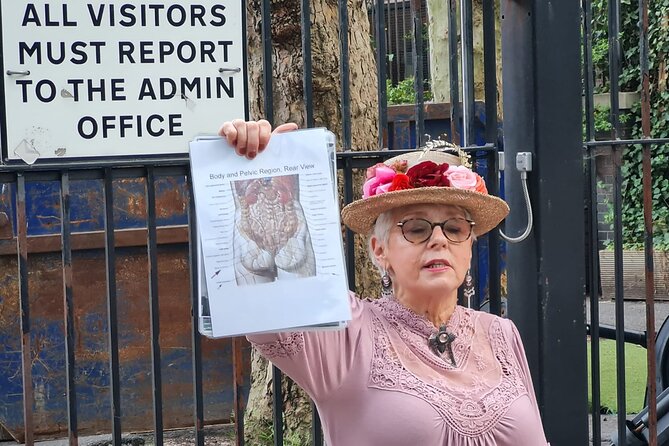
The tour continues to Wentworth Street, where you hear about Martha Tabram. She is now regarded by some as Jack the Ripper’s first victim, though that identification remains part of the wider debate.
This section is useful for understanding how the list of possible victims developed. The case is not a neat set of five unquestioned murders. Researchers have long debated which crimes belong in the series, and Tabram’s place in that discussion shows how uncertain the boundaries can be.
At nearby Gunthorpe Street, you view the street where Tabram was murdered in George Yard Buildings. The stop itself is brief, about two minutes, but it connects the story to a specific urban setting rather than leaving it as an abstract newspaper report.
You will walk through working streets rather than a preserved crime museum. That can make the experience feel more grounded, but it also means you should expect modern buildings, traffic, and ordinary neighborhood activity around the sites.
Brick Lane and the Frying Pan Pub
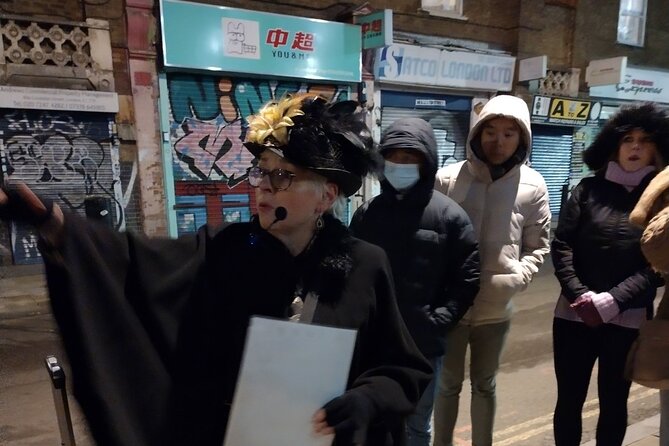
Brick Lane brings a change of pace. The route stops opposite the Frying Pan Pub, where Mary Ann Nichols, known as Polly, had her last drink.
The stop lasts about ten minutes. Here, Jenny can place Nichols within the wider story of the neighborhood, rather than treating her only as a name in a murder timeline. The pub connection gives you a tangible link to the hours before the crime.
Brick Lane is also one of East London’s best-known streets, so this part may feel less secluded than the narrow courts and alleys farther along. That contrast is useful. You see how the same district can be both an active modern destination and a setting for events from the late nineteenth century.
If you are hoping for a completely dark and silent atmosphere, this may not provide it. The tour is strongest when you focus on the layers of the area rather than expecting a theatrical set.
Hanbury Street and the murder of Annie Chapman

At Hanbury Street, the group stops at the site of the backyard at 29 Hanbury Street, where Annie Chapman was murdered. This is one of the longer stops, at about ten minutes.
The tablet becomes particularly useful here. Old photographs and site images can help you picture the layout of the yard and the buildings that once surrounded it. Without visual material, it can be difficult to imagine how close and confined these spaces were.
Jenny’s style appears to suit this sort of location. She is described as friendly, funny, and very detailed, but she also treats the material seriously. Her Victorian clothing adds atmosphere, while her explanations keep the story tied to documented places and people.
You should expect disturbing subject matter. The tour discusses murders and shows photographs connected with the case. The product information suggests an age of 12 and above, but parents should decide carefully based on a child’s comfort with crime and historical images.
Puma Court and the Dear Boss letter
Puma Court is used to discuss the Dear Boss letter sent to the Central News Office. This stop lasts around ten minutes and shifts the focus from murder sites to the growth of the Jack the Ripper legend.
The letter helped shape the public image of the killer, but its authorship has long been questioned. A good guide needs to explain both its importance and its uncertainty. That is one of the strongest reasons to choose a private walk: you can ask how the letter fits into the case instead of accepting it as simple proof.
The old courtway also reinforces a central idea of the tour. Whitechapel was full of passages, yards, lodging houses, pubs, and small streets where news, rumors, and fear could spread quickly.
The Ten Bells and Christchurch graveyard
At The Ten Bells, you stop opposite the pub associated with Mary Kelly. The group also looks toward Christchurch graveyard, where homeless prostitutes gathered during the day.
This part of the route adds a social dimension to the usual killer-focused narrative. Pubs, churches, lodging houses, and graveyards were part of daily life for people living with poverty and unstable shelter. The places were not simply backdrops for crime.
The stop lasts about eight minutes. It is long enough to explain the connections without turning the walk into a general pub crawl. No food or drink is provided, so you should eat beforehand or plan refreshments after the tour.
The Ten Bells is still a functioning pub, which may make the site feel more immediate. At the same time, modern business and evening activity can soften the eerie mood. I see that as a fair trade. You are seeing a real neighborhood, not a recreated Victorian stage.
The From Hell letter at the London Fruit and Wool Exchange
The route then reaches the London Fruit and Wool Exchange. In the passage leading to its central courtyard, Jenny discusses the From Hell letter sent to George Lusk of the Whitechapel Vigilance Society.
This is another important document in the story, and the tour’s use of images allows you to examine the letter and its context. The document is famous, but fame does not make every detail reliable. Jenny’s fact-versus-myth approach is especially useful here.
The exchange also shows how much the physical district has changed. The modern setting may not match your mental picture of Victorian Whitechapel, but the guide helps locate the former streets and buildings within today’s city.
Mary Kelly, Millers Court, and the final stop
The final major stop is the courtyard where Millers Court on Dorset Street once stood. This is linked to the murder of Mary Kelly, often identified as the last victim of Jack the Ripper.
You spend about 20 minutes here, making it one of the longest stops on the route. Jenny discusses Kelly’s murder and several men suspected over the years. This gives the tour a natural ending because it brings together the victims, the evidence, the letters, and the theories.
The precise location no longer appears as it did in 1888, so the tablet is especially helpful. It lets you see photographs and references that explain what once occupied the courtyard.
The walk ends here, about five minutes from Liverpool Street Station. That is convenient if you are continuing across London or returning to your accommodation by public transportation.
Timing, walking effort, and practical value
The tour lasts approximately two and a half hours. With at least twelve stops and several longer explanations, you should wear comfortable shoes and expect to remain on your feet for much of the evening.
The route is suitable for people with moderate physical fitness. The information says service animals are allowed, and the tour is offered in English. A mobile ticket is provided, so you do not need to print anything.
The listed operating period runs from February 27, 2026, through March 18, 2027, with tours Monday through Thursday between 3 p.m. and 9 p.m. Confirm the available start time when booking.
Free cancellation is available if you cancel at least 24 hours before the start time. Cancellations or changes made inside that window are not refunded or accepted.
Who should book this Whitechapel walk?
I would choose this experience if you want a focused, personal tour rather than a broad introduction to London. It suits readers who enjoy old photographs, disputed evidence, local streets, and the way social conditions shape a crime story.
It is also a good fit for a small family group with older children, a couple sharing the cost with friends, or anyone who already knows the basic Jack the Ripper story and wants more detail. Jenny’s experience, costume, and use of visual material add real value.
I would think twice if you dislike crime tourism, graphic subject matter, or walking through busy modern streets while hearing about violent events. The tour does not provide food or drink, and the private price may feel high for one or two people.
Should you book it?
Book it if you want personal attention, strong local context, and a guide who treats the evidence seriously. The private format is the key advantage, especially for groups of four or five, and Jenny’s long experience gives the walk a confident human presence.
Skip it if you want a cheerful sightseeing tour or a preserved Victorian setting. Whitechapel has changed, and the subject is unsettling. For the right audience, though, this is a thoughtful way to examine one of London’s most notorious cases while seeing the real streets where the story unfolded.
FAQ
How long does the Jack the Ripper walking tour last?
The tour lasts approximately 2 hours and 30 minutes.
Where does the tour start?
It starts on Aldgate High Street, London EC3N 1AH, near St Botolph’s Aldgate.
Where does the tour finish?
It ends at Bell Lane in London E1, near the London Fruit and Wool Exchange. The final stop is about a five-minute walk from Liverpool Street Station.
How many people can join the private tour?
The basic private tour price covers up to five people. The tour information lists an additional charge of £25 per extra person.
What language is the tour offered in?
The tour is offered in English.
Is food or drink included?
No. Bottled water, food, and drink are not included.
What age is the tour suitable for?
The suggested minimum age is 12 years and older. The subject includes murder, victims, crime evidence, and historical photographs.
Can I cancel the tour for a refund?
Yes. You can receive a full refund if you cancel at least 24 hours before the scheduled start time. Cancellations or changes made less than 24 hours before the start are not accepted.
More Private Ghost Tours in the UK
- Dark History of the Tudors: Private Tour of Hampton Court Palace
★ 5.0 · 10 reviews - Jack the Ripper London Private Taxi Tour
★ 5.0 · 10 reviews - London Private Jack The Ripper Tour
★ 5.0 · 9 reviews - A Private VIP Jack the Ripper Black Cab Tour
★ 5.0 · 5 reviews
More Private Ghost Tours in London
- The Ultimate Jack the Ripper Tour (Private Group Booking)
★ 5.0 · 199 reviews - Private Tour of Haunted London in a Black Cab
★ 5.0 · 21 reviews - Jack the Ripper Private Day Time Walking Tour
★ 5.0 · 16 reviews - Private Ghosts and Gore Walking Tour of London
★ 5.0 · 13 reviews
Newly added around London
- Wicked Whitechapel: Where Now’s Jack The Ripper Audio Tour★ 5.0 · 2 reviews
- Ghosts, Gore & Other Ghasty Stories in the City of London★ 5.0 · 7 reviews
- Afternoon Jack the Ripper : Guided Tour★ 5.0 · 183 reviews
- Visit Jack the Ripper in French★ 5.0 · 33 reviews
- The Fading Light London Ghost Walk★ 5.0 · 35 reviews
- Self-Guided Audio Tour-Behind the shadow of evil: Jack the Ripper★ 4.0 · 2 reviews
- The Haunted Pubs of Old London: Small Group Tour★ 5.0 · 38 reviews
- Jack the Ripper – What About the Women?★ 5.0 · 39 reviews
London Ghost Tours, compared.
London Jack the Ripper Guided Tour with Ripper-Vision
Read our review →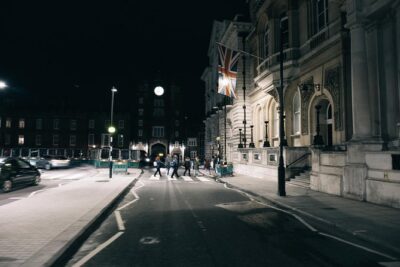
Ghost, Ghouls and Gallows Tour : Guided Tour with Boat Ride
Read our review →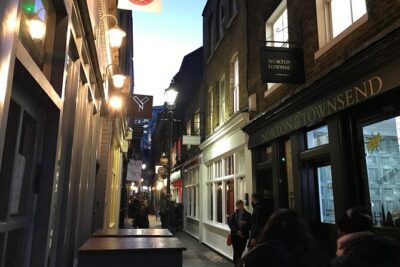
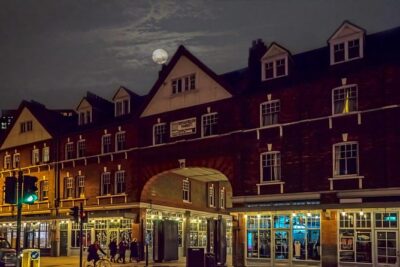
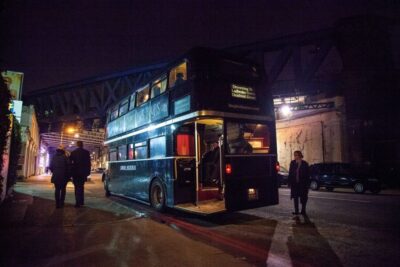
Jack the Ripper Tour with Immersive Ripper Vision
Read our review →