
REVIEW · ROME GHOST TOURS
Rome: Private Night Ghost Walking Tour
Rome’s darkest stories come alive after sunset. This two-hour walk links famous squares, quiet lanes, old churches, and the Tiber River while guides such as Diletta, Sarah, Csenge, Maham, and Dina turn grim episodes into lively storytelling. I like the 8:30 p.m. start, which avoids much of the daytime heat, and I like that the route shows you corners of central Rome you could easily pass without noticing.
The strongest part is the blend of history, crime, legend, and local detail. The main drawback is the price, listed at $179.74 per person, which is a serious expense for a walking tour with no admission tickets included. The walk also covers 11 stops in about two hours, so some stories will be brief.
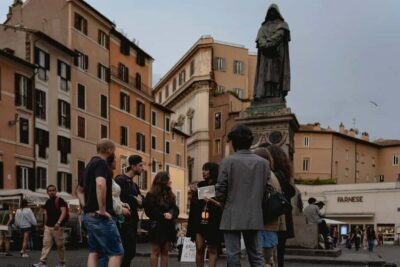
- Campo de’ Fiori begins the evening with executions, not just aperitivo.
- The route mixes famous places with quieter streets and small religious sites.
- Ponte Sisto and Castel Sant’Angelo provide the most dramatic settings.
- Guides are praised for lively storytelling, especially Diletta, Sarah, Csenge, Maham, and Dina.
- The 20-person maximum keeps the group from becoming enormous, but this is not a one-on-one tour.
- Free cancellation is available up to 24 hours before the start time.
Rome After Dark: What This Tour Is Really About
This is not a haunted-house attraction with actors jumping from behind corners. It is a guided walk through Rome’s darker past, using real places as the setting for tales of executions, suspicious deaths, prisons, crime, scandal, and religious reminders of mortality.
That distinction matters. You should book this experience if you enjoy hearing how a city’s streets were shaped by fear, punishment, power, and belief. If you want special effects, ghost costumes, or a strong supernatural element, this may feel more like a macabre history walk than a traditional ghost tour.
The route starts at Campo de’ Fiori at 8:30 p.m. and finishes near Castel Sant’Angelo. You spend roughly 10 minutes at each listed stop, with walking time between them. Since every stop is outdoors or viewed from the street, comfortable shoes matter more than formal clothing.
The tour is offered in English. It is suitable for most people, service animals are allowed, and the route is near public transportation. The stated maximum is 20 people. That is small enough for a guide to hold a conversation with the group, though it is still large enough that you may need to stay close to hear every story.
Campo de’ Fiori: A Grim Start in a Lively Square
Campo de’ Fiori is now known for restaurants, bars, and evening activity. The tour asks you to picture a very different square, one associated with public executions.
That contrast gives the opening real force. You are not beginning in an isolated ruin or a dark alley. You are standing in one of Rome’s social gathering places, then learning that the same space once served a far more severe purpose.
You get about 10 minutes here, so do not expect a long lecture on every period of the piazza’s past. Instead, this stop sets the mood and explains why Rome’s attractive public spaces can carry unpleasant memories beneath their cheerful modern use.
It is also a convenient meeting point in central Rome. Arrive with enough time to locate the guide and group, since the square can be active in the evening.
More Ghost Walking Tours in Italy
- Rome: Paranormal Night Walking Tour & Secret Backstreets
★ 4.9 · 1,921 reviews - Rome: Haunted City Night Walking Tour
★ 4.9 · 616 reviews - Haunted Rome Ghost Night Walking Tour
★ 5.0 · 495 reviews
Piazza Farnese: Beauty, Parties, and Scandal
The next stop, Piazza Farnese, changes the tone. This handsome square was connected with lavish parties and the city’s elite, but the stories here focus on the less polished side of wealth.
The appeal is the contrast between grand surroundings and private wrongdoing. Rome often makes this kind of storytelling easy: impressive buildings provide the backdrop, while the guide fills in the scandals that are not obvious from the pavement.
Your guide’s delivery matters here. Several guides have been praised for making the walk entertaining as well as informative. Sarah was singled out for sharing interesting and spicy stories, while Maham was praised for enthusiasm and a strong command of the material. Those comments suggest that the guide is not simply reciting dates. Expect a performance built around people, secrets, and sharp turns in the story.
Via del Mascherone and Vicolo dei Venti: Small Madonnas, Big Fears
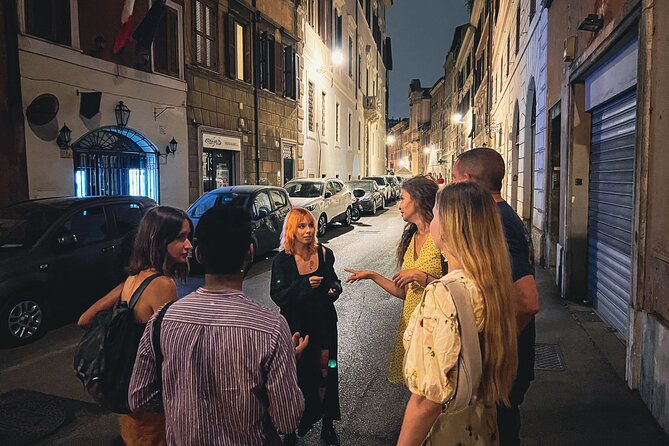
The route then moves along Via del Mascherone and Vicolo dei Venti. You will see several madonelles, or little Madonna images, placed along the streets.
Their former role is especially interesting. These religious images were associated with stopping crime, which gives you a glimpse into how faith and public safety once overlapped. A statue on a street corner could serve as a warning, a source of protection, or a reminder that wrongdoing was being watched.
This is the type of stop that makes the walk worthwhile even if you are not strongly interested in ghosts. You are looking at small details that can be easy to miss, then learning why they mattered.
The limitation is time. With only about 10 minutes at the stop, you will probably hear the central story rather than receive an extended architectural explanation. Stay near the guide and keep an eye on the street as the group moves between locations.
Ponte Sisto: Accidents, Theft, and Suspicious Deaths
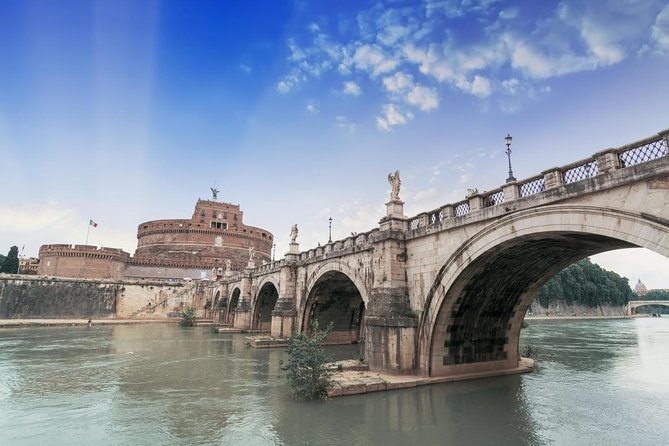
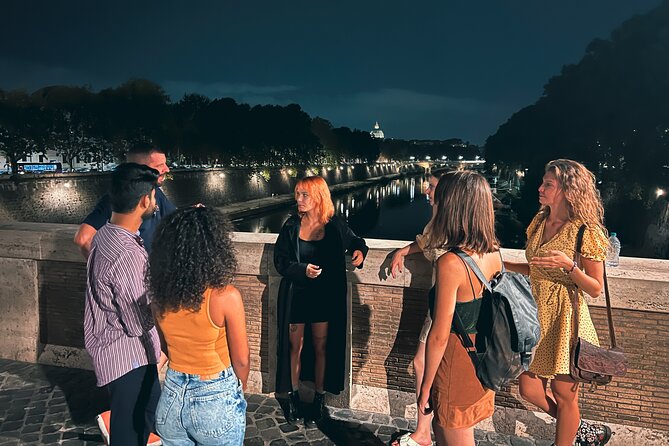
Ponte Sisto is one of the route’s most atmospheric locations. The bridge is identified as Rome’s oldest, and its past includes tragic accidents, power struggles, theft, and suspicious deaths.
Bridges are natural places for this sort of story. They connect districts, control movement, and create a dramatic setting above the water. At night, the river and old stone surroundings give the guide a strong stage without needing any theatrical tricks.
This is also a useful point to notice the route’s balance. The tour is not limited to ghost legends. It uses crime, politics, accidents, and social history to explain why a place acquired a sinister reputation.
You may find the bridge among the more memorable photo stops, though the tour is built around listening rather than stopping for a long photography session. If you want pictures, take them quickly and avoid falling behind the group.
More Ghost Walking Tours in Rome
- Ghosts, Legends & Mysteries of Rome Tip-Based Walking Tour
★ 4.7 · 284 reviews - Ghosts Legends and Mysteries of Rome Walking Tour
★ 5.0 · 149 reviews - Haunted Rome: Eternal City Night Walking Tour
★ 5.0 · 38 reviews - Ghost & Legends in Night Rome Walking Tour
★ 5.0 · 36 reviews
Fontana del Mascherone: A Fountain With a Warning
The Fontana del Mascherone brings the tour to a single, unusual detail: drinking from Rome’s fountains is illegal, but drinking from this one is deadly.
That story gives the walk a touch of dark humor. Rome is famous for its public water fountains, so the warning feels like a twist on something familiar. It also shows how the guide uses ordinary city features as entry points into stranger stories.
This is a short stop, and the fountain itself is not presented as a major attraction requiring a long visit. Its value comes from the tale attached to it. Listen closely, since the tour moves quickly and each location receives roughly 10 minutes.
Santa Maria dell’Orazione e Morte: Death in Plain Sight
The Church of Santa Maria dell’Orazione e Morte is one of the most macabre points on the route. This 17th-century church is decorated with human remains and serves as a direct reminder that death was once displayed openly in religious spaces.
For some people, this will be the tour’s highlight. It offers a more serious look at mortality than a simple ghost story. The setting connects religious practice, mourning, and the physical presence of the dead.
You should be comfortable with disturbing subject matter before booking. The tour includes executions, violent deaths, prisons, and human remains. It is not described as unsuitable for children, but families should decide based on the child’s age and tolerance for grim stories.
The itinerary identifies the church as a stop, but it does not promise an interior visit or admission. Treat it as a place where you hear the story and view what is available during the walk, rather than assuming you will enter.
Via di Monserrato: A Prison Behind an Ordinary Façade
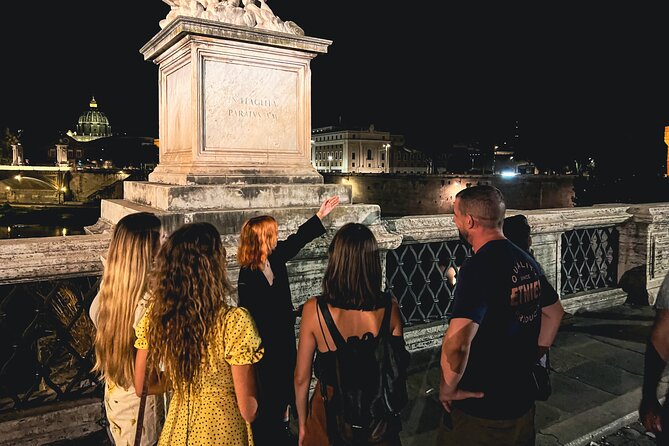
Via di Monserrato offers one of the route’s more effective ideas: a normal-looking apartment block connected to one of Italy’s worst prisons.
This kind of location is easy to appreciate because it asks you to look twice. Rome’s old streets are full of buildings that appear ordinary until you learn what happened there. The haunted reputation here comes from the prison’s past rather than from a ghost story alone.
The stop also gives the guide a chance to explain how urban spaces change. A building can lose its original function, but the memory of what happened there can remain attached to the address.
Santa Maria in Monserrato degli Spagnoli: A Church With Scandal
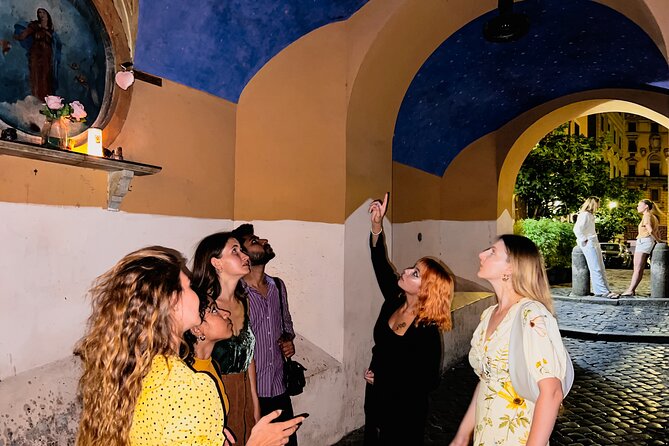
The Spanish church of Santa Maria in Monserrato degli Spagnoli supplies the route’s scandalous chapter. The story is described as worthy of a telenovela, which tells you to expect personal conflict and dramatic behavior rather than a dry account of church architecture.
That variety helps the two-hour format. One stop concerns public punishment, another crime, another religion, and this one focuses on scandal. You get a changing series of stories instead of hearing the same kind of ghost tale 11 times.
As with the other churches, no entrance is guaranteed by the information provided. The experience is primarily a nighttime walk through Rome, not a church-entry tour.
Via Giulia: When Beauty Products Became Dangerous
Via Giulia brings an unusual subject into the route: cosmetics that could kill.
This is a clever reminder that the dangers of earlier Rome were not limited to prisons and execution grounds. Everyday objects and beauty practices could carry serious risks. The former beauty shop gives the guide a compact story with a clear hook, and it adds a different kind of menace to the evening.
You may especially enjoy this stop if you like social history. It moves beyond famous rulers and battles to show how ordinary habits could be tied to danger, vanity, and deception.
Via dell’Arco dei Banchi: The Executioner’s Childhood Home
At Via dell’Arco dei Banchi, the setting appears to be an ordinary house. Its significance comes from the person who once lived there as a child, Rome’s most infamous executioner.
This stop works because the guide turns a familiar residential façade into a biography. You are not merely hearing about executions in the abstract. You are connecting the city’s system of punishment with a specific person and address.
It is also a reminder to keep expectations realistic. The attraction is the story, not a preserved museum interior. You will spend a short period hearing about the location before continuing toward the river.
Castel Sant’Angelo: A Strong Finish Beside the Tiber
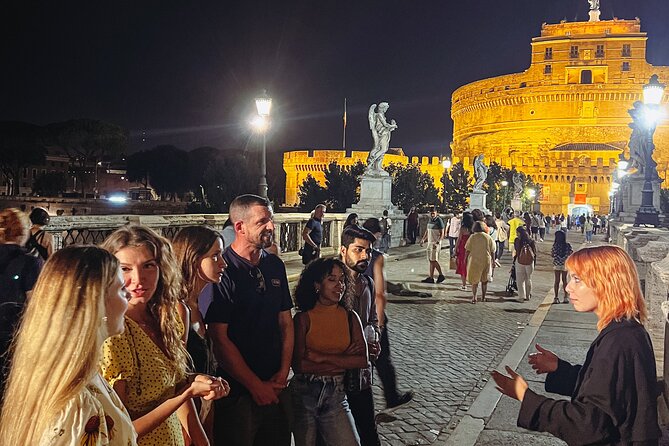
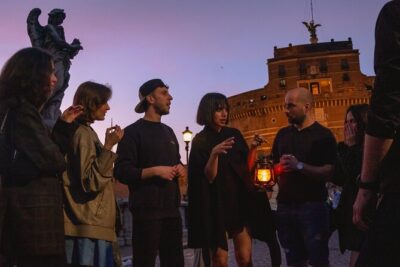
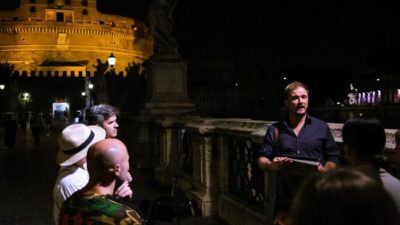
The walk ends near Castel Sant’Angelo, where the bridge once served as a place to display the bodies of executed people as a warning to sinners. Today, statues of angels surround the bridge, creating a striking contrast between beauty and brutality.
The Cenci family story provides the final major chapter, ending the route with a bloody tale tied to one of Rome’s most recognizable landmarks. This is a fitting finish because the setting is visually strong and the subject matter brings together execution, public warning, family conflict, and death.
The ending also gives you flexibility. You finish by Castel Sant’Angelo, so you can continue your evening from there rather than returning to the starting point. The tour does not include a stated return transfer, and the finish is different from the meeting point, so plan your next move before you set out.
Guide Style and the Value of the Evening Format
The strongest praise centers on the guides. Diletta is repeatedly described as engaging, captivating, and excellent with families. Sarah was praised for her storytelling and knowledge, while Csenge received strong marks for making Rome’s murderous past enjoyable to hear. Maham and Dina were also praised for enthusiasm and a polished presentation.
That matters because this route depends almost entirely on narration. You are not paying for entrance tickets or a staged show. You are paying for someone to connect 11 locations into a coherent evening and make you care about what happened there.
Starting at 8:30 p.m. is practical in Rome’s warmer months. You avoid the hottest part of the day and see the streets in a different mood. The tradeoff is that some historic sites may be harder to inspect closely in low light, and you should be prepared to finish later in the evening.
Is $179.74 Per Person a Fair Price?
At $179.74 per person, this is expensive for a two-hour walk. All listed stops have free admission, and the core value comes from the guide, the route, and the storytelling.
The price makes more sense for a group using a discount, especially if you value a focused private-style experience and want a guide to handle the route and stories. The published details also allow up to 20 people, so do not assume the word private means a personal tour for only you and your companions. Confirm the group arrangement when booking.
For a budget-conscious visitor, a lower-cost group walk may offer better value. For someone who wants a themed evening, prefers English guiding, and enjoys crime stories and unusual local details, the price may be justified if the guide is as strong as Diletta, Sarah, Csenge, Maham, or Dina.
The booking pattern also matters. This experience is booked about 30 days ahead on average, so it is not something I would leave until the last minute during a busy Rome trip.
Who Should Book This Rome Ghost Walk?
I would recommend it to:
- Adults and older children who enjoy spooky subjects without needing theatrical scares
- First-time Rome visitors who want famous sites explained through a different theme
- Repeat visitors looking for lesser-known stories in central Rome
- Families and friends who enjoy walking and sharing a memorable evening
- Anyone who values a lively guide more than museum admission
I would think twice if you dislike stories about executions, murder, prisons, suspicious deaths, or human remains. I would also compare prices carefully if your main goal is sightseeing rather than storytelling.
The walk is not described as difficult, but it covers multiple streets and bridges over two hours. Wear comfortable shoes, arrive ready for the 8:30 p.m. start, and stay close to the guide in crowded areas.
Should You Book It?
Book this tour if you want Rome’s famous streets explained through scandal, punishment, crime, and legend. The route is strongest when it turns ordinary places into story settings, especially Campo de’ Fiori, Ponte Sisto, Santa Maria dell’Orazione e Morte, and Castel Sant’Angelo.
Skip it if the $179.74 price feels too high for a walking experience with no stated admissions included, or if you prefer bright daytime sightseeing and conventional art or architecture tours.
For the right audience, this is a fun and often unsettling way to see Rome. Just think of it as a guided dark-history walk with ghostly flavor, not a supernatural show.
FAQ
How long is the Rome Private Night Ghost Walking Tour?
The tour lasts approximately two hours.
What time does the tour start?
The tour starts at 8:30 p.m.
Where does the tour begin?
It begins at Piazza Campo de’ Fiori, P.za Campo de’ Fiori, 00186 Rome, Italy.
Where does the tour end?
It finishes by Castel Sant’Angelo at Lungotevere Castello 50, 00193 Rome, Italy.
How much does the tour cost?
The listed price is $179.74 per person.
Is the tour offered in English?
Yes. The experience is offered in English.
How many people can join the tour?
The maximum group size is 20 people.
Are group discounts available?
Yes. Group discounts are listed as a feature of the experience.
Is cancellation free?
Yes, you can cancel for a full refund up to 24 hours before the experience starts. Cancellations or changes made less than 24 hours before the start time are not accepted for a refund.
Are service animals allowed?
Yes, service animals are allowed.
More Evening Tours in Rome
- Ghosts and Crimes of Rome Night Walk
★ 5.0 · 61 reviews - Haunted Evening Horse and Carriage Tour of Charleston
★ 4.5 · 3,678 reviews - Edinburgh: Evening Underground Ghost Tour
★ 4.4 · 3,092 reviews - Prague: Ghosts and Legends of the Old Town Evening Tour
★ 4.5 · 3,091 reviews
More Private Ghost Tours in Rome
- Lisbon: Private Dark History Walking Tour with Drinks
★ 4.8 · 387 reviews - Jack the Ripper Escape Room Game for Private Group
★ 5.0 · 253 reviews - The Ultimate Jack the Ripper Tour (Private Group Booking)
★ 5.0 · 199 reviews - Ghosts of Greenwich Village: 2-Hour Private Walking Tour
★ 5.0 · 178 reviews
Newly added around Rome
- Rome Secrets with Dark History and Tasty Bites Tour Experience★ 4.5 · 3 reviews
- Rome After Dark Mysteries Myths and Haunted History★ 5.0 · 14 reviews
- Ghost & Legends in Night Rome Walking Tour★ 5.0 · 36 reviews
- Haunted Rome: Eternal City Night Walking Tour★ 5.0 · 38 reviews
- Experience Rome in this Mysterious Ghost Tour★ 3.5 · 3 reviews
- Haunted Rome & True Crime: The Cenci Curse Game★ 4.5 · 27 reviews
- Rome’s Dark Side: Ghosts, Scandals and Crypts – Small Group Tour★ 5.0 · 28 reviews
- Ghosts and Crimes of Rome Night Walk★ 5.0 · 61 reviews
Rome Ghost Tours, compared.
Paranormal Night Walking Tour & Secret Backstreets
Read our review →

Small Group Rome’s Dark Side – Ghosts & Legends Tour
Read our review →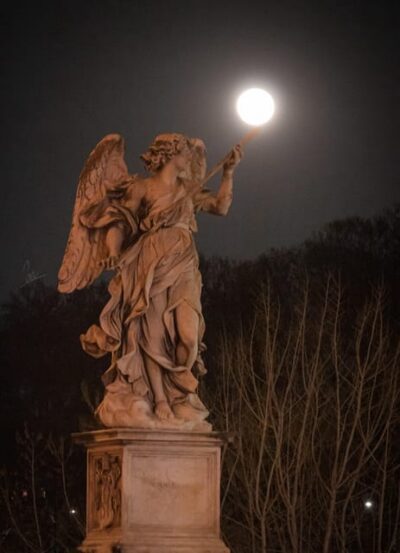
Ghosts, Legends & Mysteries of Rome Tip-Based Walking Tour
Read our review →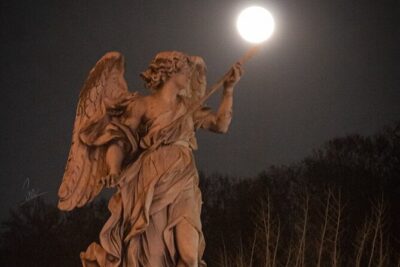
Browse the lists this tour appears in