
REVIEW · ROME GHOST TOURS
Rome After Dark Mysteries Myths and Haunted History
Rome gets stranger after sunset. This 80-minute walking tour offers two things I particularly like: a compact route that fits neatly after a long day of sightseeing, and access to quiet corners and lesser-known stories that most guidebooks skip. You see Castel Sant’Angelo, Via Giulia, Piazza Farnese, Passetto del Biscione, and Campo de’ Fiori without spending the whole evening on your feet.
The main consideration is its spooky tone. You get documented history mixed with legends, myths, executions, ghosts, and old superstitions. That blend works well if you enjoy atmospheric storytelling, but it may feel less satisfying if you want only dates, architecture, and strictly verified facts.
Six things to know before booking
- Castel Sant’Angelo after dark: Hear about executions, the prison, the Passetto escape route, and Saint Michael’s apparition.
- A short evening walk: The tour lasts about 1 hour and 20 minutes, a useful length after a full day in Rome.
- Small streets and overlooked corners: Via Giulia and Passetto del Biscione offer a quieter side of central Rome.
- History with a supernatural edge: The stories combine real events with legends and eerie local traditions.
- A lively finish: The walk ends at Campo de’ Fiori, where you can continue with a drink or dinner at your own expense.
- Very low listed price: At $4.58 per person, the stated price offers striking value if it remains available when you book.
Why Rome after dark feels different
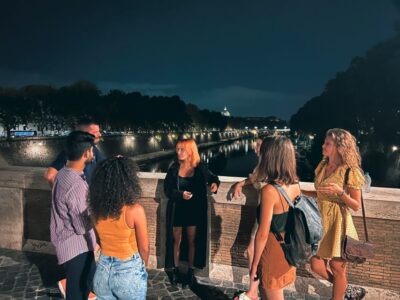
Rome changes when the tourist crowds thin out. Ancient stone catches the streetlight, church walls turn shadowy, and narrow lanes feel more secretive than they do in daylight. This tour uses that mood well without asking you to spend several hours on a formal history walk.
The route covers a small section of central Rome, linking the Tiber, Castel Sant’Angelo, Renaissance streets, aristocratic palaces, a covered medieval passage, and Campo de’ Fiori. That gives the walk a clear sense of place. You are not hearing random ghost stories in disconnected locations. Each stop connects to Rome’s power, religion, punishment, art, or public life.
I also like the timing. The tour begins at 9:00 pm, so it can work after an early dinner or after a day at the Vatican and other major sights. Since the walk lasts about 80 minutes, you still have the option of staying in Campo de’ Fiori afterward. The route is short enough to feel manageable when your legs are tired.
The storytelling style matters here. The strongest feedback describes guides such as Mike, Emily, and Emilie as personable, relaxed, and easy to listen to. Mike’s conversational approach was especially praised for feeling more like a friend sharing unusual Roman stories than a guide reciting a list of facts. That tone suits a subject built around atmosphere and mystery.
More Ghost Story Tours in Italy
- Rome: Small Group Rome’s Dark Side – Ghosts & Legends Tour
★ 4.9 · 343 reviews - Ghosts, Legends & Mysteries of Rome Tip-Based Walking Tour
★ 4.7 · 284 reviews - Ghosts Legends and Mysteries of Rome Walking Tour
★ 5.0 · 149 reviews
Castel Sant’Angelo sets the mood
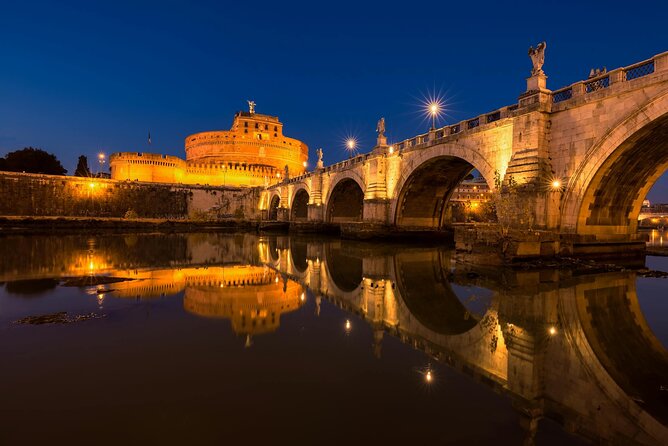
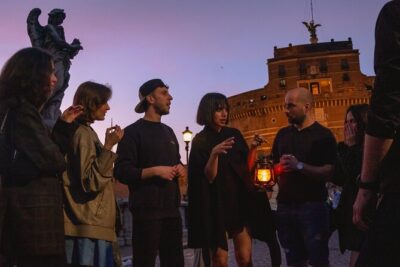
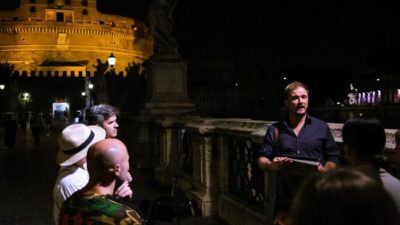
The tour begins near Via del Banco di Santo Spirito and moves toward Castel Sant’Angelo. The castle is the most powerful opening stop because it brings together military history, religion, imprisonment, and legend.
You hear about the executions held there and its role as a prison and place of punishment. That gives the building a darker meaning than the familiar postcard view. From the outside, it can look like a grand fortress beside the Tiber. The stories remind you that it was also a place where people were confined and condemned.
The guide also explains the Passetto di Borgo, the fortified corridor linking Castel Sant’Angelo with the Vatican. Its purpose was practical and urgent: popes could use it as an escape route during periods of danger. That detail helps you understand the castle as part of Rome’s defensive system, not simply as an impressive monument.
The Tiber receives attention here as well. The river helped shape Rome’s growth and defense, and its position beside the castle makes the relationship easy to picture. At night, the water and stone add to the mood without requiring theatrical effects.
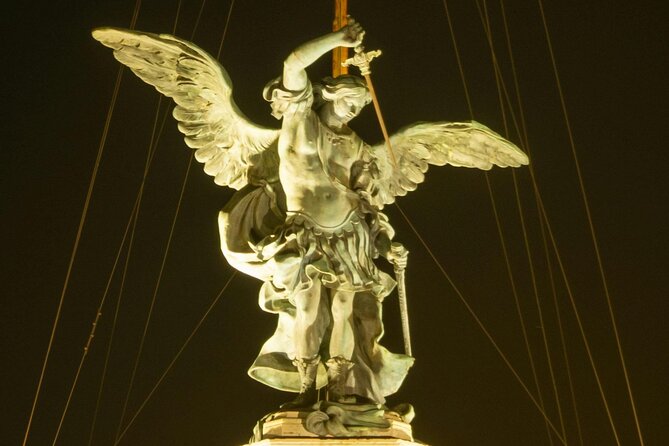
Then comes the story that gave the fortress its name. In 590 AD, Saint Michael the Archangel was said to have appeared above the castle, signaling the end of a devastating plague. You can take this as a religious tradition rather than a historical fact, but it is exactly the kind of legend that fits Rome’s habit of layering belief onto old buildings.
This stop lasts about 12 minutes. That is enough time for a focused explanation, but not enough for an interior visit. Admission to the stop is free, and the tour does not present itself as a castle tour. If you want rooms, collections, or rooftop views, you will need a separate visit.
Via Giulia reveals Renaissance Rome
From the castle area, the route reaches Via Giulia, one of central Rome’s most elegant historic streets. Pope Julius II ordered the street in the early 16th century as a direct route through the city. That simple purpose had major effects: it helped reshape the urban pattern and encouraged the construction of palaces, churches, and courtyards along the way.
The stop lasts about five minutes, so expect a brief explanation rather than a long architectural lecture. That brevity works because Via Giulia is best understood while walking through it. You can look at the façades, notice the quieter pace, and imagine how a planned Renaissance street cut through an older and less orderly Rome.
This is one of the places where the tour’s route adds real value. You might pass through central Rome during the day without knowing why the street looks different from the lanes around it. At night, with fewer distractions, the guide can point out the connection between papal ambition, city planning, and the grand buildings around you.
The drawback is simple: the stop is short. If Renaissance architecture is your main interest, you may want extra time here on another walk or during daylight. On this tour, Via Giulia serves as a compact link between the castle’s darker past and the noble quarter that follows.
Piazza Farnese and its powerful neighbors
Piazza Farnese brings you into the orbit of Palazzo Farnese, one of Rome’s major Renaissance palaces. Michelangelo was among the architects associated with the building, and the palace gives the square a sense of power that differs from the fortress at Castel Sant’Angelo.
The square is also known for two large fountains made from ancient Roman bathtubs. That detail is wonderfully Roman. Older objects were not always placed in museums and left untouched. They could be reused as public decoration, allowing several periods of the city to occupy the same space.
The stop lasts around 10 minutes. I would expect the guide to focus on the palace, the fountains, and the people who shaped the square rather than on supernatural stories alone. That balance is important. The tour’s appeal comes from the way it connects eerie tales to real streets and real political power.
At night, Piazza Farnese can feel more refined and still than Campo de’ Fiori. You get a pause in the route, with broad open space after the tighter lanes. It is a good place to look up and take in the scale of the palace before the walk turns toward a more obscure passage.
More Ghost Story Tours in Rome
- Rome: Capuchin Crypts & Ghostly Legends Small-Group Tour
★ 4.9 · 133 reviews - Rome’s Dark Side Ghosts and Legends Tour
★ 5.0 · 93 reviews - Ghost & Legends in Night Rome Walking Tour
★ 5.0 · 36 reviews
Passetto del Biscione is the quiet surprise
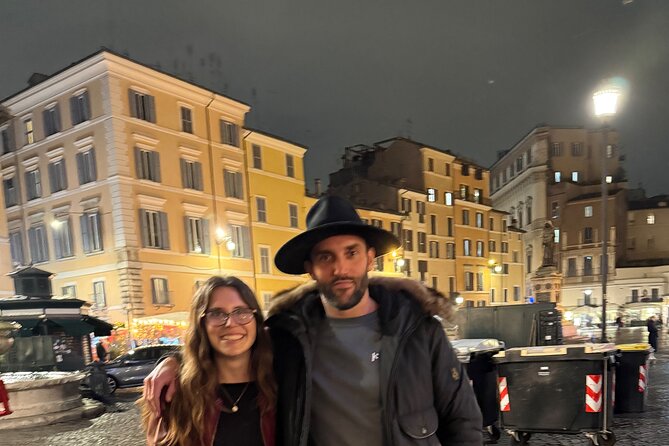
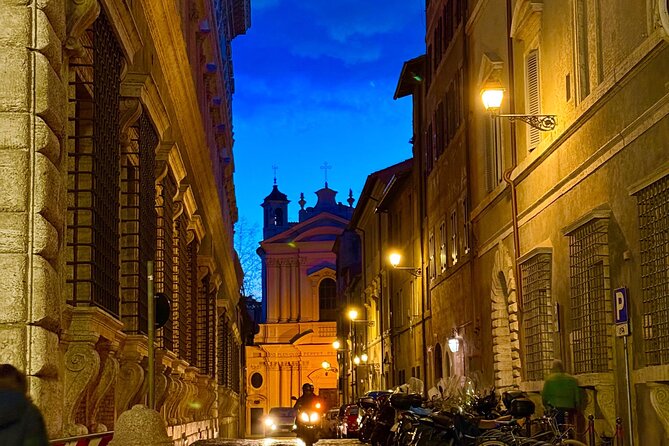
Near Campo de’ Fiori, Piazza del Biscione offers one of the tour’s most unusual settings. It is a small square with an old-world feel, and it contains the Passetto del Biscione, a covered passage with remnants of medieval frescoes.
This is the kind of place that rewards a guide. Without context, a passageway can look like a shortcut or an architectural oddity. With a story attached, the worn walls and faded images become clues to an older Rome. The location also gives the tour its strongest sense of discovery without requiring a long detour from the main route.
The stop lasts about 12 minutes. That should give you time to hear the story and look closely, though conditions in a narrow passage can affect how easily everyone sees and hears. A group of up to 100 people is allowed, which is a fairly large maximum for a small area. The actual atmosphere will depend on the number who book that evening.
This is also a reminder that the tour is not a haunted-house attraction. There are no listed special effects, actors, or guaranteed paranormal encounters. The mood comes from the age of the place, the stories attached to it, and the nighttime setting.
Campo de’ Fiori carries the darkest ending
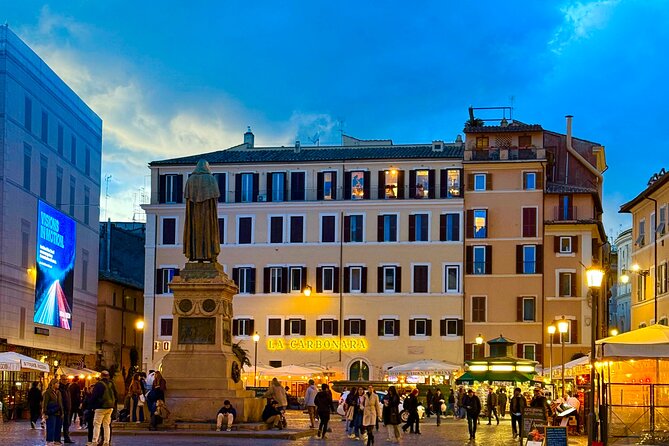
The final stop is Campo de’ Fiori, and the tour gives it about 20 minutes, the longest stop on the route. That extra time makes sense. The square is one of Rome’s most social public spaces, but it also has a grim past.
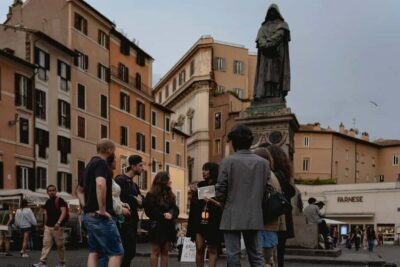
During the day, Campo de’ Fiori is known for its market, with produce, flowers, and local goods. At night, the market gives way to restaurants and bars. The square becomes a natural place to end an evening walk because you can choose to continue your night there.
At its center is the statue of Giordano Bruno, the philosopher remembered for being executed in the square. His presence gives Campo de’ Fiori an edge beneath its lively surface. You can sit with a drink nearby, surrounded by conversation and restaurant tables, while looking at a monument tied to public punishment and religious conflict.
Food and drinks are not included if the group stops at a bar. That is not a major flaw, but you should bring money if you plan to continue the evening. The tour ends in the piazza, so you are free to make your own choice rather than being pushed into a set restaurant.
Campo de’ Fiori is also a practical ending point. If you are ready to return to your accommodation, you can arrange your own transport from the square. If you want more nightlife, you are already in one of central Rome’s best-known evening areas.
The price makes the short format especially useful
The stated price is $4.58 per person, which is unusually low for a guided Rome experience. At that amount, the value comes less from a long list of included attractions and more from having a local guide give shape to an evening walk.
You do not pay separate admission at the listed stops. The tour is mainly an interpretation service, with the guide providing context that is difficult to get from simply walking past the buildings. You also avoid spending your whole evening on a large sightseeing program.
The 80-minute length improves the value for a different reason. Rome invites over-scheduling, and many visitors reach nighttime with sore feet. A short route lets you see something new without committing to another half-day activity. One particularly useful detail from the feedback is that the tour helped break up an evening after a full day of walking.
The price can change, so check the amount at booking. Still, based on the stated rate, this is an easy add-on for anyone who wants a guided experience without a major budget commitment.
What kind of experience should you expect?
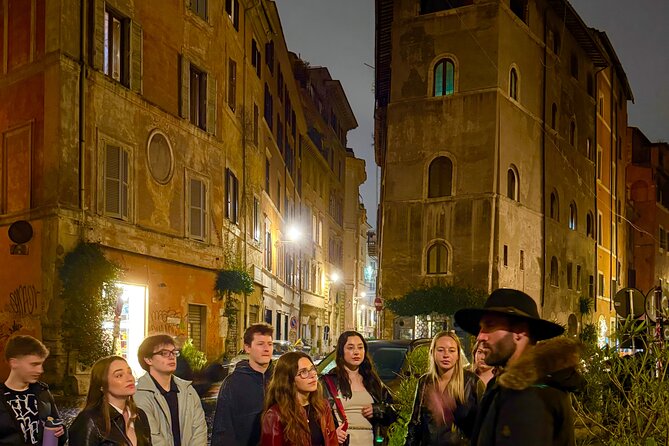
The tour is best understood as a history walk with a spooky theme. You will hear about documented places and events, including prisons, executions, papal escape routes, public punishment, city planning, and Renaissance power. Alongside those facts come legends, religious traditions, ghosts, disappearances, and superstitious tales.
That mix is the point. If you enjoy classic horror films, dramatic church shadows, old passageways, and stories that leave room for doubt, the nighttime setting should work well. The route gives you atmosphere without pretending that every legend has been proved.
You should also expect walking rather than a seated performance. The tour covers several central locations, and the information is delivered outdoors as you move. Wear comfortable shoes and keep your phone charged for the mobile ticket. Those are practical choices for any nighttime walk, though the tour description does not list a required dress code or special equipment.
The experience is offered in English. Most people can participate, and service animals are allowed. The maximum group size is 100, so do not assume every departure will feel intimate. The guides praised for their friendly, conversational style may help, but the size of the group can affect how personal the walk feels.
Is the 9:00 pm start right for you?
The late start is one of the tour’s strengths and one of its limits. At 9:00 pm, Rome is properly in evening mode, and the darker stories make more sense under streetlights than in midday sun. You also avoid using prime daytime hours for a short route.
The same timing may be difficult for families with young children or anyone who prefers an early night. The tour ends around 10:20 pm if it runs to the expected length, and the final piazza may tempt you to stay out longer. Plan your return before you set off, especially if you are unfamiliar with central Rome at night.
The route begins at Via del Banco di Santo Spirito, 25, and ends at Campo de’ Fiori. Since the start and finish are different, do not assume you will return to your starting point. The end location is useful, but you should know this is a one-way walk.
Free cancellation is available if you cancel at least 24 hours before the start time. Changes or cancellations within 24 hours are not refunded. That policy is worth noting when you plan around weather, fatigue, or a late dinner.
Who should book Rome After Dark?
I would choose this tour if you want a short, unusual evening activity that adds stories to places you might otherwise pass without much thought. It suits couples, solo visitors, friends, and anyone who likes history with a little unease around the edges.
It is especially good for:
- People who have already spent the day at major Roman sights
- Fans of ghost stories, myths, and classic horror atmosphere
- First-time visitors who want to walk central Rome with a guide at night
- Repeat visitors looking for less familiar streets
- Anyone who values a relaxed, conversational guide
- Budget-conscious visitors who want a low-cost evening activity
I would skip it if you want a full tour of Castel Sant’Angelo, a museum visit, or a strictly academic account with no legends. You should also think twice if you dislike walking at night or prefer activities with food and drinks included.
Should you book it?
Yes, if you want Rome to feel a little mysterious without giving up its real history. The short route, low stated price, and 9:00 pm start make it easy to fit into a busy visit. The best parts are the stories around Castel Sant’Angelo, the quiet Passetto del Biscione, and the contrast between Campo de’ Fiori’s festive nightlife and its past as a place of execution.
Book it for atmosphere, local tales, and an enjoyable break from standard sightseeing. Do not book it expecting a full paranormal investigation or a long monument tour. With that expectation in place, this is a smart, inexpensive way to see a more shadowy side of central Rome.
FAQ
How long does Rome After Dark Mysteries, Myths and Haunted History last?
The tour lasts approximately 1 hour and 20 minutes.
What time does the tour begin?
The tour starts at 9:00 pm.
Where does the tour start?
The meeting point is Via del Banco di Santo Spirito, 25, 00186 Roma RM, Italy.
Where does the tour end?
The tour ends at Piazza Campo de’ Fiori in central Rome.
Is the tour offered in English?
Yes. The experience is offered in English.
Is food or drink included?
No. Food or drinks are not included if the group stops at bars.
Are admission tickets included?
The listed stops have no admission charge. The experience includes a haunted tour with a local guide, not entry to paid attractions.
Can I cancel for a full refund?
Yes, if you cancel at least 24 hours before the experience start time. Cancellations within 24 hours are not refunded.
More Heritage Tours in Rome
- Rome: Guided Bar Crawl with Drinks & Dark History
★ 4.9 · 444 reviews - Rome Secrets: Dark History & Tasty Bites Tour
★ 5.0 · 37 reviews - Rome: Colosseum and Ancient Dark History Walking Tour
★ 5.0 · 10 reviews - Rome Secrets with Dark History and Tasty Bites Tour Experience
★ 4.5 · 3 reviews
Newly added around Rome
- Rome Secrets with Dark History and Tasty Bites Tour Experience★ 4.5 · 3 reviews
- Ghost & Legends in Night Rome Walking Tour★ 5.0 · 36 reviews
- Rome: Private Night Ghost Walking Tour★ 5.0 · 38 reviews
- Haunted Rome: Eternal City Night Walking Tour★ 5.0 · 38 reviews
- Experience Rome in this Mysterious Ghost Tour★ 3.5 · 3 reviews
- Haunted Rome & True Crime: The Cenci Curse Game★ 4.5 · 27 reviews
- Ghosts and Crimes of Rome Night Walk★ 5.0 · 61 reviews
- Rome’s Dark Side: Ghosts, Scandals and Crypts – Small Group Tour★ 5.0 · 28 reviews
Rome Ghost Tours, compared.
Paranormal Night Walking Tour & Secret Backstreets
Read our review →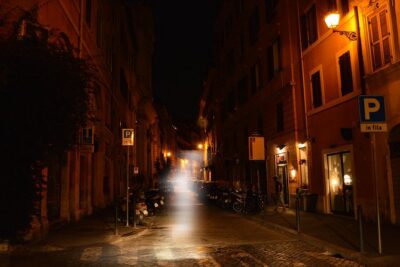

Small Group Rome’s Dark Side – Ghosts & Legends Tour
Read our review →
Ghosts, Legends & Mysteries of Rome Tip-Based Walking Tour
Read our review →
Browse the lists this tour appears in