
REVIEW · LONDON GHOST TOURS
Jack the Ripper and Victorian London: Beyond the Shadows
London’s darkest streets still reward careful attention. This 140-minute walk combines the Jack the Ripper case with the social story of Victorian East London, and I like that it gives the women involved more attention than their usual brief mention in crime tours. I also like the route itself, which links Brick Lane, Hanbury Street, Spitalfields, Goulston Street, and Mitre Square rather than keeping you in one small pocket.
The main drawback is the subject matter. Murder, poverty, and exploitation are central to the story, so this is not a light sightseeing stroll. The route also depends on an outdoor walk for more than two hours, but the guide’s humor and thoughtful delivery can keep the evening from becoming relentlessly grim.
Key points at a glance
- A case study in Victorian life: The murders provide an entry point into poverty, policing, journalism, gender, and class in 19th-century London.
- A carefully chosen East End route: You walk from Braham Street through Brick Lane, Hanbury Street, Spitalfields, Goulston Street, and Mitre Square.
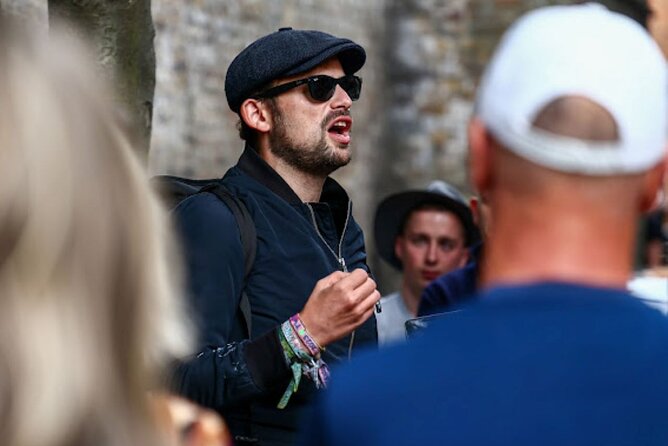
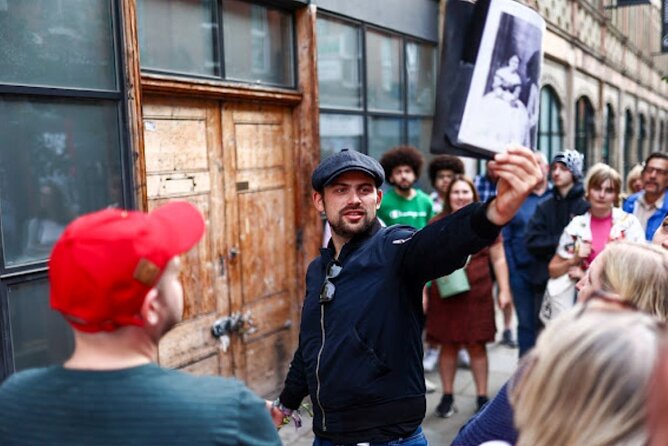
- Nick’s lively presentation: His humor, acting background, and ability to answer questions give the walk a strong sense of performance without turning it into cheap horror.
- More than grisly anecdotes: The tour stresses what is known, what is uncertain, and how myths grew around the case.
- A useful finish in Spitalfields: Ending near the market gives you an easy place to continue exploring the area after the tour.
- Good value at $24: For 140 minutes with an English-speaking guide, the price is modest, especially if you want history rather than a short photo stop.
Why this Jack the Ripper walk feels different
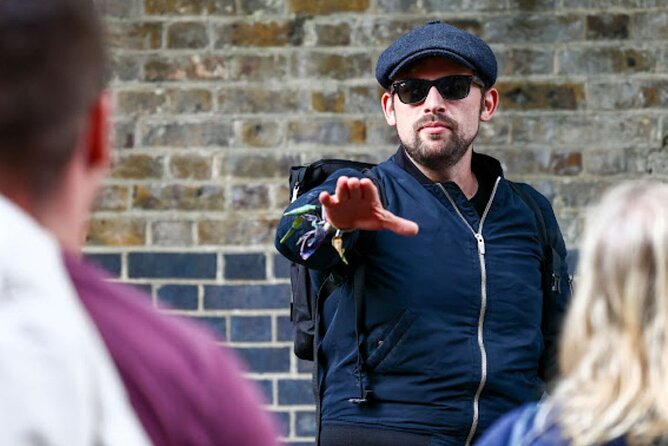
Many tours built around Jack the Ripper lean hard on shock. This one takes a steadier path. You still follow the sites connected with the murders, but the larger goal is to understand the people and the East End that surrounded them.
That distinction matters. The women killed in Whitechapel are often reduced to names, dates, and crime-scene details. Here, the emphasis is on their humanity, their difficult circumstances, and the mistaken ideas that have gathered around their lives. You are encouraged to question old reports instead of accepting every dramatic claim as fact.
I also like the attention to Victorian society. The tour sets the murders against the area’s poverty, social divisions, and cultural life. That gives you a clearer sense of why Whitechapel became such a powerful setting in the public imagination, without pretending that one killer explains the whole district.
The tone seems to be one of the strongest parts of the experience. Nick is repeatedly praised for making the subject clear and entertaining without relying on unnecessary gore. His former work in musical theatre shows in the delivery, according to the detailed feedback, and that matters on a walking tour where a flat lecture could make two hours feel very long.
More Jack the Ripper Tours in London:
- London: The Original Jack the Ripper Walking Tour
★ 4.7 · 7,833 reviews - London Jack the Ripper Guided Tour with Ripper-Vision
★ 4.5 · 4,840 reviews - London: Jack the Ripper Small Group Tour
★ 4.7 · 3,159 reviews
Starting at Braham Street and entering the East End
The walk begins at Braham Street. From there, your guide sets up the basic story before leading you into the East End streets connected with it.
This opening is important because the tour is not only about finding murder locations. You are introduced to the social setting first, including the pressures faced by working-class people and the gap between poverty in the East End and the more comfortable parts of Victorian London.
You should expect the guide to explain the difference between established fact, later interpretation, and outright legend. That approach is especially useful here. Jack the Ripper has become a cultural figure far larger than the surviving evidence can support, so a careful guide helps you separate the real case from the popular image.
The starting point on Braham Street is also practical. It places you close to the main walking route and gets you into the subject quickly. Since no transport between stops is included or indicated, wear shoes you can use comfortably for a long city walk.
Brick Lane: food, change, and Victorian memory
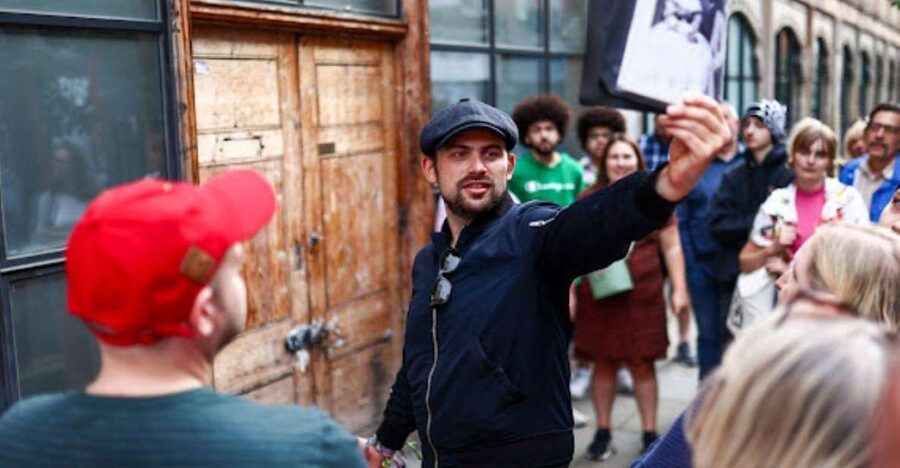
Brick Lane is the first named stop. Today, it is known for food, street life, shops, and a changing local identity, but the tour uses it to point toward the East End’s older social world.
This is one of the more useful parts of the route because the street does not feel frozen in the 1880s. You see a modern London district while hearing about the pressures that shaped the Victorian area. That contrast helps you understand that this is a living neighborhood, not an outdoor crime museum.
Your guide may also use Brick Lane to explain the cultural mixture of the East End. The tour description promises attention to the area’s social and cultural forces, not just its crimes. I find that balance valuable because it keeps the district from being defined only by its worst events.
The drawback is that modern surroundings can make it harder to picture the past. You are not walking through a preserved Victorian street. You need to listen closely and use the guide’s descriptions to reconstruct the setting in your mind.
Hanbury Street and the human cost of the story
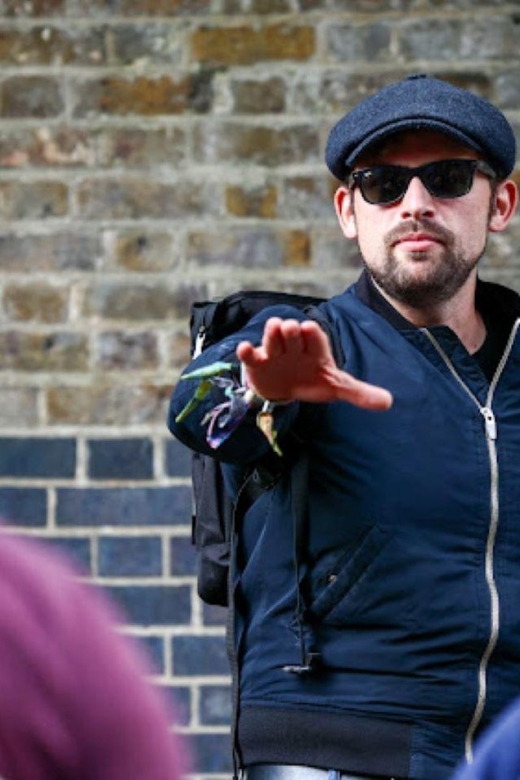
The route continues to Hanbury Street, a stop tied closely to the case. Here, the focus turns more directly to the victims and the conditions in which they lived.
This is where the tour’s humane approach matters most. Instead of treating the women as props in a detective puzzle, the guide looks at the lives behind the headlines and the assumptions made about them. You gain a better sense of how poverty and limited choices shaped daily life for many women in the East End.
The subject can be upsetting, and the guide does not appear to soften the difficult facts. At the same time, the presentation avoids piling on graphic material simply to frighten you. That makes the tour more suitable for older teenagers and adults who want historical context, though it may not suit anyone seeking a purely cheerful evening activity.
Hanbury Street also shows why location-based storytelling works here. Standing in the area gives the account a physical frame, even though the modern street has changed. You are not simply hearing dates in a room. You are matching places with stories and considering how the area functioned in Victorian London.
Same streets, an entirely different kind of scare:
- Ghost, Ghouls and Gallows Tour : Guided Tour with Boat Ride
★ 4.5 · 3,212 reviews - London Jack The Ripper Guided Walking Tour
★ 5.0 · 3,131 reviews - London: Comedy Horror Ghost Tour on a Bus
★ 4.4 · 2,084 reviews - London: Jack the Ripper Tour with Immersive Ripper Vision
★ 4.5 · 1,840 reviews
Old Spitalfields Market and the East End beyond the crimes
The walk reaches Old Spitalfields Market, one of the best places to broaden the discussion. The market connects naturally with trade, work, movement, and the everyday life of the district.
I like this stop because it helps move the tour beyond the killer. Markets are about more than buildings. They point to the workers, shoppers, sellers, and passersby who made the East End function. The guide can use the setting to show how the area was part of a larger economic and cultural system.
The market also gives the route a change of mood. After the darker material around Hanbury Street, a public market setting reminds you that the Victorian East End was not only a place of danger. It was also a place where people worked, traded, socialized, and built communities.
Because the walk finishes near Spitalfields Market, this is a useful point to note for your own plans. You can continue exploring the area after the tour, though the experience itself remains focused on the guided walk rather than food or shopping.
Goulston Street and the problem of certainty
At Goulston Street, the guide examines another part of the case and the way evidence has been interpreted. This is likely to appeal most to you if you enjoy puzzles, old reports, and competing theories.
The strongest feature here is the invitation to think critically. You are not simply handed a neat answer to the identity of Jack the Ripper. Instead, the guide explains what the historical record can support and where speculation begins.
That is a welcome approach. The case has produced countless theories, but a good tour should not treat every theory as equally reliable. Nick’s style appears to favor direct explanation, questions, and a little humor, which can make this complicated material easier to follow.
This is also a point where the experience may feel less like a conventional sightseeing tour. If you want a simple story with a final reveal, you may find the uncertainty frustrating. If you like weighing evidence, the lack of a tidy answer is part of the appeal.
Mitre Square and the central crime narrative
Mitre Square is one of the key locations on the walk. The guide brings the focus back to the murders and explains how this site fits into the wider sequence of events.
The value of visiting Mitre Square is not just the location itself. It gives you a clearer idea of how close together many important places are and how the case unfolded within the ordinary streets of the East End. The walk turns a famous name into a place you can locate and understand.
Expect serious material here. The tour does not avoid the tragedy, but the overall presentation aims to inform rather than frighten. That difference was important to one family with children aged 17 to 23, who found the tour both educational and entertaining.
You should also keep your expectations realistic. Modern London has changed greatly, and the present-day setting cannot reproduce the original scene. The guide’s storytelling does much of the work, so your enjoyment will depend heavily on how much you value interpretation and atmosphere.
London Fruit & Wool Exchange and the city’s changing face
The London Fruit & Wool Exchange adds another useful layer to the walk. Its name points to the commercial life that existed alongside the poverty and violence often associated with Whitechapel.
This stop helps correct a common mistake: treating the East End as one uniform slum. Victorian London contained sharp contrasts, and trade, commerce, labor, and wealth all shaped the area. The tour uses these contrasts to show how close hardship could sit to business and prosperity.
I find this wider frame more useful than a tour that simply lists suspects. It gives you something to remember after the evening ends: the murders happened within a working city, not in an isolated gothic setting.
The route then concludes at Spitalfields Market. That is a sensible ending, since you finish in an active part of East London rather than at an isolated site. It also makes the experience easy to pair with an evening meal or more independent exploring, although those extras are not part of the tour.
Nick’s guiding style and the tone of the evening
Nick is the guide most closely associated with the praise for this experience. His style combines strong subject knowledge, humor, and performance skills. Several detailed accounts describe him as friendly, direct, and able to keep the material interesting without turning it into a scare show.
One particularly useful detail is that he adjusted the experience during heavy rain, even stopping for beer tasting so the group could warm up. That should not be treated as a guaranteed feature, but it shows a flexible approach to the people on the walk.
Another group found itself on what effectively became a private tour because nobody else joined that evening. You should not book expecting a private experience, but the example suggests that Nick can adapt his delivery to the group in front of him.
His local connection is another plus. He has lived in the area with his family and can discuss East London from more than a script. That local perspective is useful if you want suggestions for the wider neighborhood, though the tour’s main subject remains Victorian history and the Ripper case.
Is $24 good value for 140 minutes?
At $24 per person, this is a strong value if you want a serious guided history walk. You receive 140 minutes of live English-language interpretation and cover a broad route through several important East End locations.
The price is especially fair because the experience does more than point at sites. A good part of what you are paying for is the guide’s ability to explain social conditions, correct myths, and connect separate locations into one understandable story.
It is less compelling value if you only want quick photographs of famous places. This is a walking history experience, and its payoff comes through listening, asking questions, and staying with the narrative.
You can cancel up to 24 hours before the start for a full refund, and you can reserve now while paying later. The tour is wheelchair accessible. English is the stated language, and the activity is not suitable for people over 95, according to the supplied conditions.
Who should book this East London walk?
I would recommend it to:
- History fans who want the Victorian setting as much as the crime story
- True crime followers who prefer evidence and context to graphic detail
- Visitors interested in East London’s social and cultural past
- Families with older teenagers
- People who enjoy lively guides and interactive storytelling
I would be more cautious if you dislike murder stories, outdoor walks, or uncertain conclusions. The tour is also not designed as a general introduction to every major London sight. Its world is concentrated in the East End, and its focus stays on the Ripper case and Victorian society.
The perfect audience is curious, open-minded, and ready to question familiar stories. You do not need to be an expert, but you should want more than a list of suspects and spooky alleyways.
Should you book it?
Book this tour if you want human stories, social context, and a guide who can perform as well as explain. The 5 out of 5 rating from 18 reviews fits the strongest pattern here: Nick’s humor, clarity, and thoughtful treatment of the subject are the main reasons to choose it.
Skip it if you want a blood-and-gore fright night or a short, simple account of who may have committed the crimes. For everyone else, $24 buys a well-paced way to see a less familiar side of London, with enough history to stay useful after the shadows fade.
FAQ
How long does the Jack the Ripper and Victorian London tour last?
The tour lasts 140 minutes, or about two hours and 20 minutes.
Where does the tour begin?
It begins at Braham Street.
Where does the tour finish?
The tour finishes at Spitalfields Market.
Which places are included on the route?
The route includes Brick Lane, Hanbury Street, Old Spitalfields Market, Goulston Street, Mitre Square, and the London Fruit & Wool Exchange.
What language is the tour conducted in?
The live guided tour is conducted in English.
Can I cancel the booking?
Yes. You can cancel up to 24 hours in advance for a full refund. You can also reserve now and pay later.
Newly added around London
- Wicked Whitechapel: Where Now’s Jack The Ripper Audio Tour★ 5.0 · 2 reviews
- Ghosts, Gore & Other Ghasty Stories in the City of London★ 5.0 · 7 reviews
- Afternoon Jack the Ripper : Guided Tour★ 5.0 · 183 reviews
- Visit Jack the Ripper in French★ 5.0 · 33 reviews
- The Fading Light London Ghost Walk★ 5.0 · 35 reviews
- Self-Guided Audio Tour-Behind the shadow of evil: Jack the Ripper★ 4.0 · 2 reviews
- The Haunted Pubs of Old London: Small Group Tour★ 5.0 · 38 reviews
- Jack the Ripper – What About the Women?★ 5.0 · 39 reviews
London Ghost Tours, compared.
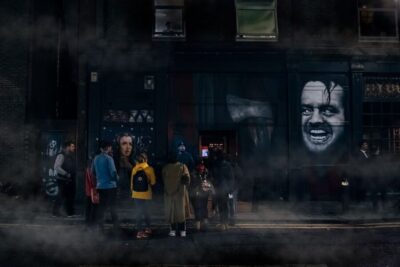
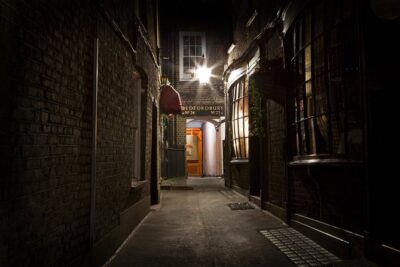
London Jack the Ripper Guided Tour with Ripper-Vision
Read our review →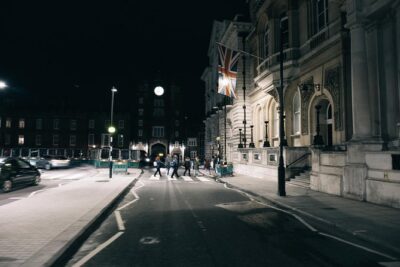
Ghost, Ghouls and Gallows Tour : Guided Tour with Boat Ride
Read our review →
Jack the Ripper Tour with Immersive Ripper Vision
Read our review →
German Language : Original Jack the Ripper Tour
Read our review →Browse the lists this tour appears in