
REVIEW · LONDON GHOST TOURS
Jack the Ripper Tour in Spanish
London gets darker in Whitechapel. This two-hour evening walk follows the streets linked to Jack the Ripper, combining Victorian social history with the mystery of a killer who was never identified. I like the Spanish-language guiding and the way the route uses real places rather than relying only on gruesome storytelling. I also like the convenient timing, since you can spend the day sightseeing elsewhere and explore Whitechapel after sunset.
The main consideration is the subject itself. This is a murder tour, and some of the material is unsettling. The walk also involves several outdoor stops, so cold, rain, and dark streets can affect the experience. The tour is listed at $17.16 per person, a fair price for two hours with a guide, though you should be comfortable with the focus on crime and Victorian hardship.
Key points about the Whitechapel walk
- Carmen receives especially warm praise for her energy, care, storytelling, and use of photographs and other visual material.
- The route visits seven connected areas, including Miter Square, Goulston Street, The Ten Bells, and Spitalfields Market.
- The evening start at 6:00 pm gives the walk an atmospheric setting and leaves your daytime open for museums and major sights.
- The meeting point is Whitechapel Gallery, an easy-to-find landmark near public transportation.
- The tour finishes at Old Spitalfields Market, giving you a useful place to continue your evening.
- The group can include up to 25 people, large enough to feel social but still manageable for a walking tour.
Why Jack the Ripper still shapes Whitechapel
Jack the Ripper is one of London’s most famous unsolved crime stories, but this tour is not only about the killer. It also places you in Victorian Whitechapel, where working-class people lived under difficult conditions and women on the social margins faced particular risks.
That wider setting matters. If you only focus on the identity of the murderer, the story can become a guessing game. A good guide helps you understand the streets, buildings, jobs, poverty, lodging houses, and social pressures that formed the backdrop to the crimes. This walk aims to connect the famous case with the daily lives of the women who became its victims.
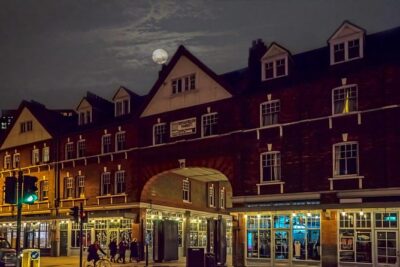
You also get a sense of how much of old Whitechapel remains. The neighborhood has changed considerably, but parts of the street pattern and several historic structures still help you picture London in 1888. The walk does not transport you back in time, but it gives the surviving buildings a clear role in the story.
That is one reason a guided route works better than simply wandering around with a map. Many of the important locations are easy to miss, and several have changed names or appearances. A guide can explain what you are looking at and why it mattered.
More Jack the Ripper Tours in London:
- London: The Original Jack the Ripper Walking Tour
★ 4.7 · 7,833 reviews - London Jack the Ripper Guided Tour with Ripper-Vision
★ 4.5 · 4,840 reviews - London: Jack the Ripper Small Group Tour
★ 4.7 · 3,159 reviews
Starting at Whitechapel Gallery at 6:00 pm
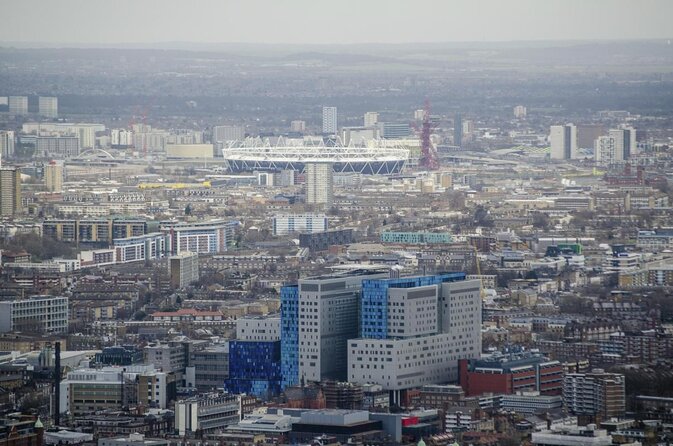
The tour begins outside Whitechapel Gallery at 77-82 Whitechapel High Street. This is a practical meeting point, particularly if you are using public transportation or exploring the East End before the tour.
Arrive with enough time to locate the gallery and gather without rushing. The listed start time is 6:00 pm, and the walk covers a number of stops in roughly two hours. Since the tour takes place after dark, keeping your phone charged is sensible if you are using mobile tickets or checking directions.
The first part of the experience introduces Whitechapel High Street and the surrounding area. This helps you get your bearings before the route turns toward the smaller streets connected with the case. You are not simply handed a list of crime scenes. The guide builds the setting first, showing how the district functioned and what life may have felt like for people living there.
The evening timing is a real advantage. You can visit the Tower of London, museums, markets, or central London sights earlier in the day, then arrive in Whitechapel for a different kind of experience. Darkness naturally adds mood, but it also means you should wear comfortable shoes and bring a coat or rain layer.
Gunthorpe Street and Whitechapel High Street
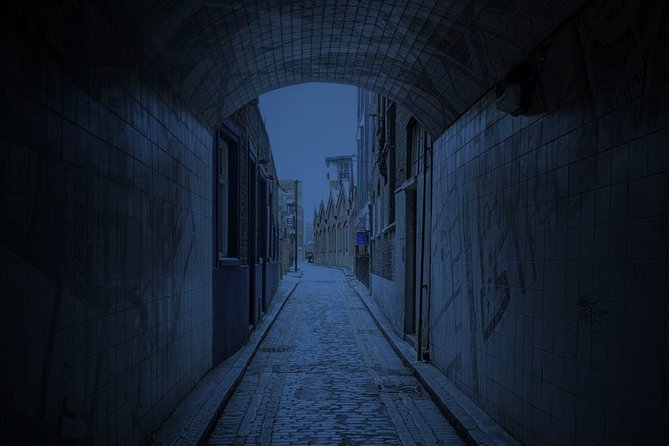
Gunthorpe Street is one of the early stops. Narrow side streets like this help shift the walk away from the modern traffic of Whitechapel High Street and toward the more intimate setting of the old neighborhood.
At this point, the guide can begin to explain how the streets connected and how close the key locations were to one another. That geography is useful because the case is often presented as a collection of separate incidents. Walking between the places gives you a clearer sense of distance and sequence.
Whitechapel High Street provides a contrast. It is a busy modern street, not a preserved Victorian film set. That contrast is worth noticing rather than treating as a disappointment. You can see how London has changed while still learning where the old routes ran.
I appreciate tours that acknowledge the difference between the surviving city and the historical record. The strongest moments here are not about pretending everything looks exactly as it did. They come from understanding what has disappeared, what remains, and how the neighborhood grew around those old streets.
Saint Botolph Without Aldgate and Miter Square
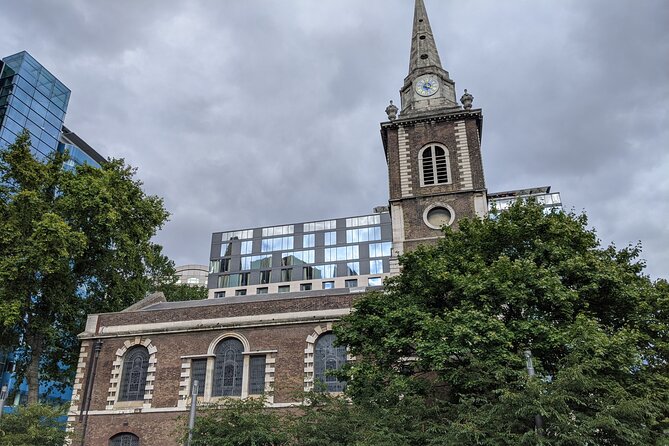
Saint Botolph Without Aldgate is another important point on the route. The church and its position near the edge of the City of London help explain the transition between the financial center and the poorer streets of Whitechapel.
That change in atmosphere is part of the story. Victorian London was not a single, uniform city. Wealth, employment, housing, and policing could vary sharply over a short distance. The guide uses places such as this to give the case a social and geographic frame.
Miter Square is one of the key stops. It is closely associated with one of the murders and usually serves as a central point for explaining what happened, what was known at the time, and what remains uncertain.
This is also where the tour’s balance matters most. You want clear facts, but the case contains gaps, disputed details, and decades of speculation. A responsible guide should distinguish between documented information and later legend. The praise for Carmen repeatedly focuses on her command of the story, her attention to detail, and her ability to keep the group engaged. Those qualities are especially valuable at a stop where fact and folklore can easily become mixed.
You may find the atmosphere compelling, but do not expect a dramatic attraction with elaborate sets or theatrical effects. The setting is an ordinary London street with an extraordinary connection to the past. The guide and the explanation create most of the impact.
Same streets, an entirely different kind of scare:
- Ghost, Ghouls and Gallows Tour : Guided Tour with Boat Ride
★ 4.5 · 3,212 reviews - London Jack The Ripper Guided Walking Tour
★ 5.0 · 3,131 reviews - London: Comedy Horror Ghost Tour on a Bus
★ 4.4 · 2,084 reviews - London: Jack the Ripper Tour with Immersive Ripper Vision
★ 4.5 · 1,840 reviews
Goulston Street and the unanswered questions
The route continues to Goulston Street, another location tied to the investigation. This section brings attention to the evidence, the police response, and the uncertainty that has kept the case alive.
The fact that Jack the Ripper was never unmasked is central to the tour. There is no final answer waiting at the end, and that can be either the appeal or the frustration. If you enjoy detective stories with a neat solution, this case will leave you dissatisfied. If you like examining clues, theories, and historical gaps, the open ending gives the guide plenty to discuss.
A useful tour should avoid presenting every popular theory as fact. It should also explain why the killer’s identity remains uncertain. The strongest parts of the experience appear to come from the guide’s storytelling rather than sensational claims. Carmen is praised for using photographs and interesting visual material, which can help make the evidence easier to follow.
Remember that this is an evening walk through working city streets. You will stop to listen, then move on. It is not a seated lecture, and you may need to pay close attention when traffic, pedestrians, or weather compete with the guide’s voice.
Lilian Knowles House and the surviving Victorian atmosphere
Lilian Knowles House adds a different layer to the route. Buildings connected with housing and daily life help move the discussion away from the killer and toward the people who lived in this part of London.
The tour is at its best when it shows how the victims were more than names in a famous case. Learning about working conditions, housing, and the pressures of Victorian Whitechapel gives the story a human dimension. It also helps you understand why certain streets and institutions mattered.
The surviving buildings are not all intact crime scenes, and you should not expect to enter every location. The experience is primarily an outdoor walking tour, with the value coming from the guide’s interpretation of what you see. Still, even a remaining facade or old street line can make the past easier to picture.
Several comments about Carmen describe her as warm, attentive, lively, and able to make the group feel transported to the nineteenth century. That does not mean the tour becomes a performance in costume. It means her delivery helps turn buildings and street corners into understandable parts of a larger story.
The Ten Bells and Spitalfields Market
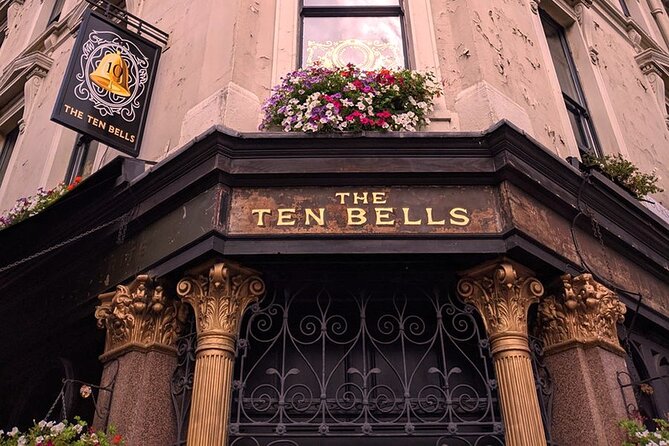
The final section reaches The Ten Bells and Spitalfields Market. The Ten Bells is one of the most recognizable names connected with the Jack the Ripper story, and it gives the route a memorable closing point.
Pubs and markets are useful historical anchors because they connect the case to ordinary social life. People worked, ate, drank, met friends, and searched for income in the same district where the murders took place. The stop can feel more tangible than a simple plaque or an empty patch of pavement.
The tour ends at Old Spitalfields Market, at 59 Brushfield Street. This is a practical finish. You can look around the market area, find food, or continue exploring the East End without needing to return to the starting point.
Ending here also gives the walk a natural rhythm. You begin at Whitechapel Gallery, move through streets and historic locations, then finish in a well-known public space. That makes the tour easy to fit into a longer London evening.
Keep in mind that the final stop may be busy, and the market is not presented as part of a separate food or shopping experience. Its value is mainly as the endpoint and as a living setting connected to the area’s past.
What Carmen adds to the experience
The guide can make or break a walking tour, and Carmen receives the strongest praise throughout the feedback provided for this experience. Her strengths are described in consistent terms: clear storytelling, strong historical knowledge, warmth, humor, energy, and careful attention to detail.
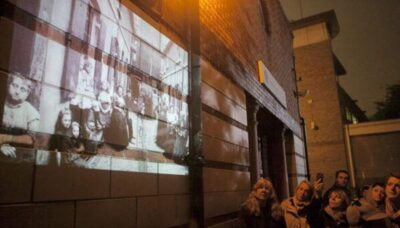
She also uses photographs and other material to support the story. That is helpful because many of the locations have changed. A visual reference can show you how a street or building looked in the Victorian period, giving you a stronger link between the modern view and the historical event.
Carmen’s style appears to suit people who want more than a list of dates and names. She keeps the tour entertaining while still giving the subject care. That balance is important here. Too much solemnity can make the walk heavy, while too much theatrical horror can reduce real victims to props in a mystery story.
The tour is guided in Spanish, which is a major benefit if you want to discuss the subject and ask questions in that language. The supplied details also mention English commentary in the highlights, creating some inconsistency. Because the experience is specifically described as a Spanish-language tour and the guide feedback is in Spanish, I would confirm the language arrangement at booking if this matters to you.
Is $17.16 good value for two hours?
At $17.16 per person, the price is modest for a guided two-hour walk in central London. You are paying for a guide, route planning, historical explanation, and the convenience of seeing several sites in one evening.
The value depends on what you want. If you already know the case well and mainly want dramatic effects, the walk may feel simple. There are no listed admission charges or elaborate attractions. You spend most of the time outdoors, looking at streets and buildings while the guide explains their significance.
For you, the price makes the most sense if you value context and storytelling. A self-guided walk could take you to some of the same places, but it would not necessarily explain the links between them or separate evidence from legend. The guide also saves you from planning a route through unfamiliar streets.
The small maximum group size of 25 is another positive. It is not a private tour, but it should be easier to hear and follow than a huge crowd. A group of that size can still feel social, while allowing the guide to keep the route moving.
Tips are not included, but they are optional. Free cancellation is available if you cancel at least 24 hours before the start time. Changes or cancellations made later are not accepted for a refund, and the tour requires a minimum number of participants. If that minimum is not met, you are offered another date or experience, or a full refund.
Who should book this Whitechapel tour?
I would choose this experience if you enjoy crime history, old neighborhoods, and guided walks with a strong storyteller. It is particularly suitable for Spanish-speaking visitors who want to follow the full explanation without depending on translated material.
It also works well for repeat visitors to London. Whitechapel is easy to pass through without understanding its connection to the case, and an evening walk gives you a reason to explore the East End after the usual sightseeing hours.
Families should make an individual judgment based on age and sensitivity. The subject involves murder, poverty, and disturbing historical details. The tour is not described as a family attraction, so parents should consider how comfortable younger children will be with the material.
You should also be ready for a walking experience rather than a show. Comfortable footwear matters, and the weather can affect your enjoyment. Most people can participate, and the tour is near public transportation, but the supplied details do not promise step-free access or a fully accessible route.
Should you book the Jack the Ripper Tour in Spanish?
Book it if you want a reasonably priced, Spanish-guided walk that connects famous crime sites with the wider story of Victorian Whitechapel. Carmen’s energetic presentation, photographs, and careful detail appear to be the main reasons this tour earns such strong approval.
Skip it if murder tourism makes you uncomfortable, or if you want a polished attraction with indoor exhibits and theatrical effects. The appeal is the streets themselves, the unanswered questions, and the guide’s ability to bring meaning to places that can otherwise look ordinary.
For the right audience, this is a smart two-hour addition to a London itinerary. It gives you a focused evening route, finishes at Spitalfields Market, and leaves you with a better understanding of both the Jack the Ripper case and the people who lived in Whitechapel.
FAQ
Where does the Jack the Ripper Tour in Spanish begin?
The tour begins at Whitechapel Gallery, located at 77-82 Whitechapel High Street, London E1 7QX.
What time does the tour start?
The tour starts at 6:00 pm.
How long does the tour last?
The walking tour lasts approximately two hours.
Where does the tour finish?
The tour ends at Old Spitalfields Market, at 59 Brushfield Street, London E1 6AA.
Is the tour guided in Spanish?
The experience is described as a Spanish-language guided tour. The supplied details also mention English commentary, so you should confirm the language arrangement when booking if it is important to you.
Can I cancel for a full refund?
Yes. You can cancel for a full refund up to 24 hours before the experience start time. Cancellations or changes made less than 24 hours in advance are not refunded or accepted.
Newly added around London
- Wicked Whitechapel: Where Now’s Jack The Ripper Audio Tour★ 5.0 · 2 reviews
- Ghosts, Gore & Other Ghasty Stories in the City of London★ 5.0 · 7 reviews
- Afternoon Jack the Ripper : Guided Tour★ 5.0 · 183 reviews
- Visit Jack the Ripper in French★ 5.0 · 33 reviews
- The Fading Light London Ghost Walk★ 5.0 · 35 reviews
- Self-Guided Audio Tour-Behind the shadow of evil: Jack the Ripper★ 4.0 · 2 reviews
- The Haunted Pubs of Old London: Small Group Tour★ 5.0 · 38 reviews
- The Ghosts of the secret alleyways of old London town★ 5.0 · 2 reviews
London Ghost Tours, compared.
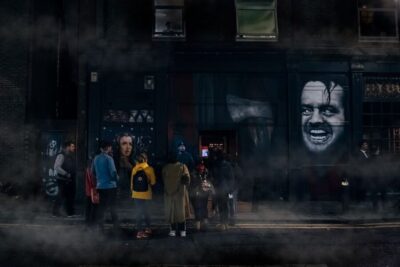
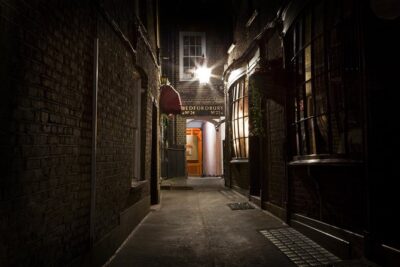
London Jack the Ripper Guided Tour with Ripper-Vision
Read our review →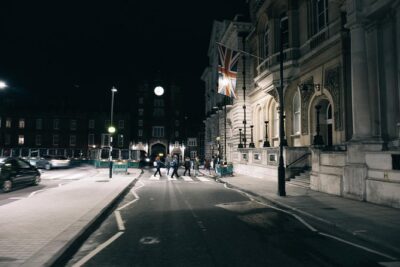
Ghost, Ghouls and Gallows Tour : Guided Tour with Boat Ride
Read our review →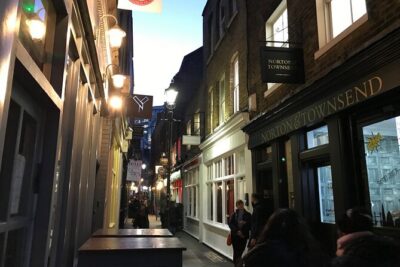
Jack the Ripper Tour with Immersive Ripper Vision
Read our review →
German Language : Original Jack the Ripper Tour
Read our review →Browse the lists this tour appears in