
REVIEW · LONDON GHOST TOURS
Jack the Ripper Tour Whitechapel
Dark streets, hard questions, and Victorian London. This evening walk links the Jack the Ripper case with the poverty, crowded housing, and working lives of Whitechapel. I especially like the strong social history and the way guides such as Jenny, Celine, and Lindsay use images, theories, and clear storytelling to make the setting easier to understand. The main thing to note is that the published duration is about 1 hour 15 minutes, but some walks have lasted two hours or more.
I also like that the tour treats the victims with respect instead of turning tragedy into cheap theatre. The walk is inexpensive at $23.31 per person, but it is not for children under 14 or anyone who dislikes grim subject matter. You will be outside after dark, walking between several stops, so warm clothing and sensible shoes matter.
Key points to know before booking

- Eight Whitechapel stops: The route covers the White Hart, Gunthorpe Street, Brick Lane, Hanbury Street, Princelet Street, Puma Court, Spitalfields Market, and the London Fruit & Wool Exchange.
- Social history comes first: You learn about poverty and daily life in late nineteenth-century Whitechapel, not just the murders.
- The evening setting helps: A 7 pm start gives the walk the darker atmosphere that suits the subject.
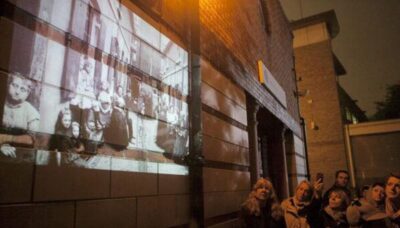
- Visual aids add detail: Guides have used photographs, victim memorial images, and a large iPad to explain people and places.
- Good local finish: The walk ends near Bell Lane and a short distance from Liverpool Street Station, with Brick Lane restaurants nearby.
- Strict age guidance: Nobody under 14 is allowed, and anyone aged 14 to 16 must be with an adult.
Whitechapel at 7 pm: starting behind the White Hart
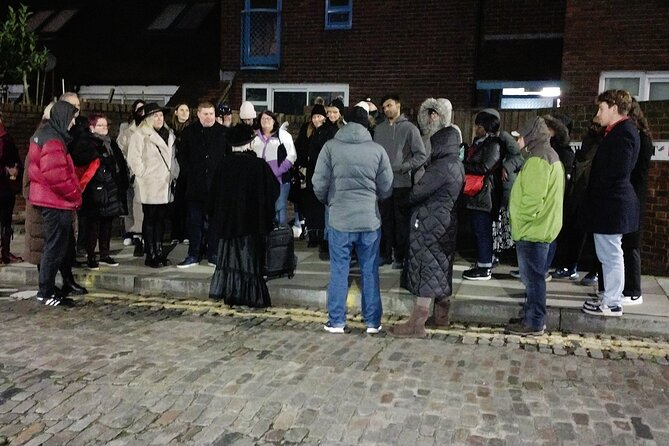
The tour begins at the White Hart, at 89 Whitechapel High Street, with the meeting point behind the pub on Gunthorpe Street. The guide gives a short introduction before setting the scene.
This opening matters. The case makes little sense if you only hear a list of names, dates, and wounds. Whitechapel was shaped by poverty, overcrowding, insecure work, and poor living conditions. The guide’s job here is to show you the district as a place where people lived and worked, not merely as a backdrop for famous crimes.
That wider view is one of the tour’s strongest features. Jenny, who has led many of these walks, is praised for explaining the social conditions alongside the case itself. Celine has also been singled out for holding a group’s attention without a microphone, using clear speech and well-chosen images.
The first stop is brief, about five minutes. That is enough for orientation, but do not expect a long lecture before moving on. The route is built from short stops, each adding another piece to the story.
More Jack the Ripper Tours in London:
- London: The Original Jack the Ripper Walking Tour
★ 4.7 · 7,833 reviews - London Jack the Ripper Guided Tour with Ripper-Vision
★ 4.5 · 4,840 reviews - London: Jack the Ripper Small Group Tour
★ 4.7 · 3,159 reviews
Gunthorpe Street and the Martha Tabram site
Across from Gunthorpe Street Workshops, the guide points out the location associated with the murder of Martha Tabram. This stop takes about five minutes.
The value here is partly in the uncertainty. The Jack the Ripper case is full of disputed links, competing theories, and questions about which victims should be included. A good guide can explain what is accepted, what is debated, and why the case has continued to attract attention.
You may find the location less dramatic than expected. Modern Whitechapel is an active part of London, and the streets have changed in many ways. That contrast is useful, though. You are not walking through a preserved crime scene. You are walking through a living district while trying to picture its Victorian past.
The guide may also use images to bridge that gap. Photographs and visual material have been an important part of the tour, especially when the present-day street gives you few clues about how it looked in the 1880s.
Brick Lane and Polly Nichols’s final drink
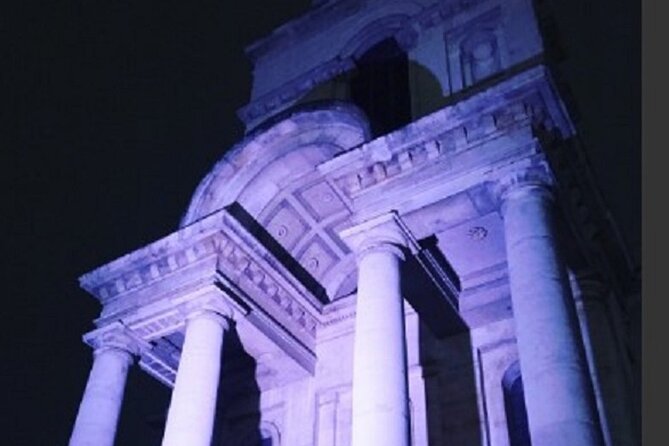
The third stop is at 9 to 11 Brick Lane, identified with the Frying Pan pub and Polly Nichols’s last drink. The planned stop lasts about five minutes.
Brick Lane is a practical place to pause because it remains one of the area’s best-known streets. Today, you will find food, shops, and evening activity here. The tour uses that familiar setting to discuss a far less comfortable period, when working people lived with much greater insecurity.
I like this part of the route because it gives the story a human starting point. Polly Nichols was not simply a name attached to a case. A final drink, a place, and an ordinary evening help you consider the person behind the headlines.
The guide may also point out how the district’s character has shifted. The walk does not require you to pretend that modern Brick Lane is unchanged. Instead, the contrast between today’s street and Victorian Whitechapel becomes part of the experience.
Hanbury Street and Annie Chapman’s murder site
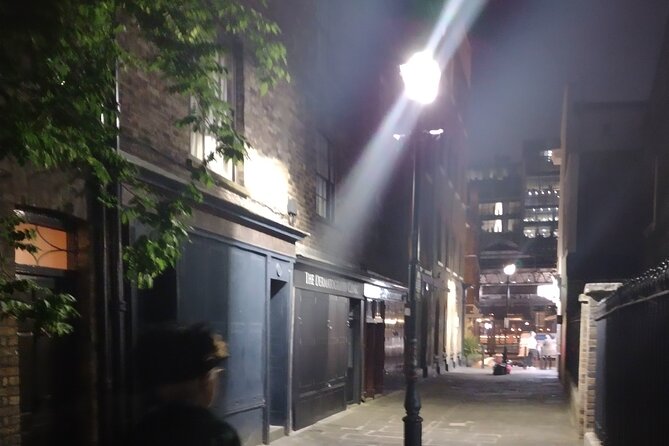
At 29 Hanbury Street, the guide discusses the murder site associated with Annie Chapman. The planned stop is around five minutes.
This is one of the places where the tour’s tone matters most. The subject is disturbing, and the experience is not recommended for anyone with a nervous disposition or who is squeamish. At its best, the narration stays factual and respectful, giving attention to the victim and the conditions around the crime rather than chasing shock.
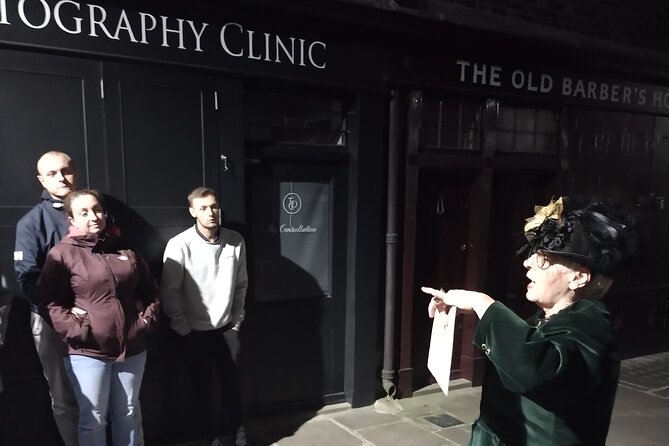
Lindsay is praised for using a theatrical style while keeping the group involved. That can make the walk more vivid, but the balance will depend partly on your taste. If you want a quiet, academic history talk, a guide’s dramatic delivery may feel strong. If you enjoy storytelling, it can help the details stay in your mind.
The short stop also keeps the group moving. You are not left standing in one place for a long time while listening to graphic material. Still, this is a serious subject, and you should book with that in mind.
Same streets, an entirely different kind of scare:
- Ghost, Ghouls and Gallows Tour : Guided Tour with Boat Ride
★ 4.5 · 3,212 reviews - London Jack The Ripper Guided Walking Tour
★ 5.0 · 3,131 reviews - London: Comedy Horror Ghost Tour on a Bus
★ 4.4 · 2,084 reviews - London: Jack the Ripper Tour with Immersive Ripper Vision
★ 4.5 · 1,840 reviews
Princelet Street and the double event
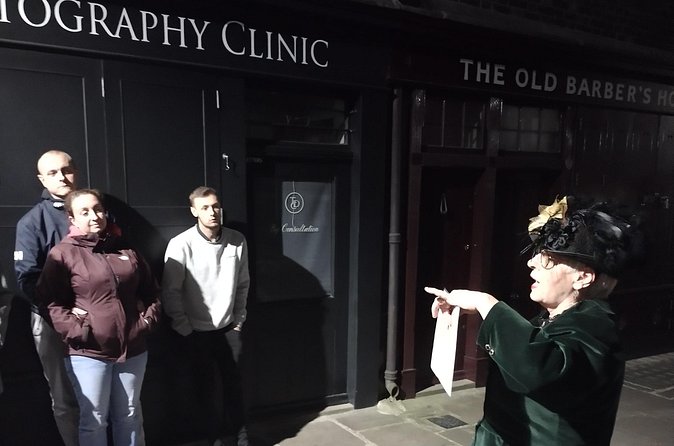
The next stop is outside 4 Princelet Street, at E1 6QH. The building is described as dating from the 1700s, and the guide discusses the night known as the double event. This section lasts about ten minutes, making it one of the longer pauses on the route.
The older building gives the guide something concrete to work with. Most of Whitechapel has been altered, rebuilt, or repurposed, so an old structure can help you picture the scale and texture of the area more clearly.
This is also a useful point for separating fact from theory. The case includes a great deal of speculation, and guides may put forward their own view of the likely suspect. Jenny has discussed theories supported by evidence, and one group came away favouring the butcher theory. You should expect a reasoned interpretation, not a final answer. The identity of Jack the Ripper remains unresolved.
The ten-minute stop allows more space for questions. If your group is curious and engaged, the walk may take longer than the advertised 75 minutes. One group’s experience lasted about two hours and 15 minutes, while another praised the two-hour pace. That extra time may be a benefit if you like discussion, but it can be tiring on a cold night.
Puma Court and the letters
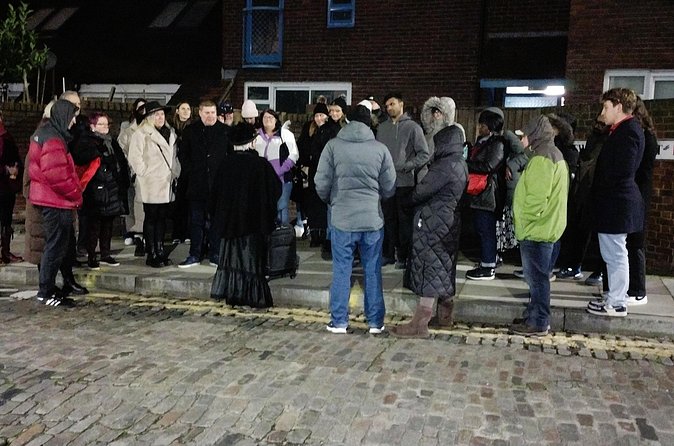
At 6 Puma Court, the guide discusses letters connected with the case. This stop takes about five minutes.
The letters are a reminder that the story was shaped not only by crimes, but also by newspapers, public fear, police work, and people trying to insert themselves into the investigation. The subject offers plenty of room for dramatic claims, so listen for the guide’s explanation of what can actually be supported.
The use of photographs and a large iPad is helpful here. Written evidence can be hard to picture when it is described from memory. Seeing relevant images gives the group something specific to examine and can make the discussion easier to follow.
Because the stop is short, you will not receive a full forensic study of every document. Think of it as one part of a larger route, rather than a separate museum-style exhibit.
Spitalfields Market, the Ten Bells, and Mary Kelly

The seventh stop takes place around the corner of Brushfield Street and Commercial Street, outside Spitalfields Market. The guide discusses the Ten Bells pub and the area associated with Mary Kelly.
This is one of the route’s most recognizable locations. The Ten Bells has become closely linked with the Jack the Ripper story, and the nearby market gives you a clear sense of how central this part of the East End remains.
The guide may also explain how later stories, popular books, and changing public interest have shaped the way these places are remembered. That is important because the modern reputation of the Ten Bells and nearby streets is not based only on events from the 1880s. It has also been built by tourism and retelling.
The stop is scheduled for about five minutes. It is a good place to look around and get your bearings, but the group may need to stay close to the guide because the area can be active in the evening.
The London Fruit & Wool Exchange and Mary Kelly
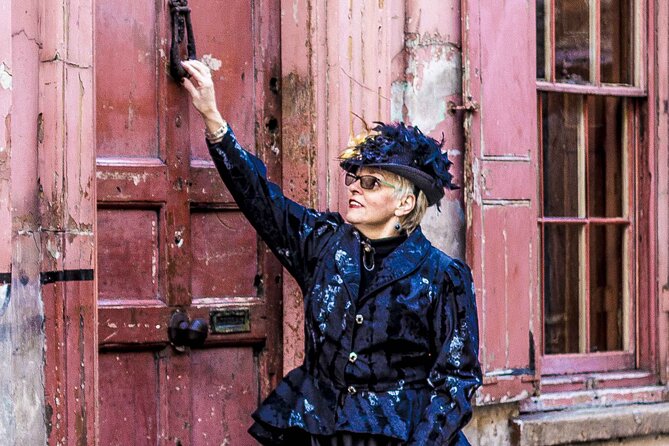
The final stop is in the courtyard of the London Fruit & Wool Exchange at 60 Brushfield Street. Here, the guide discusses Mary Kelly’s murder at 13 Miller’s Court and possible suspects. This is planned as another ten-minute stop.
The courtyard provides a useful final setting because it brings together the case’s most difficult questions. You hear about Mary Kelly, the suspected identity of Jack the Ripper, and the evidence used to support competing explanations.
Guides have also shown photographs of victims’ graves and memorials. I appreciate that detail because it shifts attention back toward the people who suffered. It can be easy for a famous unsolved case to become a puzzle for spectators. Memorial images help keep the human cost in view.
This stop may be the most intense part of the walk. If you prefer lighter sightseeing, you may find the material too grim. If you want a serious account that avoids making fun of the victims, this is likely to be one of the most meaningful sections.
What the guides do well
The strongest element of this experience is the quality of the guide. Jenny is repeatedly praised for combining case details with the social story of Whitechapel. Celine is praised for speaking clearly to a group without a microphone and using images to support her points. Lindsay brings a more theatrical energy and keeps people involved from beginning to end.
That range matters. The experience is not just a set of locations with a script read aloud. The guide controls the pace, answers questions, handles interruptions, and decides how much emphasis to give each theory.
A good example is the guide who dealt firmly with a disruptive person in the group. That may sound like a minor point, but it affects the whole evening. A respectful subject needs a guide who can keep the mood focused without letting one person turn the walk into a comedy routine.
The guides also appear to know the modern neighbourhood well. One guide recommended a curry on Brick Lane after the walk, and the end of the route leaves you close to restaurants and Liverpool Street Station. That makes the tour easy to pair with an evening meal.
How much time and energy should you allow?
The stated duration is approximately 1 hour and 15 minutes. In practice, allow extra time if the guide welcomes questions or the group moves at a relaxed pace. Experiences described by participants have lasted around two hours or 2 hours 15 minutes.
That difference is worth planning for. Do not schedule a train, theatre performance, or dinner reservation immediately after the advertised finish. The route ends on Bell Lane, a few minutes from Liverpool Street Station, but the exact finish may depend on the guide and the group.
The walk requires a moderate level of physical fitness. You will be outside and moving between stops, with periods of standing. Bring a warm layer in winter, wear comfortable shoes, and carry water because bottled water is not included.
The maximum group size is 40 people. That is not an intimate private walk, but the guide’s use of an iPad and clear spoken delivery should help. A smaller group may feel more personal, while a full group can make it harder to hear if people spread out.
Is $23.31 good value?
At $23.31 per person, this is a fair price for a guided evening walk in central London, especially if you value the social history and the guide’s interpretation. You are paying for the route, the storytelling, the historical context, and the chance to ask questions, not for entry to a museum or a preserved crime scene.
The tour includes the guide but not bottled water. All listed stops have free admission, so there are no extra site tickets to add. The value rises if your guide provides strong visual material and stays after the planned time to answer questions.
The price is less attractive if you only want a quick photo at famous locations. Modern streets can make some sites hard to identify, and several stops are brief. You are paying for explanation rather than spectacular architecture or formal attractions.
Who should book this Whitechapel walk?
I would recommend it to adults and older teenagers who enjoy crime history, Victorian London, and walks built around evidence and competing theories. It is also a good choice if you want to see Brick Lane and Spitalfields after dark while learning how poverty shaped the district.
It suits you especially well if you like social history. The strongest parts are not only the murder sites, but the explanation of how poorer residents lived and worked. You should also enjoy listening, since the guide’s narration is the main event.
I would skip it if you are squeamish, easily unsettled by murder cases, or hoping for a light London activity. The subject is grim, and the evening setting adds atmosphere rather than comfort.
Free cancellation is available if you cancel at least 24 hours before the start time. The tour requires a minimum number of participants, so a cancellation by the provider may lead to another date, another experience, or a full refund.
Should you book the Jack the Ripper Tour Whitechapel?
Book it if you want a respectful, guide-led look at the case tied closely to Whitechapel’s social past. The best reason to go is the combination of real streets, clear visual aids, competing theories, and context about the people who lived here.
Choose another London activity if you want a short, gentle sightseeing walk or dislike graphic historical subjects. For everyone else, $23.31 buys a useful evening of local history, especially when you allow extra time and follow the walk with food on Brick Lane.
FAQ
Where does the Jack the Ripper Tour Whitechapel start?
The tour starts at 7:00 pm behind the White Hart pub, at 89 Whitechapel High Street, London E1 7RA, in Gunthorpe Street.
Where does the tour finish?
The walk ends on Bell Lane, London E1 7LA. The finishing point is a few minutes from Liverpool Street Station, where the guide will direct you.
How long does the tour last?
The published duration is approximately 1 hour and 15 minutes. Some walks have lasted around two hours or longer, so allow extra time if you want to stay for questions.
What locations does the route visit?
The route includes the White Hart, Gunthorpe Street, Brick Lane, Hanbury Street, Princelet Street, Puma Court, Spitalfields Market, and the London Fruit & Wool Exchange.
Is the tour suitable for children?
No one under 14 is allowed. Participants aged 14 to 16 must be accompanied by an adult.
Is the tour suitable for people who dislike graphic subjects?
It is not recommended for people with a nervous disposition or anyone who is squeamish. The tour discusses murders and disturbing historical material.
What is included in the price?
A guide is included. Bottled water is not included.
Can I cancel for a full refund?
Yes, if you cancel at least 24 hours before the experience start time. Changes or cancellations made less than 24 hours beforehand are not accepted for a refund.
Newly added around London
- Wicked Whitechapel: Where Now’s Jack The Ripper Audio Tour★ 5.0 · 2 reviews
- Ghosts, Gore & Other Ghasty Stories in the City of London★ 5.0 · 7 reviews
- Afternoon Jack the Ripper : Guided Tour★ 5.0 · 183 reviews
- Visit Jack the Ripper in French★ 5.0 · 33 reviews
- The Fading Light London Ghost Walk★ 5.0 · 35 reviews
- Self-Guided Audio Tour-Behind the shadow of evil: Jack the Ripper★ 4.0 · 2 reviews
- The Haunted Pubs of Old London: Small Group Tour★ 5.0 · 38 reviews
- Jack the Ripper – What About the Women?★ 5.0 · 39 reviews
London Ghost Tours, compared.
London Jack the Ripper Guided Tour with Ripper-Vision
Read our review →
Ghost, Ghouls and Gallows Tour : Guided Tour with Boat Ride
Read our review →
Jack the Ripper Tour with Immersive Ripper Vision
Read our review →
German Language : Original Jack the Ripper Tour
Read our review →Browse the lists this tour appears in