

REVIEW · LONDON GHOST TOURS
Jack the Ripper. Walking tour in London in Spanish
The murder story begins before the first step. This two-hour Whitechapel walk turns a grim Victorian mystery into a theatrical street performance, with Spanish guide Javier appearing as the spirit of Jack the Ripper and leading you through the places linked to the 1888 killings. I like the strong character work, and I like that the route uses real streets, squares, churches, markets, and pubs rather than relying only on dramatic storytelling. The main drawback is clear: this is not a gentle history walk. The subject involves femicide, violence, and unsettling details, so it is unsuitable for children under 14.
Javier receives especially warm praise for his energy, humor, and personal approach. He interacts with the group, adds detail to the story, and even offers suggestions for restaurants and places to visit afterward. The tour’s Spanish-language presentation is a real advantage if you want to follow the story without wrestling with London history in English.
The meeting point is easy to find at the sundial outside Tower Hill Station. Look on the right-hand side as you leave the station for a guide with a red umbrella and mask. At $20 per person, the tour offers a focused two-hour experience, though its value depends on your taste for dark subject matter and theatrical role-play.
Key points to know before you go
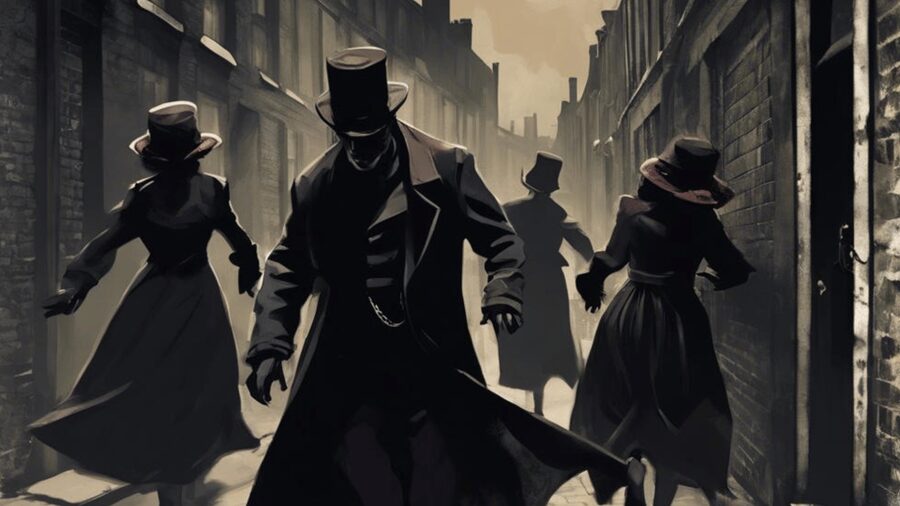
- Javier leads in character: The guide presents himself as Jack’s spirit, using a mask, red umbrella, sarcasm, and theatrical storytelling.
- The walk connects real Whitechapel locations: You visit Mitre Square, Goulston Street, Artillery Passage, Old Spitalfields Market, and The Ten Bells.
- The Spanish narration is lively: Javier explains the case in Spanish and interacts closely with the group.
- The mood is macabre but not humorless: Sarcasm and performance keep the two-hour walk moving.
- The route begins at Tower Hill Station: Meeting at the sundial makes the starting point simple to locate.
- The finish is historically atmospheric: The tour ends at The Ten Bells, a pub linked to the final night of one of the victims.
Meeting Jack at Tower Hill Station
Your starting point is outside Tower Hill Underground Station, beside the sundial. This is a useful meeting place because the station is easy to reach, and the guide’s red umbrella and mask give you a clear visual marker in a busy part of London.
The opening setting also gives the tour an immediate sense of place. From the sundial, you can see the medieval castle, linking the Victorian murder story to London’s much older past. The tour then moves east toward Whitechapel, where the streets become the main stage.
The guide’s costume matters here. This is not a standard walk with a person quietly reading dates from a folder. Javier plays Jack’s spirit, and that choice sets the tone from the start. You should expect direct address, sarcasm, and a touch of menace. The theatrical approach is one of the experience’s strongest features, but it will not suit everyone.
If you prefer calm museum-style interpretation, this may feel too dramatic. If you enjoy mystery, dark comedy, and live storytelling, the character-led format gives the walk a clear identity.
More Ghost Walking Tours in London
- London: The Original Jack the Ripper Walking Tour
★ 4.7 · 7,833 reviews - London Jack The Ripper Guided Walking Tour
★ 5.0 · 3,131 reviews - London: Jack the Ripper Evening Walking Tour
★ 4.9 · 1,449 reviews
Whitechapel through the eyes of the case
The tour explains the five femicides associated with Jack the Ripper in 1888, focusing on the lives of the victims as well as the mystery of the killer’s identity. That focus is important. The story is not presented only as a puzzle about Jack. It also brings attention to the women whose deaths shaped the case.
The guide tells the story from Jack’s point of view, but the information is presented as truthful rather than fictional. That creates an unusual tension. You hear the voice of the suspected killer while moving through the neighborhood where the events took place.
Whitechapel is especially effective for this kind of walk because the route uses ordinary streets and compact passages rather than distant attractions. You are not simply looking at a plaque and moving on. The locations provide the setting for a sequence of events, clues, and theories.
The experience does not promise to solve the mystery. Instead, it puts you inside the uncertainty that has kept the case famous. If you want a firm answer about Jack’s identity, you may leave with more questions. That is part of the design.
Mitre Square and the double event
Mitre Square is one of the central stops. It is identified with the double event, a term used for the two killings that occurred on the same night. The square gives the story a specific physical location, helping you understand how close the key sites were to one another.
This is where the tour’s walking format earns its price. A book can describe a location, but walking between the places lets you sense the distance and order of the events. The route connects details that can otherwise blur together when you encounter them separately.
You should not expect a large memorial or a preserved crime scene. The appeal is the contrast between the present-day surroundings and the violence associated with the spot. The guide’s role-play adds atmosphere, while the historical framing keeps the walk from becoming a simple ghost story.
Mitre Square may also be one of the more uncomfortable stops. The tour deals frankly with murder, and Javier’s performance can make the material feel immediate. This is a place where the age restriction makes sense.
Goulston Street and the heart of Whitechapel
Goulston Street is another major point on the route. The tour calls it the heart of Whitechapel, and it serves as a key location in the mystery. Here, the guide ties the street to the clues and theories that helped make the case so enduring.
The stop works best if you enjoy following evidence rather than only hearing dramatic retellings. The story is built around questions: what happened, what was found, and what can actually be known? Javier’s sarcastic style helps keep the discussion lively, especially when the case reaches its more speculative corners.
You may notice that the tour balances certainty and mystery. It promises truthful information, but truth does not mean every question has a known answer. A good experience here depends on separating documented details from theories about the killer.
Goulston Street also shows the value of seeing Whitechapel on foot. You move through a living part of London rather than a sealed historical attraction. The modern city continues around you, which can make the old case feel both distant and surprisingly close.
More Ghost Walking Tours in the UK
- London: Ghost Walk and River Thames Boat Ride
★ 4.5 · 1,251 reviews - London Jack The Ripper Small-Group Walking Tour
★ 5.0 · 1,013 reviews - Ghastly Ghost Walking Tour in London
★ 5.0 · 878 reviews - London: Ghastly Ghosts 2-Hour Walking Tour
★ 4.9 · 794 reviews
The Roman wall, Chamberlain, and changing London
The route also includes the Roman Wall of Londinium and a stop known as Chamberlain, described as a favorite location among people who study the Ripper case. These places broaden the walk beyond the murders themselves.
The Roman wall offers a reminder that London has been rebuilt many times. The Jack the Ripper story belongs to the late 19th century, but the streets sit on top of a city with Roman foundations and medieval landmarks. That layering gives the walk more substance than a simple sequence of crime sites.
Chamberlain is presented as a particularly important place for Ripper enthusiasts. If you already know the case, this may be one of the most rewarding sections because it adds a location associated with detailed study and debate. If you are new to the subject, Javier’s explanations should help you understand why the spot matters.
The tour also refers to Algate Church, described as a place favored by prostitutes in the 19th century. This detail adds social context. You hear about the working environment and daily life around Whitechapel, not only the final moments of the victims.
Artillery Passage and Lilian’s Building
Artillery Passage brings a change of mood. It is described as a lively street with a dark corner, a useful example of how the route contrasts ordinary city life with the case’s grim events.
This kind of stop is valuable because it avoids making every location feel identical. The story moves through streets with different characters, and the changing surroundings help you follow the narrative over two hours. You may find that the darker details feel sharper when they appear against a place that still has everyday energy.
Lilian’s Building adds another layer. It was an old night shelter, and its inclusion points toward the difficult living conditions faced by poor residents of the area. The tour uses locations like this to show that the case grew from a real neighborhood, not a Gothic fiction set.
That context matters. You are not only hearing about an unnamed foggy London. You are learning about people who lived and worked in Whitechapel, including women who faced poverty and limited choices. The theatrical voice may belong to Jack, but the route keeps returning you to the human cost.
Old Spitalfields Market and the silk trade
Old Spitalfields Market is one of the route’s most distinctive stops. The market dates to the 17th century and was associated with the silk trade, giving the tour a much older commercial setting.
This is a good place to pause and notice how many different Londons occupy the same neighborhood. The market’s history reaches back well before 1888, while the Jack the Ripper case belongs to the Victorian period. The stop helps explain why the area was such a busy, mixed part of the city.
The market also gives the walk a more open and social setting after the narrower streets and darker corners. That change can be welcome during a two-hour tour focused on murder. You still hear the case, but the surroundings offer a different rhythm.
Do not expect the entire tour to feel frightening. The highlights include terror, but also sarcasm and performance. The mood shifts between serious historical material, black humor, and atmospheric storytelling. That variety is one reason the walk has earned a very high rating, 4.9 out of 5 from 11 ratings.
Ending at The Ten Bells
The final stop is The Ten Bells, a pub associated with the last night of one of the victims. Ending here gives the route a strong narrative finish.
A pub is also a practical ending point. After two hours of grim subject matter, you can decide how much more of the story you want to discuss. The tour itself finishes at the pub, so you are not left trying to find a distant final landmark.
The Ten Bells is not presented as a place where the mystery is solved. Instead, it closes the route with one of the case’s most recognizable locations. The final stop can feel particularly atmospheric because it connects a present-day pub setting with the final hours described during the walk.
If you are sensitive to the way murder sites are treated as entertainment, this may be the point to consider carefully. The tour does make room for the victims’ lives, but it is still built around a notorious killer and a macabre mystery.
Javier’s style and what the ratings tell you
Javier is the clearest reason to book this particular experience rather than any generic Jack the Ripper walk. He performs as Jack, explains the material in detail, and keeps the group involved. The feedback consistently praises his enthusiasm, kindness, creativity, and ability to stay in character.
You can expect a guide who does more than recite information. He interacts with the group, uses humor, and adds details to the route. He also gives advice about restaurants and other places to visit, which can be helpful if you are exploring East London after the walk.
The high rating of 4.9 out of 5 reflects a strong pattern, but the number of ratings is still small. I would treat it as encouraging evidence rather than a guarantee that every group will have the same experience. The theatrical format is central, and personal taste will matter.
The one four-star rating still describes the experience as excellent and praises Javier’s explanation and commitment to the role. That suggests the main strength is the guide’s delivery, not simply the subject matter.
Is $20 a fair price?
At $20 per person, the tour sits at a reasonable price for a two-hour guided walk in central London. You are paying for a live Spanish performance, a route through several connected locations, and a guide who builds the story around the streets themselves.
The value is strongest if you want all three of these things:
- A Spanish-speaking guide
- A dramatic presentation rather than a plain lecture
- A compact route covering major Whitechapel locations
The price is less attractive if you only want to see the streets without much storytelling. Whitechapel can be explored independently, but you would need to research the case, identify the locations, and connect the evidence yourself. This tour handles that work while adding a live character performance.
The two-hour duration is also a sensible length. It is long enough to cover Tower Hill, Mitre Square, Goulston Street, Artillery Passage, Spitalfields, and The Ten Bells, but short enough to fit into a day of London sightseeing.
Who should book this walking tour?
I would recommend it to adults and older teenagers who enjoy crime history, unsolved mysteries, theatrical guides, and walking through real city locations. It is especially useful if you want to experience Whitechapel in Spanish.
You will likely enjoy it if you appreciate a guide who interacts with the group rather than speaking in a flat, formal tone. Javier’s character work gives the walk energy, and his local suggestions can help you plan the rest of your time in London.
I would be cautious if you dislike role-play, sarcasm, or graphic crime stories. The tour presents Jack’s spirit as the guide, so the performance is not an optional extra. It shapes the whole experience.
The walk is wheelchair accessible, but the information provided does not describe the exact street conditions or any specific assistance. If that detail matters to you, confirm the route arrangements before booking.
Practical details that matter
The tour is in Spanish, and some content is shown in its original language. The meeting point is the sundial just outside Tower Hill Station, on the right-hand side of the exit. Look for the red umbrella and mask.
You can cancel up to 24 hours before the start for a full refund, and you can reserve now while paying later. Starting times vary, so check availability for your chosen date.
The tour is not suitable for children under 14. That restriction reflects the subject matter, not simply the late hour. You should be ready for discussion of murder and the lives of women affected by the crimes.
Should you book it?
Book this tour if you want a Spanish-language Jack the Ripper walk with a strong theatrical edge and a guide who commits fully to the role. Javier’s energy, humor, and interaction are the main attractions, while the route gives you real Whitechapel locations rather than a story told from a distant meeting room.
Skip it if you want a quiet architectural walk or prefer your history without performance. For the right audience, $20 buys a memorable two hours in one of London’s most debated neighborhoods, with enough context to make the mystery feel connected to real streets and real lives.
FAQ
Where does the Jack the Ripper walking tour start?
It starts outside Tower Hill Underground Station, at the sundial a few meters from the station exit. The guide will be on the right-hand side, wearing a mask and carrying a red umbrella.
Where does the tour finish?
The tour finishes at The Ten Bells pub in Whitechapel.
How long does the walking tour last?
The guided walk lasts two hours.
What language is the tour in?
The live tour guide speaks Spanish. Some content is shown in its original language.
Is the tour suitable for children?
No. The tour is not suitable for children under 14 because it covers murder, femicide, and disturbing historical details.
Is the walking tour wheelchair accessible?
Yes, the activity is listed as wheelchair accessible.
Which locations are included?
The route includes Goulston Street, Mitre Square, the Roman Wall of Londinium, Artillery Passage, Old Spitalfields Market, and The Ten Bells. It also discusses places including Chamberlain, Algate Church, and Lilian’s Building.
Can I cancel the booking?
Yes. You can cancel up to 24 hours in advance for a full refund. You can also reserve now and pay later.
More Jack the Ripper Tours in London
- London Jack the Ripper Guided Tour with Ripper-Vision
★ 4.5 · 4,840 reviews - London: Jack the Ripper Small Group Tour
★ 4.7 · 3,159 reviews - London: Jack the Ripper Tour with Immersive Ripper Vision
★ 4.5 · 1,840 reviews - German Language : Original Jack the Ripper Tour
★ 4.6 · 1,805 reviews
Newly added around London
- Wicked Whitechapel: Where Now’s Jack The Ripper Audio Tour★ 5.0 · 2 reviews
- Ghosts, Gore & Other Ghasty Stories in the City of London★ 5.0 · 7 reviews
- Afternoon Jack the Ripper : Guided Tour★ 5.0 · 183 reviews
- Visit Jack the Ripper in French★ 5.0 · 33 reviews
- The Fading Light London Ghost Walk★ 5.0 · 35 reviews
- Self-Guided Audio Tour-Behind the shadow of evil: Jack the Ripper★ 4.0 · 2 reviews
- The Haunted Pubs of Old London: Small Group Tour★ 5.0 · 38 reviews
- Jack the Ripper – What About the Women?★ 5.0 · 39 reviews
London Ghost Tours, compared.
London Jack the Ripper Guided Tour with Ripper-Vision
Read our review →
Ghost, Ghouls and Gallows Tour : Guided Tour with Boat Ride
Read our review →
Jack the Ripper Tour with Immersive Ripper Vision
Read our review →
German Language : Original Jack the Ripper Tour
Read our review →Browse the lists this tour appears in